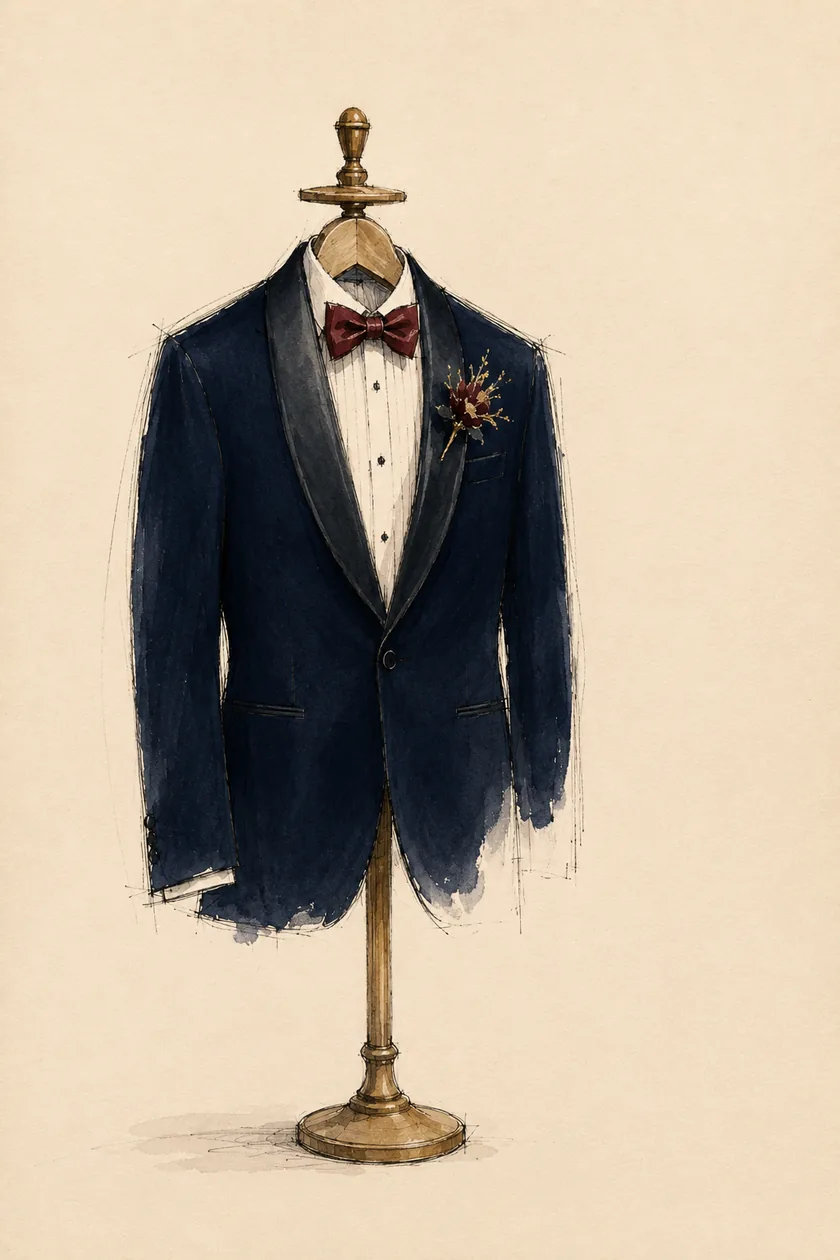
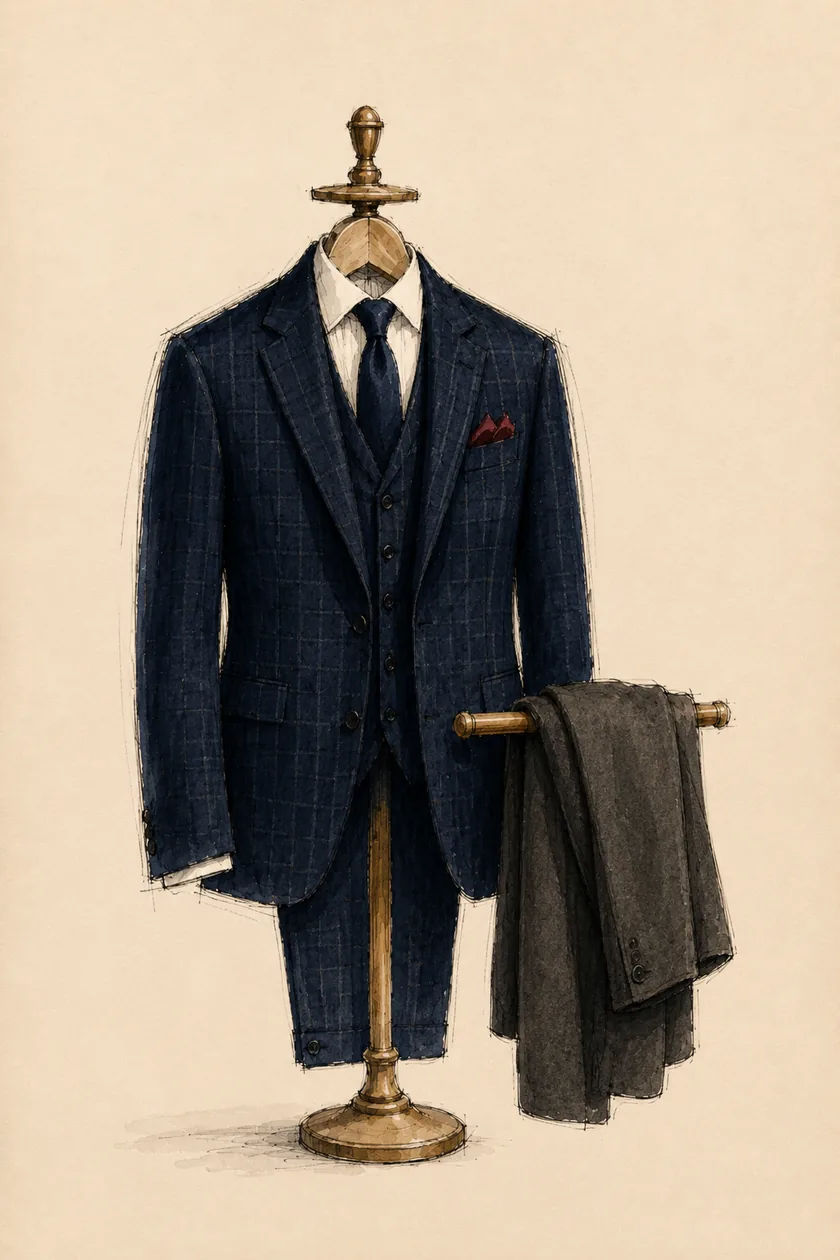
Three-piece or two-piece suit? Drawn side by side
Updated September 2026 · Sam’s Menswear editorial team
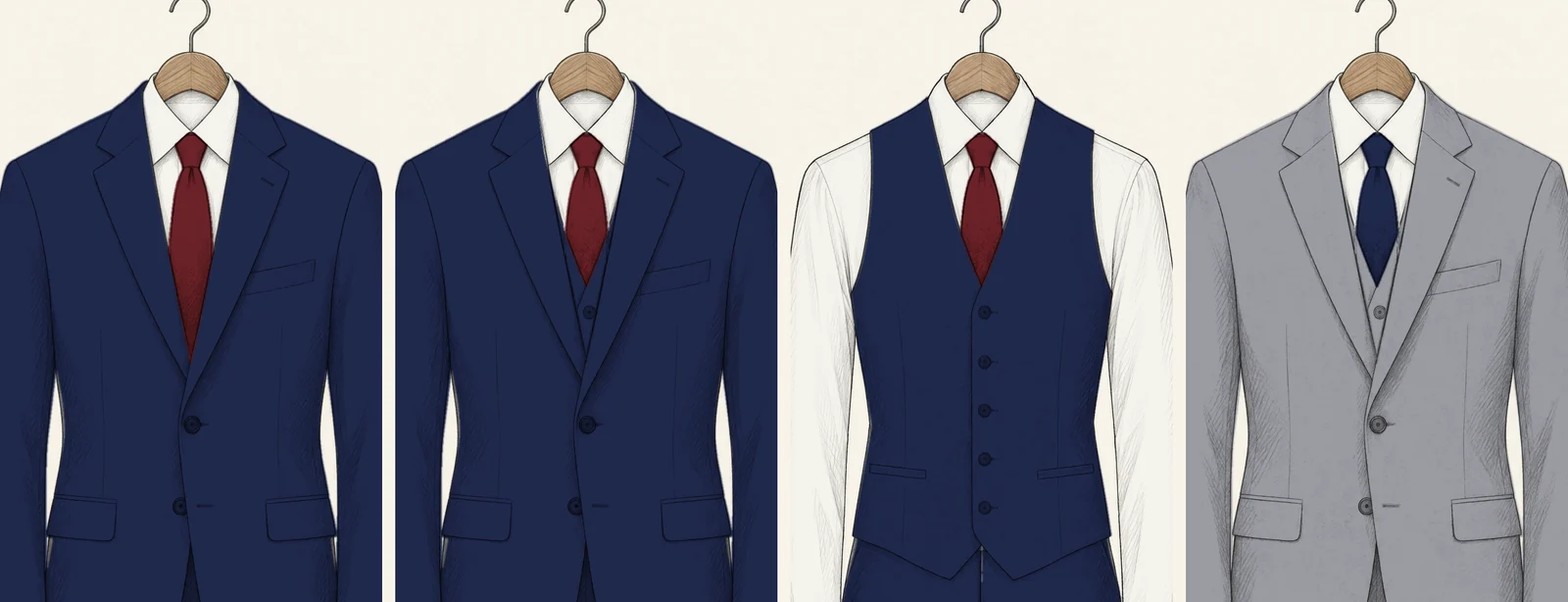
A two-piece suit is a jacket and trousers. A three-piece adds a waistcoat, a vest in American English, made from the same cloth. With the jacket buttoned the difference is only a few inches of cloth in the V. It changes more than that suggests.
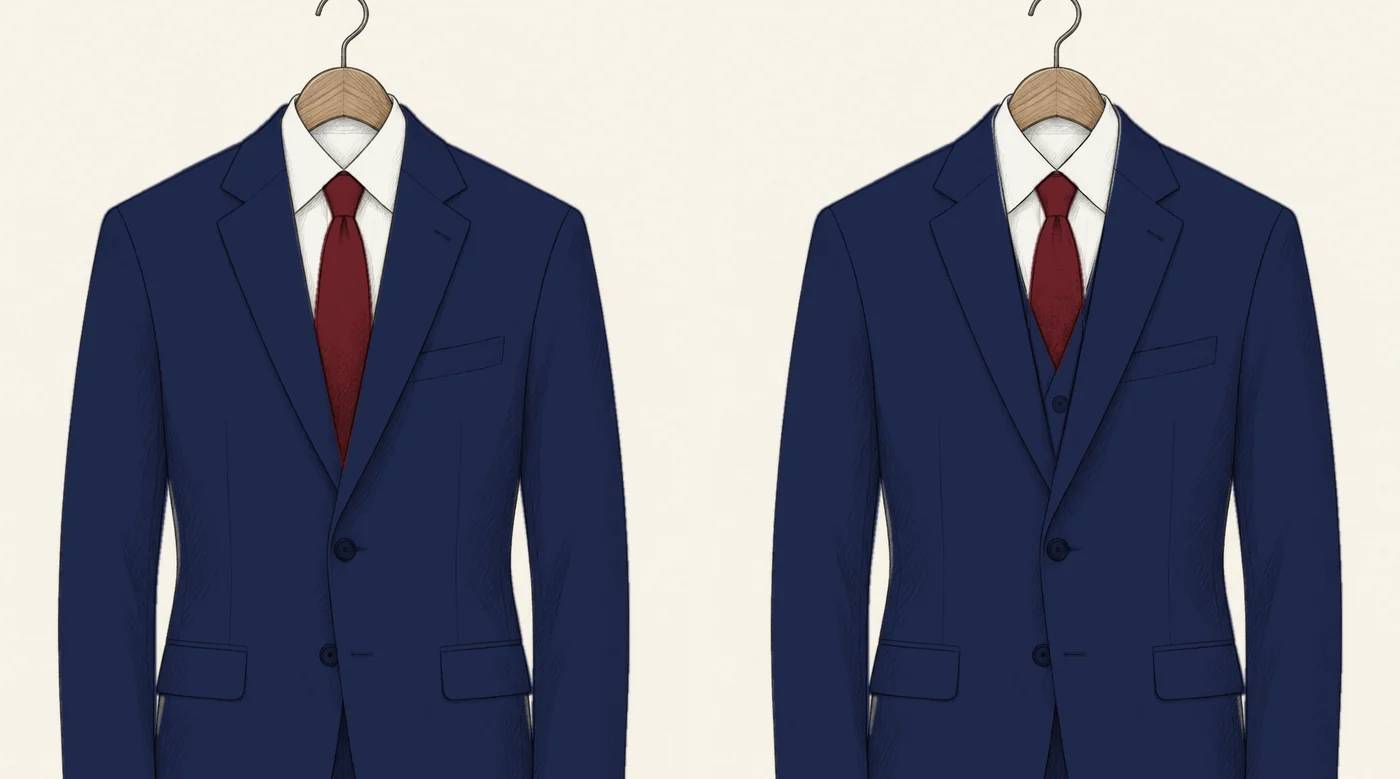
The drawings are the same navy suit on the Drawing Board, with and without the waistcoat.
What the waistcoat does
- It fills the V. Less shirt shows between the lapels, so the front reads as one clean column of cloth from collar to button. It looks more finished, and more formal.
- It covers the waistband. No shirt billowing over the trousers, no belt buckle in sight, even when the jacket falls open.
- It keeps you dressed with the jacket off. At a desk, at the reception after the speeches, on the dance floor: in a waistcoat you still look like a man in a suit, not a man who has taken his off.
- It adds warmth. One more layer of wool over the chest, which is welcome from November to March.
A three-piece is also a two-piece
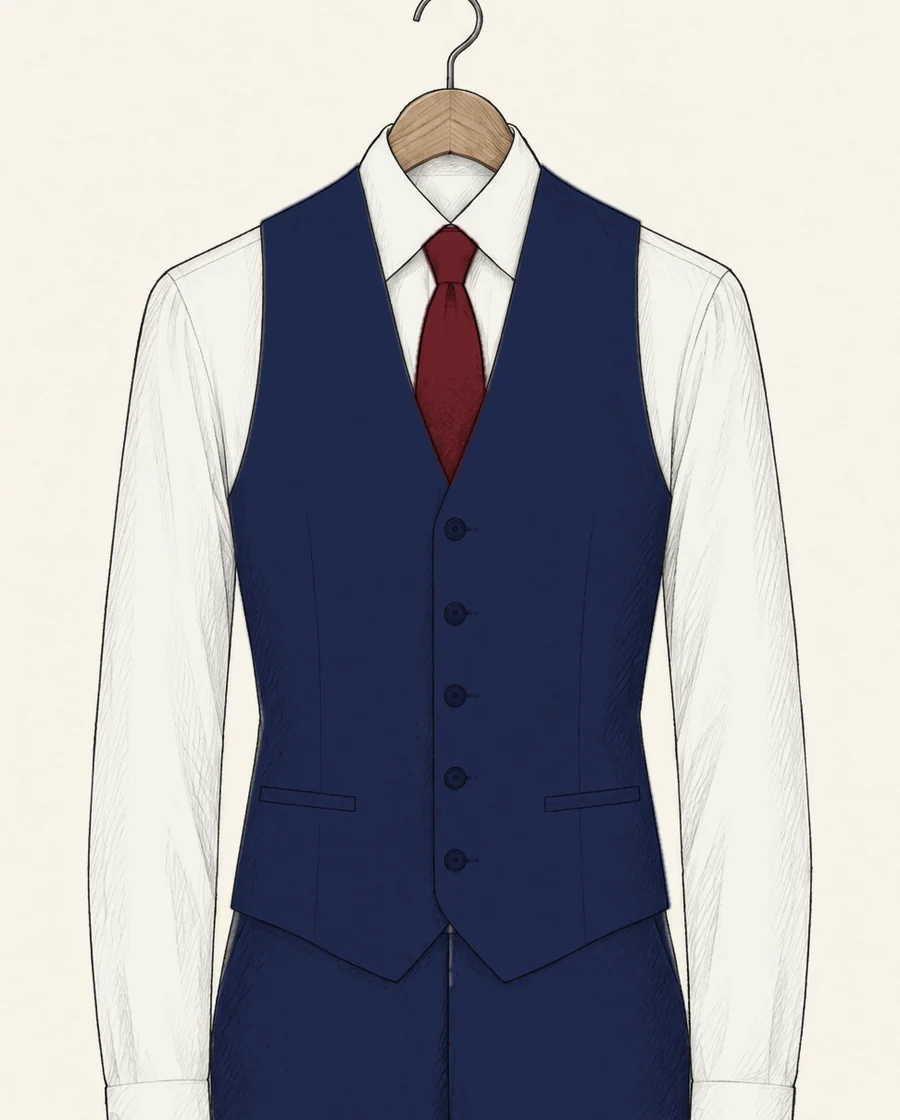
The waistcoat is optional every time you get dressed. Wear the suit as a three-piece to a wedding and as a two-piece to the office, and wear the waistcoat on its own over odd trousers on a Friday. That is the argument Goldfinger still makes sixty years on.
It only works one way round, though. Order the waistcoat with the suit, so all three pieces are cut from the same length of cloth. A waistcoat added a year later comes from a different bolt, and cloth can vary slightly from one run to the next.
How to wear a waistcoat
- Leave the bottom button undone. The waistcoat is cut for it: the front ends in two points, and the bottom button stays open by convention.
- No shirt between the waistcoat and the trousers. The waistcoat should cover the waistband, which means trousers that sit at your natural waist rather than the hips, and they are often pleated. Sam cuts the waistcoat’s length and the trousers’ rise together, so they meet.
- Braces or side adjusters, not a belt. A buckle makes a bump under the waistcoat, and nobody sees the waistband anyway. Belt or braces explains why trousers hang better from the shoulder.
- A close fit. The waistcoat should lie flat over the chest and stomach with no pull at the buttons. The back is usually lining, with an adjuster strap to take it in.
- The jacket can stay open. With a waistcoat underneath, an unbuttoned jacket still looks finished, which is one of the quiet pleasures of a three-piece.
At a glance
| Two-piece | Three-piece | |
|---|---|---|
| The pieces | Jacket and trousers | Jacket, trousers and a waistcoat in the same cloth |
| Formality | Standard | A step up |
| Warmth | Lighter | Warmer, one more layer |
| Jacket off | Shirt and waistband on show | Still dressed |
| Seasons | All year, best in summer | Autumn to spring |
| Best for | Every day, the office, summer weddings | Your wedding, winter, the suit you want to be remembered in |
When to wear which
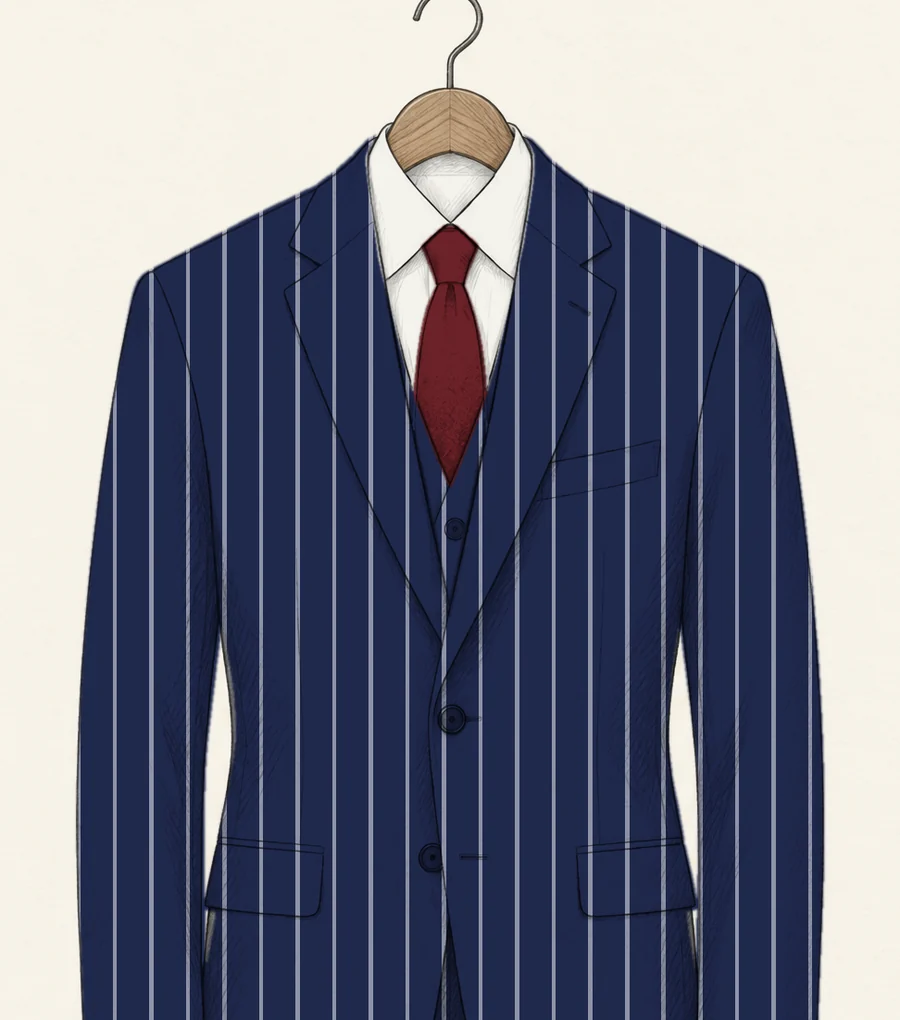
- The office: a two-piece day to day. A three-piece in winter, or whenever you want to look deliberate: a navy chalkstripe three-piece is the most businesslike suit there is.
- Your wedding: a three-piece is a groom’s classic, not least because the jacket will come off at the reception. It is also the easiest way to stand apart from your groomsmen: a waistcoat where they go without.
- A wedding guest: either. A three-piece in a quiet cloth is fine; just don’t upstage the groom.
- Black tie: a waistcoat, or a cummerbund, is traditional with a tuxedo, covering the waistband under an open dinner jacket.
- Summer: a two-piece. A waistcoat is one more layer of wool, whatever Atticus Finch managed in Alabama.
- Winter: a three-piece, in flannel or a heavier worsted. Cloth for Toronto’s seasons goes through the weights.
Matching or contrast
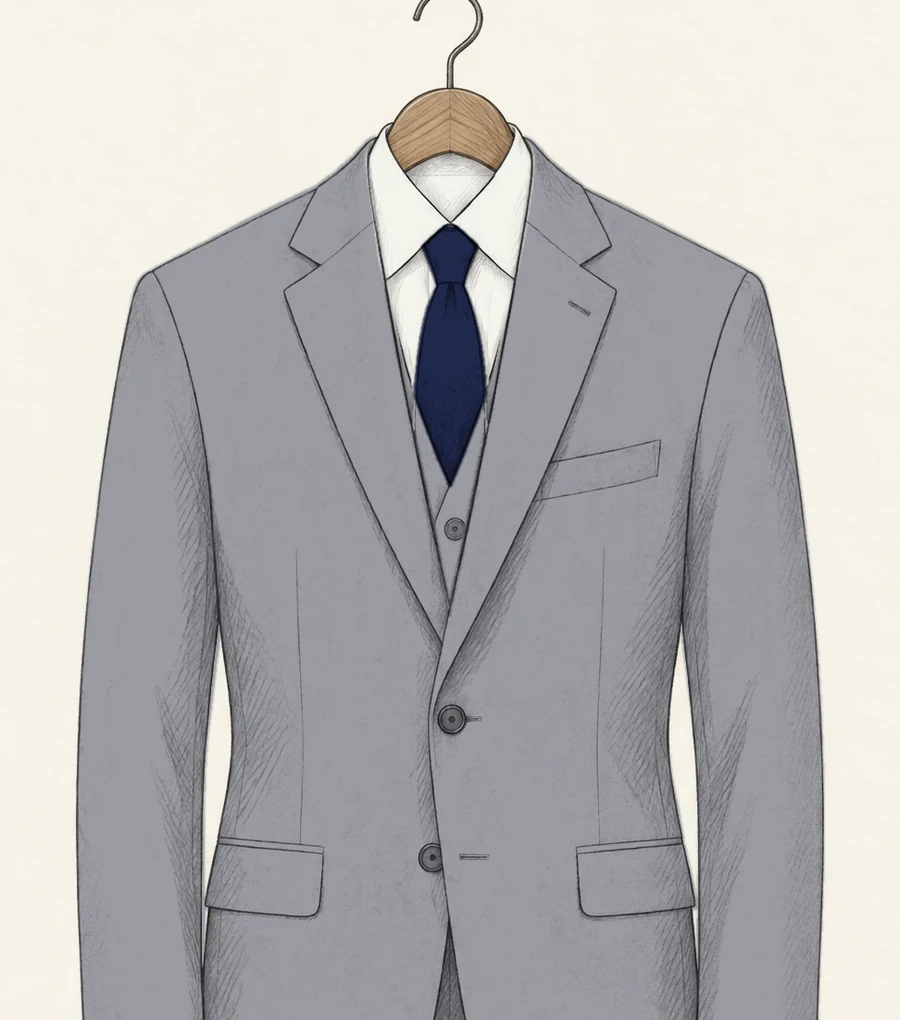
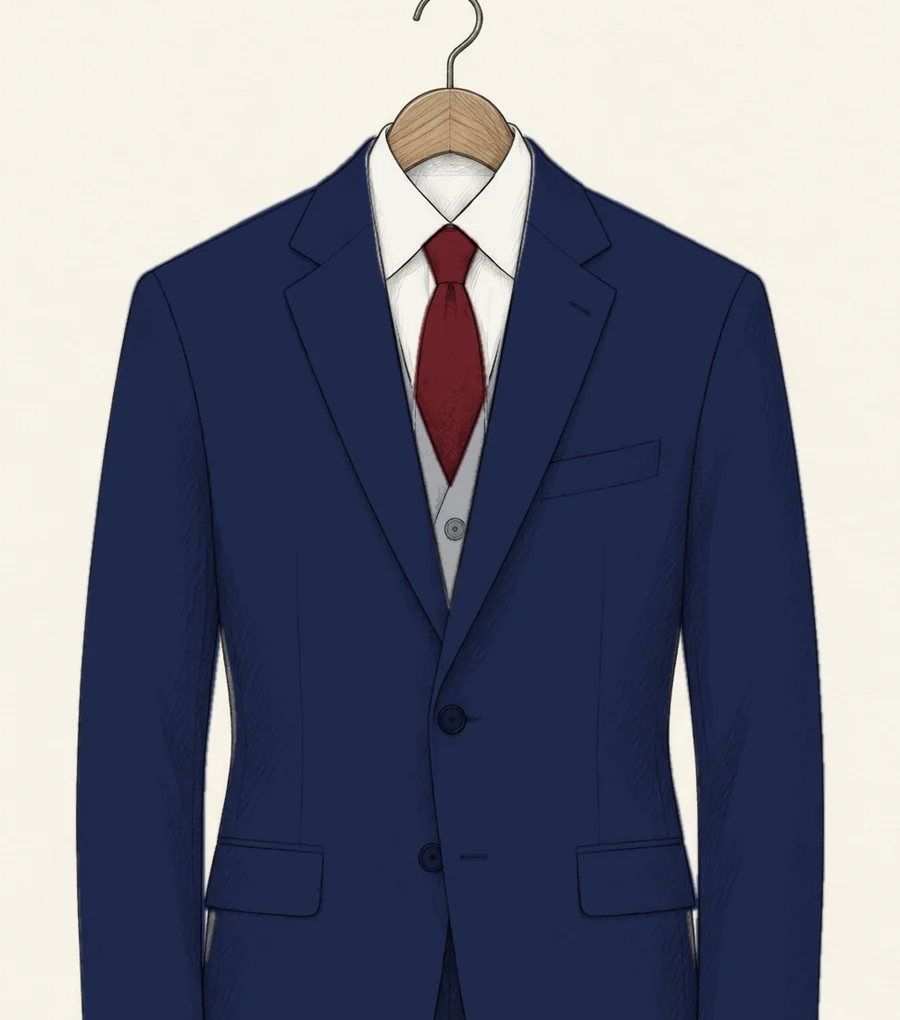
A matching waistcoat is the classic three-piece. A contrast waistcoat, also called an odd waistcoat, is cut from a different cloth: dove grey or buff under navy, for example. It is more relaxed and more of a statement, at home at a daytime wedding or a garden party, and another way for a groom to set himself apart. In an office it reads as costume, so keep it for occasions.
Three-pieces on screen
Some of the best-dressed men in film wore three-pieces, and each one shows a different side of it: Sean Connery’s glen check in Goldfinger, with a waistcoat that has its own lapels; Steve McQueen in The Thomas Crown Affair, for whom the three-piece is simply the default; and Tommy Shelby’s herringbone in Peaky Blinders, a six-button waistcoat worn with everything done up.
Draw both
On the Drawing Board you can add a waistcoat to any suit, matching or in a contrast colour, and see it on the cloth you are actually considering with the shirt and tie you would wear: two-piece, three-piece, a contrast waistcoat. Send the drawing to Sam and the appointment starts from it.
Sam makes two- and three-piece suits at his studio in Vaughan. A suit takes three to four weeks, with one fitting on the finished garment, or twelve days when it is urgent and the fabric is in. Custom suits has the rest.