Pleated or flat-front trousers? Drawn side by side
Updated September 2026 · Sam’s Menswear editorial team
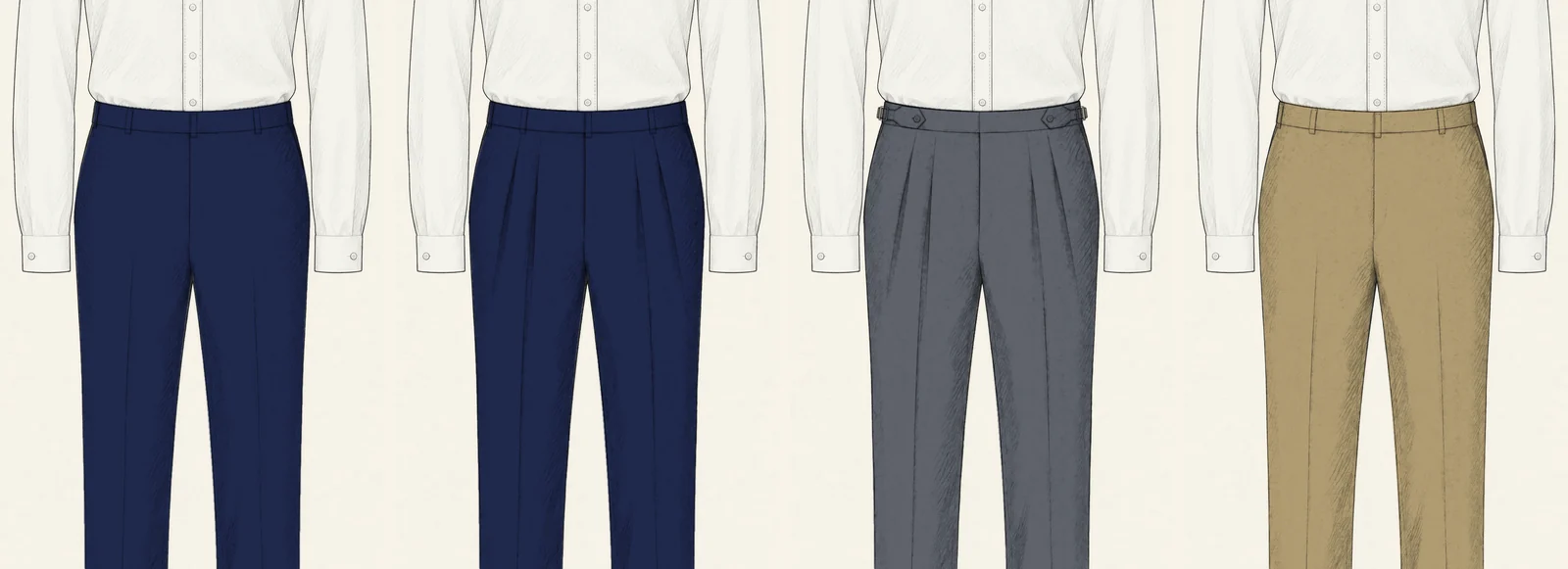
A pleat is a fold of cloth sewn into the front of the trousers at the waistband and left free below it. Standing, it lies closed. Sit down, stride or climb stairs and it opens, giving you room across the hips and thighs exactly where you need it. Flat-front trousers have no pleats: the front runs smooth from the waistband down.
The drawings are the same navy trousers on the Shirt Board, with and without pleats.
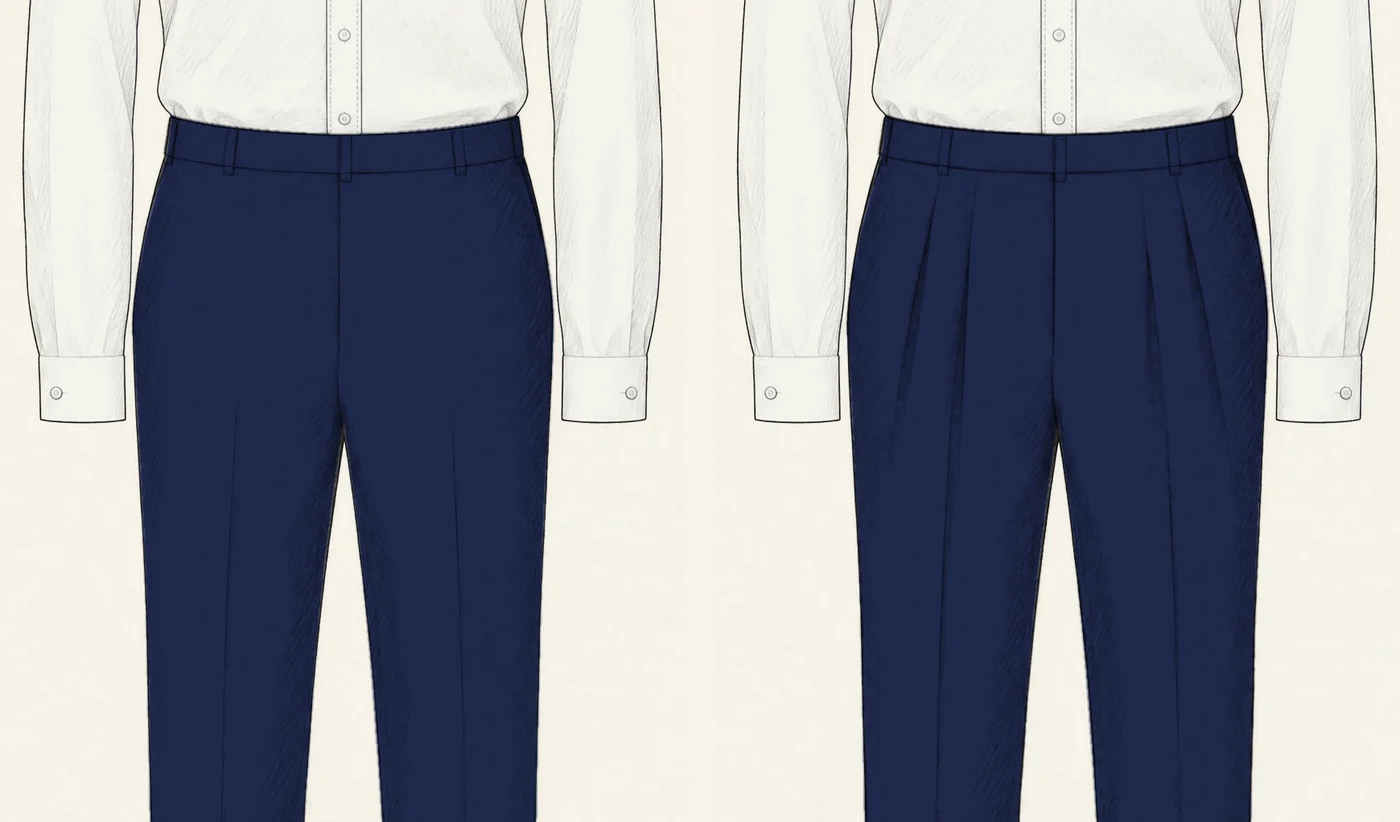
Flat front: clean and slim
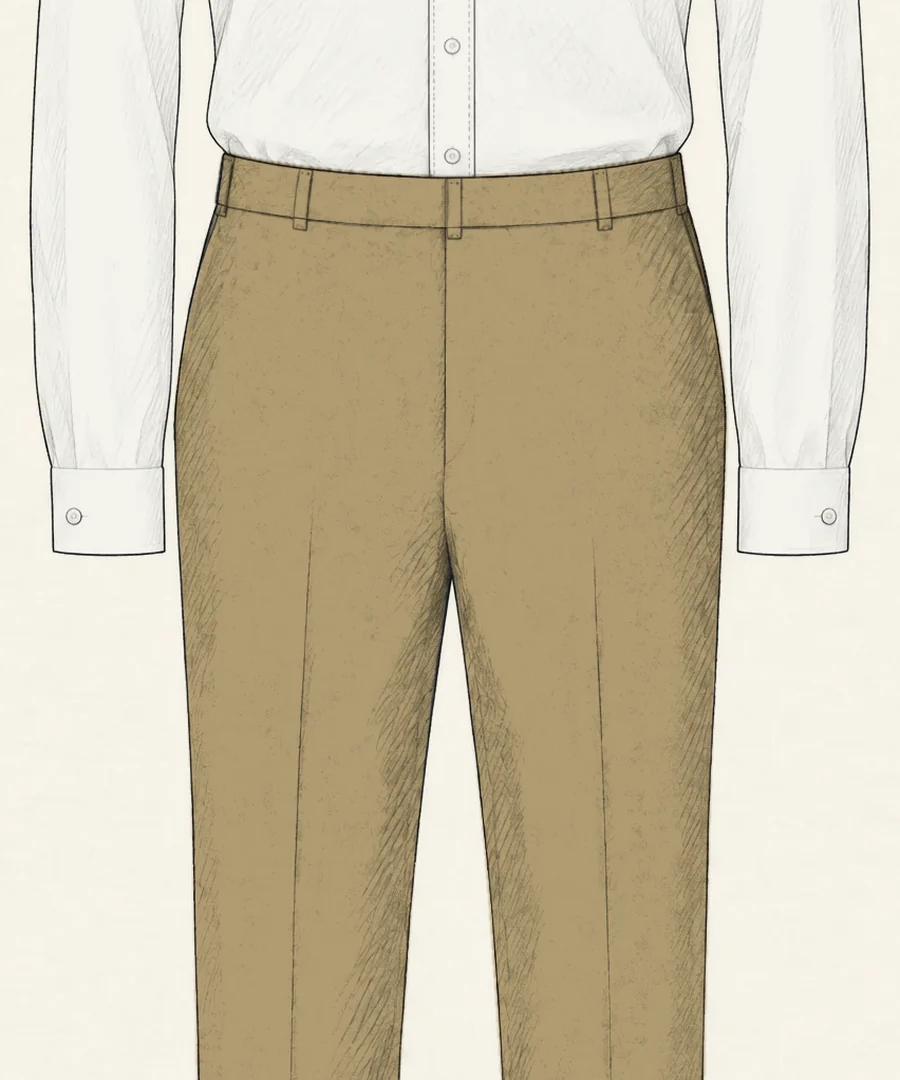
With nothing at the front, flat-front trousers make the neatest, slimmest line from waist to shoe. They have been the default for most of the last two decades, and they are the natural choice for a trim suit, for chinos and for summer trousers.
They suit a slimmer build best. On a man with a fuller seat or thigh, a flat front has less cloth to give when he sits, so it pulls across the lap and creases at the hip.
Pleated: room where you need it
Pleats are the older cut, and the more comfortable one. The extra cloth lets the trousers move with you, so they sit easily, keep their shape through a long day, and hang from the waist in a soft, straight drape rather than clinging to the leg.
They are back in favour, and not only for men who need the room. Pleats suit a fuller seat or thigh, an athletic build, and anyone who spends hours sitting: at a desk, at a wedding, or in shul over the High Holidays. They also drape best in cloths with some weight, like flannel.
The one rule: pleats should stay closed when you stand. If they pull open across the front, the trousers are too tight through the hips, and the pleats are being asked to do a job the cut should have done. That, more than the pleats themselves, is why pleated trousers got a bad name.
Single or double, and which way
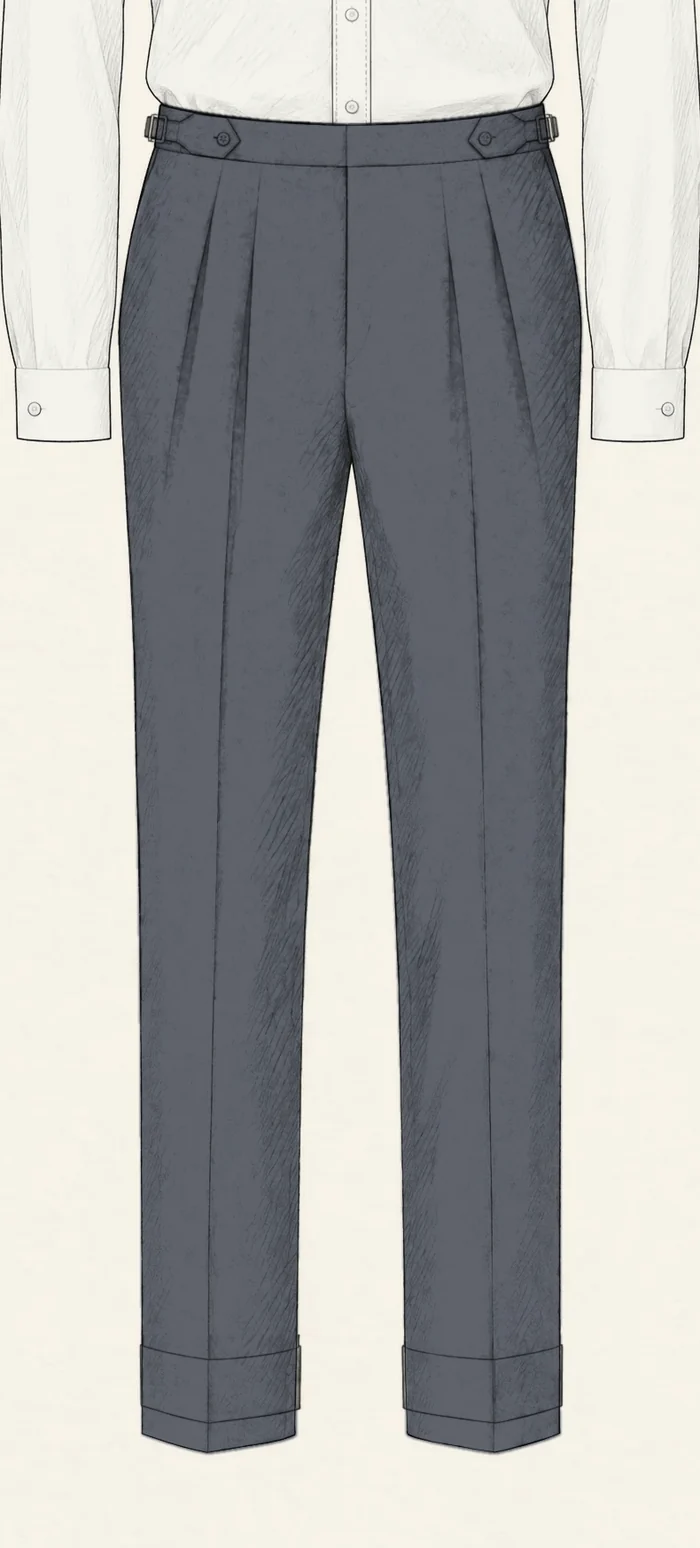
A single pleat on each side is the quieter version: a little room and a clean front. Double pleats, as drawn here, give more room and more drape, and read more classic. Pleats can also face in toward the fly or out toward the pockets. Sam will show you the options on you before anything is cut.
Pleats want a waistband at your natural waist, where they can hang straight down the leg. On a low rise they sit on the hips, splay open and look like a mistake. That is also why pleats, a higher rise and braces or side adjusters so often go together.
At a glance
| Flat front | Pleated | |
|---|---|---|
| The front | Smooth from the waistband | One or two folds each side, closed when you stand |
| The line | Slim and clean | Straight, with a soft drape |
| Comfort sitting | Less room | More room across the hips and thighs |
| Suits | Slimmer builds | Fuller seats and thighs, athletic builds |
| Rise | Mid to high | High, at the natural waist |
| Best in | Worsteds, chinos, linens | Flannels and heavier worsteds |
Which one suits your build
Your build decides it more than fashion does. A slim man in flat-fronts looks neat; a man with strong thighs or a fuller seat looks better, and is more comfortable, in pleats, because the cloth has somewhere to go. If you are between the two, a single pleat is the safe middle.
Sam measures your rise, seat and thigh, and has you sit down in the trousers at the fitting. How they behave sitting settles the question better than any rule.
With a suit, a jacket, or on their own
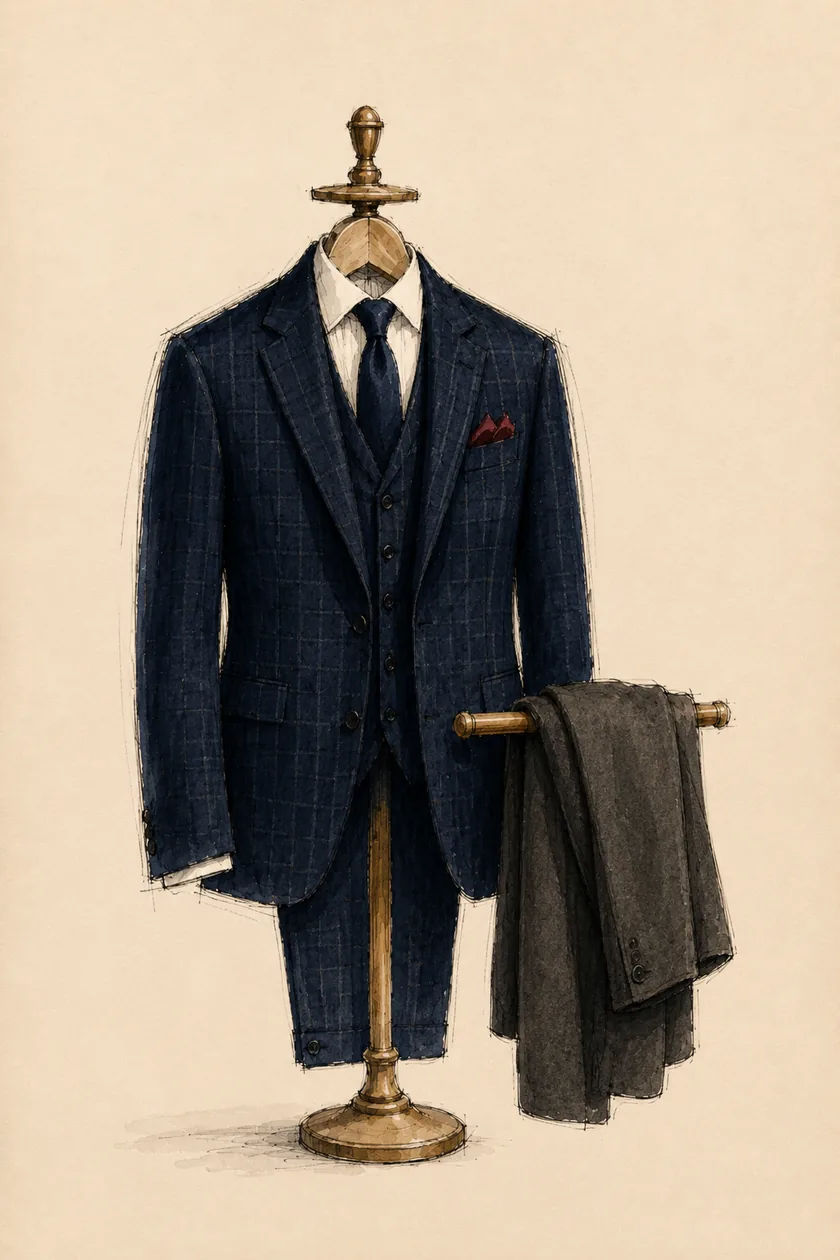
- With a suit: either works. With the jacket buttoned, the pleats are mostly hidden, and what you notice is how the leg hangs. On a three-piece, pleats, a high rise and the waistcoat work together.
- With an odd jacket: grey flannel pleats under a navy blazer is one of the great combinations.
- Chinos and summer trousers: usually flat-front, for a lighter, more casual line.
Draw both
On the Shirt Board you can put trousers under any shirt, flat-front or pleated, with belt loops or side adjusters, plain hems or turn-ups, in worsteds, flannels, chinos and linens: flat-front, pleated, grey flannel with pleats. On the Drawing Board the same choice sits under the suit jacket. Send the drawing to Sam and the appointment starts from it.
Sam makes trousers with a suit or on their own, at his studio in Vaughan. A suit takes three to four weeks, with one fitting on the finished garment. Once your pattern is on file, another pair of trousers is a phone call: two to three weeks, no fitting needed.