The groom's suit: how to know it's right while there's still time to fix it
Updated October 2026 · Sam’s Menswear editorial team
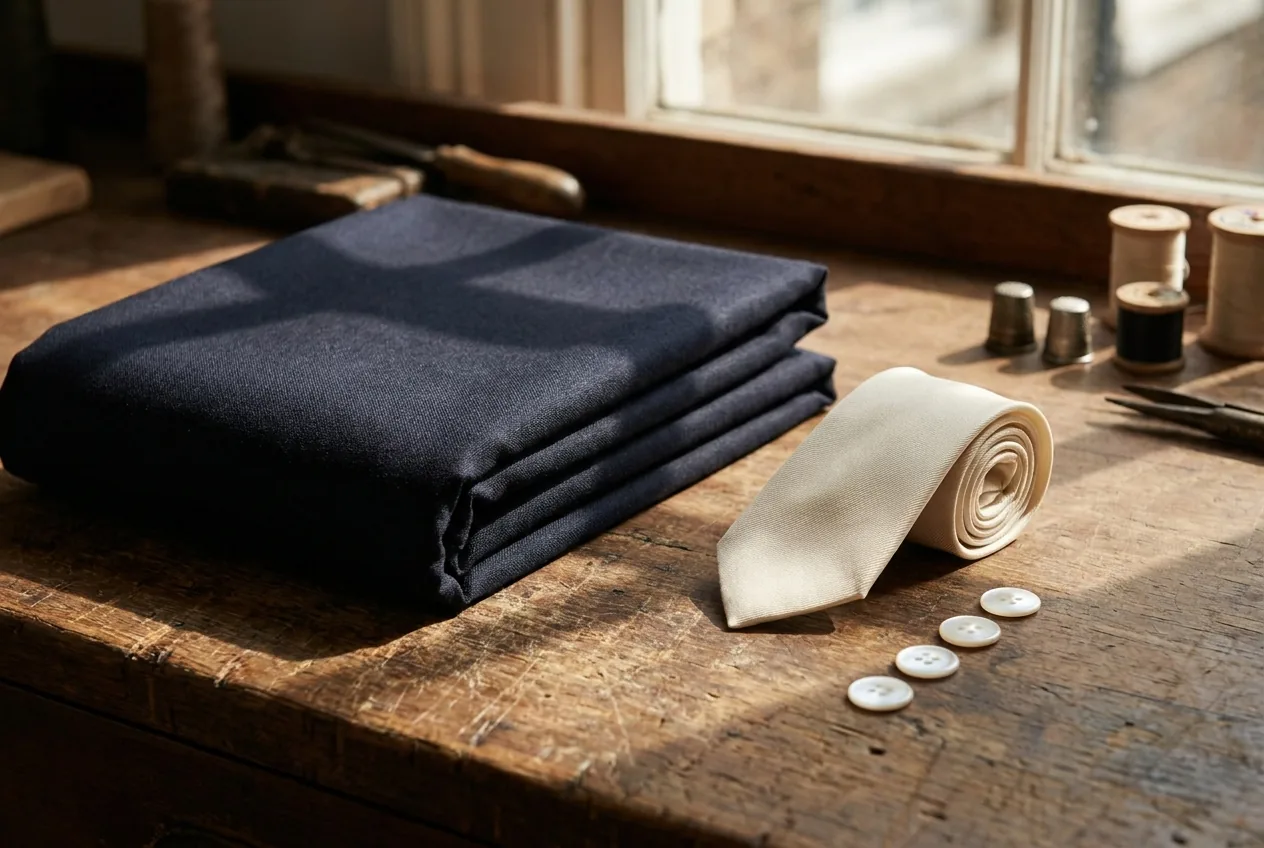
Read enough wedding-suit horror stories and they start to share a shape. The suit was wrong, and there was no time left to fix it: a remake the shop could not promise before the date, the wrong rental size arriving a day before the photographs, alterations finished the morning of. In almost every one, the problem was found after the last day anyone could have fixed it.
So plan the groom’s suit backwards, from one question: when will you find out if something is off, and how much time will be left?
Suit or tuxedo?
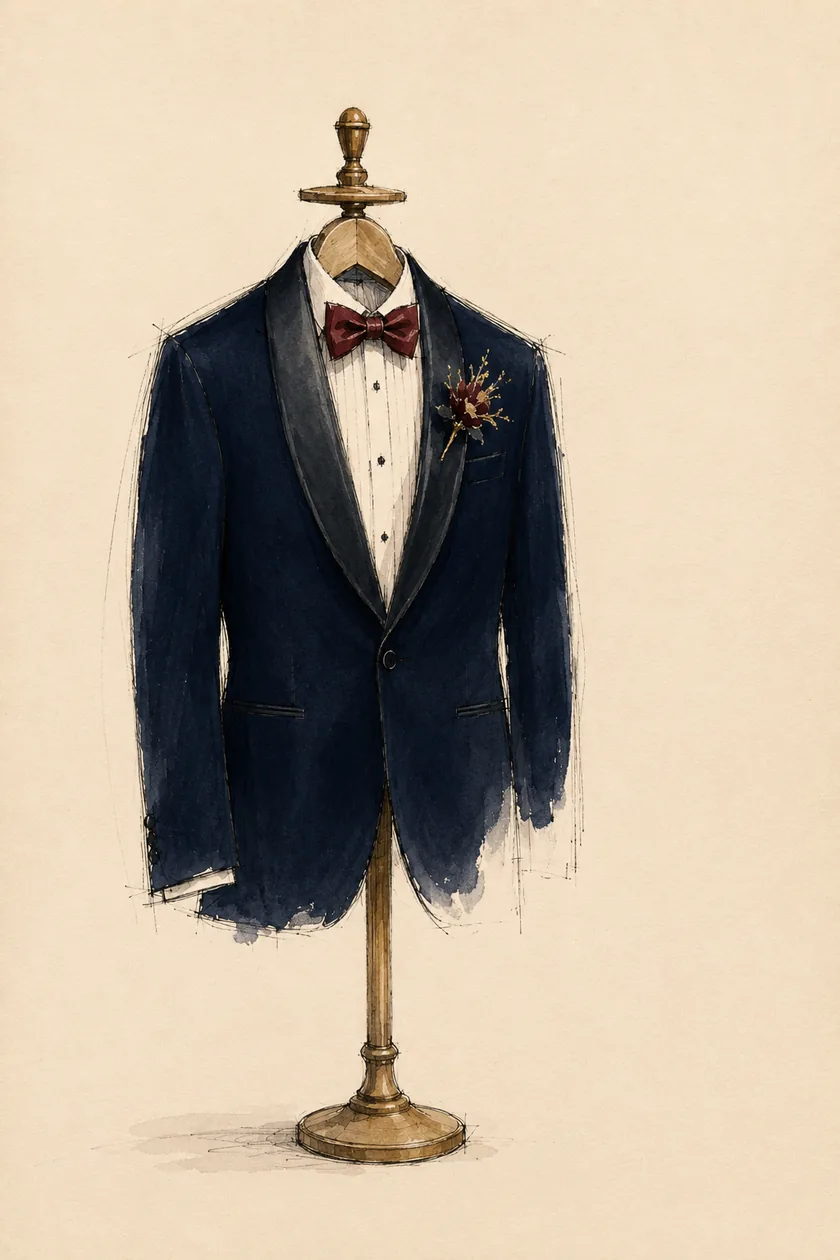
The invitation decides. If it says black tie, the groom wears a dinner suit: black tie, decoded, and the custom tuxedo if you are having one made. For a daytime, outdoor or less formal wedding, a suit is right, and it is also the one you will wear again.
Which colour will still look right in the album?
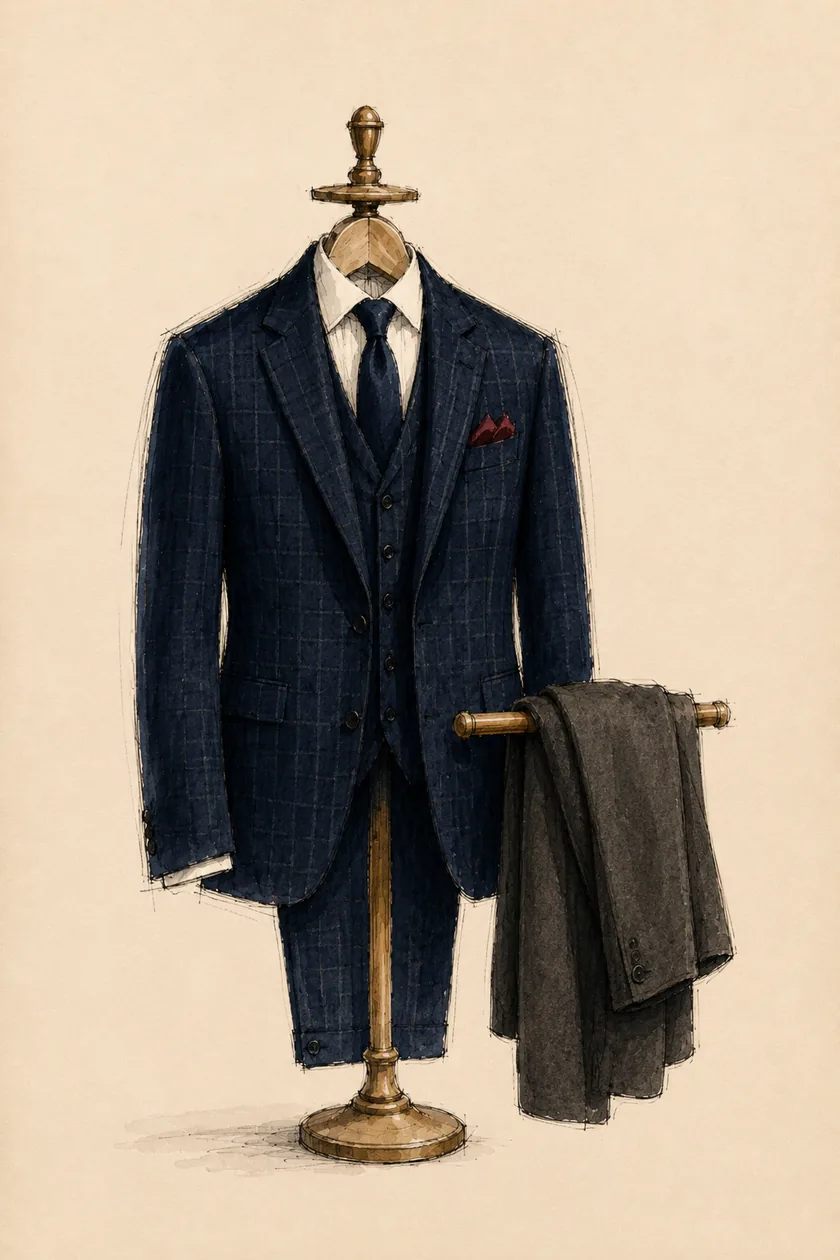
Navy is the safest good choice: rich in photographs, right in any season, and wearable for years afterwards. Why navy works. Charcoal is more formal and flatters almost everyone. Earth tones (sage, tobacco, taupe) are lovely outdoors by day, but they look more like their year in a photograph twenty years on, so weigh that against wearing it again.
When do you find out if it’s wrong?
Every route has a moment when you see the real garment on your body. What matters is how far that moment is from the wedding.
| Route | When you see it on you | What can still change |
|---|---|---|
| Rental | Usually at pickup, often days before | A different size, if there is one in stock |
| Off the rack, altered | In the shop, before you pay | Sleeves, trouser length, waist; the shoulders and jacket length are what they are |
| Made to measure | At the one fitting on the finished suit | Lengths, waists, how the collar sits, and small changes to the balance |
None of these is wrong. A suit bought off the rail that fits your shoulders is a perfectly good wedding suit. The point is to know your moment and put weeks behind it. For a made suit, that moment is the fitting, so the fitting date is the one to protect.
What can the fitting fix, and what can’t it?
The fitting can change sleeve length, trouser length and how much the trousers break on the shoe, the waist of the jacket and the trousers, a collar that stands away from your neck, and a little of how the jacket hangs front to back.
What it can barely touch is shoulder width. Narrowing a jacket’s shoulders is close to rebuilding it, and widening them is rarely possible. A jacket can be shortened a little but hardly ever lengthened. That is why the first appointment matters more than the fitting: it is where the shoulders, the jacket length and the posture get decided. Sam measures you and does the fitting himself, so the man checking the suit is the man who took the numbers.
How do you test it at the fitting?
A mirror shows you standing still, facing forward. The wedding asks for more than that, so test it the way the day will.
- Turn round. At most ceremonies the couple face the officiant and the guests look at their backs, sometimes for half an hour. Use a second mirror or a friend’s phone. The collar of the jacket should sit against your shirt collar with no gap, there should be no ridge of cloth just below it, and the vents should hang closed.
- Sit down. You will sign the register, sit through dinner and give or hear speeches. Unbutton the jacket as you sit; the trousers should not pull tight across the thigh or dig in at the waist.
- Reach up and forward. Hugs, the first dance, and at many Jewish weddings, being lifted on a chair. A little sleeve will ride up. If the whole jacket lifts off your shoulders, say so.
- Stand still for a photograph. A little shirt cuff should show below the sleeve, and the trousers should sit on your shoe the way you want them in every full-length shot.
Wear the shoes and the shirt you will wear on the day; what to bring has the list. If you don’t have the words, describe what you feel and where: “it pulls here when I reach”, “I can feel the collar at the back”, “the trousers catch when I sit”. That is all a tailor needs. How a suit should fit gives you the vocabulary if you want it.
When should you order?
Two to three months before the wedding is comfortable. The suit itself takes three to four weeks, with the fitting at the end, so ordering then puts the fitting a month or more before the day, with room for anything it turns up. The full wedding timeline.
Three things move the dates:
- A winter wedding. Orders placed from 20 November through February take about three weeks longer, and no rush is possible then.
- Weight you are losing. Tell Sam at the first appointment, and plan the fitting for when the scale has settled. Buying clothes while your weight changes.
- Leaving it late. A rush is about twelve days if the cloth is in stock, and it spends the margin you were protecting. A few days out, only alterations or a press are possible, never a new suit.
How should the groom stand apart from the party?
Quietly. A deeper cloth, a waistcoat where the groomsmen go without, or his own tie is enough to read as deliberate. Seven ways, drawn, and coordinating the whole party for the men beside you. If you are still weighing a rental, why grooms quietly regret it has the case both ways.
Open your calendar and put the fitting in first, a month or more before the wedding. The first appointment goes three to four weeks before that, which for most grooms lands two to three months out. Book a wedding appointment for that date. Sam measures at the studio in Vaughan, or comes to your office or home on request for the first appointment and the fitting, and can see the whole party in one block.