Choosing your fabric: a plain guide
Updated September 2026 · Sam’s Menswear editorial team
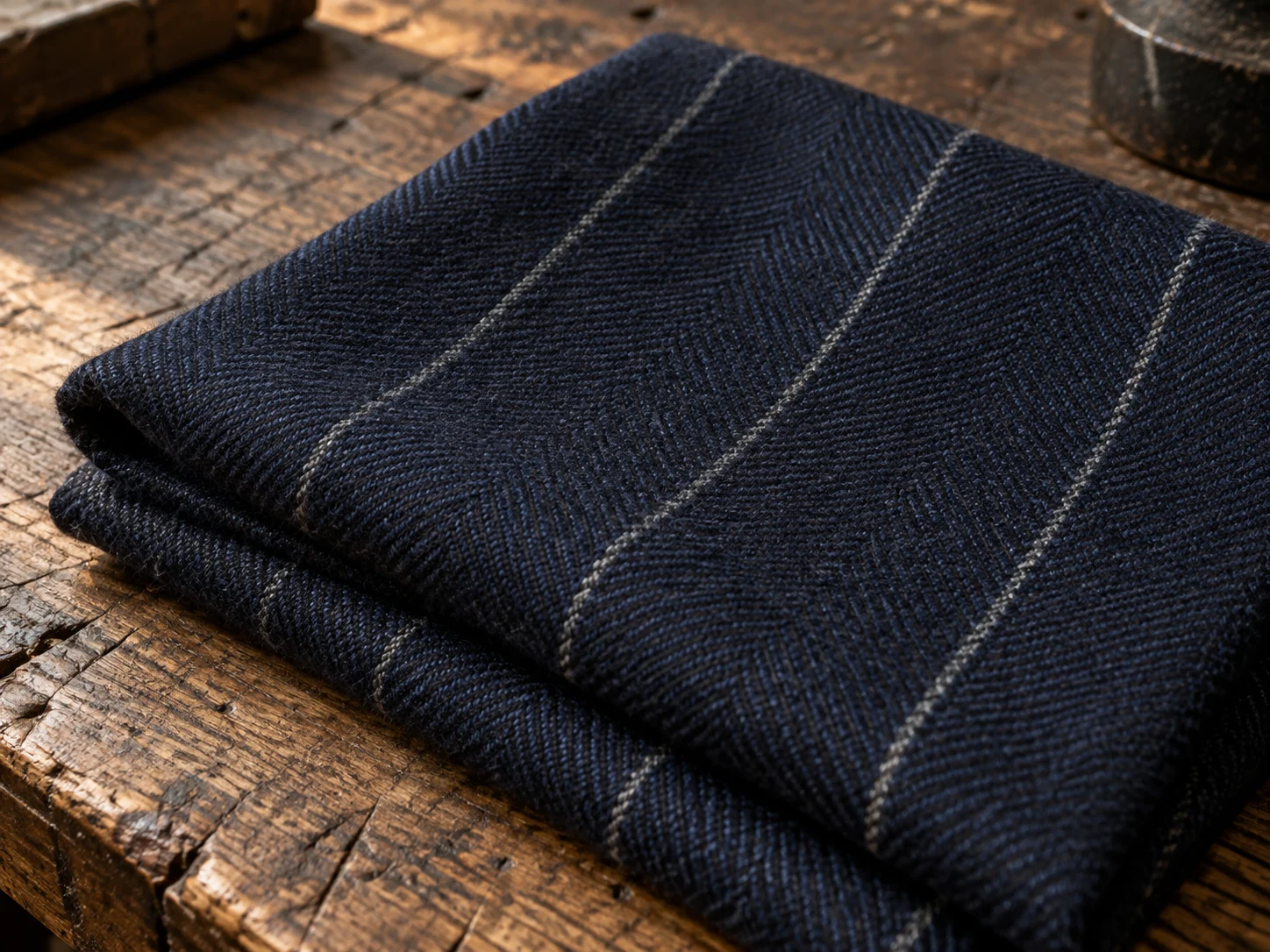
Choosing fabric starts with one question: where and how often will you wear it? Answer that and the rest (colour, weight, weave) falls into place. You don’t need to know a twill from a hopsack; that’s my job. Here’s the short version.
Start with the first two suits
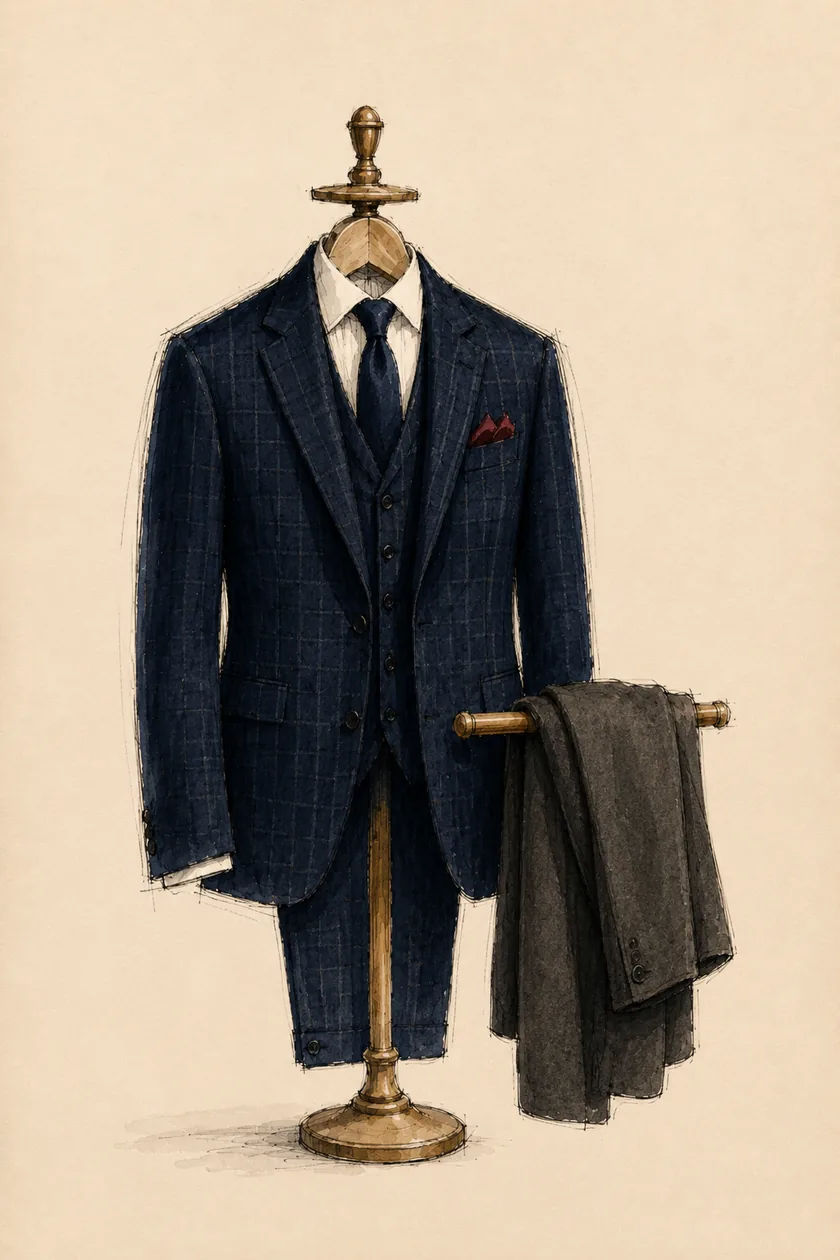
If it’s your first or only suit, make it navy. If it’s your second, make it charcoal. Between them they cover work, weddings, funerals and dinners, and they flatter nearly everyone. Patterns, browns, greens and lighter shades are suits three and four, earned once the basics are covered.
Winter vs summer
Fabric weight, measured in ounces, decides the season:
- Winter. A mid-weight worsted or a flannel around 11–13oz. Warm, holds its press, heavy enough not to crease on the drive downtown. I’ll cut the jacket with room for a proper overcoat on top.
- Summer. High-twist fresco, linen or wool hopsack around 8oz. Open weaves that breathe and travel. Linen creases by design; if that bothers you, we go fresco.
What the “Super numbers” mean
Super 100s, 120s, 150s measure the fineness of the wool fibre. Higher is finer and softer, and more delicate. A Super 150s feels beautiful and marks easily; a Super 110s is tougher for daily wear. Finer isn’t always better: it depends on how hard the suit will work.
Colour for your skin
Deep, cool shades (navy, charcoal, midnight) suit almost everyone. If you’re fair, mid-greys and blues read softer on you; if you’re darker or warmer, browns, greens and richer tones come alive. I’ll hold the fabric to your face in daylight before you commit; it’s the only test that matters.
Reading a swatch
A dozen words cover most of what’s in the library. Learn them and a swatch stops being a colour and starts being information.
- Twill — a diagonal weave, the default for most suiting. Durable, drapes well, hides light soiling better than a flat weave.
- Pinstripe — a fine, closely-spaced stripe woven into the cloth, not printed on it. The classic business stripe.
- Chalkstripe — a softer, slightly blurred stripe, wider-spaced than a pinstripe. Reads less formal, more forgiving.
- Birdseye — a small, all-over dot weave. From a few feet it looks like a plain solid with more depth.
- Sharkskin — a two-tone diagonal weave that shifts faintly as you move. More texture than a flat worsted, less pattern than a check.
- Herringbone — a zigzag weave, the signature of a tweed jacket. Warmer and more textured than suiting cloth.
- Houndstooth — a broken, jagged check, technically a variant of twill. Bold at a large scale, quiet at a small one.
- Glen check — sometimes called Prince of Wales check: bands of woven pattern, often with a fine overcheck in a contrast colour.
- Windowpane — a wide, simple check that looks like a pane of glass laid over the cloth.
- Flannel — brushed worsted wool, soft-handed and warm. The standard winter cloth.
- Hopsack — an open basket weave, breathable and slightly textured. The classic unlined-feeling summer jacket.
- Fresco — a high-twist worsted, spun tight enough to spring back rather than crease. A cloth built to survive a humid day.
- Barathea — a fine, pebbled weave with almost no shine, used almost exclusively for dinner jackets and tuxedos.
- Melton — a dense, felted wool with no visible weave, used for outerwear collars and heavier coats.
- Donegal — a tweed flecked with small dots of contrasting colour, spun into the yarn rather than woven as a pattern.
None of that replaces holding the cloth. Ten of the library’s fabrics are photographed as cloth and again cut into a jacket, which is closer than a name on a page, but a screen still isn’t daylight on your own face.
Vegan & wool-free
Want no wool? I keep vegan suiting and shirtings: recycled and plant-based fabrics that tailor and press well. They’re tagged in the library.
See them for yourself
Browse the fabric library, a colour and weave reference you can filter by season, then design your suit or bring your shortlist to the fitting, where Sam puts the actual fabric in your hands.