What a custom suit actually costs in Toronto
Updated November 2026 · Sam’s Menswear editorial team
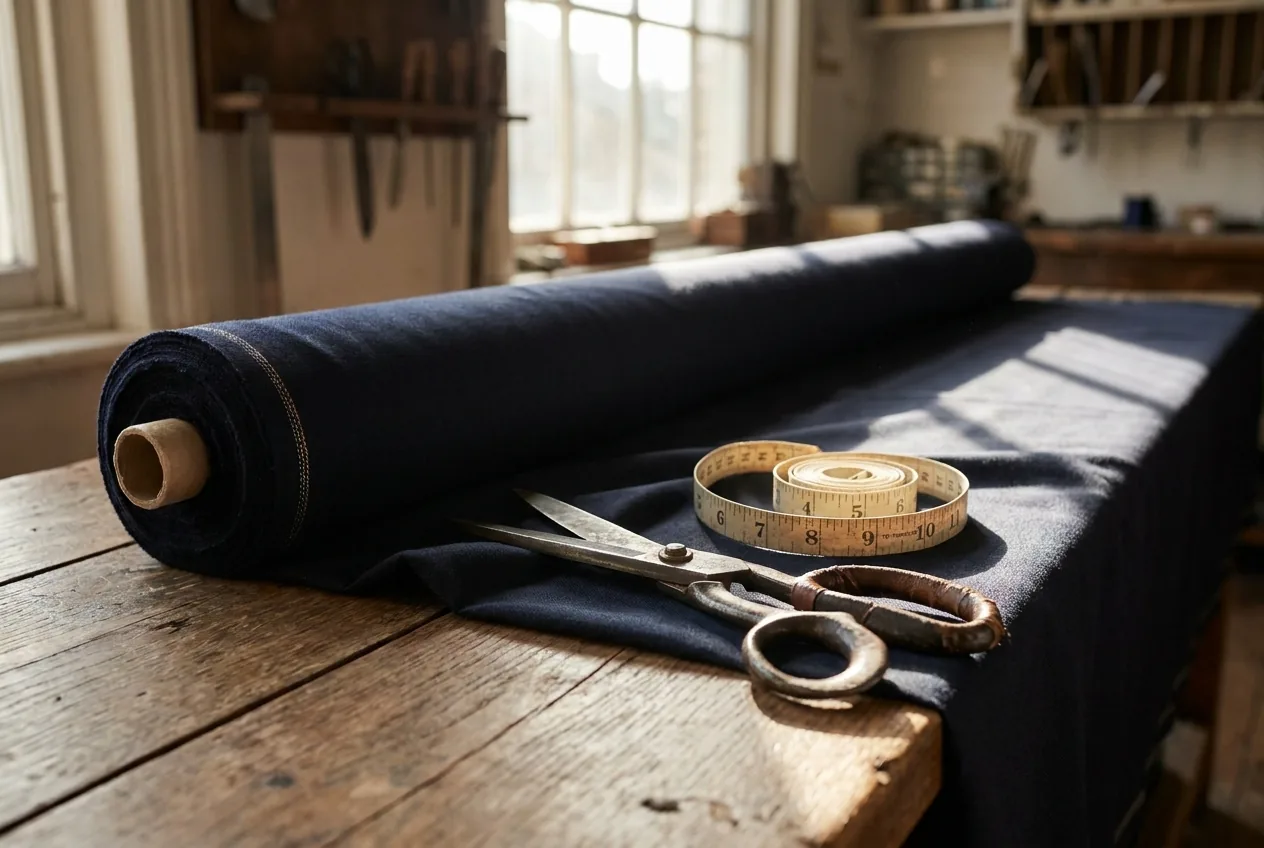
Most men who search for the price of a custom suit have the same two worries. Why won’t any tailor put a number on the website? And once I’m in the room, how do I stop it from climbing?
The first has a dull answer. The price depends mostly on the cloth, and nobody can quote cloth you haven’t picked yet. The second has a practical answer, and most of this page is about it.
Which “tailored suit” are you pricing?
The word covers two different jobs, and search results mix them up. That is why the numbers you find online swing so wildly.
- Altering a suit you already have. Hems, sleeves, the waist, sometimes the back seam. You pay for the work, job by job.
- Having a suit made to your measurements. You pay for the cloth, the construction and the hours, as one garment.
If your current suit fits across the shoulders and only the length and waist are wrong, alteration is the cheaper and sensible answer. Shoulders are the one thing a tailor can barely change. If they are wrong, the suit will never sit right whatever you spend on it. Our guide on when to alter and when to replace walks through the checks, and the alterations page covers what Sam takes on.
How do the three ways of buying a suit compare?
| Route | What you get | Fittings | Where the money goes |
|---|---|---|---|
| Off the rack, then altered | A factory size, adjusted at the hem, sleeves and waist | Usually one, for the alterations | The suit, plus each alteration |
| Made to measure | A pattern cut from your measurements, in cloth you choose | One on the finished suit | Mostly the cloth and the construction |
| Bespoke | A pattern drafted from scratch, built up over several fittings | Several, on a part-made garment | Many more hours of hand work |
Sam makes suits to measure from his own measurements, taken at the studio in Vaughan or at your office or home in Toronto on request. There is one fitting on the finished suit, and alterations after delivery are included. Our guide to made to measure vs bespoke explains where the line between the two really falls.
What actually moves the price?
Three things, in order of how much they matter.
- The cloth. This is the biggest lever by a distance. A plain navy worsted and a fine Italian wool or a mohair blend sit at very different prices. One thing shoppers rarely hear: a higher “Super” number means a finer, softer yarn, not a tougher one. A Super 150s suit worn hard every weekday will shine and wear sooner than a sturdier Super 100s. The most expensive cloth on the shelf is often the wrong one for a suit you live in.
- The construction. Inside the jacket front is either a canvas, stitched in so it moulds to you over time, or a fused interlining glued to the cloth. Fused fronts are cheaper and common on rack suits. After enough heat and dry cleaning, the glue can let go and the chest ripples, which is very hard to fix. Sam’s jackets are half canvas by default, with full canvas on the dearer cloths. The difference is set out in fully canvassed vs fused.
- The details. A waistcoat, a second pair of trousers, a special lining, working cuff buttons. Each is small money, but they add up. The one most worth paying for is the second pair of trousers. Trousers wear out first, and a spare pair can double the life of the jacket.
How do you work out cost per wear?
Divide what you paid by the number of times you will realistically wear it before it is done. Take two made-up round numbers. A $400 suit worn 20 times before it shines and sags costs $20 a wear. A suit at three times the price, worn 200 times over the years, costs $6.
Two things push that number down further. The first is rotation. Wool needs a day on a hanger to recover its shape, so two suits worn on alternate days outlast one suit worn every day. The second is refitting. A made-to-measure suit can be let out or taken in as your body changes. A fused rack suit that no longer fits usually goes in the bin. Our suit care guide covers the rest.
How do you avoid being upsold?
Go in with a plan.
- Say your ceiling out loud at the start. A good tailor will work to it, and you will see quickly if one doesn’t.
- Ask to see cloth from two or three price levels side by side, in the same colour. Under good light, the difference (or the lack of one) is obvious.
- Ask what the quote includes. A fitting? Alterations after delivery? The lining? A second pair of trousers?
- Ask how payment works. At Sam’s it is half when you order and half when you pick up the suit.
- Get the firm number before anything is cut, with the cloth named on it.
When is spending less the right call?
Sometimes the honest answer is “don’t buy custom yet.” Buy off the rack and alter it in these cases:
- A teenager who is still growing. See suits for kids and teens.
- A one-off themed event.
- A body that is mid-change, such as during a weight-loss plan.
Spend on a made suit when you will wear it often (court, the office, the sales floor), when it is your wedding suit, or when rack suits have never fitted you. That last group is covered in suits for big, tall and short men.
What should you do next?
Bring the suit you wear most to a first appointment. Sam will tell you whether it is worth altering or worth replacing. If it is worth replacing, he will put cloth from more than one price level side by side so you can decide with the numbers in front of you. A suit takes three to four weeks. Orders placed between November 20 and February take about three weeks longer, so plan around any date that matters.