Prêt-à-porter, made-to-measure, bespoke: what the words actually mean
Updated August 2026 · Sam’s Menswear editorial team
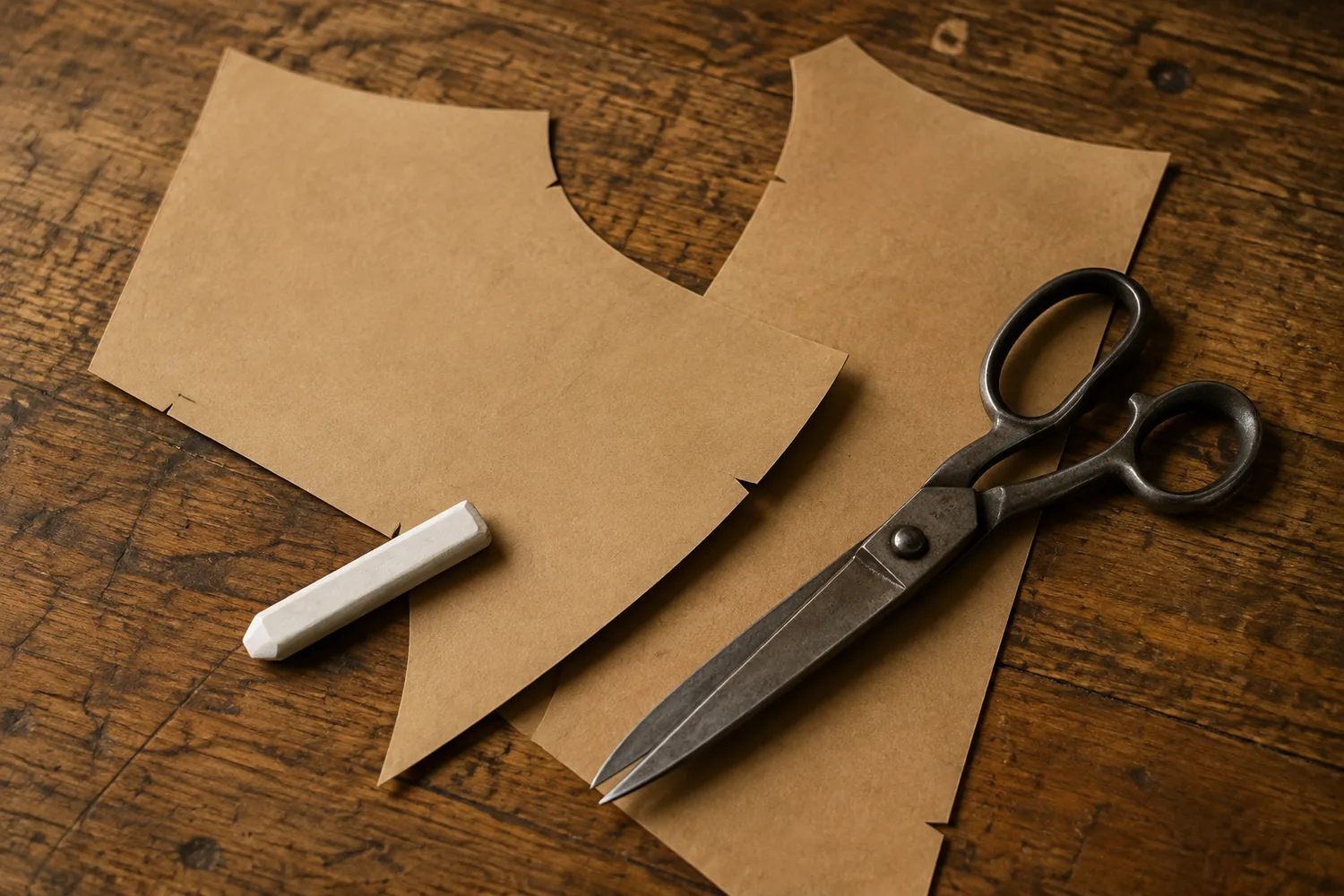
Four words get used for suits, and only two of them still mean anything reliable. Prêt-à-porter is ready-to-wear, cut to an average body and sold finished. Made-to-measure adjusts an existing pattern to your measurements. Bespoke drafts a new pattern from scratch for one body. Custom means whatever the person selling it would like it to mean, because nobody has ever defined it.
That sounds cynical. It is actually the useful part, and there is a specific date when it became true.
The year bespoke stopped being a promise
In 2008 the Savile Row tailors took a complaint to Britain’s Advertising Standards Authority. A Bond Street firm called Sartoriani was advertising suits as bespoke. Measurements were taken in London, then sent to a factory in Germany where the suits were made substantially by machine, and once they came back the customer got a single alteration.
Savile Row argued that this was made-to-measure with a borrowed name. The ASA sided with Sartoriani. Its reasoning was that while a customer would expect a bespoke suit to be made to his measurements, most would not expect it to be entirely hand-made, and plenty of respectable firms already used the word for machine-assisted work.
So the word survived the argument and lost the meaning. In advertising, bespoke and made-to-measure are effectively synonyms. Anyone can print it.
This is worth knowing not to make you suspicious of everyone, but because it changes the question. The label is not evidence. The process is. Ask about the process and any honest tailor will happily tell you.
Prêt-à-porter: ready-to-wear, and not an insult
Literally “ready to carry”, the French phrase for clothing made in standard sizes and sold finished. It entered the language in the middle of the last century as the respectable alternative to couture, when designers began producing collections ordinary people could actually buy.
It is worth reclaiming the word from its own snobbery. A good ready-to-wear suit from a house that cuts well, in a size close to your build, will beat a badly made suit in any other category. The limitation is not quality, it is arithmetic: the pattern was cut for an average of many bodies, and yours is one body.
What a tailor can change afterwards is real but bounded. Waist, hem and sleeve length are straightforward. The shoulders, the chest and the armholes are built in at the factory and are effectively fixed, which is why a jacket that is wrong across the shoulders is wrong forever.
Why an off-the-rack suit will never quite fit →
Made-to-measure: your numbers, someone else’s pattern
A block pattern already exists. Your measurements adjust it: lengthen the sleeve, let out the seat, drop a shoulder, change the rise. The adjusted pattern goes to a workshop, the garment is made, and you are fitted when it is finished.
This is where the overwhelming majority of good custom tailoring sits, and for most men it is the right answer rather than a compromise. You get a garment cut to your measurements, your choice of fabric, lining, buttons and details, and a fit that ready-to-wear cannot reach, without the time and cost of the full bespoke process.
The honest limit: a block pattern assumes a broadly conventional build. The further your body sits from that assumption, the harder the block works, and at some point adjusting it stops being enough.
Made-to-measure against bespoke, in practical terms →
Bespoke: a pattern that did not exist before you
The traditional definition. A cutter takes your measurements and your posture and drafts a paper pattern for you alone. Nothing is adapted, because there was nothing to adapt. The fabric is cut to that pattern, basted together, and fitted on you while it is still in pieces, then taken apart and corrected, sometimes several times, before it is finally made.
The word comes from fabric being “bespoken”, spoken for by a particular customer, which is a nice reminder that the term originally described a transaction rather than a technique.
That intermediate fitting is the real dividing line, and it is the thing to ask about. Made-to-measure fits you when the garment is finished. Bespoke fits you while it is still being built. Everything else, the hand-stitching, the pattern kept on file, the fabric range, appears in both.
Custom: the word with no definition at all
There is no agreed meaning. It gets used for genuine bespoke, for made-to-measure, for a ready-made suit with a monogram, and for choosing a lining colour from six options on a website.
That does not make it a dishonest word, and this site uses it, because it is simply the word most people reach for when they mean “made for me rather than bought off a shelf”. But it carries no information on its own. When you see it, treat it as the beginning of a question rather than an answer.
The second axis, which matters more than the first
Here is the part almost nobody explains, and it is the reason two suits described identically can be entirely different objects.
How the pattern is made is one axis: ready-to-wear, made-to-measure, bespoke. How the jacket is built is a completely separate one:
- Fused. The front of the jacket is glued to a synthetic interfacing. Fast, cheap, and it can bubble or delaminate after enough dry cleaning. Once that happens the jacket is finished.
- Half-canvassed. A layer of canvas runs through the chest and lapel, with fusing lower down. The canvas moulds to your chest over time.
- Full-canvassed. Canvas through the entire front. It moves with you, shapes to you and lasts longest.
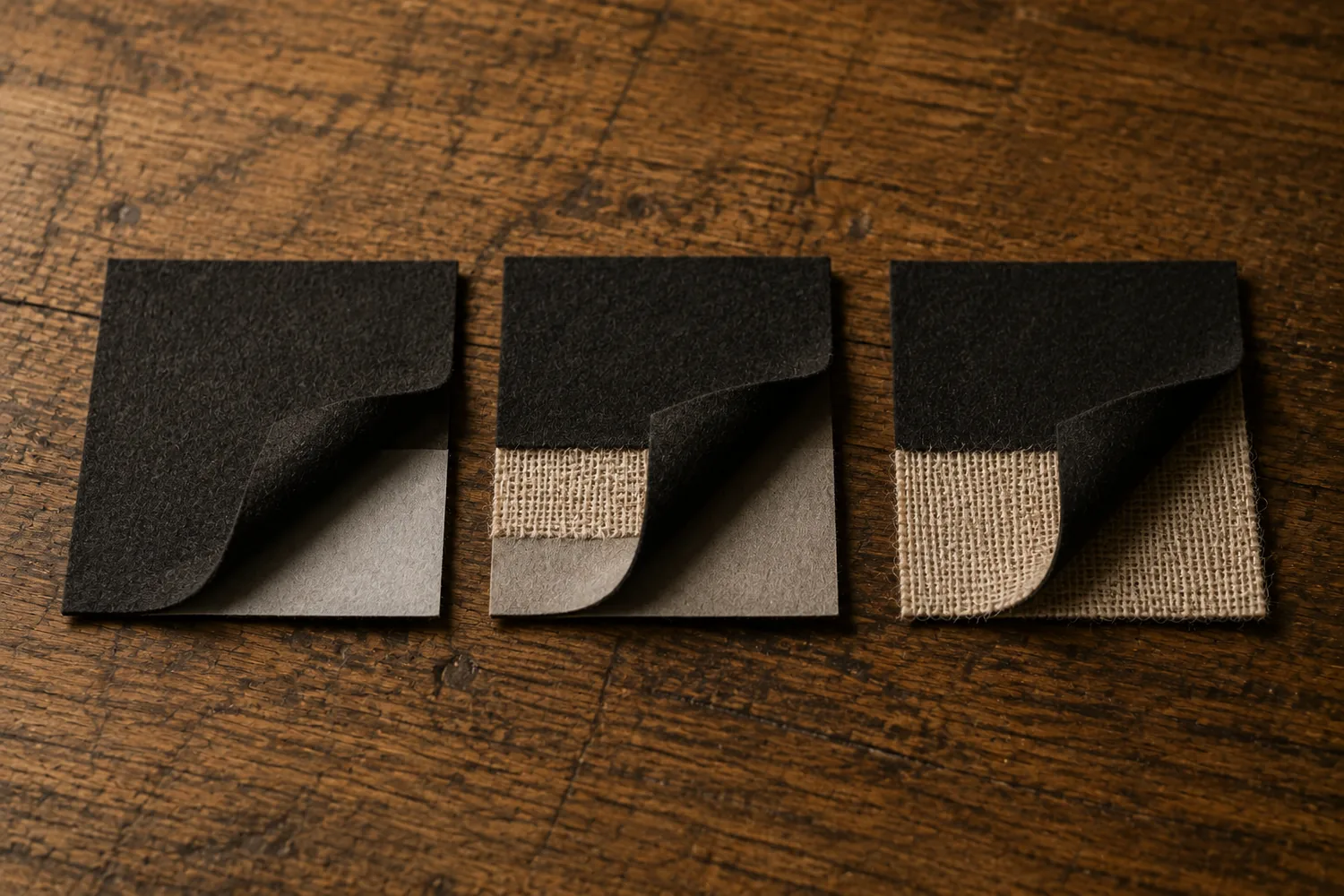
The two axes are independent. A fused bespoke suit exists. So does a full-canvassed made-to-measure. If you only ask which category the suit falls into and never ask how it is built, you can pay for the better word and take home the worse garment.
Fully canvassed against fused, explained →
What to ask, whoever you are buying from
Five questions that cut through every label:
- Is the pattern drafted for me, or adjusted from an existing block? This is bespoke against made-to-measure, stated plainly.
- Will I be fitted before the garment is finished, or after? The single most revealing question of the five.
- Is it fused, half-canvassed or full-canvassed? A tailor who cannot answer immediately is not one to buy from.
- Is the pattern kept for next time? It decides what a second suit costs you in time.
- Who does the alterations, and are they included? Fit is not a single event, and a garment you wear for a decade will need work.
Any tailor worth your money will answer all five without flinching. The answers matter more than any word on the awning.
Where Sam actually sits
Made-to-measure, mostly, and he will say so.
Measurements and fittings are done by Sam personally, the pattern is kept on file so a second garment does not start from nothing, and jackets are half-canvassed by default with full canvas on the dearer fabrics. Nothing is fused. For complex builds he will make a sample garment first, and the traditional pieces, kapotas and bekishes, are made bespoke.
The reason for the honesty is self-interested as much as principled: made-to-measure is the right answer for most men, and a tailor who tells you that has no reason to inflate the vocabulary.
What actually happens at a first fitting → · How a suit should fit →