What “fully canvassed” means and why you should care
Updated July 2026 · Sam’s Menswear editorial team
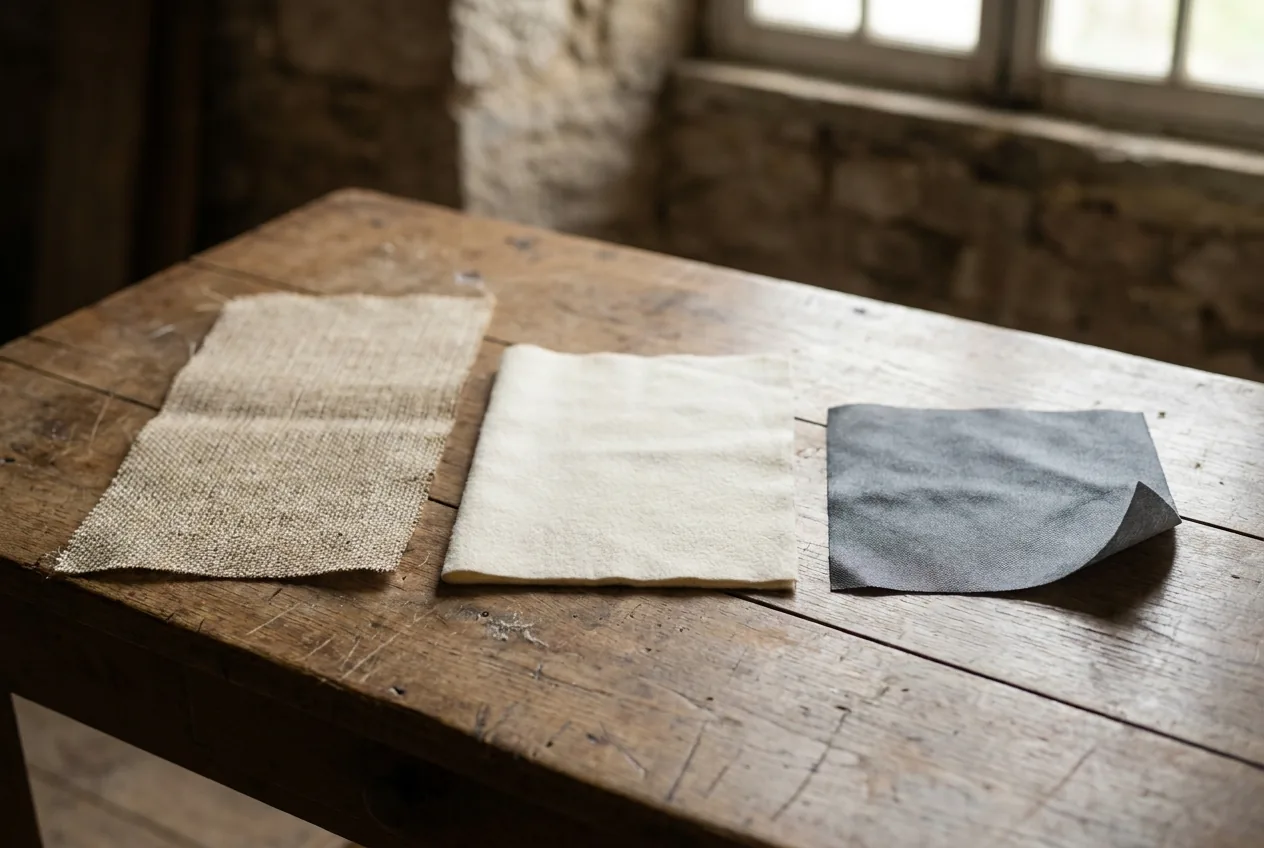
“Fully canvassed” means the inner structure of the jacket (a layer of horsehair and wool canvas) is stitched in by hand rather than glued. That canvas floats between the outer fabric and the lining, so the jacket drapes to your body, breathes, and holds its shape for years instead of bubbling and peeling like a glued suit does.
If you only remember one thing: sewn lasts, glued doesn’t.
What does “fully canvassed” actually mean?
It means a full-length layer of canvas is hand-stitched inside the jacket, from shoulder to hem, front to bottom. That canvas is the skeleton. It’s what gives a jacket its chest, its roll, and its structure.
The canvas is usually a blend of horsehair and wool: springy, resilient stuff that wants to hold a shape. It’s not attached to your outer fabric with adhesive. It’s tacked in with thousands of tiny loose stitches so it can “float,” moving with the fabric instead of fighting it. On a custom suit, this is the difference between a garment that molds to you and one that just sits there.
What’s the difference between canvassed, fused, and half-canvas?
Three ways to build the inside of a jacket. Sewn, glued, or a bit of both.
- Fully canvassed: canvas hand-stitched through the whole front. Best drape, best longevity, most labour. This is real tailoring.
- Fused: a sheet of interfacing is glued to the back of your outer fabric with heat and adhesive. Fast, cheap, and how most off-the-rack suits are made.
- Half-canvas: canvas sewn through the chest and lapels (where it matters most), fused below. A sensible middle ground and genuinely good value.
Most suits under a few hundred dollars are fused. There’s nothing evil about a fused jacket for occasional wear. The problem is what happens when you actually live in it.
What is the “bubbling” problem?
Bubbling is when the glue in a fused jacket lets go and the outer fabric separates from the layer underneath. You get ripples and bubbles across the chest and lapels, and there is no fixing it.
Here’s why it happens: body heat, sweat, rain, and especially dry-cleaning solvents slowly break down the adhesive bond. Over a few years the glue fails in patches. The fabric lifts. Those bubbles are permanent. The jacket is done. A canvassed suit can’t bubble because there’s no glue to fail. The layers were never glued in the first place.
If you’ve ever pulled an older suit out of the closet and found the lapels looking wavy and warped, that was fusing giving up.
How does canvas affect how a suit drapes and moves?
Because the canvas floats freely, it lets the fabric fall naturally over your chest and roll softly through the lapel. A fused jacket is stiffer and flatter; the glue holds everything rigid.
Wear a canvassed jacket for a season and something nice happens: the canvas slowly molds to your posture, your chest, the way you actually stand. It starts to feel like your jacket, not a jacket. That’s the “soft roll” tailors talk about. You don’t get that from glue. Glue can’t learn your shape.
How long does a fully canvassed suit last?
With reasonable care, a well-made canvassed suit lasts many years (often a decade or more) and the structure only gets more comfortable with age. A fused suit worn regularly often starts bubbling somewhere in the 2–5 year range.
So the math is simpler than it looks. A canvassed suit costs more up front and less over its life, because you’re not replacing it. If you wear a suit for work or you’re building a wardrobe you’ll keep, canvassed is the honest choice. See how to care for your suit to make it last, and go easy on the dry cleaning either way.
How can I tell if a suit is canvassed or fused?
Do the pinch test. Grab the outer fabric at the bottom of the jacket front, near the buttons, and pinch the two front layers apart with your fingers.
- If you can feel a third, floating layer between the outer fabric and the lining, that’s canvas.
- If the front feels like one stiff, glued-together board, that’s fused.
It’s a five-second check and it tells you almost everything about how the jacket was built. Salespeople won’t always volunteer it; the pinch test doesn’t lie.
Is fully canvassed worth it for me?
If you’ll wear it often, yes. If it’s one wedding and then the back of the closet, half-canvas or even a good fused suit is fine.
At Sam’s, everything we build custom is fully canvassed. That’s not an upsell; it’s just how we’ve made suits for 30-plus years. For a wedding you’ll want photographed forever, or a business wardrobe you’ll wear five days a week, the drape and the longevity earn their keep. And it starts with the fabric: browse the fabrics and we’ll build the structure around it.
Want to feel the difference for yourself? Bring your current suit to the studio and we’ll do the pinch test together on the spot. Book an appointment or start to design your suit whenever you’re ready.
Related reading: Custom vs. rental for your wedding suit · The navy suit · The interview suit