Made-to-measure vs bespoke: which do you actually need?
Updated July 2026 · Sam’s Menswear editorial team
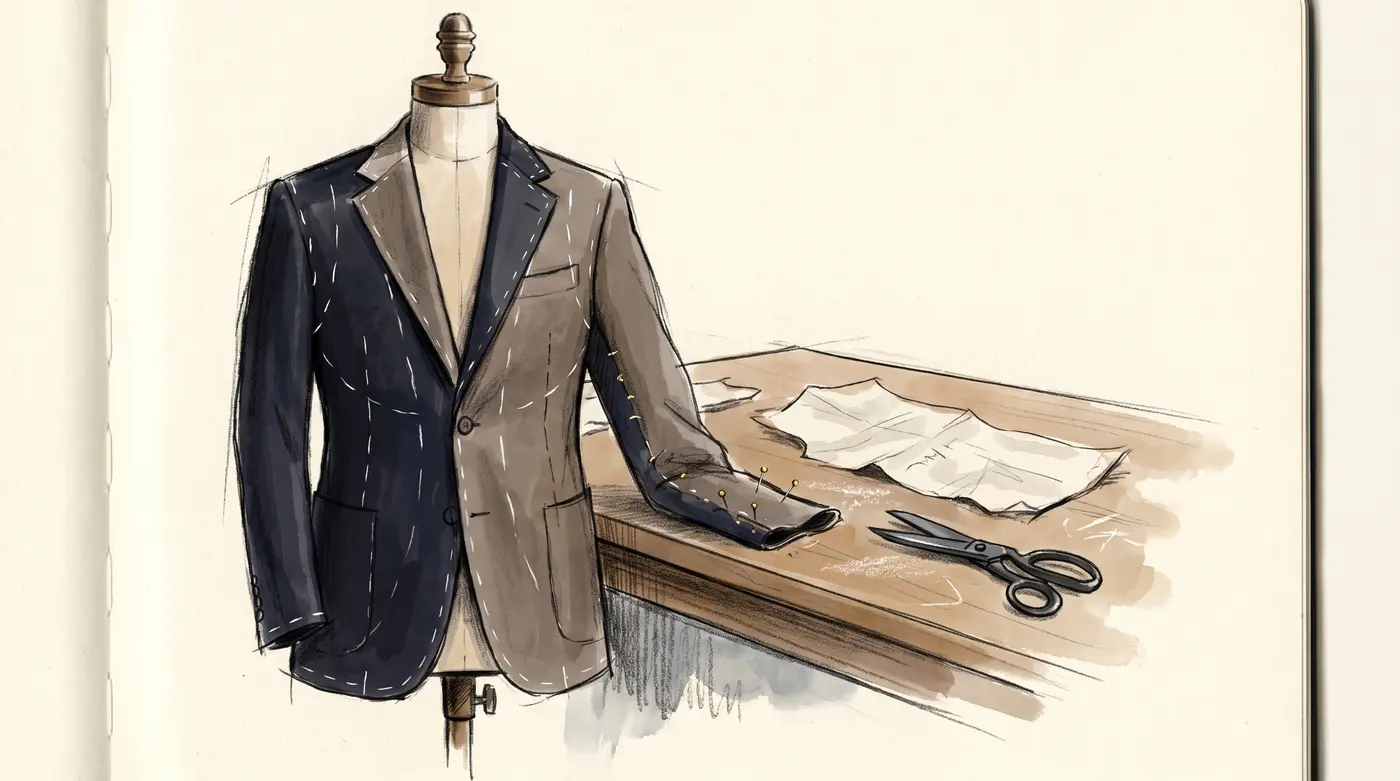
The short version: made-to-measure adjusts an existing pattern to your measurements and is delivered finished. Great fit, faster, more affordable. Bespoke builds a brand-new pattern from your body, cut and sculpted across multiple fittings: the best possible fit and total control, at more time and cost. Most people are genuinely well served by made-to-measure. Bespoke earns its price when your body is hard to fit or the suit really matters.
After 30-plus years at the bench here in Vaughan, I’ll tell you straight: I fit both, and I steer people toward the one that’s right for them, not the one with the bigger ticket. Here’s how to know.
What’s the actual difference between made-to-measure and bespoke?
Made-to-measure starts from an existing base pattern and adjusts it to your numbers. Bespoke starts from nothing: a pattern drafted from scratch to your body. That’s the real line.
With made-to-measure, we take your measurements, pick the closest block, and tweak it: sleeve length, waist suppression, jacket length, and so on. The suit comes back essentially finished. With bespoke, a paper pattern is drafted unique to you, the fabric cut fresh to it, and the suit built up over fittings and shaped directly on your body. One adjusts a good template; the other creates a template that only fits you.
Everything else (number of fittings, price, timeline) flows from that one difference.
Which one fits better?
Bespoke fits better at the extremes. For most regular builds, a well-executed made-to-measure suit fits so well you’d never know the difference. The gap only shows up when your body departs from the standard blocks.
If you’ve got even shoulders, a fairly proportional build, and no big posture quirks, made-to-measure will hug you beautifully. Where bespoke pulls ahead is the hard stuff: sloping or uneven shoulders, a prominent seat, a big drop between chest and waist, a stoop, a very short or very tall frame. A drafted pattern handles those cleanly instead of fighting a block that was never built for you. If that’s you, read suits for hard-to-fit bodies. That’s exactly where bespoke earns its keep.
How many fittings does each need?
Made-to-measure is usually one fitting, sometimes none. Classical bespoke, as practised in the old London houses, runs to two or three, including a baste fitting where the suit is loosely stitched in white thread and then opened up and re-cut.
That baste fitting is the heart of the classical method: the jacket arrives half-built, gets marked on the body, and is taken apart again. Here, the garment comes to your fitting finished and is corrected on you instead, and where a build is genuinely hard to fit Sam makes a sample suit to try on first. It reaches the same place by a different road. What you cannot do with made-to-measure, because there’s no pattern to reshape and the suit shows up finished. More fittings means more chances to correct, which is why bespoke gets closer to perfect.
What does each one cost, and where’s the smart spend?
Made-to-measure occupies the broad middle of the market; bespoke from an established tailor sits well above it and climbs from there with fabric and hand-work. The gap is mostly labour and fittings, not magic, and any tailor worth the name will quote your garment rather than wave at a range.
Here’s the math. If you need one sharp suit for interviews, work, or a wedding you’re attending, made-to-measure is the smart spend: you’re paying for fit and fabric, not for hours you don’t need. Bespoke is the smart spend when the suit is a centrepiece (your own wedding), when you’ll wear it constantly for years, or when off-the-rack and made-to-measure have simply never fit you right. Spend where it changes the outcome. For a full breakdown, see what a custom suit costs and is a custom suit worth it.
How long does each take?
Across the trade, made-to-measure runs roughly 4 to 8 weeks and bespoke 8 to 16, the difference being the extra fittings and hand-work. Here, a suit is three to four weeks. Rush the wrong one and you’ll feel it.
If your event is six weeks out, bespoke may not be realistic, and forcing it means cutting corners on the fittings that make it worth doing. Made-to-measure fits that window comfortably. If you’ve got a few months, either is on the table. Groom on a clock? Read the wedding suit timeline before you decide.
So which do I actually need?
Made-to-measure if you’re a fairly standard build, want one excellent suit, or you’re on a normal budget or timeline. Bespoke if you’re hard to fit, the suit is a big deal, or you’ll live in it for years.
Quick gut-check:
- Regular build, one good suit, sensible budget → made-to-measure. You’ll be thrilled.
- Odd fit history, big occasion, or a wardrobe you’ll wear hard → bespoke.
- Not sure? → come in. Ten minutes with a tape measure tells us more than any online quiz.
I’d rather sell you the made-to-measure that’s right than talk you into bespoke you don’t need. A suit that fits and gets worn beats an expensive one that sits in the closet. Whichever way we go, we start with the fabric and design the suit around your life, whether that’s a business, wedding, or traditional piece.
Still torn between the two? Book a first appointment and let the tape measure settle it. Ten minutes on your shoulders and drop tells me which route your body needs; bring your questions and I’ll answer them straight.