Is a custom suit worth it if you only wear a suit a few times a year?
Updated October 2026 · Sam’s Menswear editorial team
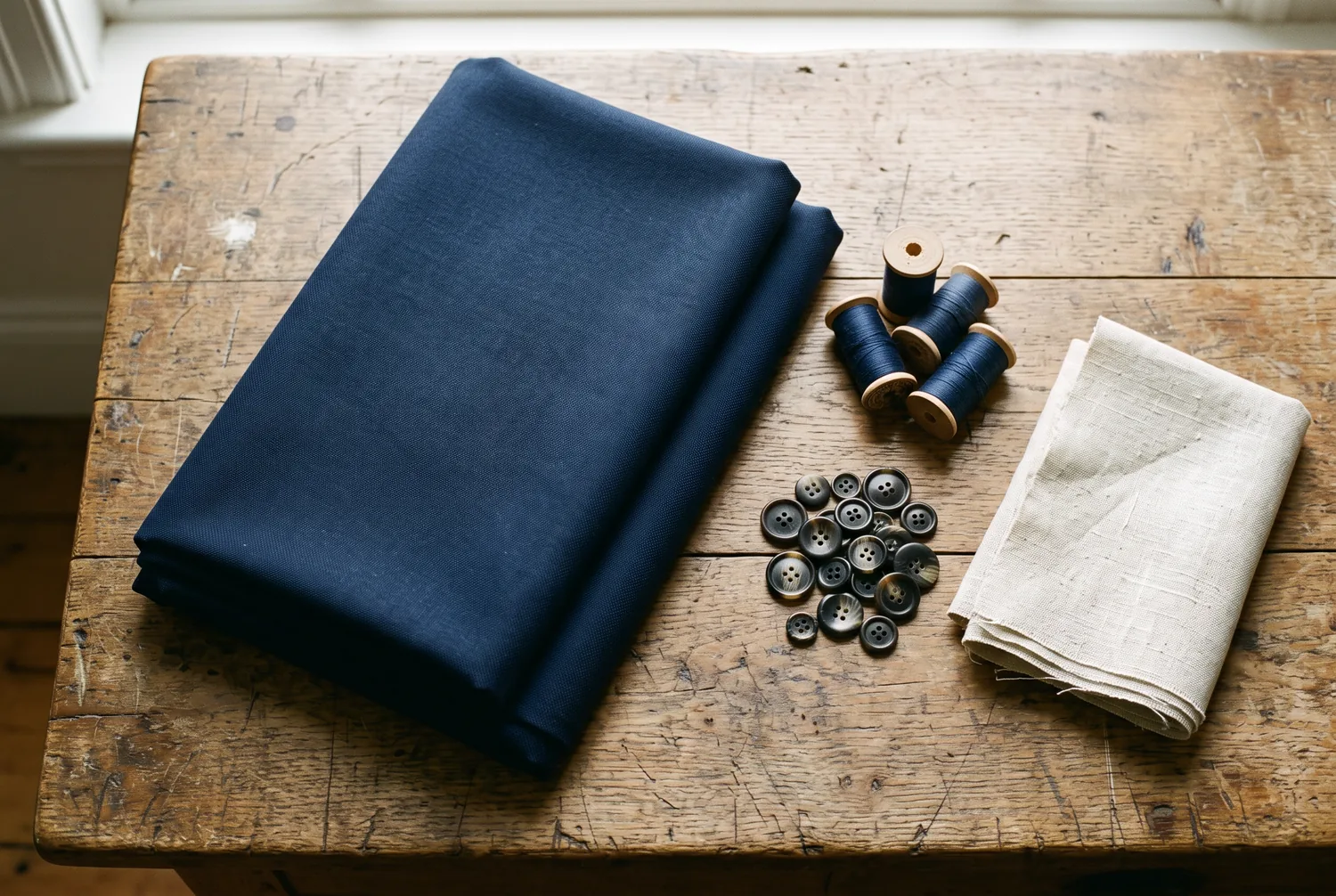
Most men asking this already accept that a custom suit can fit better than one off the rack. What they want to know is whether it’s worth it for someone who wears a suit to a couple of weddings, the odd funeral and perhaps one interview a year, and whether paying more simply buys a different set of problems: a suit that arrives wrong, then a second bill to have it fixed.
Both worries are reasonable. Three questions settle them: what your body does to a suit off the rack, how many times you can actually name that you’ll wear it, and what it costs you if the order goes wrong.
Will an off-the-rack suit with alterations do for me?
Find out in a shop before you decide anything. Ignore the size on the label and find the jacket whose shoulders fit: the seam ends where your shoulder ends, with no dent in the sleeve below it and no ledge of cloth past it. Then look at what’s left to fix.
- Only the sleeves, the trouser hems and the waist. These are routine alterations, and the result can look very good. Buy it and have it altered.
- The jacket that fits your shoulders won’t button, or the one that buttons collapses at the shoulder. No alteration will save either. The shoulders, chest and armholes are the parts a tailor can barely move; why your off-the-rack suit will never fit goes through that limit piece by piece.
- The jacket is fine, but no trousers work. Thighs that won’t go in, or a waistband that slides under the stomach. That’s a problem with the cut rather than the size, and trousers for a bigger belly explains why.
Men with a big drop from chest to waist, broad shoulders, a stomach that sits forward, long arms or short legs tend to land in the second or third group. Most men of middling build land in the first, and for them off the rack is often the sensible answer.
I only wear a suit a few times a year. How do I justify it?
Stop calling it an investment and count. Write down the occasions you already know about over the next two or three years: weddings you’re invited to, a family simcha, interviews, the Yom Tov days you dress for. Divide what you’d spend by that number. Then do the same for the cheaper suit, adding its alterations and the chance that you’ll replace it sooner.
Two things change the sum more than people expect.
- Shabbos counts. A man who wears a suit to shul every week isn’t an occasional wearer: that’s more than fifty wears a year. For him a well-made suit is closer to work clothes than to a special purchase.
- A suit that fits gets worn. The one that pulls at the shoulders tends to stay in the closet, which quietly raises its cost per wear.
There’s also a cost the price tag never shows: what happens when a suit fails close to the date. A rack suit that doesn’t work becomes a second suit bought in a hurry. A custom order that arrives wrong becomes a remake against the clock, or a bill from another tailor to correct it. That’s the fear behind most hesitation about custom, and it’s the right fear to have.
What should I ask before paying for custom anywhere?
“Custom” covers everything from a pattern drafted by hand to a form filled in online. The useful questions are all about what happens if it’s wrong:
- Who takes the measurements: a salesperson, an app, your partner with a tape, or the person who will cut and fit the suit?
- Who does the fitting, in person, and is it on the finished garment?
- If it needs correcting after you’ve taken it home, are those alterations included, or are they your bill?
- Is the jacket canvassed or fused? Fully canvassed vs fused explains why it matters.
- Is your pattern kept, so the next order doesn’t start from nothing?
Sam’s answers, in order: he measures you himself, and he fits you himself, on the finished garment. Alterations after delivery are part of the order. Jackets are half canvas as standard and full canvas on the dearer cloths. The pattern is kept, and a reorder from it takes two to three weeks. The price is agreed when you order, with half paid then and half when you collect.
What if my weight changes after I order?
A few pounds either way is ordinary, and a made garment can follow it. The trouser waist lets out through the centre back seam (how much trousers can be let out shows how to check yours), and the waist of a jacket can usually be taken in, or let out a little, at its seams. What doesn’t move is the shoulders and chest, so a large change in either direction means a new jacket.
If you’re partway through losing weight, wait until it has held before ordering anything important, and get through the meantime with a few pieces that fit now. Buying clothes while your weight changes sets that out. Because your pattern is kept, the later suit starts from your own numbers, adjusted, rather than from scratch.
When isn’t it worth it?
- You passed the shoulder test, you’re of middling build, and you’ll wear the suit a handful of times. Buy well and have it altered.
- The event is days away. A new garment can’t be made properly in that time, so the realistic options are altering or pressing a suit you already own. Sam’s fastest rush is about twelve days, and there’s no rush at all on orders placed from 20 November through February, when the workroom runs about three weeks slower.
What does the extra money buy that a rack can’t?
A pattern made to your measurements and kept for next time. Cloth chosen by daylight, rather than whatever happened to be in stock in your size. A canvas inside the chest of the jacket that settles to your shape as you wear it. Choices you make rather than accept, such as side adjusters instead of belt loops. And one person accountable from the first measurement to the last alteration, which is what answers the fear of it coming back wrong. What a custom suit involves here →
Take the suit you own now, or the one you nearly bought, to a mirror and do the shoulder test. If it fails at the shoulders, book a first appointment and bring it with you; it shows Sam in a couple of minutes what has been going wrong. If it passes, have it altered. Sam does alterations on suits, jackets and trousers whether he made them or not.