How to care for a suit: what wears one out in two years, and how to stop it
Updated October 2026 · Sam’s Menswear editorial team
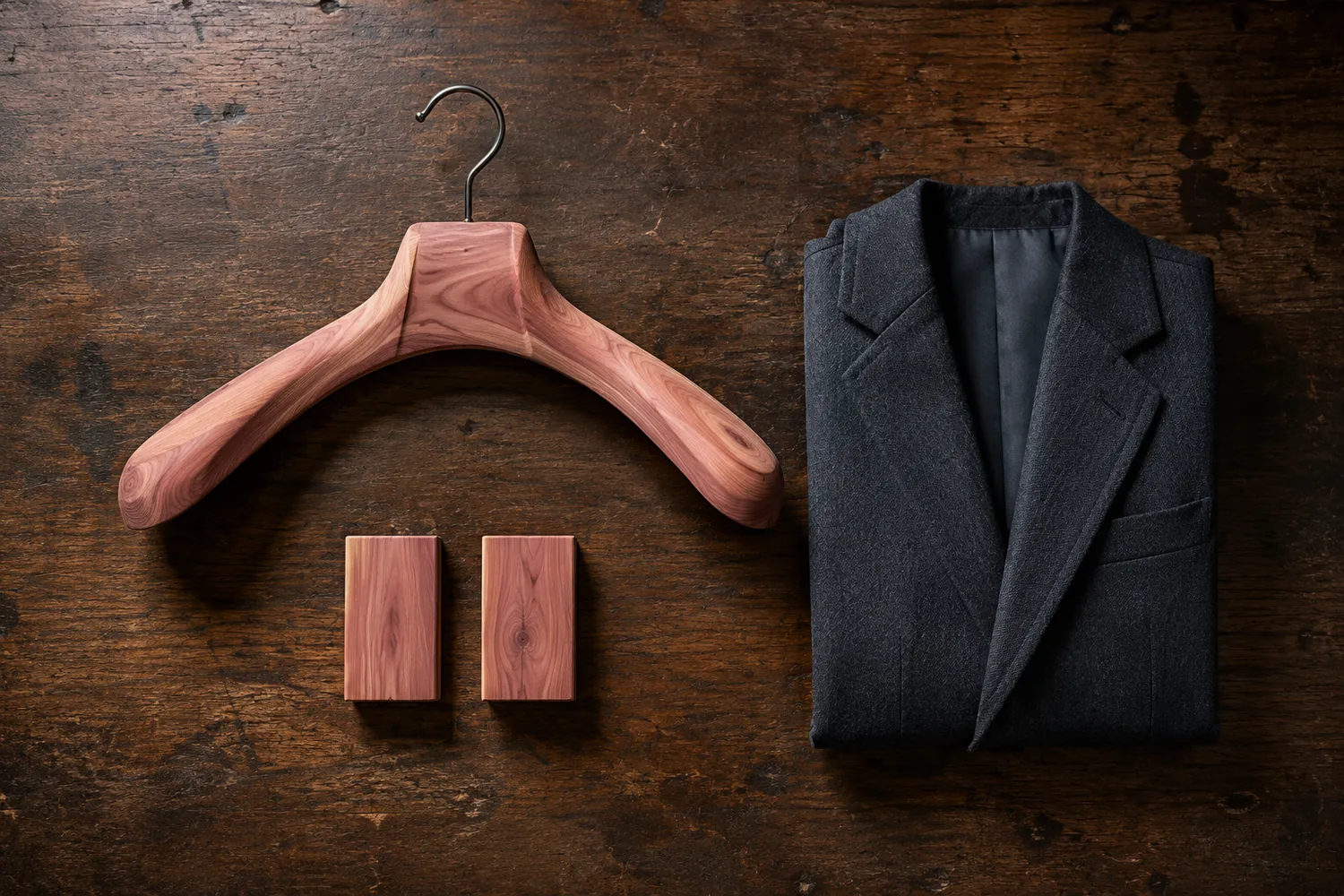
A well-made wool suit should give you many years. When one looks tired after two, most men assume it was a poor suit, and sometimes it was. More often it was worn out by a handful of habits, and each of them leaves a mark you can learn to read.
This guide works backwards from those marks: what you see, what caused it, and what to change. The everyday routine (rest it between wears, brush it, hang it properly, steam it, dry-clean it rarely) is covered in how to make a suit last ten years and dry-clean less, so it isn’t repeated here.
Why are there bumps at the top of my sleeves?
Small points of cloth sticking up just below the shoulder line are hanger marks. A thin wire or plastic hanger carries the whole weight of the jacket on two narrow points, night after night, and the cloth takes that shape. A shaped wooden hanger, roughly as wide as the jacket’s shoulders, spreads the load. Fresh bumps usually steam out. Ones that have been there for months may need a proper press from a tailor or a good cleaner.
Why does the front of my jacket hang open?
Check the pockets. A phone, a wallet and keys pull the front of a jacket down and outward, and after enough months the pocket mouths stay stretched open and the front edges no longer meet neatly when you fasten the button. Carry the heavy things in your trousers or a bag, and keep the jacket to a slim card holder and a pen in the inside pocket.
Unfasten the button before you sit down, too. A buttoned jacket on a seated man strains across the front and pulls on the button’s thread, creasing the cloth around it and loosening the button over time.
Why is the back creased and shiny when the front looks fine?
Usually the car. Driving in a jacket presses the back into creases for the length of the commute, the seat rubs the cloth, and the seatbelt drags across one shoulder and lapel. From Vaughan or Thornhill to downtown, that can be an hour or more of it every working day. Take the jacket off before you get in, and hang it on the hook or lay it flat across the back seat.
Bags do similar damage. A strap across the chest flattens the roll of the lapel and polishes one shoulder; a backpack pills the back of the jacket and creases the shoulders. On suit days, carry a bag in your hand.
Why has the lining gone yellow or split under the arms?
Sweat and antiperspirant. Together they stain and weaken lining fabric under the arm, so the lining there discolours, stiffens and eventually splits while the rest still looks new. Let antiperspirant dry before you dress, wear an undershirt on long days, and hang the jacket somewhere airy overnight before it goes back in the closet. A lining can be replaced; it’s a bigger job than a hem and a far smaller one than a new jacket.
Why are the backs of my trouser hems fraying?
Your heels. With every step the back of the hem comes down against the back of the shoe, and trousers cut too long sit on the heel and get trodden on as well. Many good trousers have a strip of tape sewn inside the back of the hem to take that wear; if yours don’t, a tailor can add one, and shortening a hem that drags removes the cause. Shine at the seat and the inner thigh comes from friction rather than heels, and why the trousers wear out first covers what can still be done about it.
Why did small holes appear close together?
Moths. Their larvae eat wool, and they prefer wool with traces of food, sweat or skin on it, which is why the suit put away dirty for the summer is the one that gets eaten. Store suits clean, keep them in breathable cotton bags rather than the cleaner’s plastic, and look through the closet now and then. Cedar helps a little and doesn’t leave the smell of mothballs on your clothes; keeping things clean and checking on them does more. Care by cloth has more on moths, and keeping suits in a Toronto condo deals with small closets.
What should I do the moment I spill something?
The first few minutes decide whether it comes out.
- Blot, don’t rub. Press a clean napkin onto it and lift. Rubbing drives the stain in and roughens the surface of the wool, which can leave a pale patch after the stain itself has gone.
- Wine, coffee, juice, soft drinks: blot, dab on a little cold water, and blot again.
- Salad dressing, gravy, butter: leave the water out, since it spreads oil. Blot what you can and leave the rest for the cleaner; dry-cleaning solvent dissolves oil in a way water doesn’t.
- Blood, egg, milk, cream: cold water only. Heat cooks the protein into the fibres.
- Keep heat away from any stain until it’s out: no iron, no steamer, no hand dryer, no hot tap. Heat sets most stains for good.
- Tell the cleaner what it was and when it happened, and point to the spot. A cleaner who knows it was red wine treats it differently from one who’s guessing.
What can still be fixed?
| What you see | Can it be fixed? |
|---|---|
| Bumps below the shoulder | Usually, by steaming or pressing |
| Pocket mouths stretched open | Often improved by pressing, not always fully |
| Yellowed or split lining | Yes, the lining can be replaced |
| Frayed back of the hem | Yes: shorten or refinish it, and add heel tape |
| Early shine on the seat | Sometimes, if it’s caught early |
| Shine worn right through, thin cloth | No |
| Small moth holes | A specialist reweaver can often close them |
| Bubbles or ripples across the jacket front | No |
No habit prevents the last one: bubbling happens when the glued layer inside a fused jacket comes away from the cloth. Fully canvassed vs fused shows how to tell what’s inside a jacket before you buy it.
The next time you take your suit off, turn it over under good light and check the five places in this guide: the tops of the sleeves, the pockets, the back, the underarms and the hems. Caught early, almost all of it is a small job. If Sam made the suit, alterations after delivery are part of the order, so bring it back and ask about anything else while you’re there. If he didn’t, he does alterations on suits from anywhere. Book a time or call 647-458-0711.