Turn-ups or plain hems? Trousers drawn side by side
Updated September 2026 · Sam’s Menswear editorial team
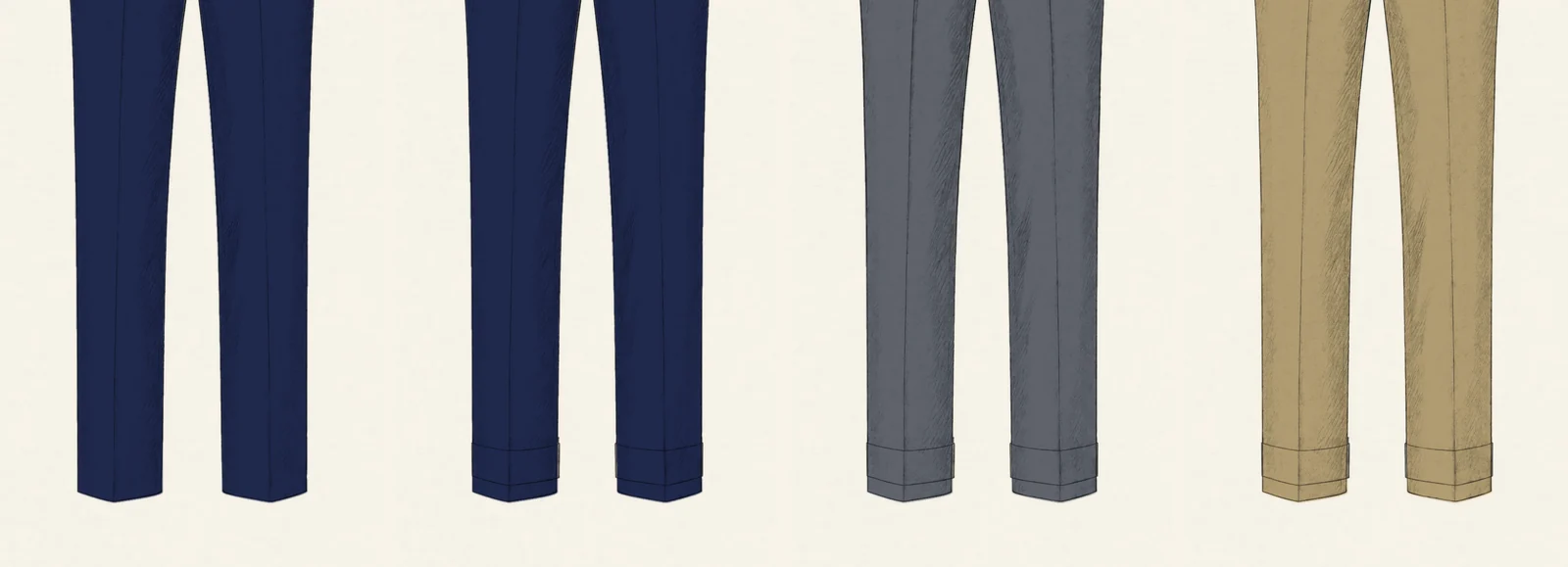
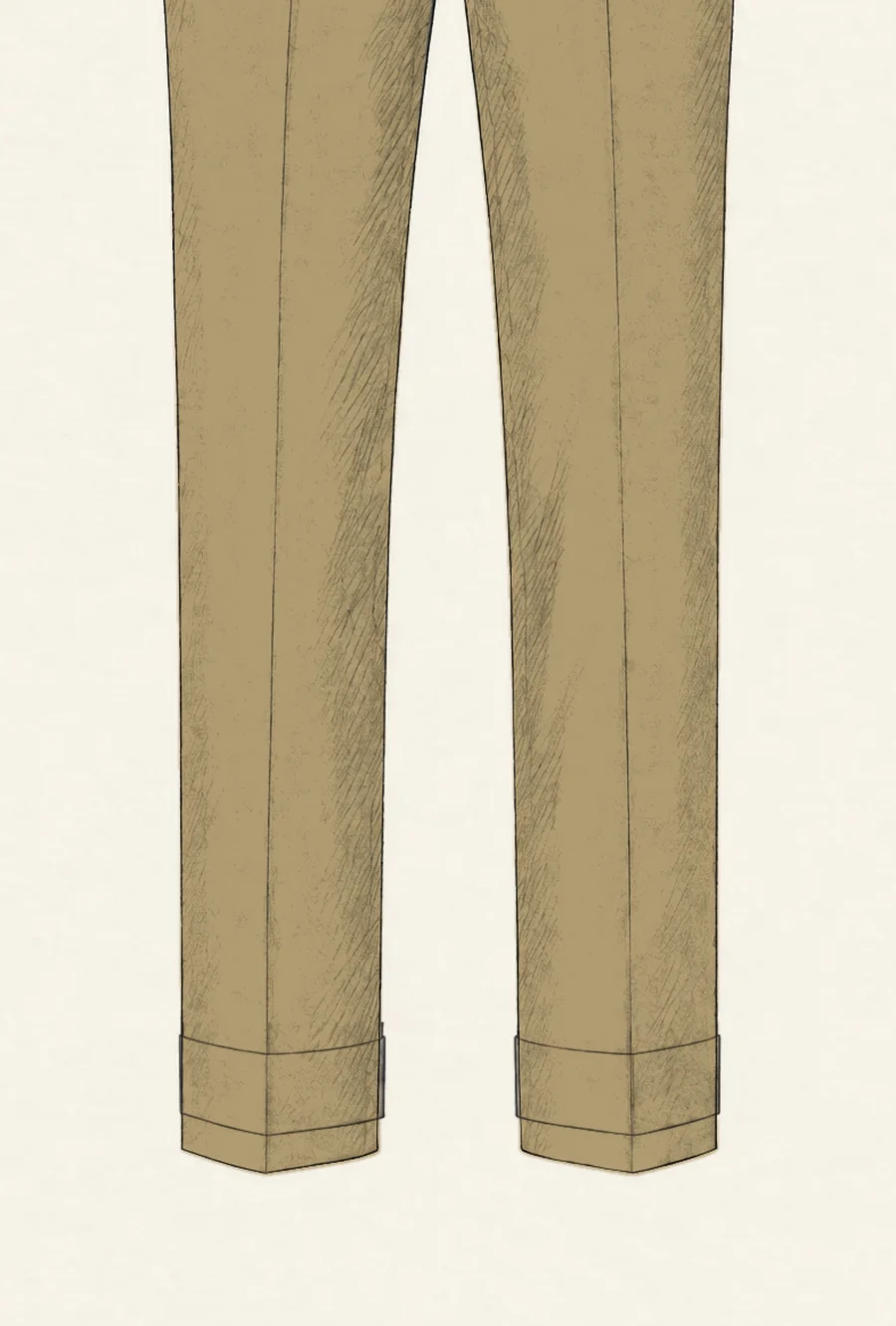
A turn-up is the bottom of the trouser leg folded up on the outside and tacked in place. Americans call it a cuff; in a Canadian tailor’s shop you will hear both. A plain hem is folded up on the inside, where nobody sees it. It is the smallest decision on a pair of trousers, and one of the most visible, because it sits right where the eye lands on your shoes.
The drawings are the same navy trousers on the Shirt Board, with and without turn-ups.
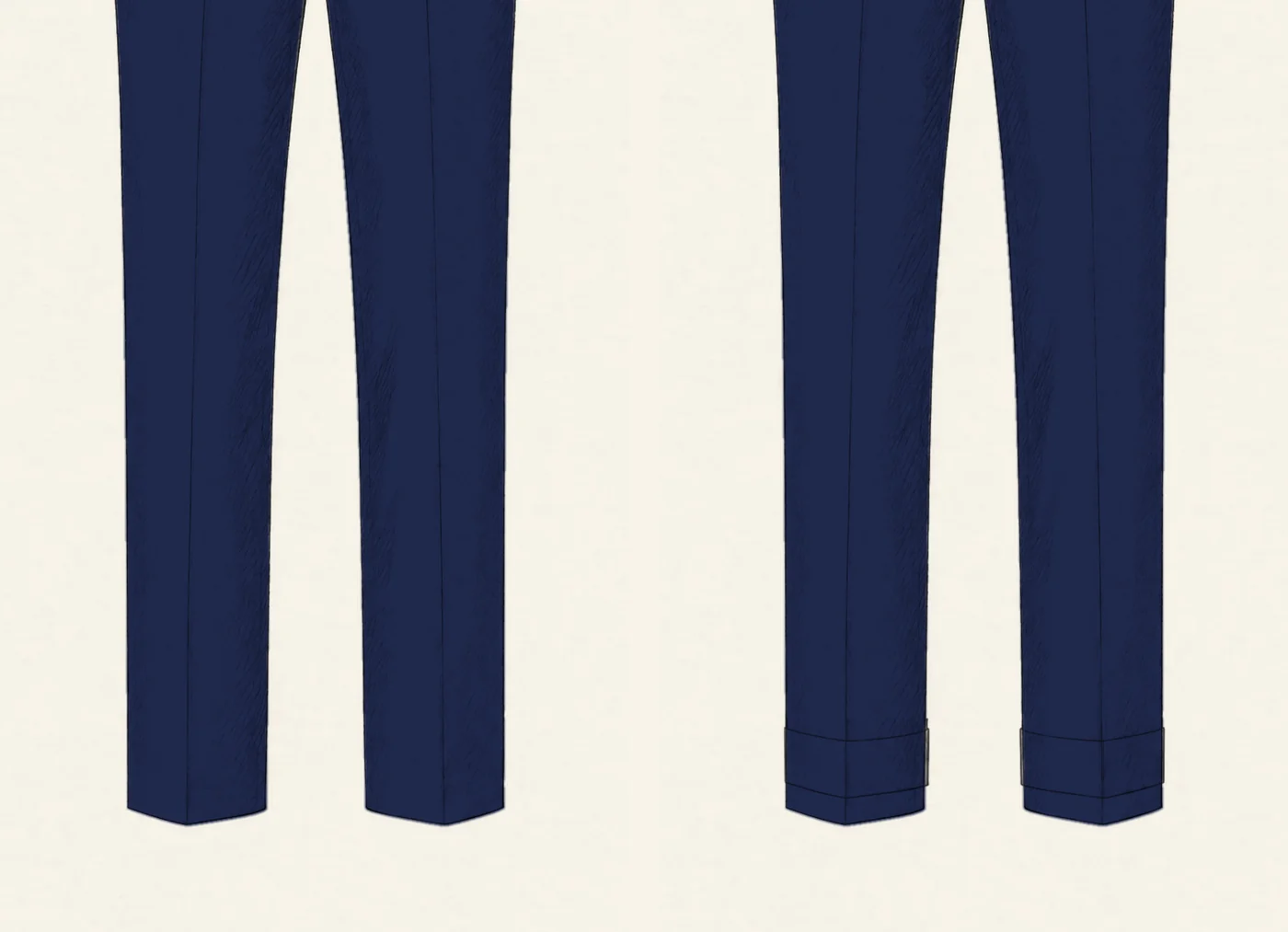
What a turn-up does
- It adds weight. The fold puts a little more cloth at the bottom of the leg, so the trousers hang straight and fall back into place as you walk. In a soft or light cloth that is a real help.
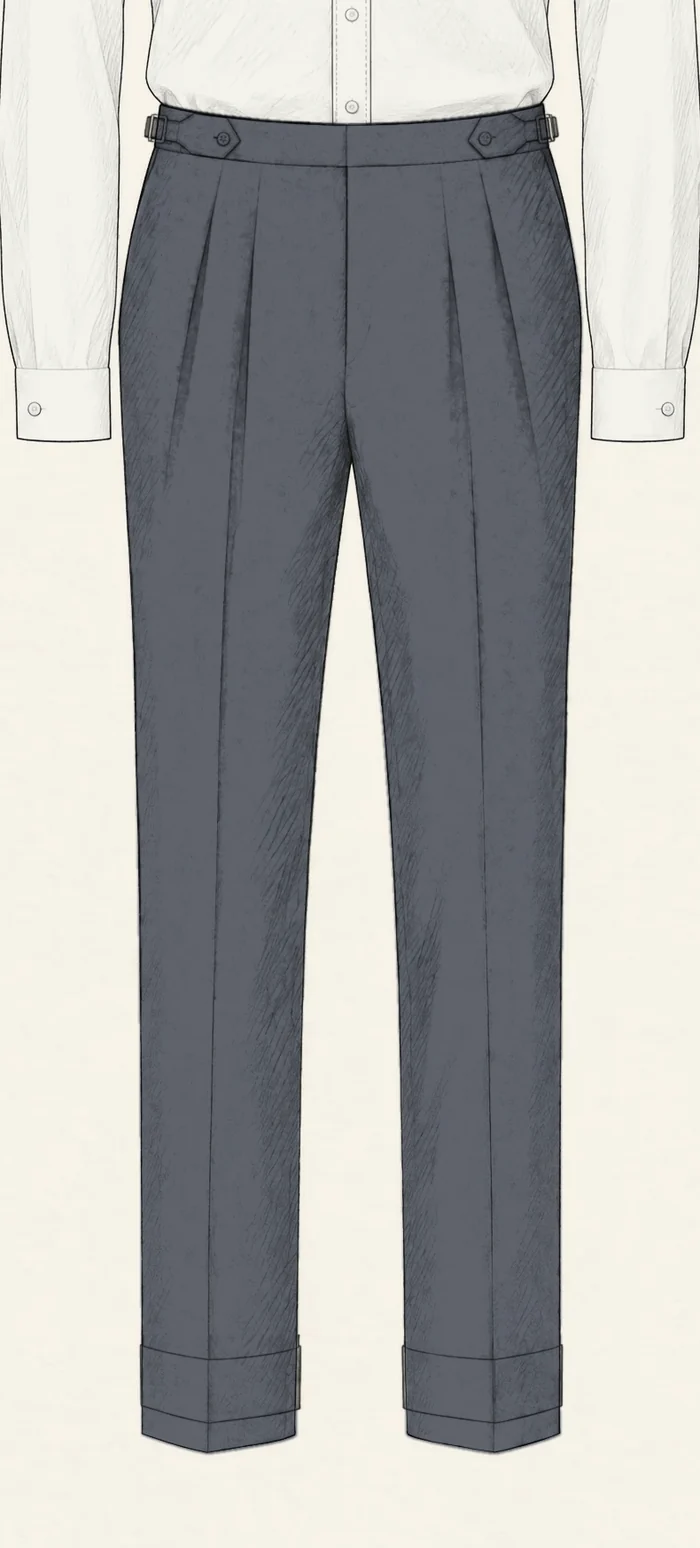
- It anchors a fuller leg. On pleated trousers, which carry more cloth through the thigh, a turn-up balances the leg and finishes it.
- It reads traditional. Turn-ups have a country, heritage feel: at home on flannel, tweed and cotton, and a little less formal than a plain hem.
What a plain hem does
A plain hem is cleaner and more formal, and it lets the line of the leg run uninterrupted to the shoe, which makes the leg look slightly longer. It can also be cut with a slight slope, a touch longer at the heel than at the front, so it sits neatly on the shoe from every side. A turn-up has to run straight across.
How deep, and how long
- Depth: usually an inch and a half to two inches, about 4 to 5 cm. A turn-up draws a line across the ankle, so on a shorter man keep it at the shallow end; a taller man can carry two inches.
- Break: turn-ups look best with little or no break, the hem just touching the shoe. With a full break the cuff crumples on your foot. A plain hem takes any break.
- Decide at the order. A turn-up uses about twice its depth again in extra cloth, so the leg has to be cut long enough. The hem itself is finished on you at the fitting, in the shoes you will actually wear.
At a glance
| Plain hem | Turn-ups | |
|---|---|---|
| The look | Clean, uninterrupted, formal | Finished, traditional, a little relaxed |
| Weight at the hem | Lighter | Heavier; the leg hangs straighter |
| Shape | Can slope toward the heel | Straight across |
| Break | Any | Little or none |
| Best with | Slim flat-fronts, dress trousers, black tie | Pleats, flannel, tweed, chinos, linen |
| Avoid | Nothing; it is always correct | Black tie, and slushy winter walks |
Which trousers want which
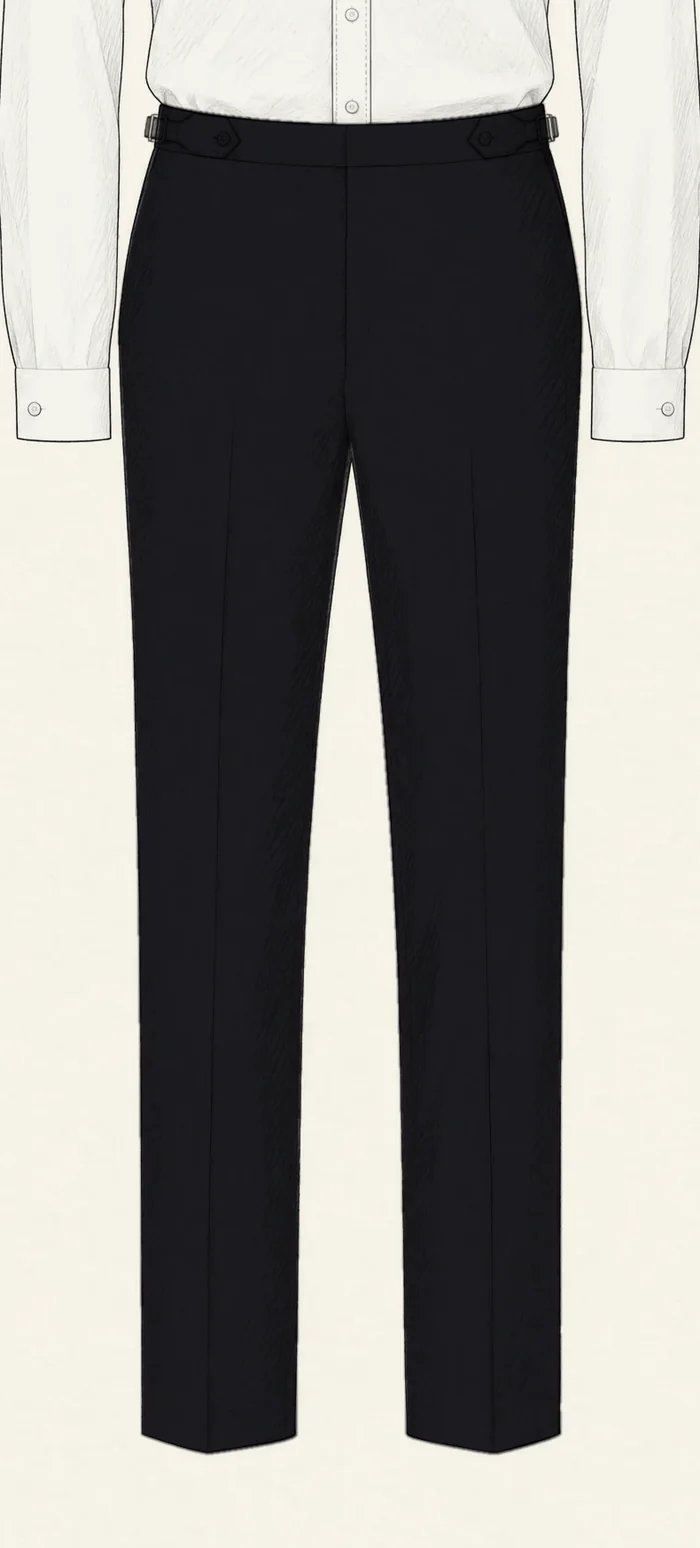
- Black tie: plain hems, always. Dress trousers are cut clean, with side adjusters and no belt loops, and a turn-up has no place on them.
- A slim, flat-front suit: usually plain, for the sharpest line.
- A business suit: either. Turn-ups are a traditional English touch on a worsted suit; plain hems are the modern default.
- Pleated trousers, flannels and tweeds: turn-ups, the natural partner. See pleated or flat-front.
- Chinos and linen: turn-ups are common and relaxed, and the weight helps a light cloth hang.
- A Toronto winter: if your trousers walk through slush, skip the turn-up. It is a small shelf that collects salt and holds it against the cloth; road salt and your suit has the rest.
Draw both
On the Shirt Board you can put trousers under any shirt and switch between plain hems and turn-ups, flat-front or pleated, with belt loops or side adjusters: plain hems, turn-ups, grey flannel turned up. Send the drawing to Sam and the appointment starts from it.
Sam makes trousers with a suit or on their own, at his studio in Vaughan. A suit takes three to four weeks, with one fitting on the finished garment. Once your pattern is on file, another pair of trousers is a phone call: two to three weeks, no fitting needed.