Why the trousers wear out first
Updated September 2026 · Sam’s Menswear editorial team
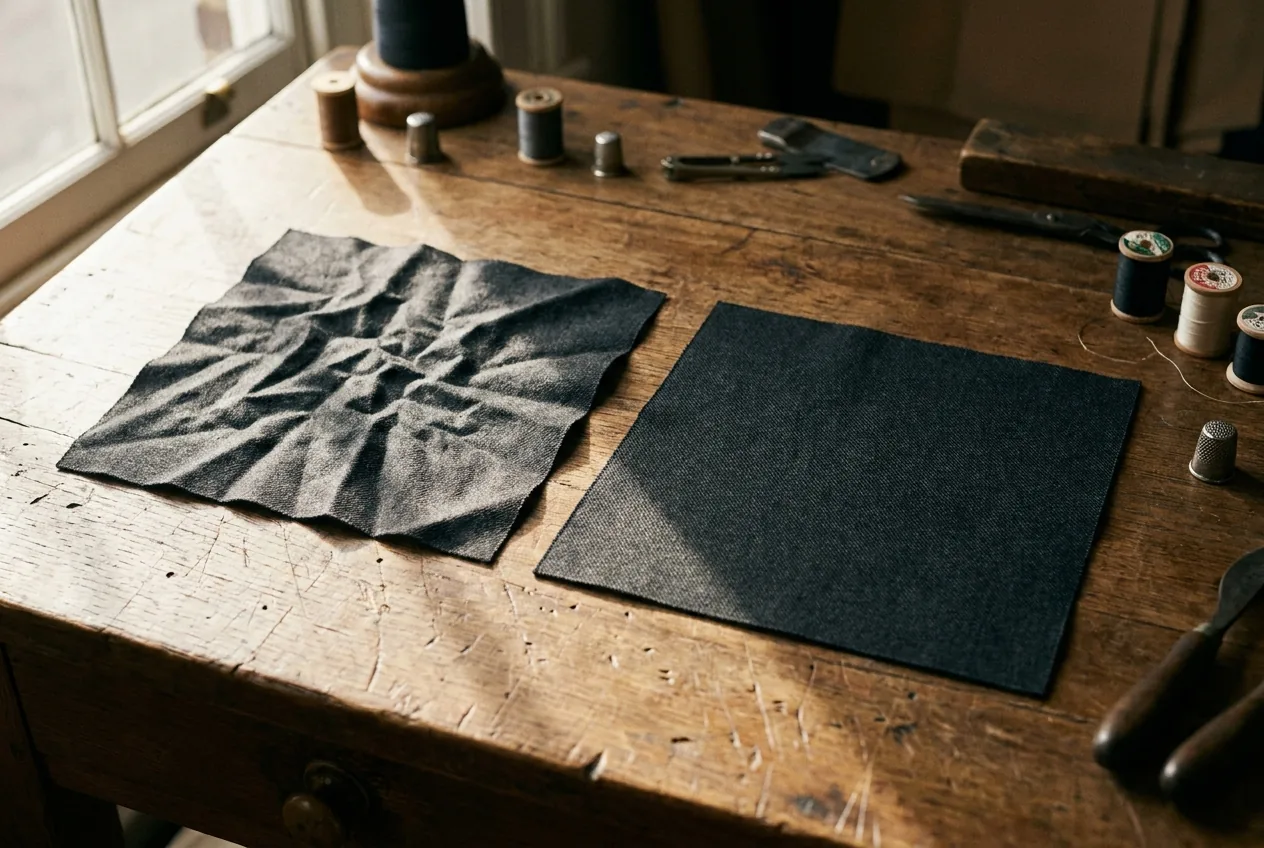
Every man who has owned a suit for a few years knows the moment: the jacket still looks fine, and the trousers do not. The seat has a shine on it, the crease has gone soft, and something has happened at the inner thigh that you would rather not examine closely.
This is normal, and it is not your fault. Trousers take punishment the jacket never sees.
Where the wear actually comes from
Three places, and all three are friction rather than dirt.
The seat. Every chair, every car seat, every bench. The fibres are compressed and rubbed in the same place for hours a day, which flattens and polishes them. That polish is the shine.
The inner thigh. The two legs rub against each other with every step you take. On a man whose thighs touch when he walks, this is the failure point, and it is where a trouser eventually thins to nothing and splits. Nobody tells you this and everybody experiences it.
The hem. The back of the hem rides on the top of your shoe all day. Add a heel that catches the edge and you get fraying at exactly the point where everyone can see it.
The jacket, by comparison, hangs. It is the same cloth, doing a far easier job.
What you can do about it
Rotate. The same logic as suits, more urgent. Two suits worn alternately last far more than twice as long as one worn daily, and the trousers are where you notice it.
Hang them properly. From the cuffs, upside down, in a clamp hanger, so gravity pulls the leg straight and the knee bag falls out overnight. Folded over a bar is second best. Draped across a chair is how you get a permanent fold across the thigh.
Empty the pockets every night. A phone and keys in trousers all day stretches the cloth at the pocket bag and eventually prints the outline of what you carry into the front of the leg. This is the single most common self-inflicted trouser problem I see.
Brush the hems in winter. Road salt in the GTA is not just grey dust; it is a crystal that cuts wool fibres and draws moisture into the hem. Let the hem dry, then brush it out. If there is a white tide line, sponge it with cool water, blot it and let it dry before it goes back in the closet.
Steam the crease rather than pressing it. The crease is set by heat, moisture and pressure, and the flat iron most men reach for is what puts shine on the seat in the first place. A steamer and a hanging trouser will bring a soft crease most of the way back with no risk at all.
Shine: what can and cannot be fixed
Shine is flattened fibre reflecting light in one direction. Whether it comes back depends entirely on how far it has gone.
Early, when the cloth is merely flattened, steam plus a firm brush against the nap will lift the surface and take most of the shine out. A good cleaner can do this properly with a steam press and a brush.
Late, when the fibre ends are polished through and the weave has thinned, nothing brings it back. Not a cleaner, not a brush, not me. The cloth has been worn away.
The reason to get it looked at early is that the first stage looks almost identical to the second to an untrained eye, and only one of them is recoverable.
The repairs worth doing
Trousers are more repairable than most people assume, and alterations are included in anything I make, so the conversation is about whether the repair is worth it rather than what it costs.
- Hems re-done, and the heel edge reinforced, before fraying reaches the cloth itself.
- Inner thigh patched or reinforced from the inside at the first sign of thinning. Once it splits, you are repairing a hole rather than preventing one, and the patch shows.
- Reweaving for a small hole, moth damage or a cigarette burn. A specialist reweaver can make a small hole genuinely disappear, working thread pulled from a seam allowance.
- Waist taken in or let out. This is the normal one. Bodies change, and a trouser waist has cloth in reserve precisely so it can follow.
The real answer: a second pair of trousers
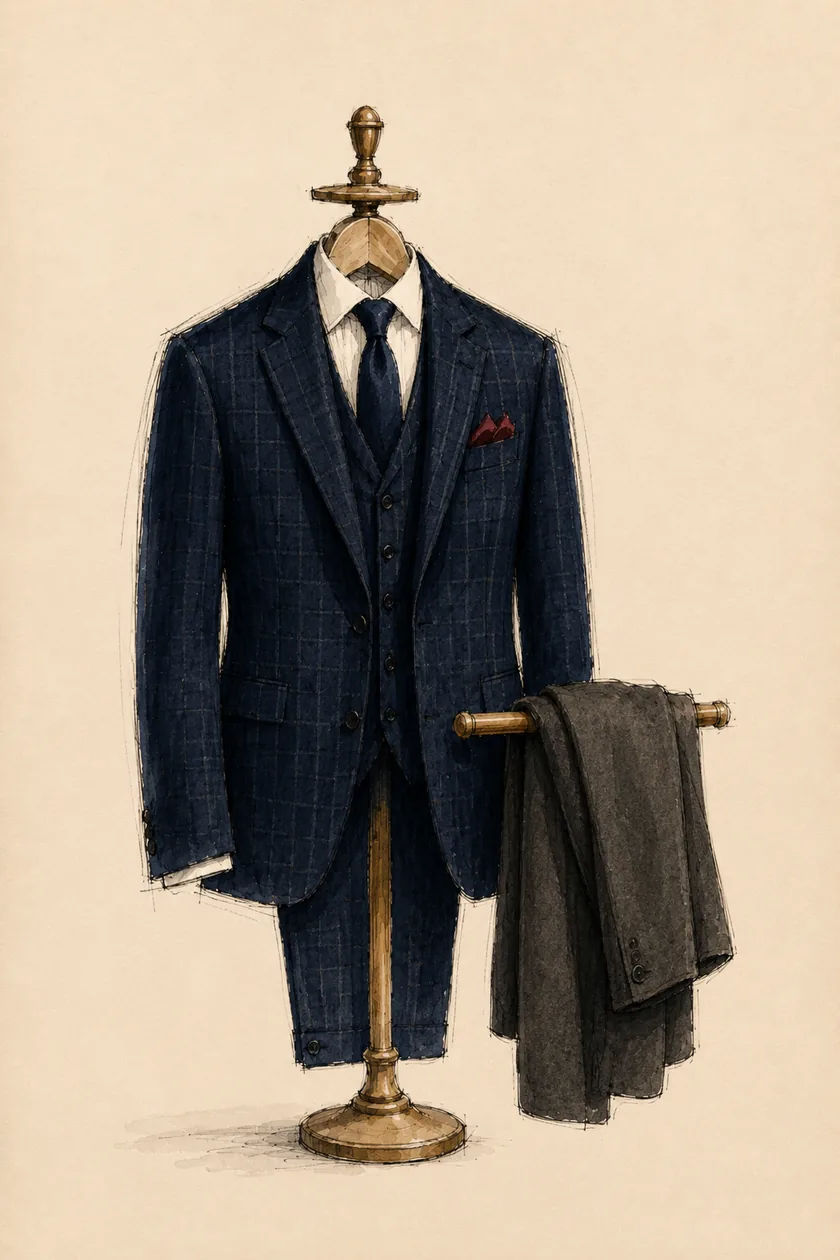
The oldest advice in the trade, and the reason it survives is arithmetic. If the trousers wear at roughly twice the rate of the jacket, then one jacket and two pairs of trousers, worn in rotation, will wear out at about the same time.
It is worth deciding this when a suit is being made rather than three years later, because the cloth from the same bolt will match exactly. A second trouser cut from a different dye lot two years on is close, and close is visible in daylight.
When to stop repairing
There is a point where a trouser is finished, and it is honest to name it: when the inner thigh has thinned across a wide area, when the seat shine is through, or when the cloth around a repair is too weak to hold the stitches.
At that point the jacket usually still has years in it. Wear it as an odd jacket with grey flannels or cords, which is what half the well-dressed men I know are doing whether they admit it or not. When to alter and when to replace walks through that decision on the rest of a wardrobe.
If your trousers have gone shiny or thin at the thigh, bring them in while the fabric is still there to work with. And if you are ordering something new, ask me about the second trouser before the cloth is cut, not after. Custom trousers are measured and fitted the same way the suits are.