When to alter, when to replace
Updated July 2026 · Sam’s Menswear editorial team
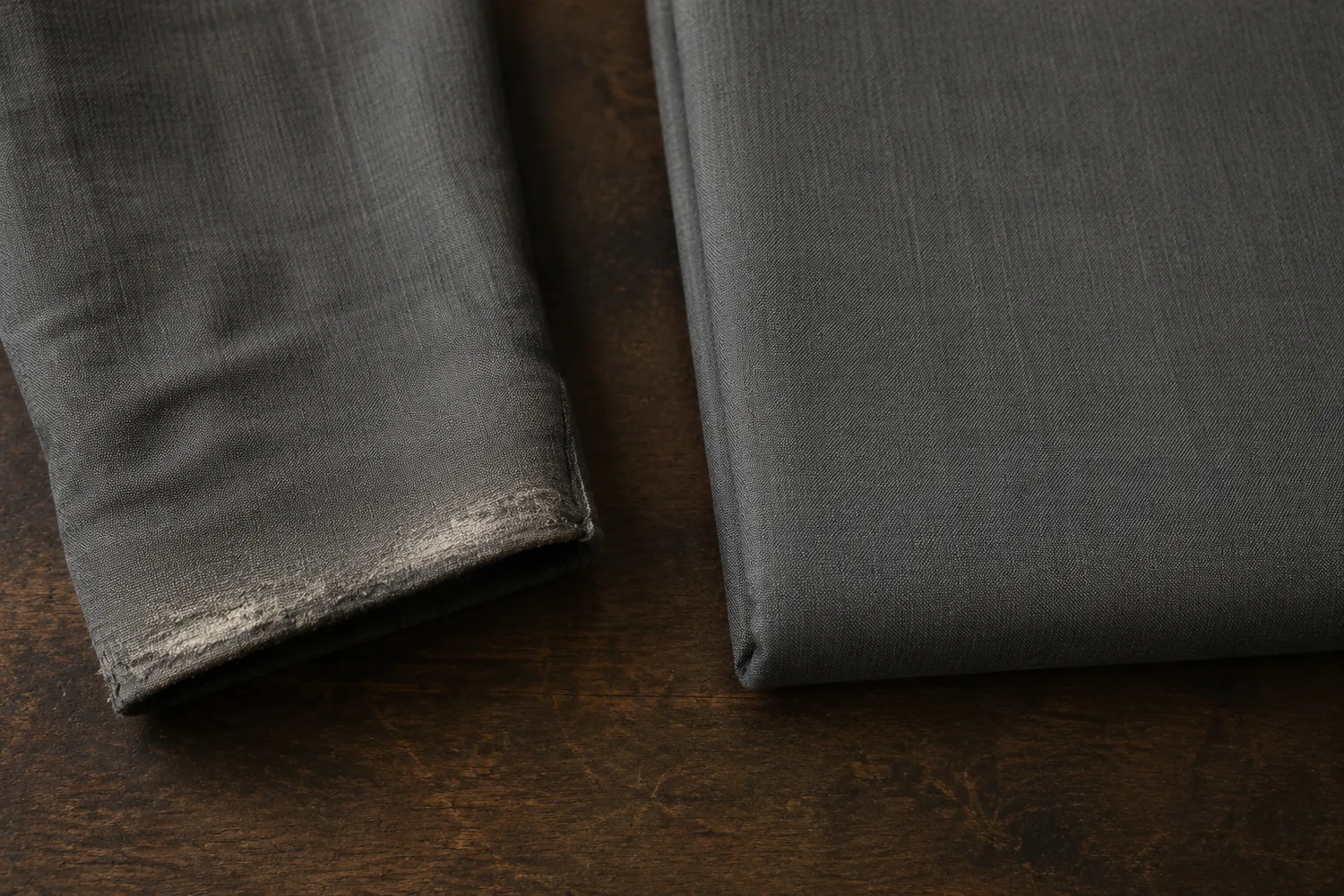
Alter it when the suit still fits your shoulders and chest and the fabric is sound; a waist, hem, or sleeve is quick, straightforward work. Replace it when the shoulders are wrong, the fabric is worn through, or the fix costs more than the garment is worth. A good tailor will tell you which one you’re looking at before you spend a dollar.
What alterations are actually worth doing?
The high-value fixes are the ones that touch fit without touching structure: taking in or letting out the waist, hemming trousers, shortening or lengthening sleeves, and tapering a jacket’s sides. These are fast, they hold, and they transform how a suit looks on you.
The best-return alterations, roughly in order:
- Trouser waist and hem: the most common fix, and the cheapest per inch of improvement.
- Jacket waist suppression: bringing in the sides so the jacket follows your torso instead of hanging like a bag.
- Sleeve length: a quarter-inch of shirt cuff showing changes the whole picture.
- Tapering trouser legs: modernizing an older, wider cut.
If the bones of the suit are right and only these need attention, alter every time. That’s exactly the work we do at the bench, and it’s what keeps a good suit in rotation for years. If you’re building fit from scratch, our how a suit should fit guide covers what “right” looks like.
What can’t a tailor fix?
The shoulders. If the shoulder line doesn’t sit where your shoulder ends, no alteration fixes that cleanly. Reworking a shoulder means deconstructing and rebuilding the entire top of the jacket (the armhole, the collar, the chest), and you rarely come out ahead.
A few other things live in the “possible but not worth it” zone:
- Chest that’s too tight: very little to give here; the canvas and structure are set.
- Jacket length: shortening moves the pockets and vents out of proportion; it looks off.
- Widening a jacket with no fabric in the seams: you can’t sew fabric that isn’t there.
When the shoulders are wrong, that’s the honest cutoff. It’s the number one reason we tell someone a suit isn’t worth saving, and often the reason a custom or made-to-measure jacket, cut to your actual shoulder, is the better spend.
How much can a suit be taken in or let out?
Figure on about 1 to 2 inches each way, and only as far as the seam allowance allows. Letting out is limited entirely by how much fabric was tucked into the seams when the suit was made. You can’t add what isn’t there.
Trousers are the friendlier garment: manufacturers often leave 1–2 inches in the waist and seat, sometimes more, so a waistline can move a size in either direction. A jacket is tighter: the back and side seams together usually give around 1 to 1.5 inches of room in the torso. If weight gain is the reason, six mirror tests tell you which garments are worth it, and you can check a pair of trousers yourself before you bring them in.
Push past those limits and the proportions go wrong: armholes pull, pockets shift, the balance breaks. A custom or bespoke jacket is cut with generous inlays precisely so it can be opened up years later, one reason it outlasts anything off the rack. If your body has changed a lot, our hard-to-fit bodies guide is worth a read.
When is it cheaper to replace than to alter?
When the alteration bill starts creeping toward the cost of a new suit, stop. Multiple heavy alterations on a fused, entry-level jacket rarely leave you with something that fits well. You’ve spent good money reshaping a garment that was never built to hold it.
A simple test we use at the bench:
- One or two clean fixes on a suit with good fabric and construction → alter.
- Three-plus structural changes, or a shoulder problem → replace.
- Alteration cost approaching half the suit’s replacement value → replace.
The math flips fast on cheap suits and stays generous on good ones. A well-made jacket in sound fabric is almost always worth altering, even repeatedly. That’s the whole point of buying quality once. See is a custom suit worth it for how that longevity pencils out.
How do I know if the fabric is too far gone?
Look for shine, thinning, and fray. Once the fibres break down (a slick sheen on the seat and elbows, threadbare lapel edges, a weave you can see light through), alterations won’t hold, because the fabric itself is failing.
Common points of no return:
- Shine on the seat and elbows from wear and pressing: permanent, not cleanable.
- Fraying at cuffs, vents, and lapel edges: a signal the whole garment is aging out.
- Moth damage or holes in the body panels: a reweave patches one spot but rarely disappears.
A blown lining, a torn pocket, a loose button: those are cheap repairs, not replacement flags. It’s the face fabric wearing out that ends a suit. Good fabric and proper care buy you years; our how to care for your suit guide is the difference between a decade and three.
Should I alter a suit I already own or start fresh?
Start with the shoulders and chest. If those fit, alter. If they don’t, or you’ve altered this suit before and still aren’t happy, that’s your sign to build one that’s right from the first cut.
There’s no shame in either answer. A lot of what walks through our door gets a quick, tidy fix and goes right back into service. The rest (the suits fighting their own shoulders, the fabric that’s given up) are the ones where a suit cut to your measurements saves you money over the long run, not costs you more. If it’s for a big day, the wedding and business pages walk through where custom earns its keep.
We’ll always tell you straight which one you’re looking at. Bring the suit in and let Sam read the shoulders and the seam allowance; if a ten-minute alteration is all you need, that’s what we’ll say. Alterations on suits, jackets and trousers, whether Sam made them or not. Book a visit, or start your own when the moment’s right.