Dry-clean less: what tailors actually do
Updated July 2026 · Sam’s Menswear editorial team
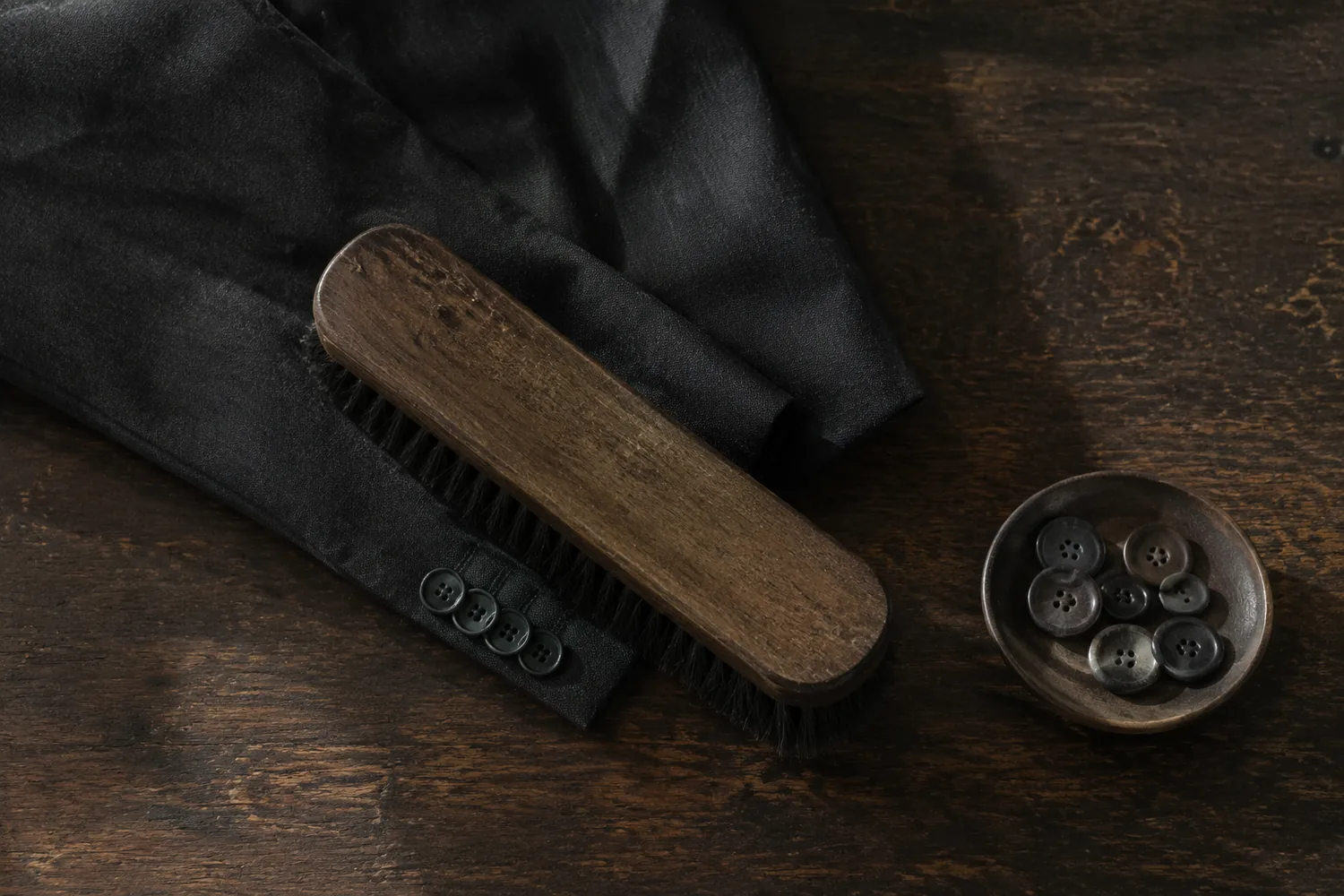
Dry-clean less. A good wool suit should see the cleaner two or three times a year, not every few wears. The chemicals that clean it also strip the wool’s natural oils and, over time, leave the fabric thin, shiny, and tired. For almost everything short of a real stain, a brush and a bit of steam does the job better and keeps the suit looking new for years.
How often should I actually dry-clean a suit?
Two to three times a season for a suit in regular rotation. Maybe once or twice a year for something you wear occasionally.
The old habit of dropping a suit at the cleaner after every wear is the single fastest way to age it. Unless there’s a real stain, a spill, or a smell that won’t air out, you don’t need the machine. Rotate two or three suits so no single one gets hammered, hang it to breathe after each wear, and let the fabric recover. A good suit built for you is meant to last a decade or more; treat it that way.
Why does over-dry-cleaning ruin a suit?
Because the solvents strip the wool’s natural oils and the heat and pressing flatten the fibers. Do it too often and the fabric goes thin, shiny, and lifeless.
Dry cleaning isn’t really “dry.” It’s a chemical bath, usually a solvent like perchloroethylene, plus tumbling, heat, and a hard press. Wool is a living fiber with its own lanolin oils that give it drape and richness. Every cycle pulls some of that out. Repeated cleaning also weakens the bonds between fibers, can fade color, and leaves that tell-tale shine on the seat and elbows. That shine isn’t wear from your body. It’s the cleaner. Once it’s there, it doesn’t come back.
What should I do instead of dry-cleaning?
Brush the suit after each wear and steam it to freshen and drop wrinkles. That handles ninety percent of what people run to the cleaner for.
Here’s the routine, and it takes about three minutes:
- Brush it. A natural boar-bristle brush, firm enough to lift dust and grit but soft enough not to scratch. Grit is abrasive: left in the fabric, it saws at the fibers every time you move.
- Brush with the grain. Start at the shoulders, work down, always in one direction. Follow the weave, don’t scrub back and forth.
- Air it out. Hang the suit somewhere with room around it for a day before it goes back in the closet. Most odor is just trapped air.
How does steaming beat dry-cleaning for freshening?
Steam relaxes wrinkles, lifts odors, and kills the bacteria that cause smell, without solvents, without shine, without shrinking the fabric. It’s gentler and it’s free after you own the steamer.
A handheld steamer is one of the best small investments you can make for your wardrobe. Hang the jacket, run the steam head a few inches off the fabric from the top down, and watch the wrinkles fall out. It refreshes the wool, doesn’t strip the oils, and won’t flatten the fibers the way a hot press does. Give it ten or fifteen minutes and the suit is ready to go again. This is exactly the care we build our garments to reward: real fabric responds to steam beautifully. If you’re curious what your suit is actually made of, our fabric library walks through it.
When do I genuinely need the dry cleaner?
For a real stain, a spill that’s set, or a smell airing out won’t fix. That’s it. And when you do go, go smart.
Choose a cleaner who knows tailored clothing, not the corner one-hour shop. Ask for a hand-finish and a gentle press, point out any stain so they treat it directly instead of running the whole garment hot, and clean the jacket and trousers together so they age at the same rate and match in color. If you’re between the cleaner and just airing it out, air it out first; you can always clean later, but you can’t un-clean.
How do I store a suit so it needs less cleaning?
Good storage is half the battle. A proper hanger, room to breathe, and a brush-down before it goes away keeps a suit fresh far longer.
- Use a wide, shaped wooden hanger so the shoulders keep their form, never a wire hanger.
- Give each suit space on the rail; crammed jackets crush and wrinkle.
- Empty the pockets so the fabric hangs clean and doesn’t stretch.
- Skip the plastic dry-cleaning bag; wool needs to breathe. A breathable fabric garment bag is right for long storage, and toss in a cedar block for moths.
Do this and you’ll find you almost never think about the cleaner. The suit just stays ready.
If it’s built right in the first place, it’ll take this kind of care and give it back to you for years. That’s the whole idea behind how we work: real fabric, made to last, made to be lived in. If a suit you love has already gone shiny at the seat, bring it by and I’ll tell you what’s recoverable. Or start to design your own suit whenever you’re ready.
More from the care shelf: How to care for your suit · The navy suit · The interview suit