How to make a suit last ten years
Updated July 2026 · Sam’s Menswear editorial team
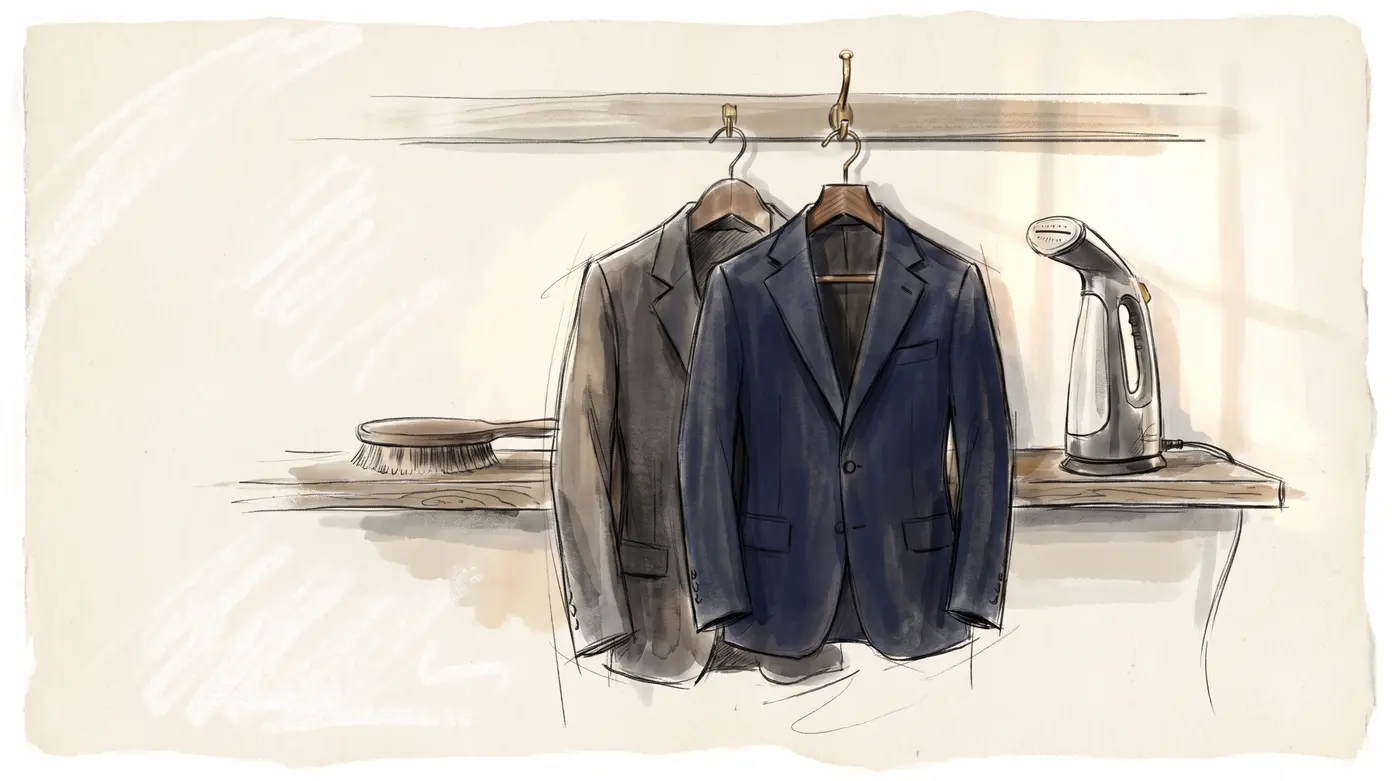
A suit doesn’t die from being worn. It dies from being neglected between wears. Rotate it so it never goes two days in a row, brush it after every wear, hang it on a proper shaped hanger, and steam instead of dry clean. Do those four things and a well-made suit will look sharp a decade later.
Thirty years at the bench has taught me one thing: the men whose suits last aren’t the ones who baby them. They just have a handful of quiet habits. Here’s what actually matters.
How long does a suit actually last?
A well-made suit, cared for properly, lasts ten to fifteen years of regular wear. Cheap fusing and constant dry cleaning kill it in two.
The garment itself is rarely the problem. Good wool wants to last: it’s springy, breathable, and forgiving. What wears a suit out early is friction, moisture that never dries, and the chemical beating of the dry-cleaning machine. Take those three off the table and the fabric will outlast the trends. If you want to understand what makes a garment worth keeping this long in the first place, that comes down to construction; how we build it is laid out on our process page.
Why does rotating suits matter so much?
Because wool needs time to recover. Never wear the same suit two days running; give it at least 24 to 48 hours to rest, dry out, and spring back into shape.
Here’s the thing most men don’t know: wool can absorb close to a third of its weight in moisture without feeling damp. Your body puts that moisture in all day. If you hang the suit up and wear it again the next morning, the fibres are still compressed and still holding water, and that’s when creases set permanently and knees and seat start to bag.
If you wear a suit daily, own at least three and cycle through them. Two is workable. One worn every day will look tired inside a year no matter how good it is. Rotation is the single cheapest thing you can do for longevity, and it costs you nothing but a closet rail.
What does brushing a suit actually do?
Brushing lifts out dust, grit, and body oils before they grind into the fibres; that grit is what quietly saws the fabric apart over time. Thirty seconds after every wear.
Use a soft horsehair clothes brush. Work top to bottom, following the weave, with short downward strokes: collar, shoulders, lapels, then the body and sleeves. Pay attention to the collar and the seat of the trousers, where oil builds up fastest.
This one habit does more than any dry clean. Most of what makes a suit look dull isn’t stains. It’s a fine layer of dust and skin oil sitting on the surface. Brush it off and the fabric stays bright, and you’ll cut your cleaning trips way down.
What kind of hanger should I use?
A wide, contoured wooden hanger, thick enough to fill the shoulders. Thin wire hangers put a dent in the shoulder line that no pressing fully removes.
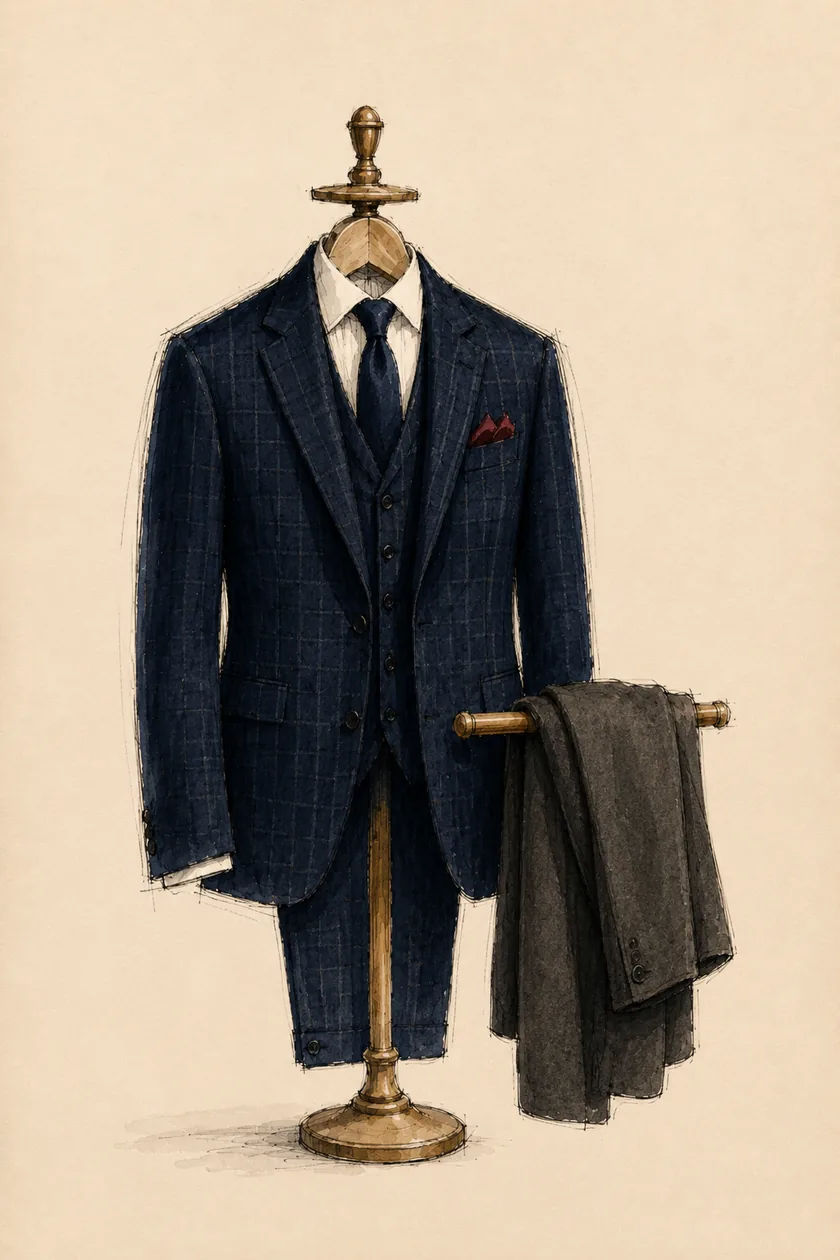
The shoulder is the most structured, hardest-to-rebuild part of a jacket. A proper hanger supports that shape so gravity works for you overnight instead of against you. Hang trousers by the cuff or folded once over a bar so the crease stays clean.
Give each suit a little air around it; don’t pack the closet. A jammed rail crushes lapels and traps the moisture you’re trying to let out. And keep it out of direct sun; sunlight fades wool faster than most people realise.
How often should I dry clean a suit?
As little as possible: two or three times a year for a suit in regular rotation, and only when it’s genuinely dirty or smells. Dry-clean it every week and you’ll wear it out from the inside.
Dry-cleaning solvent and press heat strip the natural oils out of wool, dry out the fibres, and flatten the hand of the fabric. Do it too often and the fabric goes thin, shiny, and lifeless. I can spot an over-cleaned suit across the room.
For everything short of a real stain, steam and spot-clean instead:
- Spills: blot immediately, never rub, and let it dry before you touch it again.
- Smell or light wrinkles: hang it in a steamy bathroom or hit it with a garment steamer.
- Real stains: take it to a good cleaner promptly and tell them exactly what it is.
When you do clean, always do the jacket and trousers together so they age and fade evenly.
Does pressing and steaming matter more than dry cleaning?
Yes. Steaming refreshes and relaxes the fabric without the chemical damage; it’s the gentler, everyday tool. Save real pressing for when the suit genuinely needs it.
A garment steamer is the best twenty dollars you’ll spend. It drops wrinkles, kills odour, and helps the fabric hang the way it was built to. If you do press with an iron, use low heat and a pressing fabric between the iron and the wool; direct heat scorches and glazes the fibres, and that shine never comes out.
And keep small repairs small. A loose button or a starting seam is a five-minute fix now and an expensive one later. Catch it early and the suit stays sound.
The habits, in one breath
Rotate so it rests. Brush after every wear. Hang it right. Steam, don’t dry clean. Fix small things fast.
None of it is hard, and none of it is fussy. It’s just consistent. That, more than anything, is what carries a suit past the ten-year mark.
It also starts with how the thing is built. A properly canvassed, well-cut suit rewards care; a glued-together one won’t last no matter what you do. If you’re thinking about a garment made to go the distance, come design your suit with us, explore the fabric, or book a visit and bring the suit you’re trying to save; I’ll tell you what it needs. We’re in Vaughan, on the Thornhill line, and we’ve been doing this a long time.
Keep reading: How to care for your suit · Custom vs. rental for a wedding suit · The navy suit