Care by cloth: what wool, linen, cashmere and silk each need
Updated September 2026 · Sam’s Menswear editorial team
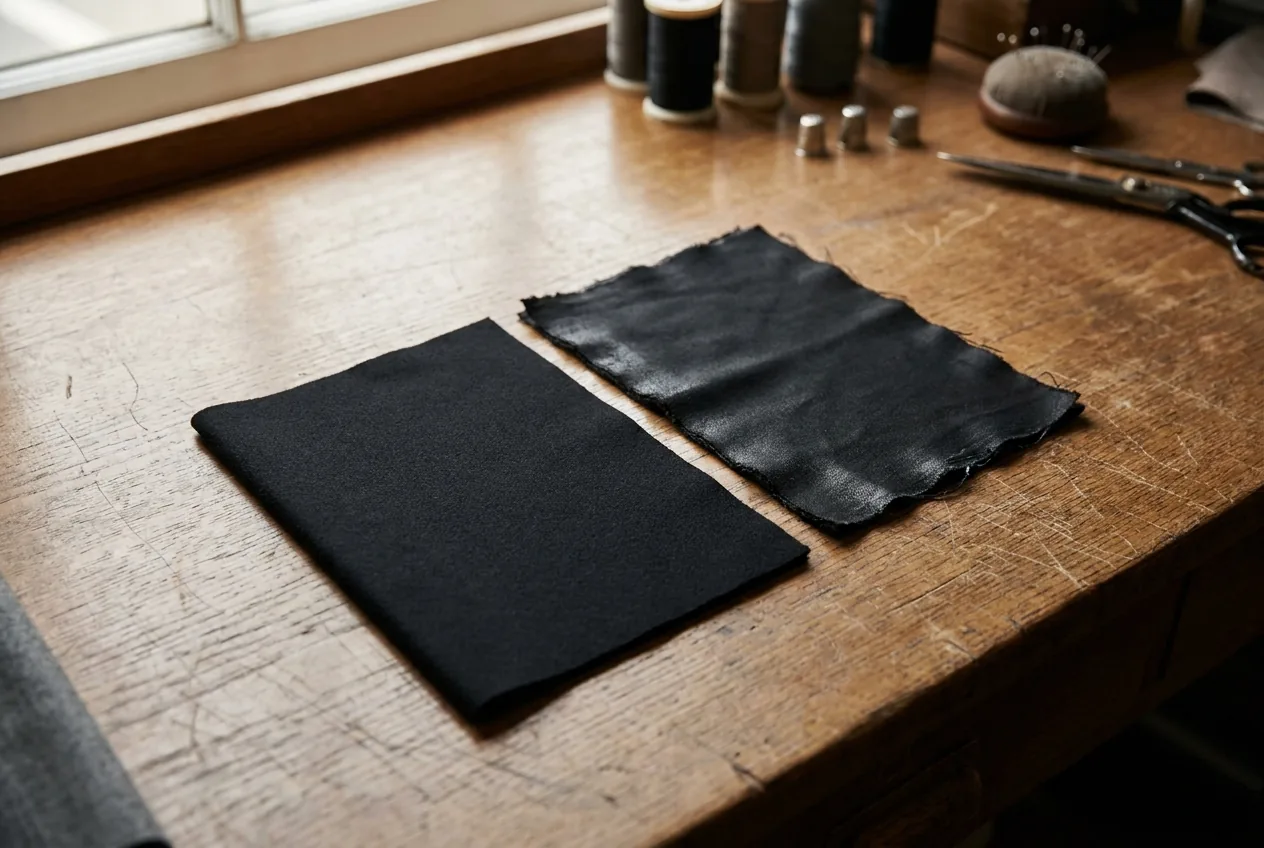
Most care advice is written for a garment: a suit, a shirt, a coat. That is the wrong unit. The thing in your hands is a fibre first, and the fibre decides everything. Two jackets can look identical on the rail and want opposite treatment, because one is a smooth worsted and the other is a napped flannel.
So read the cloth, not the garment. Here is what each one needs from you, what kills it, and what I can still fix once it has gone wrong.
Worsted wool: the everyday suit
Worsted is the smooth, tightly spun wool most business suits are made of. It is the most forgiving cloth in a wardrobe and the one people damage fastest, because it looks like it needs nothing.
What it needs. A day of rest between wears so the fibres recover, a wide shaped hanger, a brush with the grain after each wear, and steam instead of a press. That is the whole routine, and it is the subject of making a suit last ten years.
What kills it. Heat and solvent. A hot iron pressed straight onto worsted flattens the surface and leaves a permanent shine, and so does the cleaner’s press, which is one of the reasons to dry-clean far less than most men do. Grit is the slower killer: dust left in the weave saws at the fibres every time you move.
Once it goes wrong. Shine from flattened fibres can sometimes be lifted slightly with steam and a stiff brush. If the fibres are polished through, it is permanent. Bring it in and I will tell you which one you have.
Flannel, tweed and anything with a nap
Flannel is worsted’s opposite. The surface is deliberately raised and slightly fuzzy, and that nap is the whole character of the cloth. Tweed, moleskin, brushed cotton and corduroy behave the same way.
What it needs. Brushing, more than any other cloth, because a nap holds dust. Steam from a few inches away, then brush the nap back up while it is damp. Hang it with room on both sides; a napped cloth crushed between two other jackets takes the shape of its neighbours.
What kills it. A flat iron. Press flannel directly and you crush the nap into a shiny, hard patch that no brush recovers. If something must be pressed, it goes face down on a towel with a cloth between the iron and the fabric, and even then I would rather you brought it to me.
High-twist and open weaves: the summer cloths
Fresco and other high-twist wools are spun hard and woven open so air moves through them. They are the reason a wool suit can be comfortable in a Toronto August, and they are tougher than they look: the twist makes them spring back from creases on their own.
What it needs. Hanging and air. A high-twist suit left on a hanger overnight usually drops its own wrinkles.
What kills it. Snagging. An open weave catches on watch bracelets, ring settings and the corner of a desk. A pulled thread in an open weave is a visible line, not a fuzz. If you catch one, do not cut it. Bring it in; a snag can often be worked back into the weave, and cutting it turns a repair into a hole.
Linen
Linen creases. That is not a defect and it is not something to fight. The men who are happiest in linen are the ones who decided in advance that a crease across the lap at four in the afternoon is part of the look.
What it needs. Linen is one of the few tailored cloths that genuinely likes water. An unlined linen shirt or trousers can be washed cool and hung damp. A tailored, canvassed linen jacket is a different animal: the cloth would survive the water, the internal structure would not, so that one is dry-cleaned or steamed.
What kills it. Heat in the dryer, which shrinks it and bakes creases into set folds. Folding it away for a season in a hard crease also weakens the fibre along the fold line. Hang it.
Cotton
Cotton trousers, chinos and shirting are the workhorses. Cotton is strong, washable and cheap to maintain, and the mistakes are all about heat and friction.
What it needs. Cool water, a modest amount of detergent, and removal from the dryer while still slightly damp. Cotton irons beautifully when damp and fights you when bone dry. Shirts have their own routine, which is here.
What kills it. Hot water and a hot dryer, in that order, mostly through shrinkage. Chlorine bleach on white cotton, which whitens for a season and then yellows and weakens the fibre for good.
Cashmere and fine-hair blends
Cashmere is short, fine hair, which is what makes it soft and what makes it pill. Pilling on new cashmere is not a sign of a bad garment; it is the short fibres working their way to the surface, and it settles down after a few wears.
What it needs. A cashmere comb or a fabric shaver to take the pills off gently, and rest, because the fibre is easily crushed. A cashmere overcoat wants a broad hanger and space, and a season in a breathable bag rather than plastic.
What kills it. A razor, which cuts the surface fibres and thins the cloth. Friction at the usual places: a shoulder bag strap will felt a patch on a cashmere coat in a single winter. Switch shoulders, or carry it in your hand.
Silk
Silk turns up in tailoring more than people expect: linings, ties, facings on a dinner jacket, and the silk kapotas I make for Shabbos and Yom Tov.
What it needs. Professional cleaning, and as little of it as possible. Air it after wearing, hang it away from light, and keep it dry.
What kills it. Three things, all quick. Sweat, which is acidic and breaks the fibre down from the inside, so a silk garment should never go back in the closet still damp from a long simcha. Water, which leaves a ring. And direct sun, which fades silk faster than any other cloth in your wardrobe.
Velvet
A velvet dinner jacket has a pile, and pressure is its enemy. Never press velvet flat. Steam it hanging, from the inside where you can, and let gravity and moisture lift the pile back. Sitting will crush the seat and the backs of the sleeves; hanging it overnight in a steamy bathroom usually brings it back.
Plant-based and vegan cloth
The vegan tailoring I make uses organic cottons, linens and modern plant-based wool alternatives, with cupro or viscose linings and corozo or recycled buttons. Two care notes matter here.
Viscose and cupro are weakest when wet. They lose strength soaked and can shrink or pull out of shape, so a vegan-lined jacket should be steamed rather than soaked, and cleaned by someone who knows what the lining is. Say so at the counter.
Plant fibres also crease more readily than wool, which springs back on its own. Budget a few minutes with a steamer before an event rather than expecting the garment to recover on the hanger.
Synthetics and blends
If there is polyester in the cloth, heat is the risk that outranks everything else. Polyester does not scorch like wool, it melts and glazes, and a glazed patch is permanent. Iron low, use a pressing cloth, and treat any “iron high” instinct you have as wrong.
The moth question, honestly
Moths do not eat clean wool with any enthusiasm. They are after the salt, skin and food traces left in a worn garment, which is why the jacket you wore all winter and hung away in April is the one that comes out in October with holes in it.
Cedar is not a pesticide. Cedar oil repels some larvae and does nothing to eggs already in the cloth, and a cedar block that has lost its smell is a piece of wood. It helps at the margins; it is not a plan.
The plan is this: clean or thoroughly brush and air a garment before it goes away for the season, store it in a breathable bag rather than plastic, and keep the closet from being a place nothing moves for six months. If you find holes, the wool can often be rewoven where the damage is small. Bring it in before you decide it is finished.
The short version
| Cloth | Do | Never |
|---|---|---|
| Worsted wool | Brush, rest, steam | Hot iron direct to cloth |
| Flannel, tweed, corduroy | Steam, brush the nap back up | Press flat |
| High-twist summer wool | Hang and let creases drop | Cut a snagged thread |
| Linen | Hang, accept creases | Hot dryer, hard folds |
| Cotton | Cool wash, iron damp | Chlorine bleach on white |
| Cashmere | Comb the pills, give it space | Razor, bag strap friction |
| Silk | Air it, keep it dry | Storing it damp, direct sun |
| Velvet | Steam hanging | Any pressure on the pile |
| Vegan and viscose-lined | Steam, tell the cleaner | Soaking it |
| Polyester blends | Low iron, pressing cloth | High heat, ever |
If you are not sure what your cloth is, the label is a starting point and not a guarantee. Care labels decoded explains what each symbol means and why in Canada the fibre content is the line you can trust. And if something in your wardrobe has already gone shiny, pilled or holed, bring it by and I will tell you honestly whether it is recoverable.