
Road salt and a good suit: getting through a Toronto winter
Updated September 2026 · Sam’s Menswear editorial team
The City of Toronto spreads somewhere between 130,000 and 150,000 tonnes of road salt in a typical winter, and more when the ice storms come. The sidewalk crews add their own. By the end of January, every man in the city who walks anywhere in a suit has the same white tide line around his trouser hems and his shoes, and most of them are making it worse by how they clean it.
Salt will not ruin a good suit in one winter. Left alone for a whole season, it can.
The brief
A composite, not one client’s order.
He walks fifteen minutes each way between the subway and the office, and he wears his dress shoes on the walk because changing shoes feels fussy. By February his navy trousers have a pale ring six inches up the leg that the dry cleaner has twice failed to shift, and his best pair of oxfords has cracked across the toe. He wants to know what he did wrong and what to do next winter.
What salt actually does
Road salt dissolves in slush and is thrown up by every footstep and every passing car. The water soaks into the cloth, then evaporates, and the salt stays behind as crystals caught between the fibres.
- On wool, those crystals are abrasive. Every step flexes the hem and the crystals grind at the fibres from inside the weave. That is why winter hems fray and thin faster than any other part of a trouser, and why the trousers wear out first.
- On leather, salt draws the moisture and oils out as it dries. The leather stiffens, the white line sets into it, and where the shoe flexes across the toe, stiff leather cracks.
- The ring itself is where the wet cloth dried. Salt was carried to the edge of the damp patch and left there, which is why the line is sharpest at the top.
Getting salt out of suit trousers
- Let them dry completely first. Scrubbing wet salt just drives it deeper. Hang the trousers by the hem from a clip hanger overnight.
- Brush. A stiff clothes brush, brushed down the leg in the direction of the nap, lifts most of the loose crystal. Do this over a sink or outside.
- Test first. Mix about two parts cool water to one part white vinegar and try it inside the hem, where nobody will see, before it goes near the front of the leg.
- Dab what is left. Dampen a clean white cloth in the mix and dab the line from the outside in. Do not rub. The mild acid dissolves the salt the brush left behind.
- Rinse the spot with a second cloth dampened in plain water, blot dry with a towel, and let it hang to dry at room temperature.
Do not put wool near the radiator, the baseboard heater or a hair dryer to speed it up. Direct heat on damp wool can shrink and harden it, and it sets whatever salt is still there. If the line survives all of this, a good cleaner can take it out, but once a season is plenty. How often to dry-clean explains why more is worse.
Getting salt off shoes
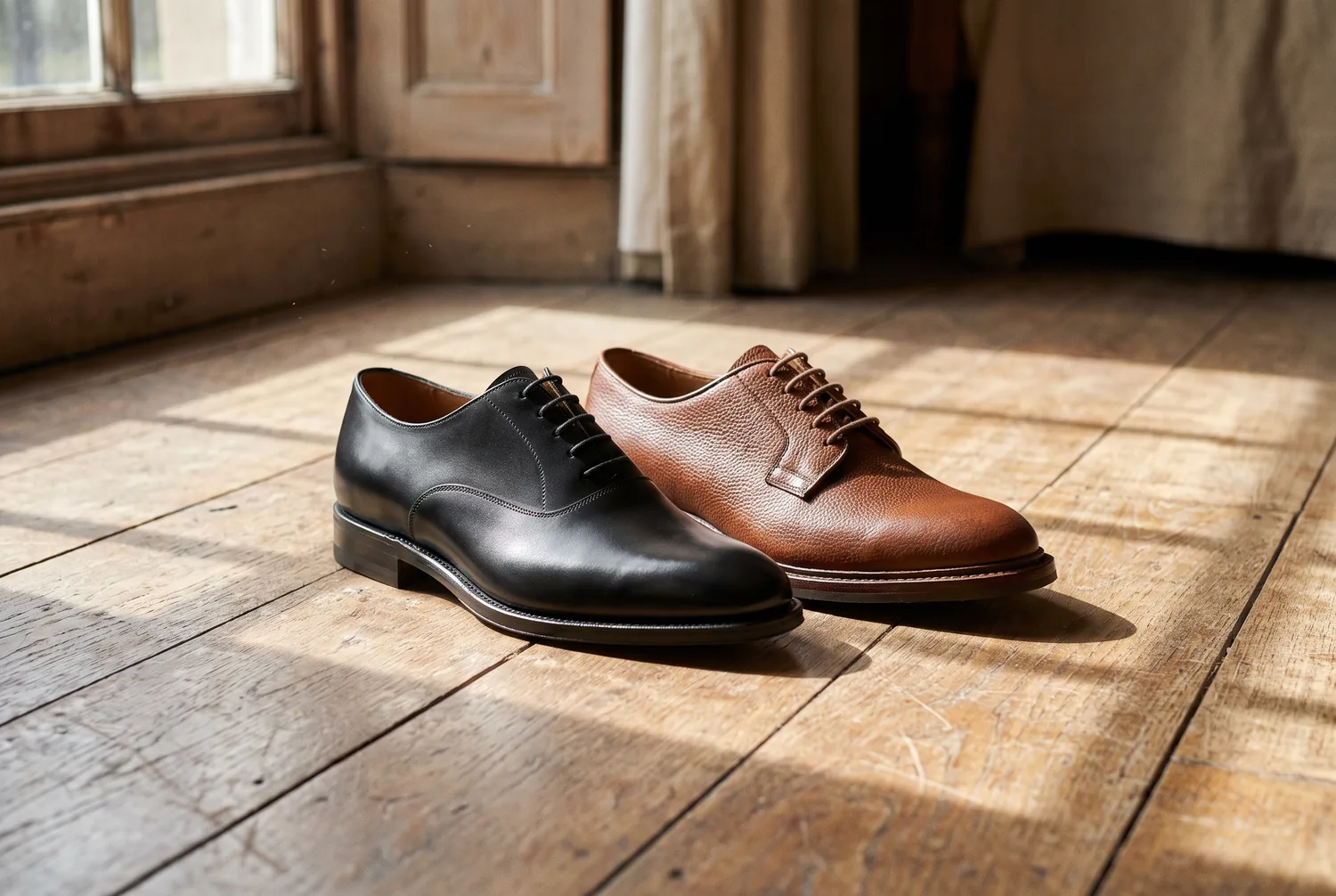
- The same day. Wipe off the worst with a damp cloth as soon as you are indoors. The longer the salt sits, the deeper it sets.
- Vinegar again. The same two-to-one water and white vinegar mix, on a soft cloth, wiped over the white line until it lifts.
- Dry slowly. Cedar shoe trees in, away from heat, overnight.
- Feed the leather. Once dry, a conditioner or a cream polish puts back the oils the salt drew out. This is the step that prevents the crack across the toe.
Dress so less of it gets on you
The cheapest fix is the one where the salt never lands.
- Hem with little or no break. A trouser that pools on the shoe sits in the slush at every crossing. A plain hem that just touches the top of the shoe clears it. Winter is not the season for a full break.
- Skip the turn-up in winter. A cuffed hem is a small shelf that collects slush and salt and holds it against the cloth.
- Boots for the walk, shoes at the desk. Keep a pair of proper shoes at the office from November to April. Rubber overshoes that slip over your dress shoes work too, and they are nothing to be embarrassed about.
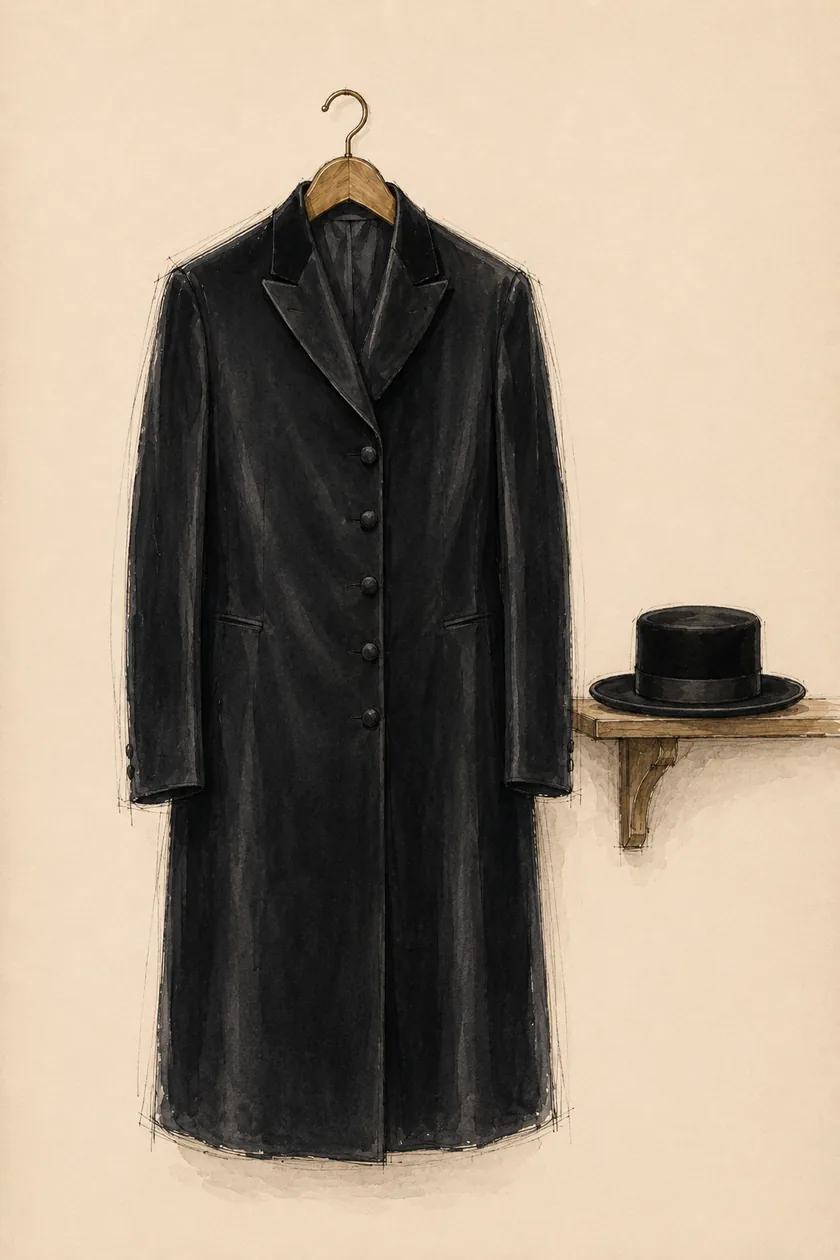
- A coat that reaches the knee. It keeps the spray off the upper trouser, which is the part that is hard to clean and easy to see. Coat over a suit covers the rest of the commute.
- Pick a cloth that hides it. A mid-grey flannel or a charcoal birdseye shows the tide line far less than a smooth navy or black worsted.
The winter suit, drawn
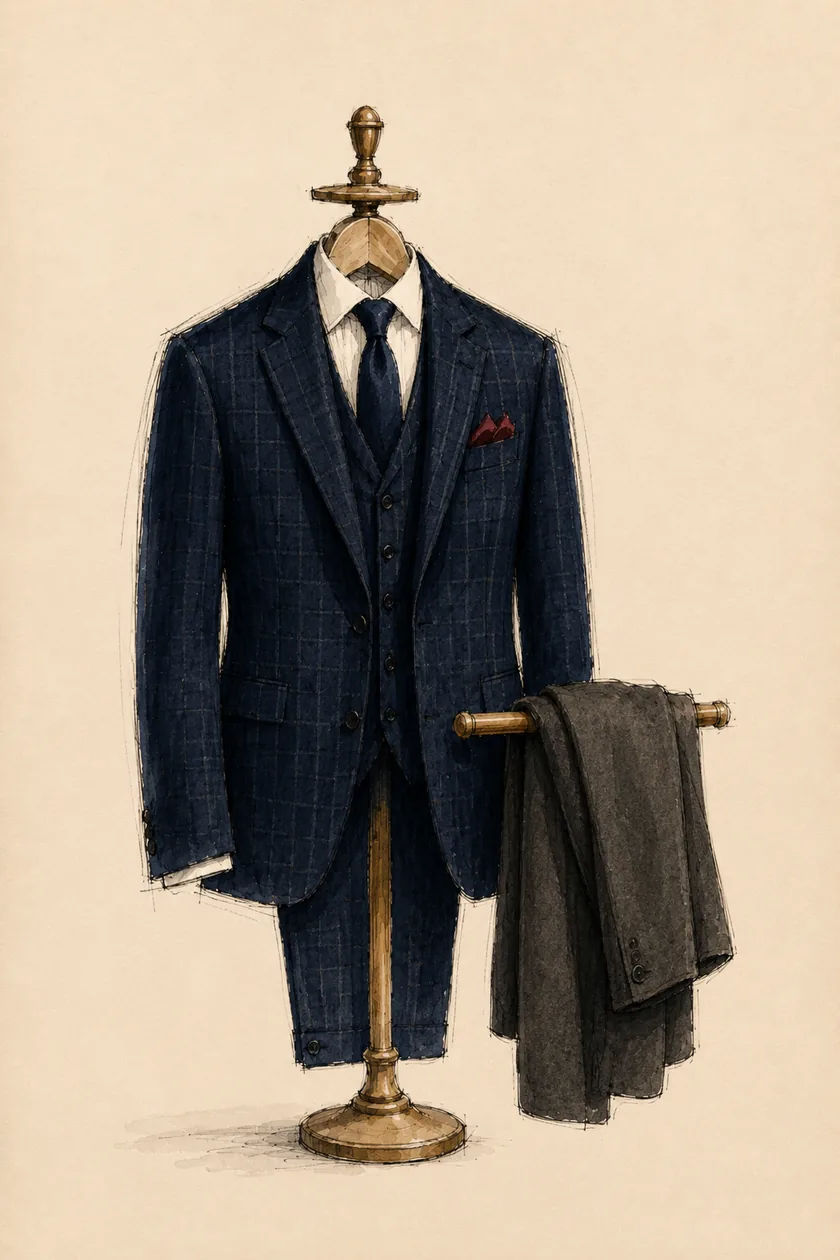
A slate grey flannel, plain hem, flat front: warm enough for the walk, forgiving of a season of salt. Draw it on the Drawing Board.
Salt-worn hems can be re-hemmed or reinforced before they fray through, so bring them in at the first sign rather than the last. For a new winter suit, Sam makes custom suits for Toronto clients at the studio just north of Steeles, in three to four weeks. Book a time before the first snow and it is ready when the salt trucks go out.