Coat over a suit: dressing for the Toronto commute, from the GO train to the PATH
Updated September 2026 · Sam’s Menswear editorial team
A Toronto winter commute asks a coat to do three contradictory things in forty minutes. It has to hold off a platform at minus ten with the wind coming across the tracks. Then it has to come off, or at least open, on a train or a subway car heated well past twenty degrees and packed shoulder to shoulder. Then it goes back on for the last walk down a downtown street that funnels the wind straight off the lake.
January nights in Toronto average around minus seven, an average winter drops more than a metre of snow, and none of that is the hard part. The hard part is the transition, twice a day, four or five days a week.
The brief
A composite, not one client’s order.
He lives in Vaughan, Richmond Hill or Mississauga and takes the GO train to Union. Since the big banks moved most of their office staff to four days a week in the autumn of 2025, that is four round trips a week instead of two. From Union he can walk most of the way to his tower indoors, through the PATH, which runs over thirty kilometres underground and links more than seventy-five downtown buildings. So the coat is worn hard for twenty minutes and carried for the rest. He wants one coat that covers his suit, survives the salt, and does not cook him on the train.
What the coat has to cover
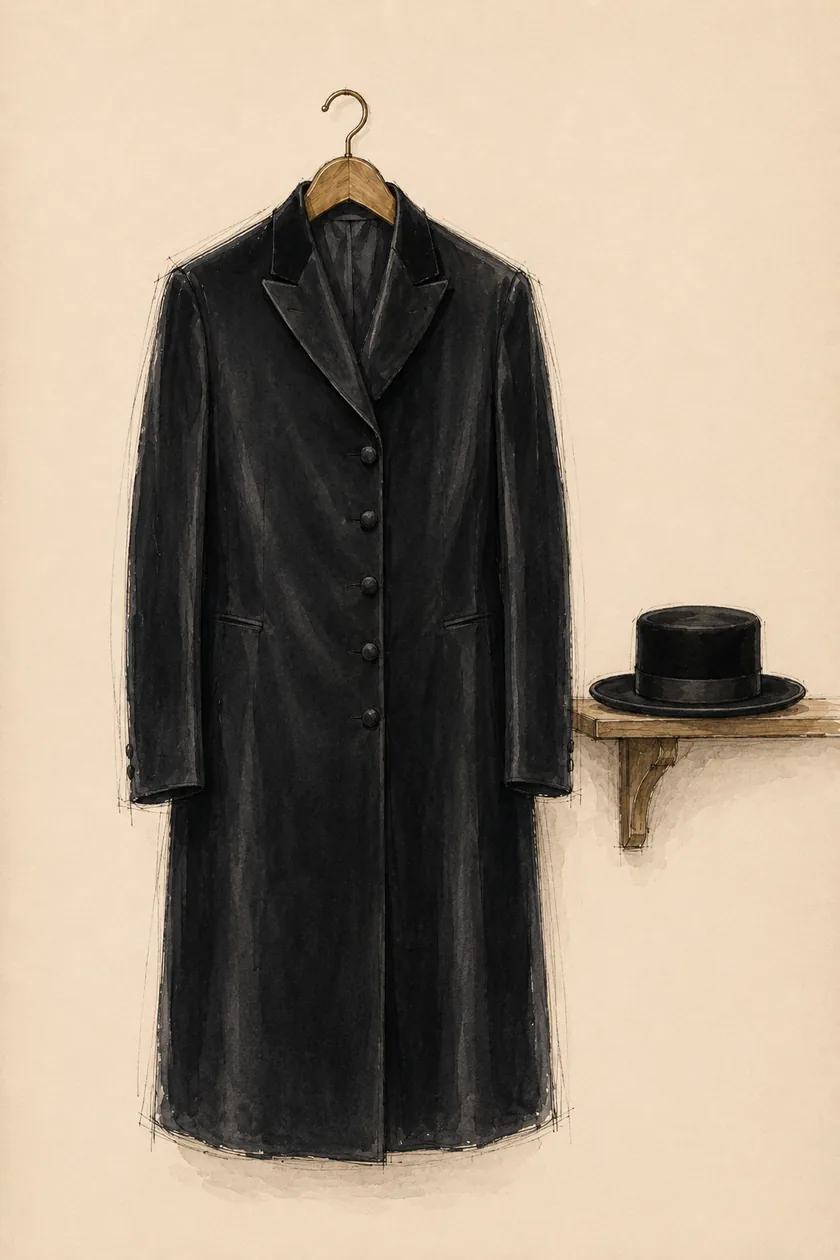
The first rule is simple and most ready-made coats break it: the coat must be longer than the suit jacket. A jacket hem hanging out below a short coat looks like a mistake, and it is the jacket, not the coat, that takes the wet and the salt spray from the street.
That rules out the mid-thigh car coat for a man who wears a suit. On the platform and the street, a coat to the knee, or just above it, covers the jacket and keeps the tops of the trouser legs dry. Much longer than the knee, and the hem drags on the stairs at Union and in the slush at the curb.
The second rule: the coat is cut over the suit, not over a shirt. A coat bought in the same size as your suit jacket is cut to go over a sweater at most. Over a tailored jacket it pulls across the back and binds at the armhole, and the jacket’s shoulders come out crushed. A made coat is cut from the measurements taken over your jacket, with room in the shoulder, the upper sleeve and the chest. It is the single biggest reason custom outerwear earns its keep.
The order
| The commuter’s coat | |
|---|---|
| Cloth | Wool melton or herringbone coating, 18 to 20 oz; wool with some cashmere if you want it softer |
| Length | To the knee or just above it; always longer than the jacket |
| Cut | Single-breasted, three buttons or a fly front; room in the shoulder and sleeve for the suit underneath |
| Collar | Deep enough to turn up against the wind and close at the throat |
| Lining | Slippery all the way down the sleeves, so it slides over the suit jacket |
| Pockets | Flap pockets deep enough for gloves; an inside pocket where your hand goes for the PRESTO card |
| Colour | Charcoal or mid-grey forgive salt and slush; navy is smart but shows the white tide line; camel shows the slush |
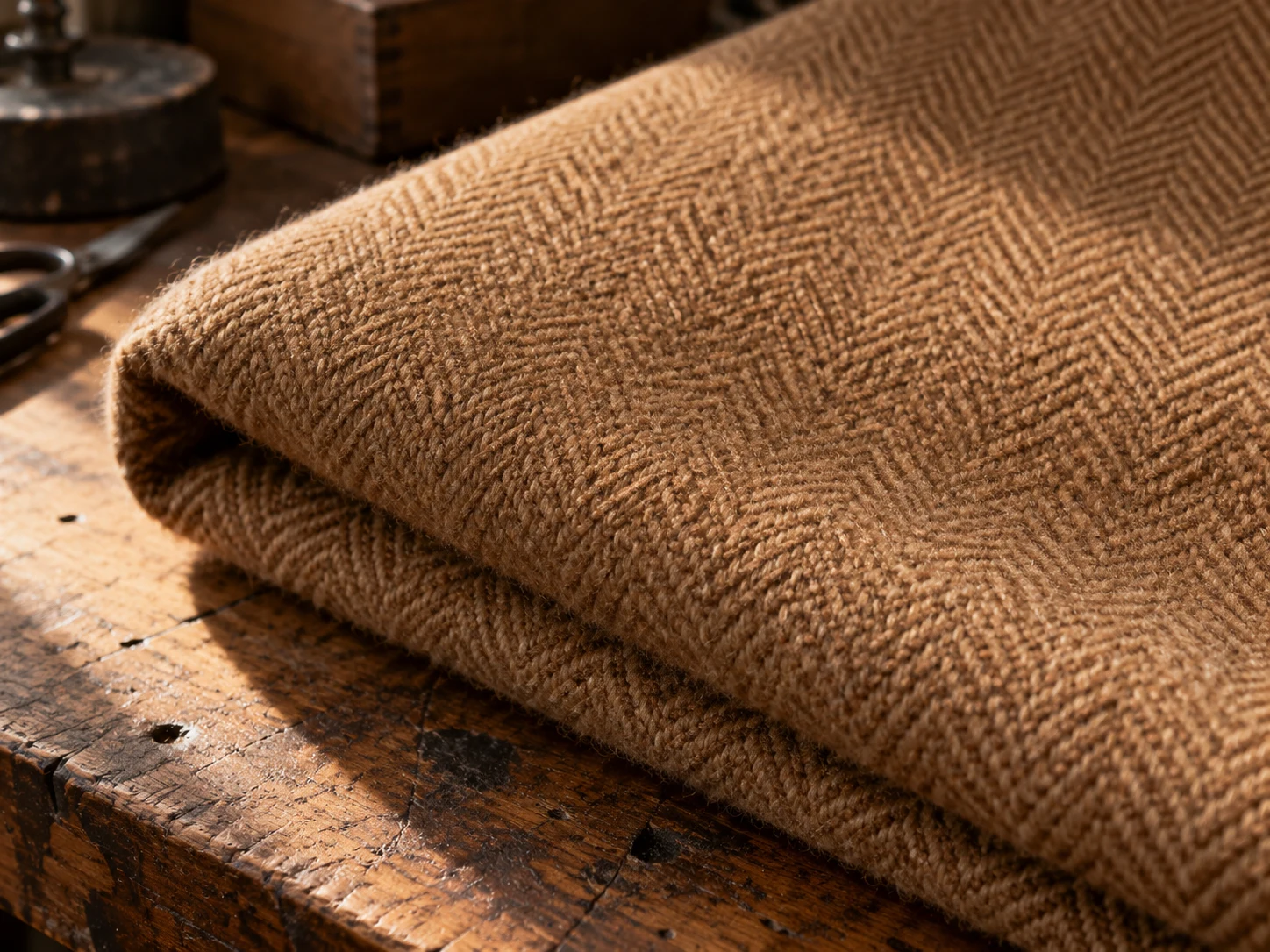
Every coating in the fabric library sits at around 20 oz: melton for a smooth, dense, wind-shedding face, herringbone for texture that hides a hard season.
Topcoat or overcoat?
A topcoat is the lighter of the two, around 14 to 16 oz, cut a little closer, and right for October, November and April, the long shoulder seasons when the mornings are cold and the afternoons are not. An overcoat is the heavy one, for December through March.
If you only have one, make it the overcoat at knee length. A Toronto January will find the gaps in a topcoat; a mild November in an overcoat just means you unbutton it. For the days a wool coat is not enough at all, see down coat or wool overcoat; for the Chesterfield, the polo coat and the rest, see the overcoat styles, explained.
Arriving intact
- On the train, carry it, do not sit on it. Fold it in half at the shoulders, lining out, and lay it over your arm or your knees. Sitting on a coat for forty minutes presses creases into the back that do not come out by lunchtime.
- Scarf under the coat collar, not over the suit collar. Wound around the neck on top of the jacket, a scarf crushes the jacket’s lapels and collar into your shirt. Put the scarf on after the jacket and before the coat, so the coat’s collar closes over it.
- Boots on the walk, shoes at the desk. Keep a pair of proper shoes under the desk from November to April. Salt and slush destroy good leather faster than anything else in a Toronto winter; the salt guide covers getting it off.
- Brush it weekly. A clothes brush down the front and across the shoulders lifts the grit and the salt dust before it works into the cloth. Hang it at home on a broad, shaped hanger, not a hook.
The suit underneath
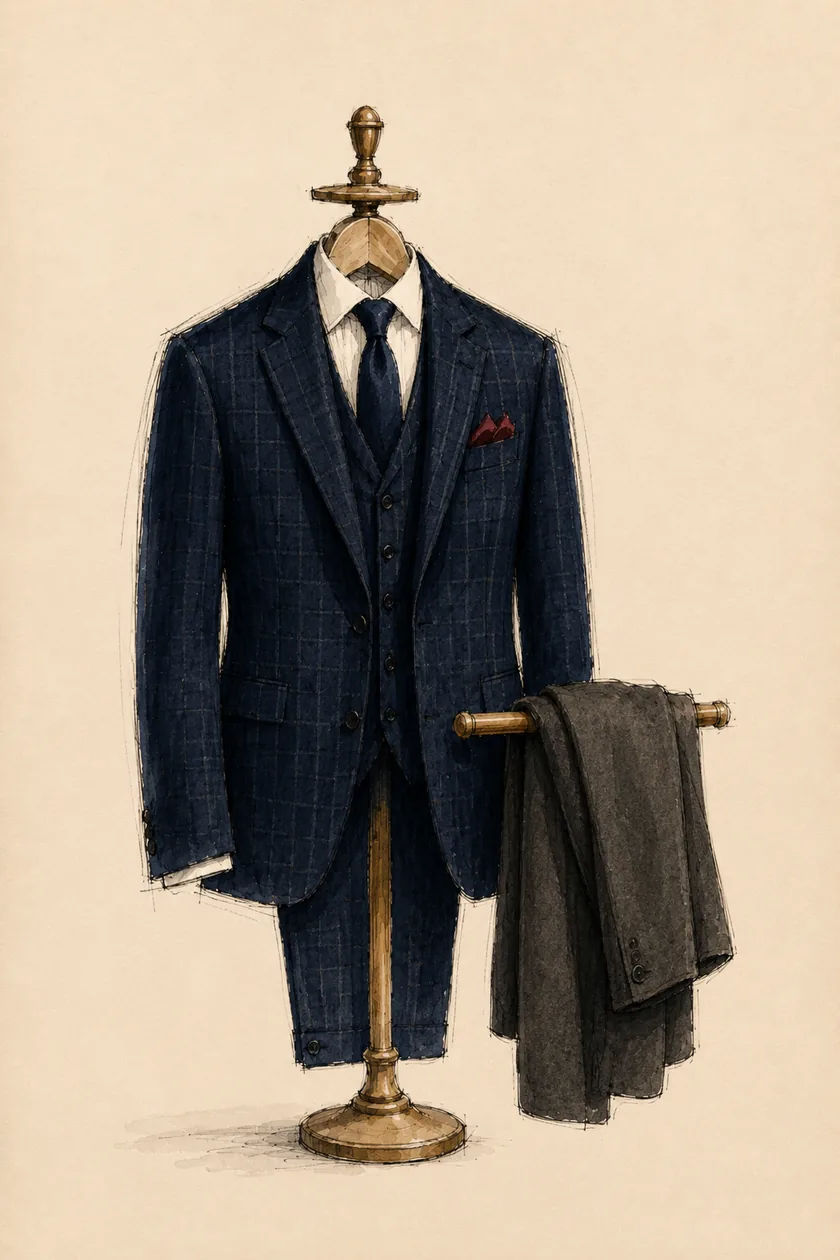
A coat is only half of the commute. The suit under it wants a year-round worsted of about 10 to 11 oz, dense enough for the walk and light enough for a heated office all day: a charcoal birdseye does both and hides a winter’s worth of wear. Draw that suit on the Drawing Board, then look at how it would sit under a charcoal coat.
Sam makes coats and custom suits for Toronto clients at the studio just north of Steeles, a straight run up from the city. A coat is best ordered in September or October, before the first real cold, so it is finished and fitted before you need it. Book a time and wear the suit you commute in, so the coat is measured over it.
The 2026 order dates, with the week coat searches peak: Overcoat by 16 October →
In November the coat carries the poppy: how to wear it on a suit and a coat →