Chesterfield, polo coat, car coat, peacoat: the men's overcoat styles, explained
Updated September 2026 · Sam’s Menswear editorial team
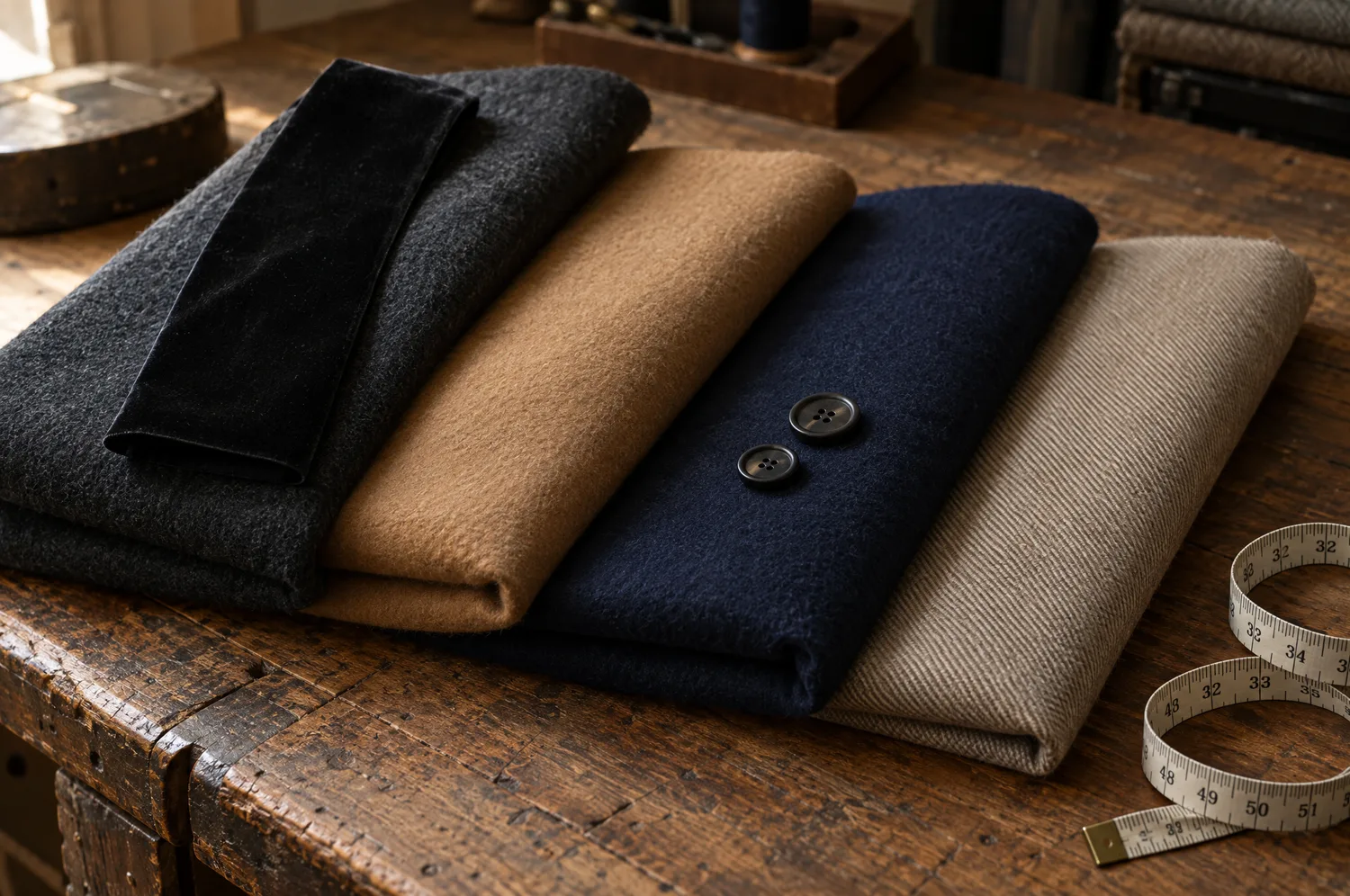
Most men buy a coat by colour and length and never learn the names. The names matter, because each style was made for a job, and a coat worn for the wrong job looks it: a short coat with the suit jacket hanging out below, a camel polo coat at a funeral, a peacoat over a dinner suit.
Here are the styles side by side, what gives each one away, and where it belongs.
At a glance
| Length | Front | Usual cloth | Wear it with | |
|---|---|---|---|---|
| Chesterfield | Knee | Single-breasted, often a hidden button fly | Charcoal, navy or black melton; velvet collar | Suits, evenings, the office |
| Polo coat | Knee or just below | Double-breasted | Camel hair | Suits and odd jackets; weekends |
| Covert coat | Just above the knee | Single-breasted, hidden fly | Fawn covert twill | Suits and country clothes |
| Topcoat | Knee or above | Any | Lighter wool | Spring and autumn over a suit |
| Car coat | Mid-thigh | Single-breasted | Wool, tweed, cotton | Casual clothes, driving |
| Peacoat | Hip | Double-breasted | Heavy navy melton | Casual clothes |
| Trench coat | Knee | Double-breasted, belted | Tightly woven rain-shedding cloth | Suits in spring and autumn rain |
The Chesterfield
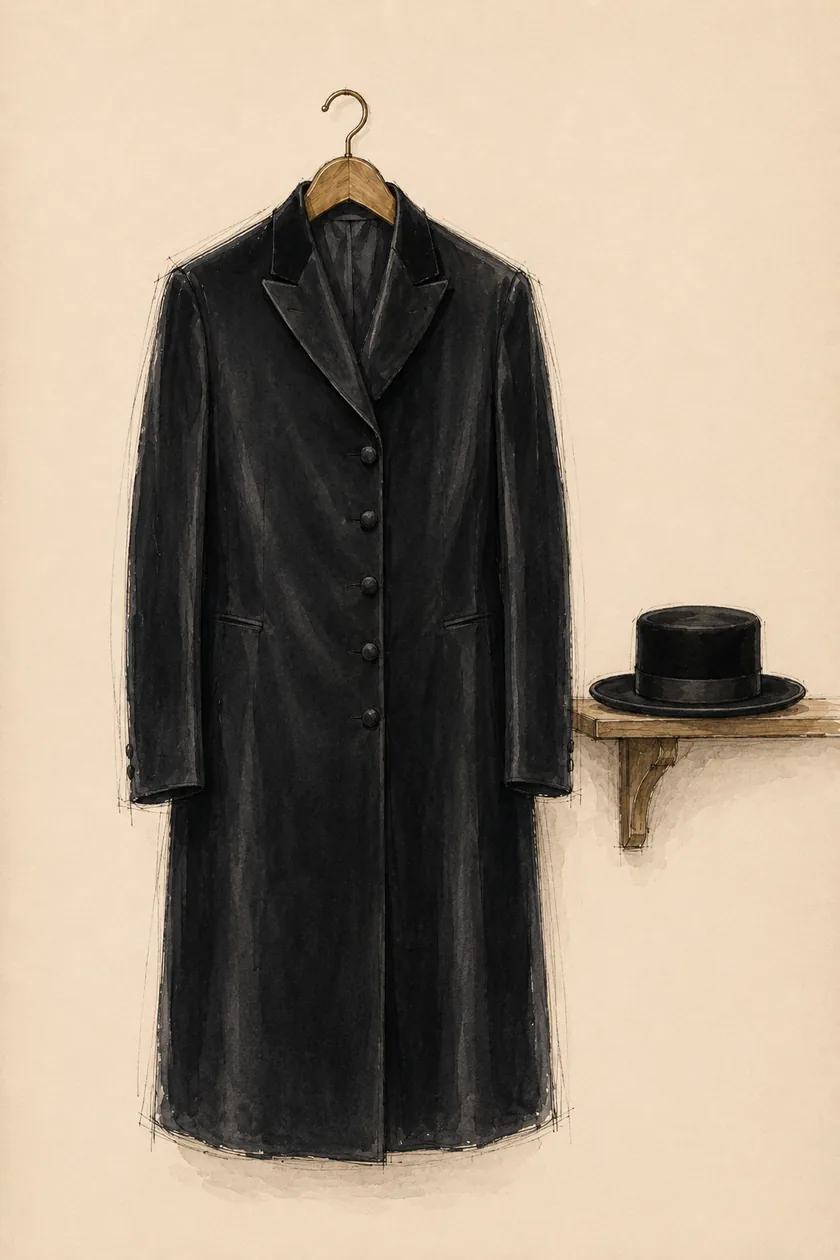
The Chesterfield is the classic town overcoat, usually said to be named after a nineteenth-century Earl of Chesterfield. It is cut straight, with no waist seam, and it falls to the knee, which is what makes it the coat for a suit: it covers the jacket completely. Many have a fly front, a placket that hides the buttons, and a collar faced in velvet, black on charcoal or navy.
It is the most formal coat on this list and the most useful. In charcoal or navy it goes over a business suit, a wedding suit and a dinner suit alike, which is why it is the answer for a man who owns one coat.
The polo coat
The polo coat began as the coat polo players threw on between chukkas in the early twentieth century, and it kept the sporting details: double-breasted, usually six buttons, patch pockets, a half belt across the back and turned-back cuffs. It is made in camel hair, or in camel-coloured wool, and that colour is the whole point. It warms up a grey or navy suit and it is the coat people remember.
It is less formal than a Chesterfield. Wear it over a suit to the office or a weekend lunch, not to a funeral or over black tie.
The covert coat
The covert coat takes its name from its cloth, covert, a tough, tightly woven twill usually in fawn or light brown, originally for riding and hunting. Its giveaway is rows of stitching around the cuffs and the hem, and like the Chesterfield it often has a fly front and a velvet collar. It is shorter than a Chesterfield and a little more country than town, and it sits well over tweed as well as over a suit.
The topcoat
A topcoat is less a style than a weight: an overcoat in a lighter cloth, for the months when a winter coat is too much. In Toronto that is October and November and again in March and April, which is a good part of the year. Cut like a Chesterfield, it keeps a suit covered through the shoulder seasons. The commuter’s guide covers when a topcoat is enough and when it isn’t.
The car coat
The car coat was made for driving, and its length follows from that: it stops at mid-thigh, so you can sit behind the wheel without bunching a long coat under you. It is simple, usually single-breasted, and comes in wool, tweed or heavy cotton.
It is the everyday coat for jeans, chinos and a sweater. It is the wrong coat over a suit, because a suit jacket is longer than it is and the jacket’s hem hangs out below.
The peacoat
The peacoat comes from the navy: double-breasted, in heavy navy melton, with broad lapels and a big collar that turns up against the wind, cut to the hip so a sailor could climb in it. It is a warm, hard-wearing casual coat. Like the car coat, it is too short to go over a suit jacket.
The trench coat and the raincoat
The trench coat was an officer’s coat from the First World War, and the details are still there: double-breasted, belted, with a storm flap at the shoulder and straps at the cuffs, in a tightly woven cloth that sheds rain. It falls to the knee, so it covers a suit, which makes it the coat for a wet spring or autumn day in the city. A plainer single-breasted raincoat does the same job with less ceremony.
And the down coat
None of these is a down coat, and on the coldest days in Toronto, a wool coat is not always enough. Down coat or wool overcoat? sets out when each is the right choice and why many men here own one of each.
If you only own one
- You wear a suit most days: a charcoal or navy Chesterfield at the knee, in a heavy wool for winter.
- You want to be noticed: a camel polo coat. It works over grey and navy and makes a plain suit look chosen.
- You rarely wear a suit: a car coat, or a peacoat, in a colour that goes with everything you own.
- You spend a lot of the winter outside: a down-filled coat, and a wool coat for the days that need tailoring.
Having one made
Sam makes every coat on this list, the Chesterfield, the polo coat, the covert coat, the topcoat, the car coat, the peacoat and the trench coat, plus raincoats, in cashmere, camel hair and heavy wool. Each is cut to your measurements and, for a coat that goes over a suit, measured over the jacket you will wear under it. He doesn’t make down coats. A coat takes about five weeks, so October is the month to start. Sam can come to your office or your home for the first appointment, and for the fitting too if you’d rather, or you can come to the studio in Vaughan. See custom overcoats and winter coats.
This year’s dates, worked out: Overcoat by 16 October →