Fabric for a Toronto winter (and the humid summer)
Updated July 2026 · Sam’s Menswear editorial team
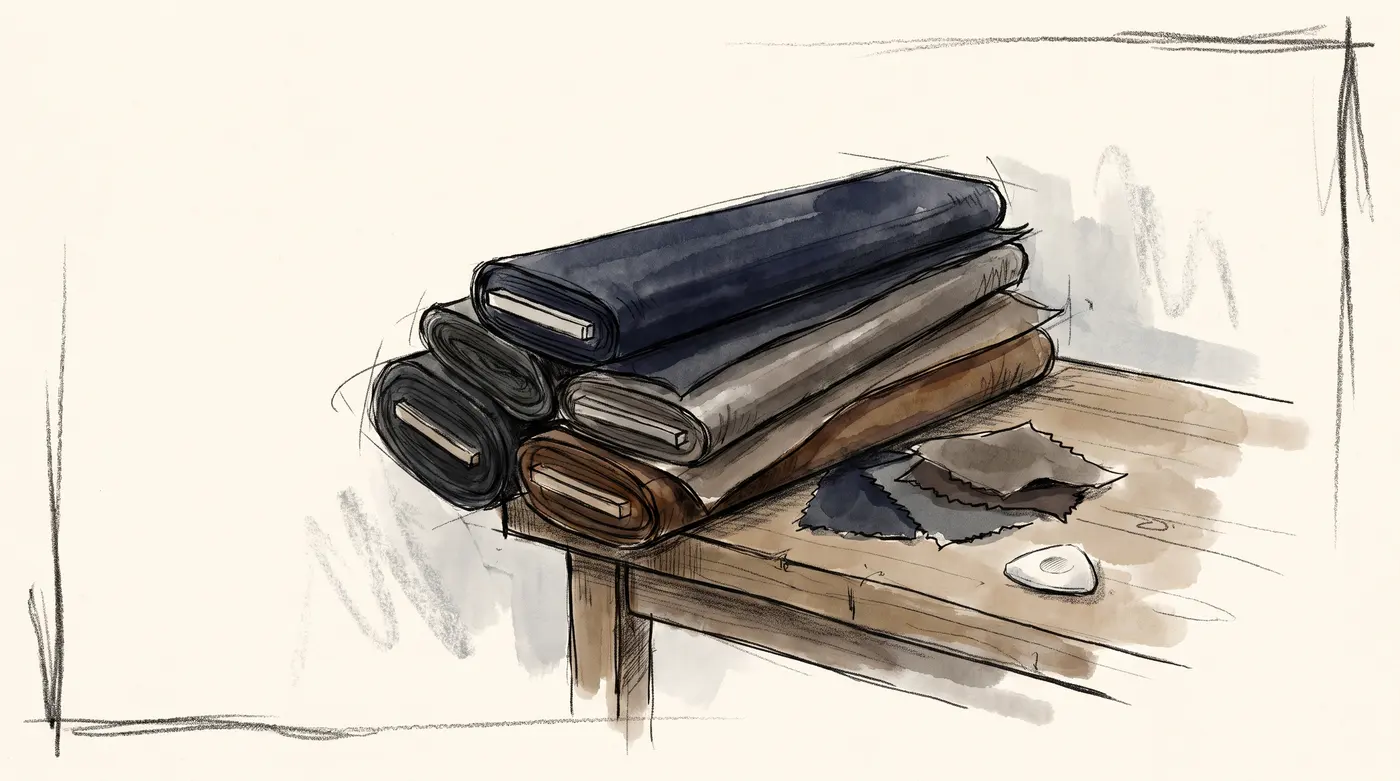
Toronto asks two hard questions of a suit: can it survive a January that bites, and can it breathe through an August that sits at 30°C with the humidity to match? The honest answer is that no single fabric does both well. For winter you want weight and a soft, brushed hand: flannel. For our sticky summers you want a light, open weave that lets air through: high-twist worsted, fresco, or linen. Here’s how I choose fabric by the season at the bench.
What suit fabric is best for a Toronto winter?
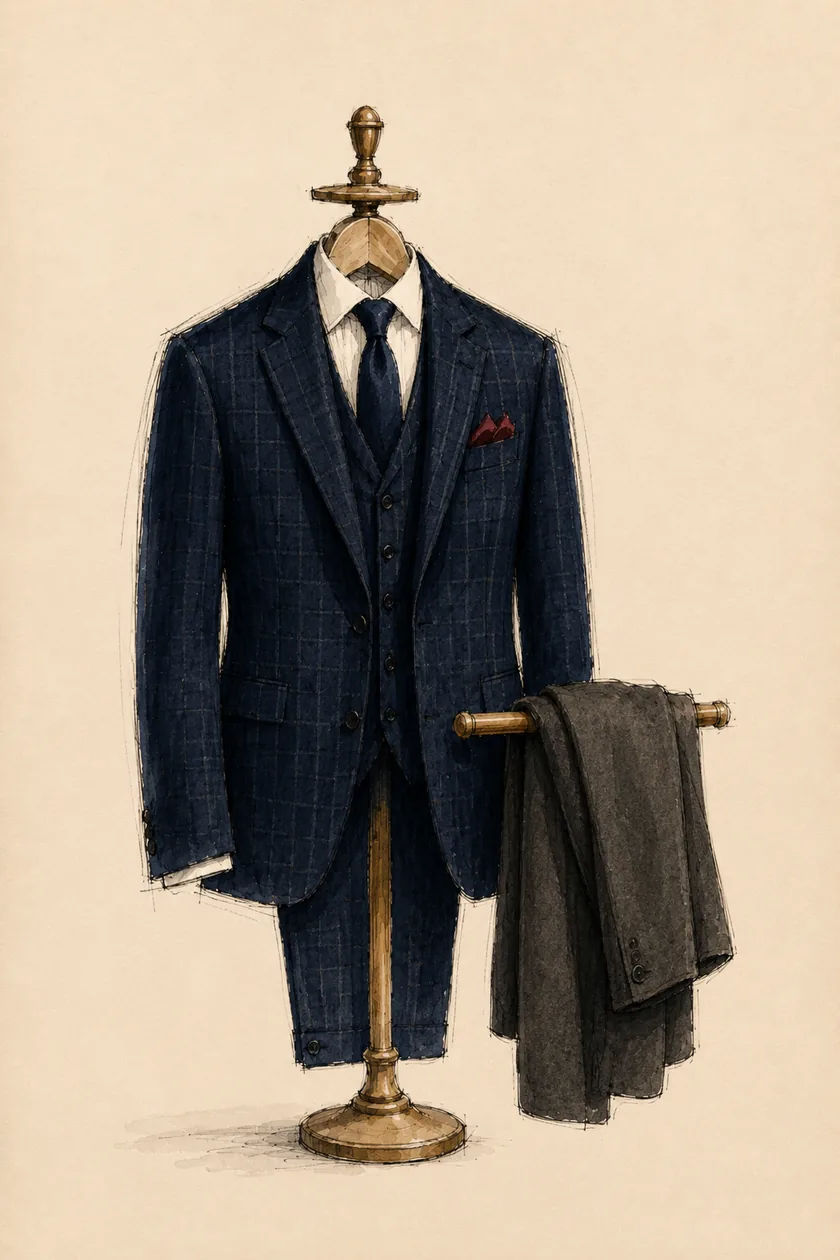
For real cold, flannel. A worsted or woollen flannel around 11–14 oz (roughly 320–400 g/m) gives you warmth, a rich matte look, and a drape that only gets better with wear.
Toronto winters aren’t gentle. You’re walking from a heated GO train to a windy corner of King Street, and a summer-weight suit will feel like paper. Flannel has a lightly brushed finish that traps warm air against you without adding bulk. It also hides a hard day: the surface is forgiving, so it creases less visibly than a slick worsted.
If flannel feels too soft for a boardroom, a heavier worsted (around 12 oz) in a tight twill gives you the same warmth with a sharper, more formal face. Both are excellent for a winter wedding or a client-facing role where you want presence. More on picking a base colour in choosing your fabric.
What fabric handles a humid Toronto summer?
High-twist wool, fresco, or linen. The trick isn’t just lighter weight. It’s an open weave that lets humid air pass through instead of trapping it against your skin.
This is the part people get wrong. A featherweight but tightly woven fabric will feel hotter than a slightly heavier one with air pockets in the weave. Toronto’s summer isn’t dry heat; it’s wet. You need the moisture vapour to escape.
- High-twist worsted. Yarns spun tight, then woven with space between them. Breathes, resists wrinkles, and springs back after a humid subway ride. My default recommendation for summer suits that still have to look professional.
- Fresco. A classic high-twist fabric (the Minnis-style ones are the benchmark) with a slightly crunchy, porous hand. Genuinely cool, holds a crease, and looks like a proper suit rather than a beach outfit.
- Linen. The coolest of all, with an open flax weave. It wrinkles, and that’s the point. Embrace it for outdoor summer weddings and weekends, not a courtroom.
Does fabric weight or weave matter more for staying cool?
Weave, more often than weight. A slightly heavier open weave beats a light, dense one in the humidity every time, because air and moisture move through the gaps.
Weight (grams per metre or ounces per yard) tells you roughly how warm a fabric is, but it doesn’t tell the whole story. Two fabrics at the same 240 g/m can feel completely different: the high-twist open one breathes, the tight plain one steams. When you come in, I’ll put both against your hand and you’ll feel the difference in about three seconds. That’s why I’d rather show fabric in person than sell it off a photo. Browse the range on the fabrics page first if you like.
What weights should I actually ask for by season?
Think in three bands. Roughly: summer 220–260 g/m, year-round 260–320 g/m, winter 320–400 g/m. If you own one suit, buy the middle band.
- Summer (220–260 g/m / ~8–9 oz): high-twist, fresco, linen, tropical wool.
- All-season (260–320 g/m / ~9.5–11 oz): mid-weight worsted, the workhorse. Fine in an air-conditioned office nine months of the year.
- Winter (320–400 g/m / ~11–14 oz): flannel, heavy twills, tweeds for sport coats.
Most Toronto men are best served by two suits: a mid-weight worsted for most of the year and a flannel for the deep cold. Add a summer high-twist third once those are covered. We’ll map this out together in the drawing board when we design yours.
Is a year-round suit a real thing, or a compromise?
It’s real, and it’s the smartest first purchase. A mid-weight worsted around 280–300 g/m carries you through spring, fall, air-conditioned summers, and mild winter days indoors.
You layer for the extremes: an overcoat over it in January, a lighter shirt under it in July. What it won’t do is keep you warm standing outside in February or cool at an outdoor August wedding. That’s when a dedicated flannel or a high-twist earns its place. For a first business suit, the year-round worsted is almost always where I start clients. See dressing for finance or dressing for sales for role-specific picks.
How do I care for seasonal fabric so it lasts?
Rest it, brush it, steam it. Don’t over-dry-clean it. Flannel and linen especially reward a light hand.
Give any suit a full day off between wears so the fibres recover; a cedar hanger and a soft brush do more than the cleaner does. Steam out humidity-set wrinkles rather than pressing them flat, which flattens flannel’s nap. Dry-clean only when it’s genuinely dirty; two or three times a year is plenty. The full routine is in how to care for your suit. Fabric chosen right for the season also simply lasts longer, because you’re not fighting the weather in the wrong material.
Come feel the difference for yourself. Bring your calendar and I’ll help you pick weights for the life you actually live: a flannel for the cold, a high-twist for the humidity, or one mid-weight year-round suit to start. Put a fresco and a flannel against your hand at the first fitting and you’ll leave knowing exactly what your next suit should be made of. When you’re ready, we’ll design it together.