Super 100s to 150s: what the numbers actually mean
Updated July 2026 · Sam’s Menswear editorial team
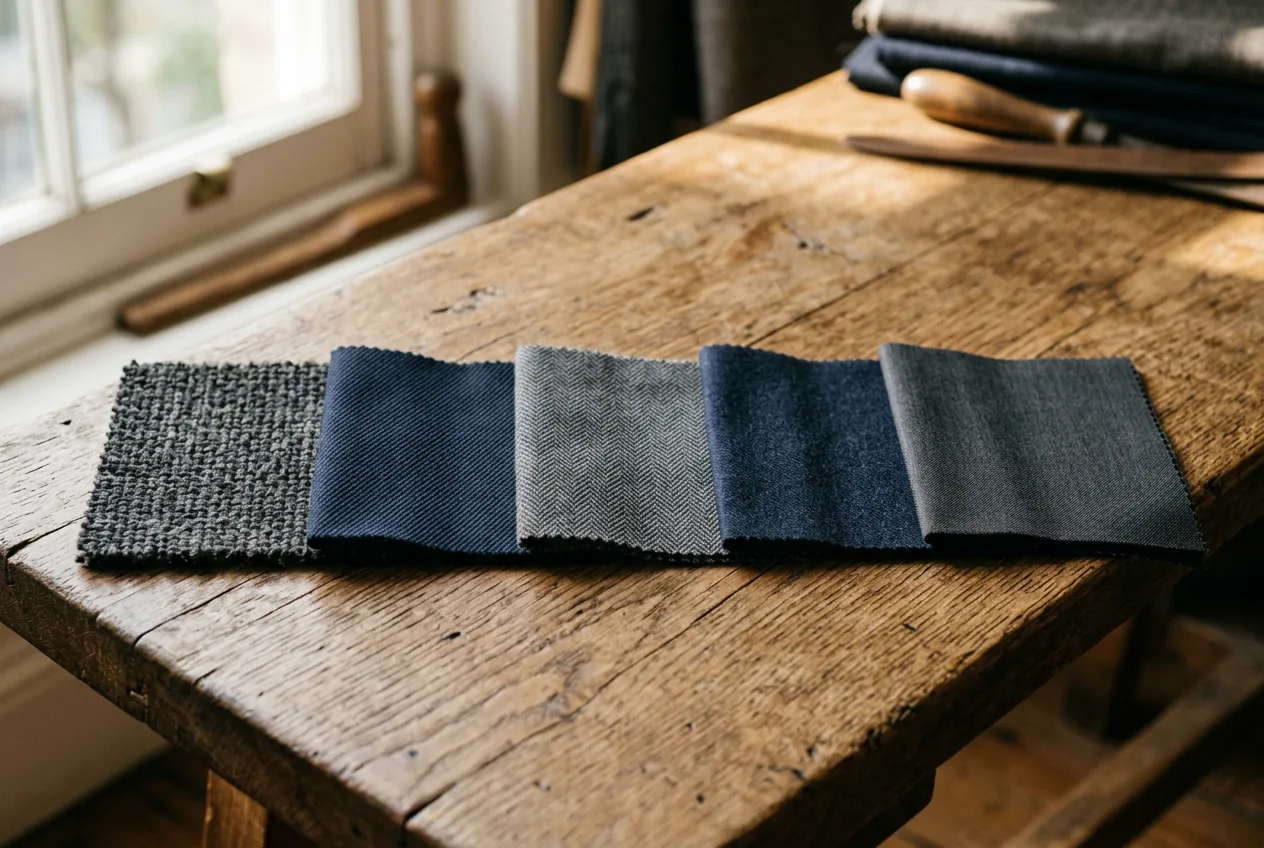
Super numbers tell you how fine the wool fiber is, not how good the suit is. The higher the number, the finer and softer the fabric. But finer also means more delicate, so the “best” number depends on how hard you’ll wear the suit, not on bragging rights.
What does the Super number on a suit actually mean?
It measures the fineness of the wool fiber. Higher number, thinner fiber, softer hand. That’s the whole story.
The number ties back to how many hanks of yarn a spinner can pull from a pound of that wool. Finer fiber spins into more, longer thread, so it earns a higher Super rating. In plain terms:
- Super 100s: roughly 18.5 microns of fiber diameter
- Super 120s: around 17.5 microns
- Super 150s: around 16 microns
- Super 180s+: 14 microns and down, into the very fine range
A micron is a thousandth of a millimeter, so we’re splitting hairs, literally. The finer the fiber, the smoother and more luxurious the fabric feels in your hand. See the range on our Fabric Library.
Is a higher Super number better?
No. Higher means finer and softer, not better made or longer lasting. A Super 150 is a more delicate fabric than a Super 100, and delicate is not the same as superior.
Here’s the part the marketing tags leave out: the Super number says nothing about the weave, the mill, the finishing, or how the fabric was spun and woven. A beautifully woven Super 110 from a top mill will outperform a cheap Super 150 every day of the week. The number is one input, not a grade.
I’ve had guys walk in asking for the highest number on the shelf because they think it’s the “best” suit. It’s usually the wrong instinct. You’re paying more for a fabric that gives you less life.
Which Super number lasts longest?
Lower numbers last longer. Super 100s to 130s are your workhorses. They hold their shape, resist shine and wrinkles, and take daily wear without complaint.
Thicker fiber is simply tougher. It springs back after a long day at a desk, survives being sat in, and doesn’t develop a shine at the seat and elbows nearly as fast. As you climb past Super 150, the fiber gets so fine it starts to give up faster:
- Wrinkles set in more easily and hang around
- The fabric develops shine at stress points sooner
- Snags and pulls are harder to repair invisibly
- It punishes frequent dry cleaning
If you want a suit that takes a decade of real use, Super 120s or 130s is the sweet spot. Enough refinement to feel like something, enough backbone to last.
When is a Super 150s or higher actually worth it?
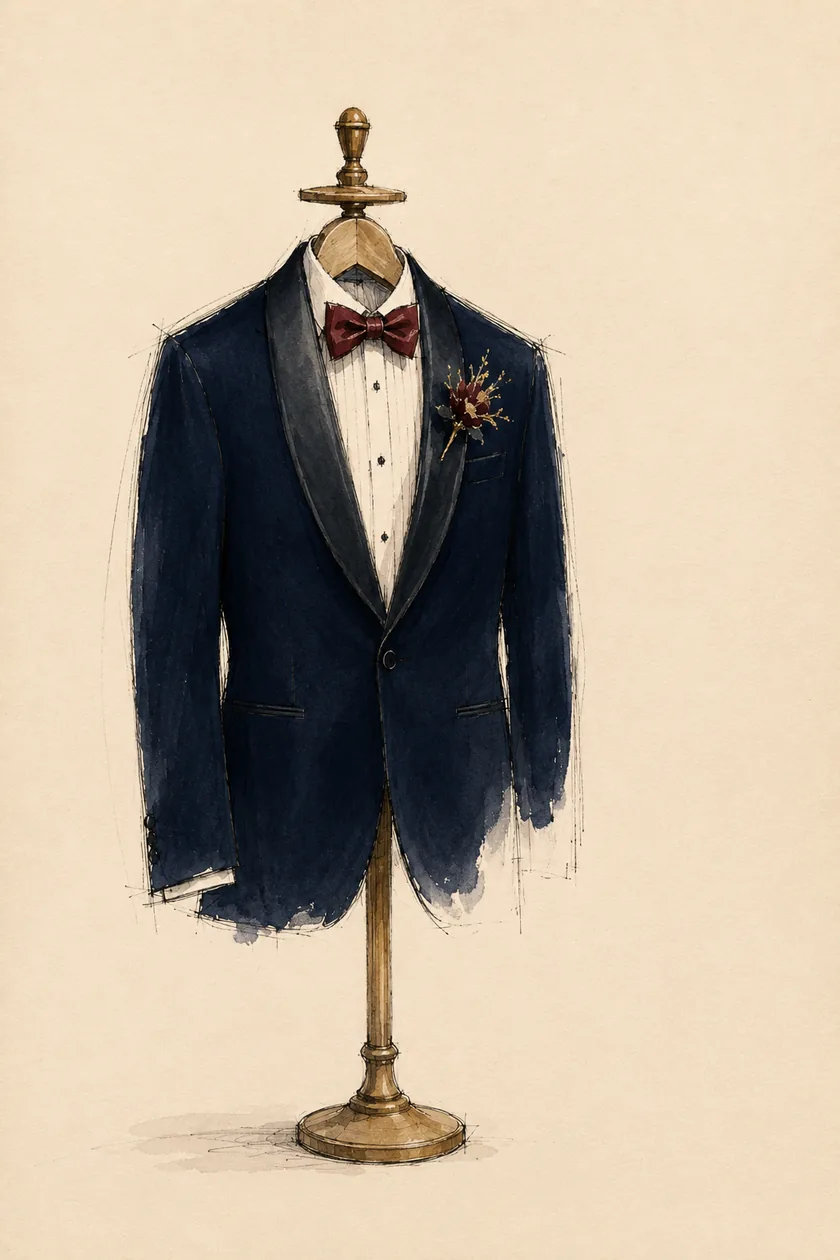
When the suit lives in the closet more than on your back. A Super 150 or 160 is genuinely gorgeous for a wedding, a black-tie night, or a few big occasions a year.
If it’s the suit you wear twice a month to something important, the delicacy never gets a chance to bite you, and you get to enjoy that liquid, feather-light drape. That’s the right home for a high number. For a groom who wants that one showstopper, we’ll happily build it, see the groom’s suit and our black-tie wedding attire guide.
What I steer people away from is buying a Super 150 as their five-day-a-week office suit. You’ll love it for six months and be disappointed by year two.
What Super number should I choose for a daily work suit?
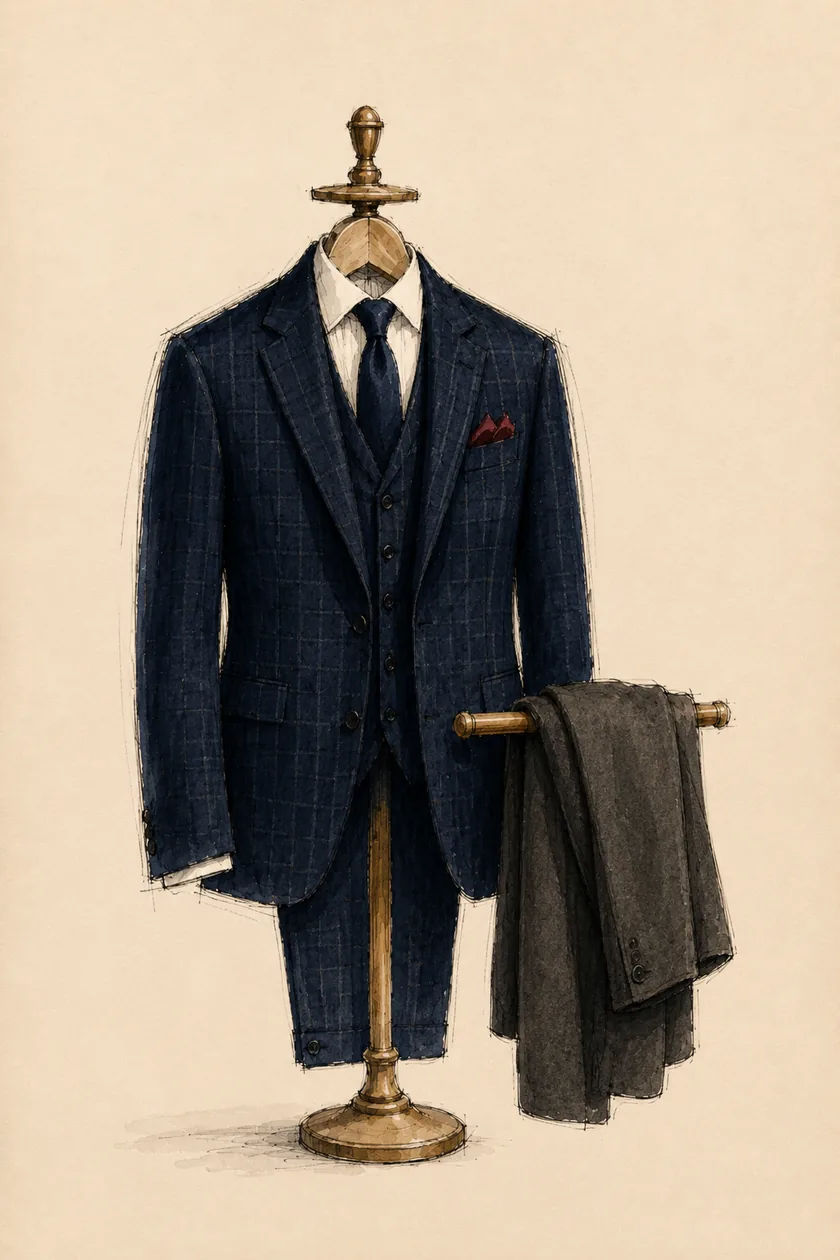
For a suit you wear hard, Super 110s to 130s. It’s the range that feels good, photographs well, and survives the commute, the chair, and the years.
Think about the life the suit will lead:
- Everyday business, courtroom, sales floor: Super 110s to 130s
- Frequent travel: lean toward 110s to 120s, they resist wrinkles and bounce back
- A few special occasions a year: Super 150s and up is fair game
- First good suit you own: 120s, no question, it does everything
If you’re building a work wardrobe, our choosing your fabric guide walks through weight and weave too, which matter more than the Super number for how a suit performs. And a foundational navy suit in a solid 120s is the most useful thing most men can own.
Does a higher Super number wrinkle more?
Yes. The finer the fiber, the less it resists creasing and the longer wrinkles linger. It’s the single most common regret with high-Super suits.
A Super 100 will shrug off a day of sitting and look fresh again by morning. A Super 170 remembers every time you crossed your legs. That’s not a defect, it’s physics, finer fiber has less body to snap back. If a low-maintenance, always-sharp look matters to you, that alone is a reason to stay in the low-to-mid range.
How do I care for a high Super number suit?
Gently. Rotate it, hang it on a proper shaped hanger, brush it, steam it, and dry clean it as rarely as you can get away with.
Dry cleaning is the quiet killer of fine wool, the solvents and heat wear the fiber down. Steam and a good brush handle most of what a suit needs between real cleanings. Our full suit care guide covers the routine. The finer the fabric, the more that routine matters.
The honest takeaway: the Super number is a fineness rating, not a quality score. Pick the number that matches how you’ll actually live in the suit, and let the mill and the weave carry the rest.
If you want to feel the difference between a 110 and a 150 in your own hands, come in. Rubbing the two fabrics between your fingers settles the question faster than any tag. Book an appointment and we’ll help you design a suit around the life it’s going to lead, whether that’s the office, a wedding, or a traditional wardrobe.