The finance dress code: understated, precise, and quietly expensive
Updated July 2026 · Sam’s Menswear editorial team
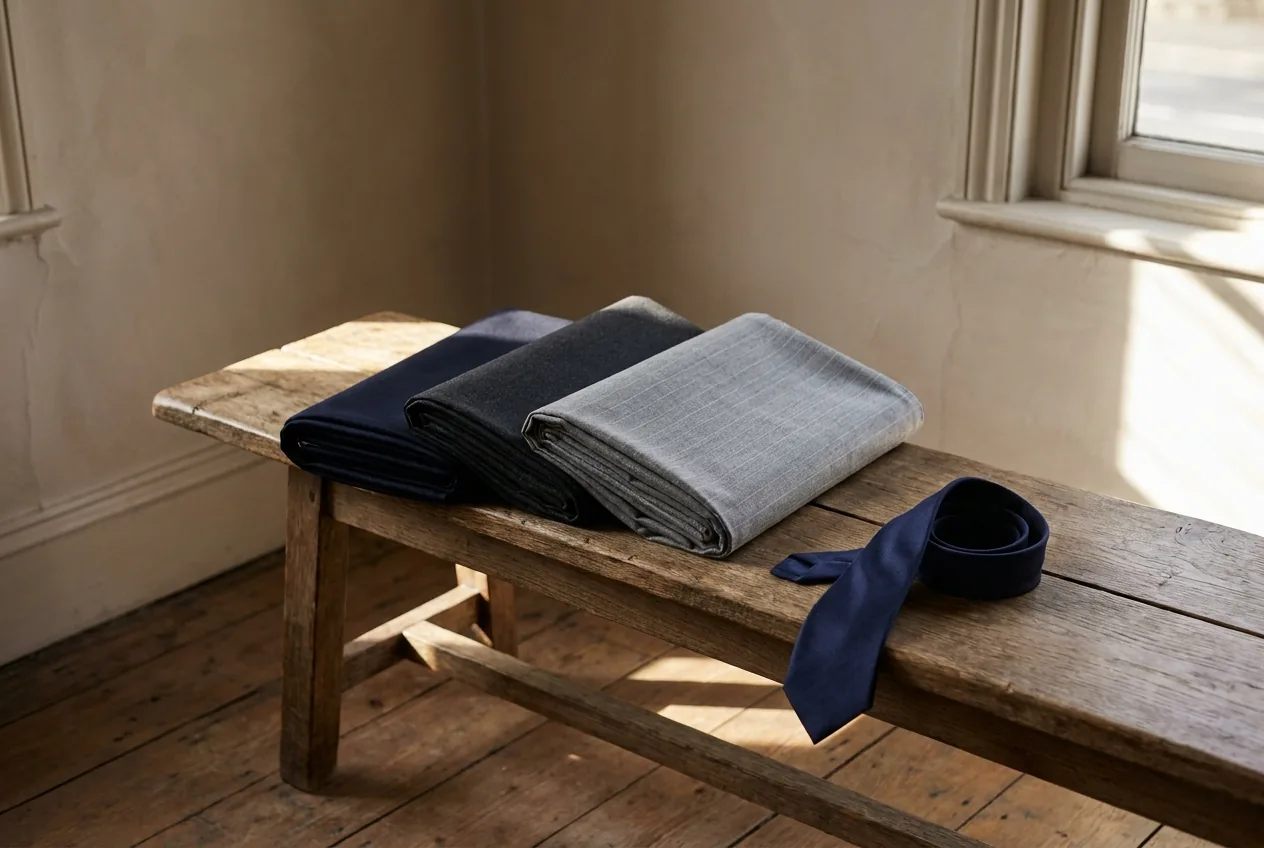
In finance, the suit is not decoration; it’s a credential. Navy or charcoal, cut clean, in a solid or a pattern you can’t read from across a room: that’s the whole brief. The money is in the fit and the fabric, not in anything anyone will consciously notice, and on Bay Street the fastest way to look junior is to look like you tried.
I’ve been tailoring for men on both sides of King and Bay for over thirty years: the old-guard bank suit and the fintech founder who wants to look sharp without a tie. Here’s what actually works in your world, and why.
What should I wear to work in banking or finance?
A well-fitted navy or charcoal suit, white or light-blue shirt, a restrained tie, and polished dark leather shoes. That’s the spine of it. Everything else is degree.
If you’re on the conservative end (a bank, a PE fund, wealth management with old-money clients) assume a full suit until someone tells you otherwise. Dark grey and navy carry authority without shouting. You leave brown, olive, and anything light for the weekend. The point isn’t to be noticed; it’s to be trusted with someone’s balance sheet before you’ve said a word.
The look I build for finance men, in order of what matters:
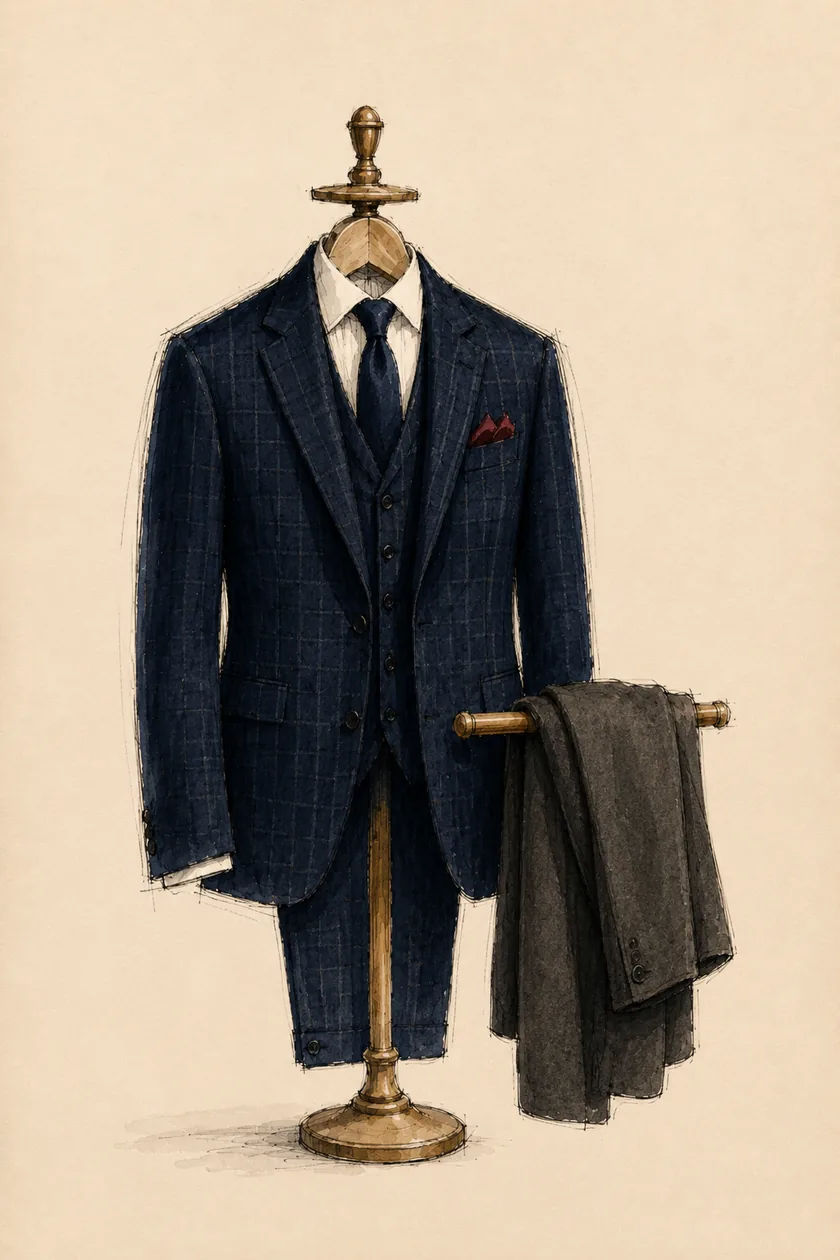
- Suit: navy or mid-to-charcoal grey, solid or a whisper of a pattern
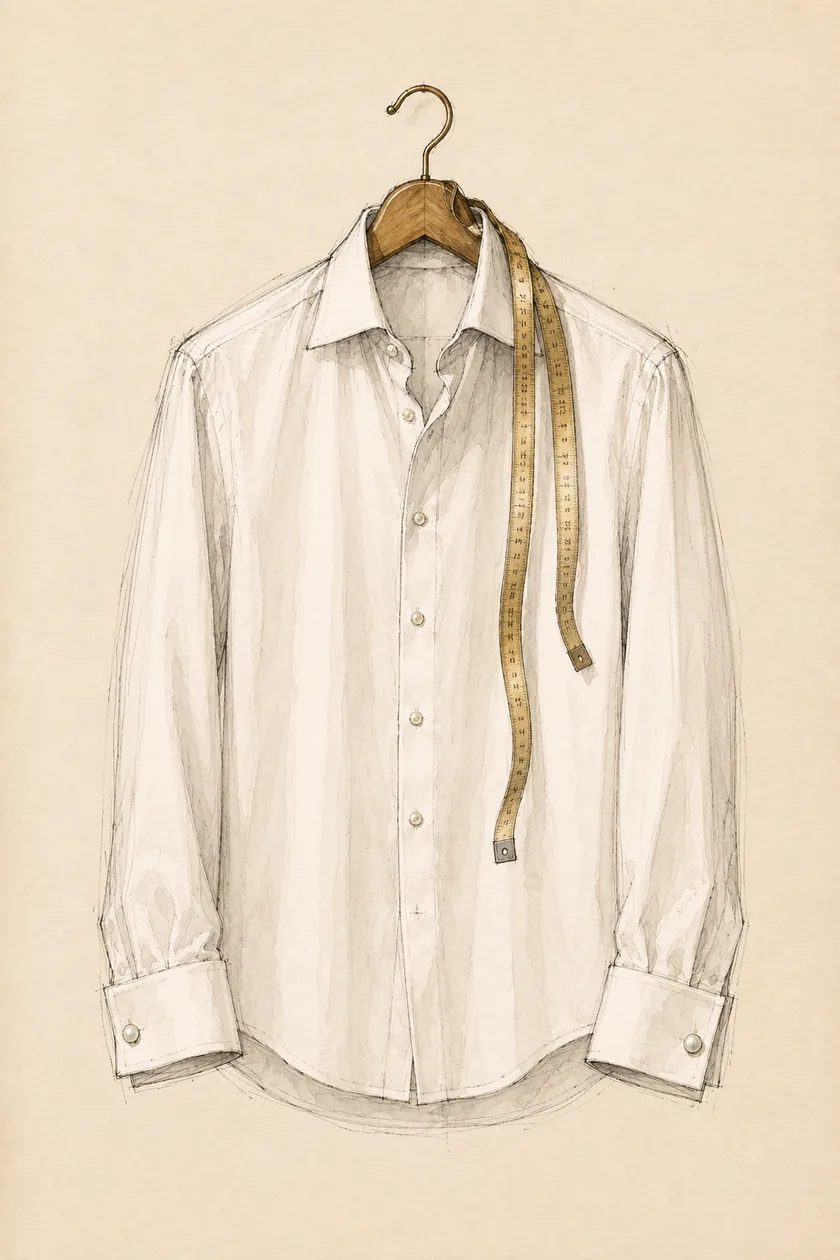
- Shirt: white or light blue, no chest pocket, no button-down collar
- Tie: navy, burgundy, or a small neat weave, when you wear one
- Shoes: black or dark-brown oxfords or derbies, kept polished
How conservative is the finance dress code, really?
Very, at the top, and it’s a spectrum. Old-guard banking and PE are still suit-and-shirt every day; fintech has gone smart-casual. Read the room you’re actually in.
There are two finances now, and dressing for the wrong one is the mistake I see most.
Old-guard banking, PE, private wealth. The suit stays. You might lose the tie day-to-day, but a tie lives in your desk drawer for the moment a managing director or a client walks in. Trousers and a proper shirt are the floor, never gym-fit chinos.
Fintech and the newer shops. This runs like tech: a blazer over a good shirt, dark clean denim or trousers, no tie. But “casual” here is a trap. It means considered, not comfortable. A crisp shirt and a jacket that fits still beats a hoodie in every room where a decision gets made.
When you don’t know, dress one notch up. Nobody has ever lost a deal for being slightly too sharp; plenty have for the reverse.
What does “quietly expensive” actually mean?
It means the quality reads to an expert and disappears to everyone else. No logos, no shine, no flash. Just fabric that hangs right and a cut that fits your body exactly. Your clients dress this way, and they clock it instantly.
Here’s the thing wealth managers will tell you: the genuinely rich clients often look completely unremarkable. The signal isn’t a visible brand; it’s tailoring. A mid-priced jacket altered properly by a good tailor looks more expensive than a designer suit worn off-the-rack, because the eye reads fit as money long before it reads a label.
In a finance wardrobe, that looks like:
- Fabric with substance: a good wool that holds its shape, not a paper-thin “Super-everything” number that wrinkles by 10am
- A jacket that sits flush on the shoulder with no gap at the collar
- Trousers that break once, cleanly, on the shoe
- Colours so unremarkable nobody remembers them, which is the point
You want to be the best-dressed man in the room in a way no one can name. That’s the whole game. More on the reasoning in what understatement buys you.
What colours and fabrics fit the work?
Navy and charcoal, full stop, in a mid-weight wool. Solids first; if you want pattern, keep it to a fine pinstripe, a subtle chalk stripe, or a nailhead you can only see up close.
For a Toronto professional, a mid-weight worsted wool (around 10–11 oz) is the workhorse: it holds a press through a full day, survives a subway commute, and layers under a topcoat from November through March. Skip the tropical-weight summer fabrics for daily wear; they photograph thin and crease under a seatbelt on the drive to a client in Mississauga or Markham.
Two suits done right beat five done cheaply. A navy and a charcoal, rotated, will carry you through 90% of what finance asks of you. Add a mid-grey third when you’re ready. Solids are your foundation because they take any shirt and tie and never look repetitive when you swap the details.
What signals competence and trust to finance clients?
Consistency and fit. A man whose collar sits flat, whose jacket closes without pulling, and who looks the same put-together on a Tuesday as on pitch day reads as someone who handles details, which is exactly what they’re hiring you for.
Your audience is trained to spot risk. A gaping collar, a straining button, a shirt cuff that swallows your hand: those register subconsciously as sloppy, and sloppy is the last word you want near your name when you’re managing money. Precision in the wardrobe is a proxy for precision in the work.
This is why fit beats flash every single time. I’d rather send a client out in a modest suit that fits him perfectly than an expensive one that fights his shoulders. If you read one thing before your next fitting, make it how a suit should fit; it’s the entire lever.
What do juniors get wrong?
Almost always the same three things: a suit that’s too big, trying to signal with accessories, and cheap shoes. Analysts overspend on the label and underspend on the tailor.
The tells I fix most often:
- The oversized suit. Shoulders past the arm, a jacket you could smuggle a laptop in. It’s the single biggest giveaway of a first-year. The fix is free-ish: proper alteration.
- Loud signalling. Bright pocket squares, a flashy watch, a bold tie, monk straps with too many buckles. In a room built on understatement, effort reads as insecurity.
- The shoe letdown. A sharp suit over scuffed, square-toed, rubber-soled shoes undoes everything. Senior people look at shoes. Buy one good pair of dark leather oxfords and keep them polished.
- Interview overthink. For the interview, boring wins: dark suit, white shirt, plain tie. See the interview suit for the full playbook.
And a Toronto-specific one: don’t let a heavy topcoat and boots ruin the line underneath. Keep proper shoes at the desk and change out of the winter footwear. A great suit over salt-stained boots is a common February sin on Bay Street.
Where does business owner or executive attire differ?
Once you’re senior (running the desk, owning the client) you earn small room to have a point of view: a considered pattern, a better fabric, a personal signature. It stays subtle. If you’re building that wardrobe, see dressing as a business owner.
Finance is the most honest dressing job there is: get the fit and the fabric right, keep the colours boring, and the clothes vanish so your work can speak. That’s what I build for.
Bring your current work suit to a fitting and I’ll show you exactly where it’s letting you down, or let’s design a suit from the fabric up that reads exactly the way your clients expect. I’m a Toronto tailor and I work across the GTA.