How to dress in senior management: quiet authority, not loud power
Updated July 2026 · Sam’s Menswear editorial team
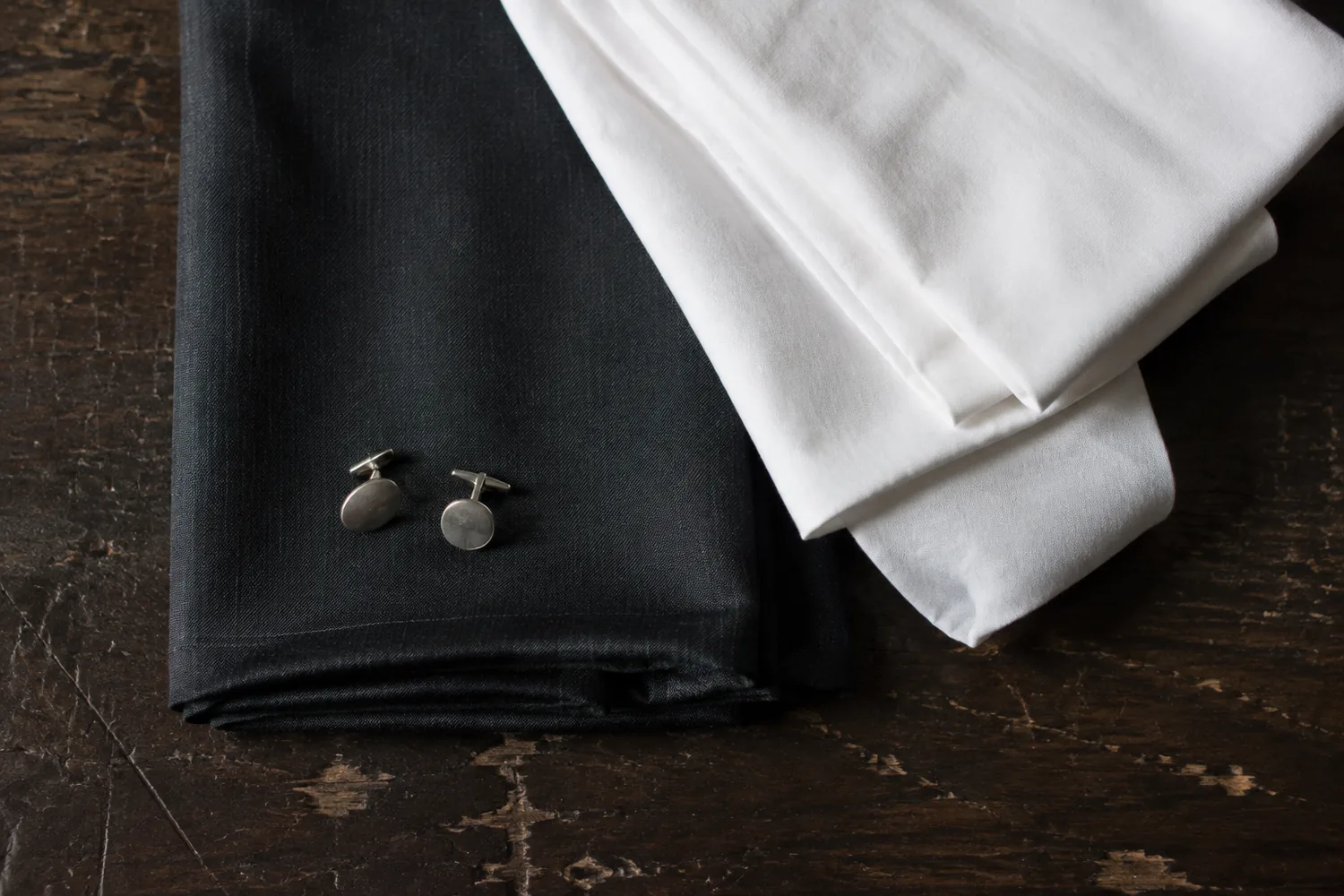
You’re past the point of dressing to impress. At the top, clothes should make you the calmest, most credible person in the room without anyone clocking why. That means better fabric in navy and charcoal, a fit that’s exact without announcing itself, and near-zero decoration. The flex is that nothing shouts and everything works.
Look at the people who run things and the pattern is consistent: the higher up you go, the plainer the wardrobe gets. Here’s how to dress like you already have the job you have.
What do senior executives actually wear day to day?
Navy or charcoal suiting, or a good odd jacket with grey trousers, in plain or barely-there fabric, impeccably fitted, with minimal jewellery and quality shoes. That’s the whole game.
The everyday executive uniform isn’t complicated, and it isn’t supposed to be. Two or three suits you can rotate (one navy, one charcoal, maybe a mid-grey) plus a soft navy blazer for the days that don’t need a full suit. Plain worsted wool or a very subtle weave (a fine nailhead, a faint herringbone). White and pale-blue shirts. A watch you don’t have to explain. Black or dark-brown leather shoes, kept properly.
The reason it looks like a uniform is that it is one. You free up your attention for the actual work, and you never send a mixed signal. People at your level are read constantly. You want the reading to be “steady, prepared, in control,” every single time.
For the mechanics of getting any of this to sit right, see how a suit should fit.
What does calm authority actually look like in clothing?
It looks expensive but invisible: superb fabric, a fit so clean it disappears, and no logos, loud patterns, or flash. You command the room by not trying to.
Here’s the mechanism. Loud clothing (bold checks, shiny fabric, a pocket square doing gymnastics) makes people look at the clothes. Plain clothing makes people look at you. When you’re leading, you want the second thing. Every time.
That kind of authority is built from things people feel before they can name:
- Fabric that drapes. Better wool falls into a clean line and holds it all day. Cheap fabric breaks, sags and shines. Nobody consciously notices good fabric; they just register that you look settled.
- A shoulder that fits your actual shoulder. No divot, no overhang. This is the single biggest tell of a real suit versus a bought-off-the-rack-and-never-touched one.
- Almost no decoration. One good watch. A plain or small-patterned tie if the room calls for it. That’s the ceiling, not the floor.
This is the “expensive but invisible” look people write about as quiet luxury. Strip the phrase of the hype and it just means: let the fit and the fabric do the talking, and keep your mouth (and your lapels) shut.
Why is fit the real flex, not the price tag?
Because a $2,000 suit that fits badly looks cheaper than a $700 suit that fits perfectly. Fit is the one thing money alone can’t fake, and everyone reads it instantly.
I’ll say this plainly because it’s the most useful thing in this whole guide: fit beats budget, every time. You can buy the finest fabric in Toronto and still look sloppy if the jacket’s too long, the trousers pool at the ankle, and the collar gapes off your neck. That’s not a rich look. That’s a “borrowed my dad’s suit” look.
What “fitted” actually means at your level:
- Jacket closes cleanly with no pulling X across the button.
- Shoulder seam ends where your shoulder ends.
- A little shirt cuff shows past the jacket sleeve, a half-inch or so.
- Trousers just kiss the shoe. No puddle, no flood.
- The whole thing skims you. Not tight, not tented.
Getting there is almost never about buying more expensive. It’s about tailoring what you’ve got. That’s most of what I do. If you’re not sure where a suit is letting you down, book an appointment and I’ll tell you straight which seams are worth moving.
Navy or charcoal, and does it matter which?
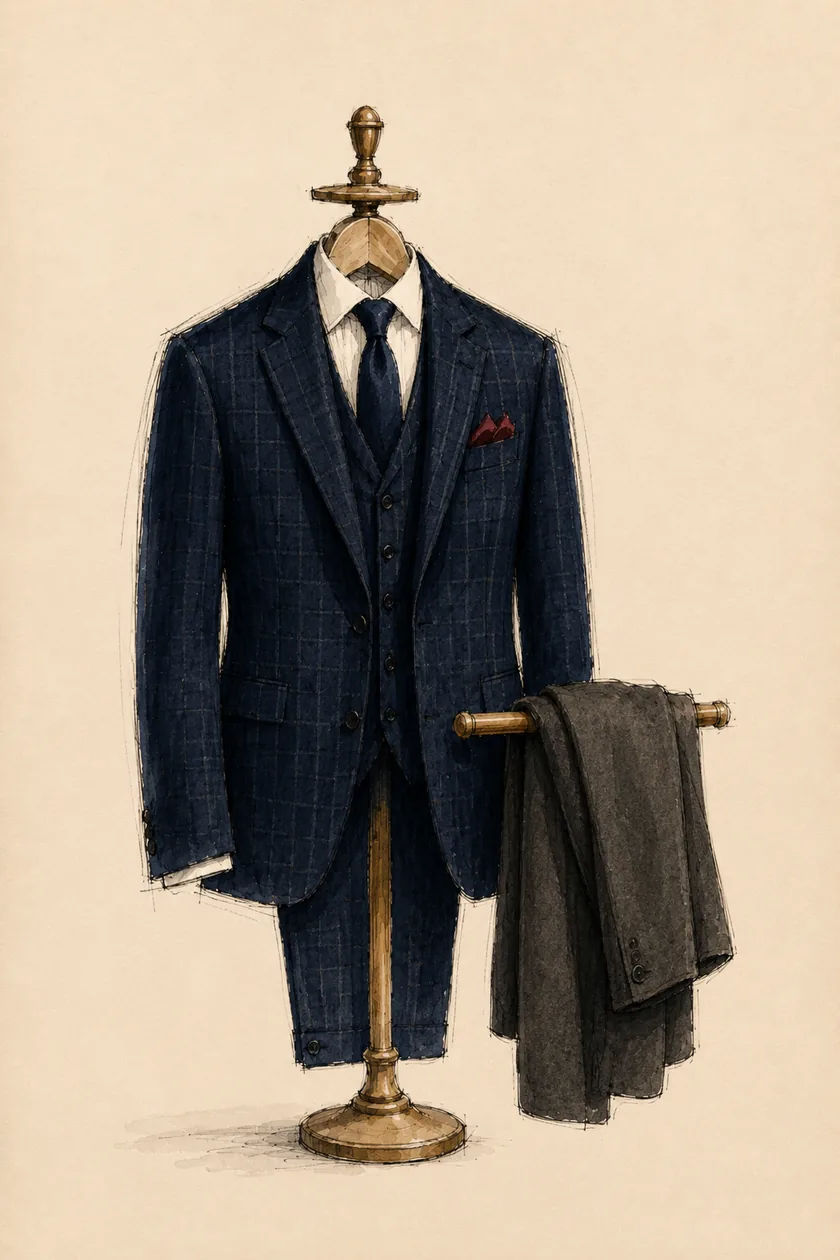
Navy reads approachable and modern; charcoal reads serious and formal. Own both. Navy for most days and client work, charcoal for boardrooms, bad news, and big rooms.
These two carry the entire executive wardrobe, and here’s the difference in plain terms:
- Navy is your workhorse. It’s friendly without being soft, it flatters nearly everyone, and it photographs well under the awful lighting in every conference room ever built. Reach for it by default.
- Charcoal carries more gravity. When you need to look like the adult in the room (the board meeting, the layoff conversation, the keynote), charcoal carries weight without raising its voice.
Black suits are for funerals and waiters, not the C-suite. Skip them. And keep the pattern faint: a subtle herringbone or nailhead adds depth up close and reads as solid from across the table. That’s the sweet spot. If you want to go deeper on the workhorse, I wrote a whole piece on the navy suit.
Should I dress above or below the room?
As a rule, dress one notch above the room, not two. You want to look like leadership without looking like you missed the memo or you’re performing.
The instinct at the top is sometimes to dress down to seem approachable: the tech-founder-in-a-hoodie move. Be careful with it. It only works when everyone already knows you’re in charge. Until then, under-dressing reads as “doesn’t take this seriously,” and that costs you.
The safer play:
- Client pitch or board: match the most formal person expected, then edge just above. Full suit, restrained tie if others will wear one.
- Internal day with your team: navy blazer, open collar, grey trousers. Present, not stuffy.
- The offsite / the factory floor / the site visit: drop the tie, keep the blazer or lose it, but keep the fit. A great knit and well-cut trousers still read as leadership.
The thread through all of it: you can go more casual, but you never go sloppy. Fit is the constant. Formality is the dial. This is the same logic behind the interview suit: dress a step above where you’re standing.
What travels, and what survives a full day?
A high-twist wool suit in navy or charcoal. It resists wrinkles, breathes on a plane, goes from flight to boardroom to dinner, and packs without turning into a rag.
Executives live in transit and back-to-backs, so the fabric has to earn its keep. What I put people in for this life:
- High-twist / four-season wool. The yarn is spun tighter, so it springs back instead of creasing. Get off a flight from Toronto to anywhere and still look pressed.
- Half-canvas construction. Enough structure to hold a clean line, light enough to wear for fourteen hours without feeling armoured.
- A colour that mixes. Navy jacket doubles as a blazer with grey trousers. One suit becomes three outfits in a carry-on.
Skip anything that needs babying: heavy patterns you can only wear once a week, or delicate fabric that shines the moment you sit down. Your wardrobe should work as hard as you do.
The common mistakes I see at the top
A few that show up again and again, and are all fixable:
- Never tailoring the off-the-rack suit. The most expensive mistake. Ten minutes of adjustment separates “sharp” from “fine.”
- Buying flash to signal success. Bold patterns, shiny fabric, a big-logo belt. It reads as trying too hard, which is the opposite of authority.
- Wearing the suit until it’s tired. Shiny elbows and a worn seat undo everything. Rotate, rest, and press.
- Ignoring the shoes. People at your level look down. Scuffed shoes wreck a great suit before you reach the table.
None of this requires a bigger budget. It requires the right fabric, an honest fit, and restraint.
If you’re building a wardrobe for a senior role in the Toronto or GTA market, that’s exactly what I do. I’ll help you design a suit that fits your actual body and your actual week. Book an appointment and bring the suit you wear most, or start with the broader business wardrobe guide. Better fabric, a true fit, nothing loud. That’s the whole secret.