The lawyer's suit: authority, credibility, and reading the room
Updated July 2026 · Sam’s Menswear editorial team
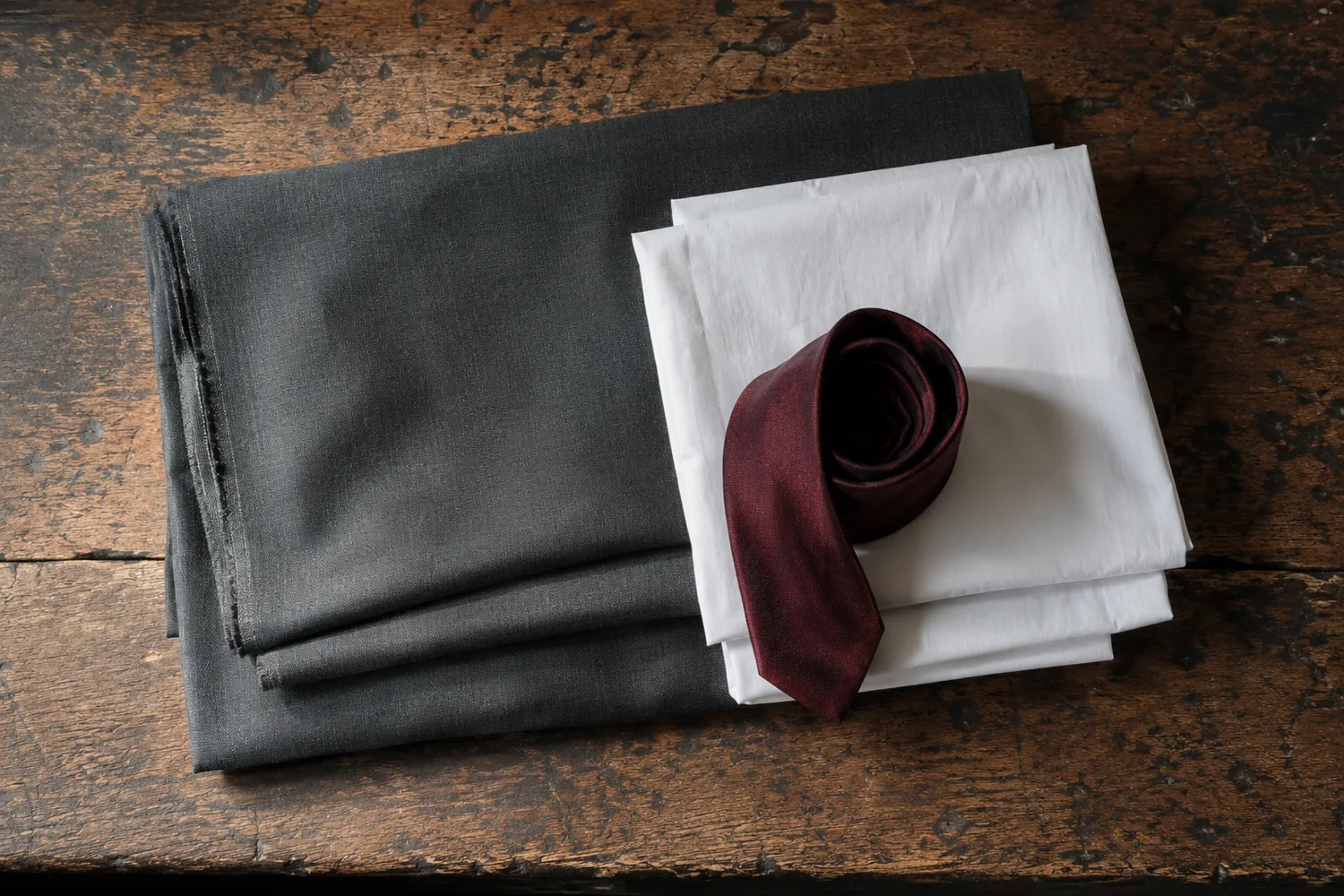
In law, your clothes are evidence before you’ve said a word. The job is dark, conservative, and unimpeachable: navy or charcoal, quiet fabric, nothing that pulls focus from your argument. Get the fit right and you look like someone who is careful with details, which is exactly what a judge, a jury, and a client are paying to believe about you.
A litigator heading to 361 University, corporate counsel on Bay Street and a sole practitioner doing family court in Newmarket need different things from a suit, and a few of the same. Here’s what actually works, and why.
What should a lawyer wear day to day?
Navy or charcoal suit, white or pale-blue shirt, a quiet tie, polished black or dark-brown shoes. That’s the uniform. It reads competent and trustworthy without a single loud note.
Navy is your credibility colour: stable, approachable, right for client meetings and the everyday office. Charcoal carries more gravitas, which is why it’s the courtroom and deposition standard. Own both and you’ve covered ninety percent of your working life. A mid-grey rounds it out for lighter days.
Keep two suits in rotation minimum, ideally three or four if you’re in court often. You cannot wear the same suit Monday and Tuesday and look sharp in either. Wool needs a day to rest and recover its shape.
Navy or charcoal: which matters more?
Both. Charcoal for gravitas, navy for trust. If you buy one first, buy navy; it works for more of your week. Buy charcoal second, and reach for it whenever the stakes are highest.
Think of it by room. Charcoal in front of a judge or across a negotiating table: it’s the most serious tone a man can wear short of black, and it says you understand the weight of the moment. Navy for the client consult, the networking lunch, the daily desk. It signals you’re capable but human, someone they can actually talk to.
Skip black for regular practice. It reads funeral or waiter, not counsel. Save it for genuinely formal evening events. More on why in the navy suit.
What are the courtroom rules in Ontario?
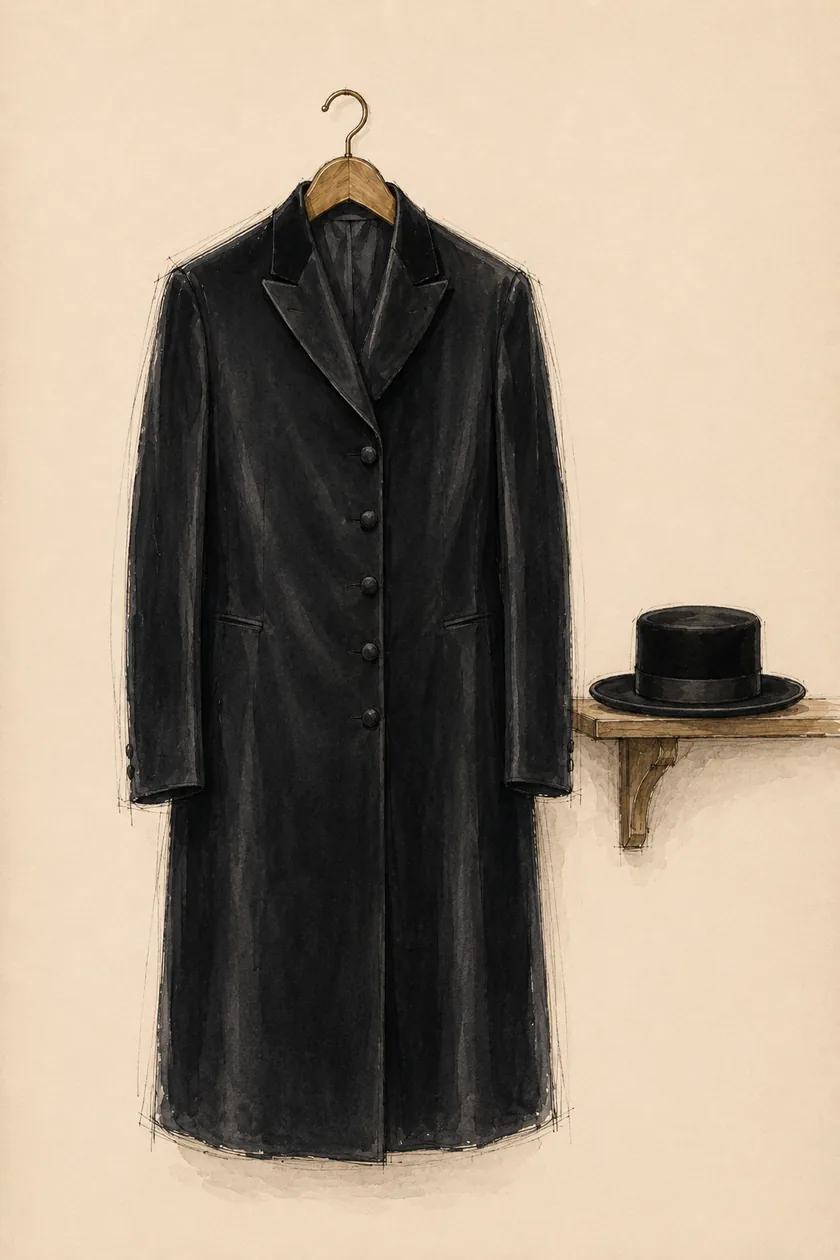
In higher courts you gown: a black waistcoat, black robe, tabs and a wing collar over dark trousers. The suit underneath still has to be right, because the gown comes off the moment you’re out of the courtroom.
For Superior Court, the Court of Appeal, and the Federal and Supreme Courts, gowning is required and the dress beneath it is strict: black or charcoal trousers, black shoes, a white shirt built to take a wing collar and tabs. Wigs were retired in Canada long ago, so don’t worry about those.
Lower courts (Ontario Court of Justice for most matters, Small Claims) don’t gown, and there a proper dark suit is exactly what’s expected. Whatever the room, dressing well signals respect for the court itself. Judges notice, and they read carelessness as disrespect. A trial suit should be your sharpest, most conservative one: solid charcoal, substantial wool, nothing that catches the light or the eye.
Does litigation dress differently than corporate?
Same palette, different emphasis. Litigators lean into gravitas; transactional and corporate counsel lean into polish and stability. The colours don’t change; the read does.
If you’re in court, your clothing is doing persuasion work in front of people deciding something. You want unimpeachable: charcoal, clean lines, zero flash, so a jury trusts you and opposing counsel finds nothing to size up. Gravitas is the currency.
If you’re transactional (M&A, real estate, in-house counsel across the GTA), you’re facing high-net-worth clients and institutions who equate a well-cut dark suit with reliability and financial seriousness. Here a beautifully fitted navy or charcoal, maybe a subtle fabric with a faint weave, tells them their money and their file are in steady hands. This is close to the business suit logic: look like the person they’d trust with the big decision.
How do judges, juries and clients actually read you?
They read seriousness, respect, and attention to detail before you open your mouth. Fit and restraint do that; flash undoes it.
A jury is a room full of ordinary people. Dress too flash (shiny fabric, a pocket square doing tricks, a loud watch) and you look like you’re selling something. Dress plainly and well and you look like the honest, prepared professional in the room. That’s the whole game.
Clients, especially in your first meeting, are deciding whether to hand you their problem. A clean, well-fitted dark suit says this person is careful, and careful is what I need. Same instinct that governs the interview suit: you want them thinking about your competence, not your clothes.
What are the common mistakes?
The mistakes I see aren’t about spending more. They’re about buying wrong.
- Buying flash instead of fit. A $900 suit that fits your shoulders beats a $3,000 one that doesn’t. As a Fasken partner put it, you don’t need to spend three grand; you need it to fit.
- Trendy cuts and fabric. Skinny lapels, sharp checks, fashion colours. They date fast and stand out for the wrong reason. Classic and timeless wins in this field, every year.
- Loud shirt-and-tie combos. No novelty ties, no shine, no two-tone. White or pale-blue shirt, a solid or small-patterned tie. Nothing that hums under fluorescent light.
- Mismatched leather. Belt matches the shoes. Brown with brown, black with black. It’s a small tell and lawyers get judged on tells.
- One tired suit worn to death. Rotate. A rested, pressed suit outperforms a better one that’s been worn three days running.
Why fit is the real lever
Fit is the entire signal in a conservative field. When everyone’s in dark suits, the only thing separating you is whether yours actually fits. The shoulder must sit flat with no divot or overhang. The jacket closes without pulling at the button. The collar hugs your neck when you stand and doesn’t gap when you sit. You’ll sit a lot, at counsel table and in meetings. The trouser breaks once, cleanly, on the shoe. And the sleeve shows a little shirt cuff.
Off-the-rack rarely delivers all of that on a real body: one shoulder lower, a longer torso, an athletic build. That’s what a tailor fixes. Whether we alter a suit you own or build one from scratch, the target is the same: you look completely put-together and nobody can say why. See how a suit should fit for exactly what to check.
Clients come up from across the GTA to the studio. If you genuinely cannot get away from a file, Sam can come to your office or your home for the first appointment, the measuring and the choosing, between two calls, and for the fitting too if you’d rather. If you’re near a court date, a big pitch, or just tired of a suit that fights you, book an appointment and bring the suit you’d wear to trial. We’ll get you looking like the safest, sharpest person in the room. Or if you want it built right from the fabric up, let’s design a suit that does the work before you say a word.