How to dress in sales: look sharp without out-dressing the client
Updated July 2026 · Sam’s Menswear editorial team
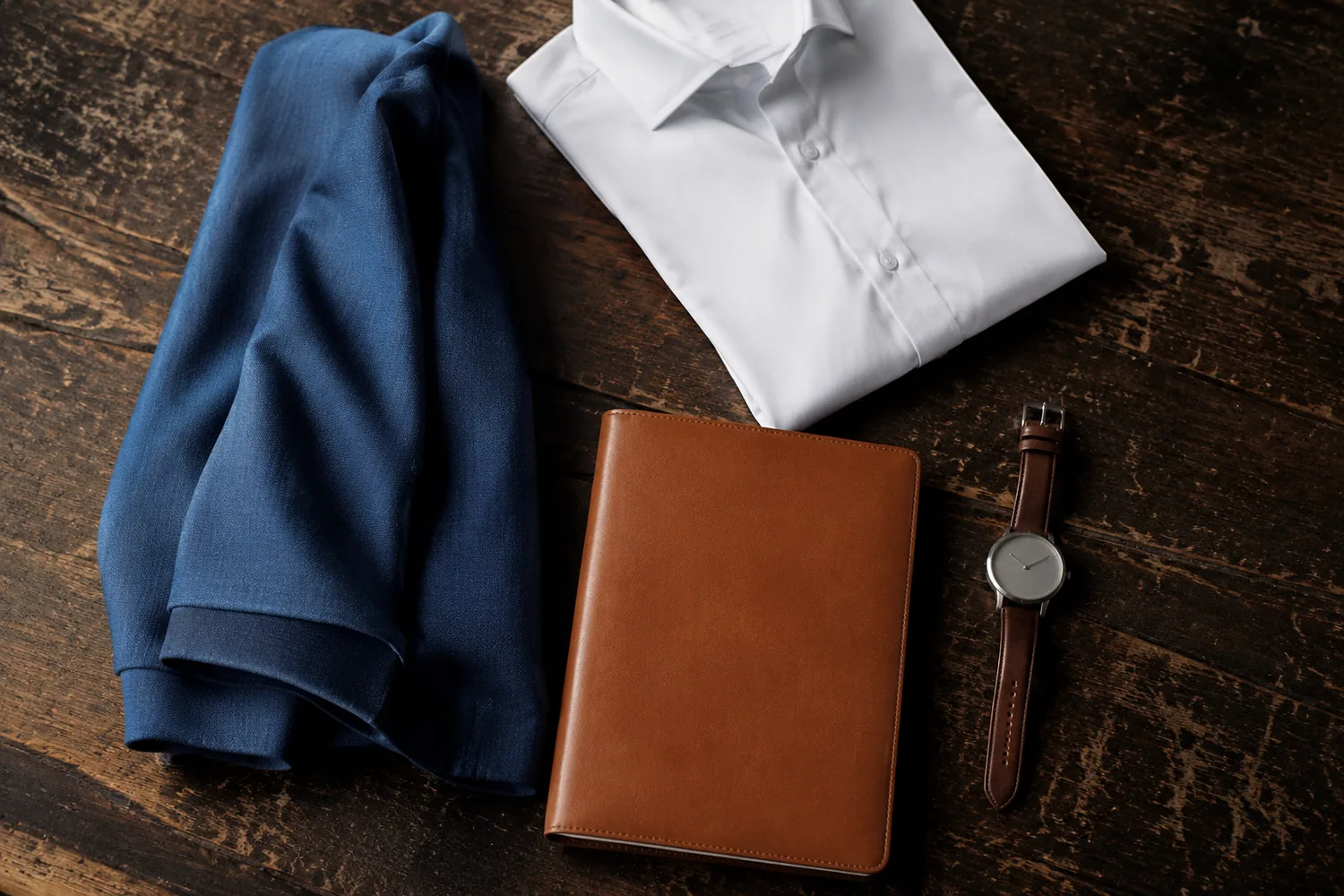
In sales, your clothes have to do two jobs at once: prove you’re serious, and never make the person across the table feel small. The rule the whole trade runs on is one notch above the room: read how your prospect dresses, then land a half-step sharper. For most B2B account execs in the GTA that means a well-fitted navy or mid-grey suit (or a good blazer and trousers) in a travel-hardy fabric, in colours that put people at ease rather than on guard. Below is how I’d sort it out if you sat on my bench.
What should a B2B sales rep actually wear day to day?
A navy or mid-grey suit or sport coat that fits properly, an open-collar shirt or a soft tie depending on the account, and clean leather shoes. That’s the whole engine.
The reason it works is that it’s modular. A sales day isn’t one meeting. It’s a coffee, a boardroom pitch, a warehouse walk-through, and a dinner, sometimes all before 6pm. You need one core outfit that reads right in all of them. A navy jacket with grey trousers, a crisp shirt, and a tie folded in your bag covers you top to bottom: tie on for the CFO, tie off and jacket unbuttoned for the founder in a hoodie. You’re never the wrong person in the room, you just adjust one dial.
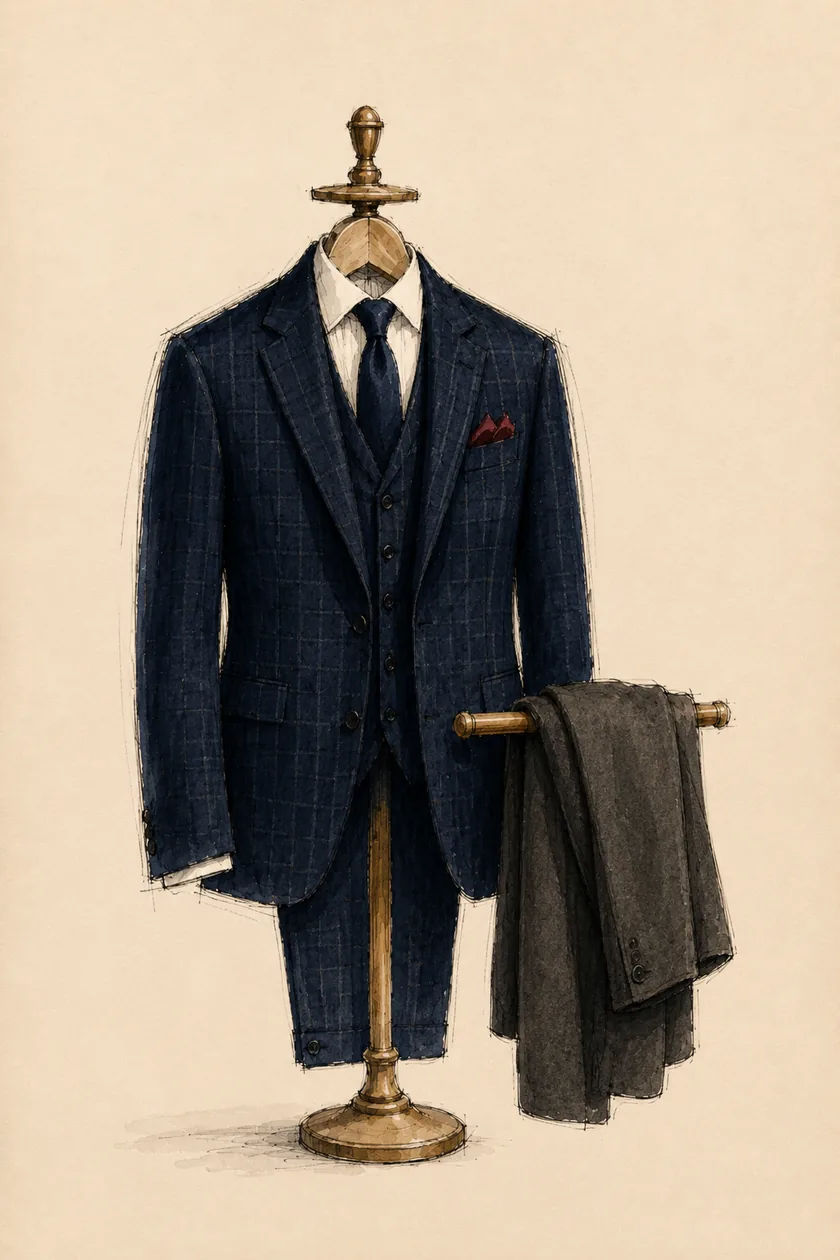
If you’re building from scratch, start with the navy suit. It’s the single most useful thing a salesperson can own, and it splits into separates when you need range.
How do I dress sharp without out-dressing the client?
Match their world, then go one notch up, never three. If they’re in open collars, you wear a jacket and skip the tie. If they’re in suits, you wear a suit. Simple.
The mistake I see is reps confusing expensive with effective. A shiny sharkskin suit, a big watch, a pocket square doing acrobatics: that doesn’t say “trust me,” it says “I’m here to sell you something.” When you out-dress the buyer, you make them self-conscious, and a self-conscious buyer gets defensive. People buy from people who feel like them, a half-step more polished. So the target isn’t “most impressive man in the room.” It’s “clearly competent, clearly one of us.”
Practical move: if you show up in a jacket and the room is in shirtsleeves, take the jacket off as you sit down. Costs nothing, reads as “I’m easy to work with,” and you’ve still walked in looking like you came prepared.
What colours build trust and don’t intimidate?
Navy, mid-grey, and soft earth tones. They read as steady and approachable. Save charcoal-black and bold patterns for when you genuinely need authority.
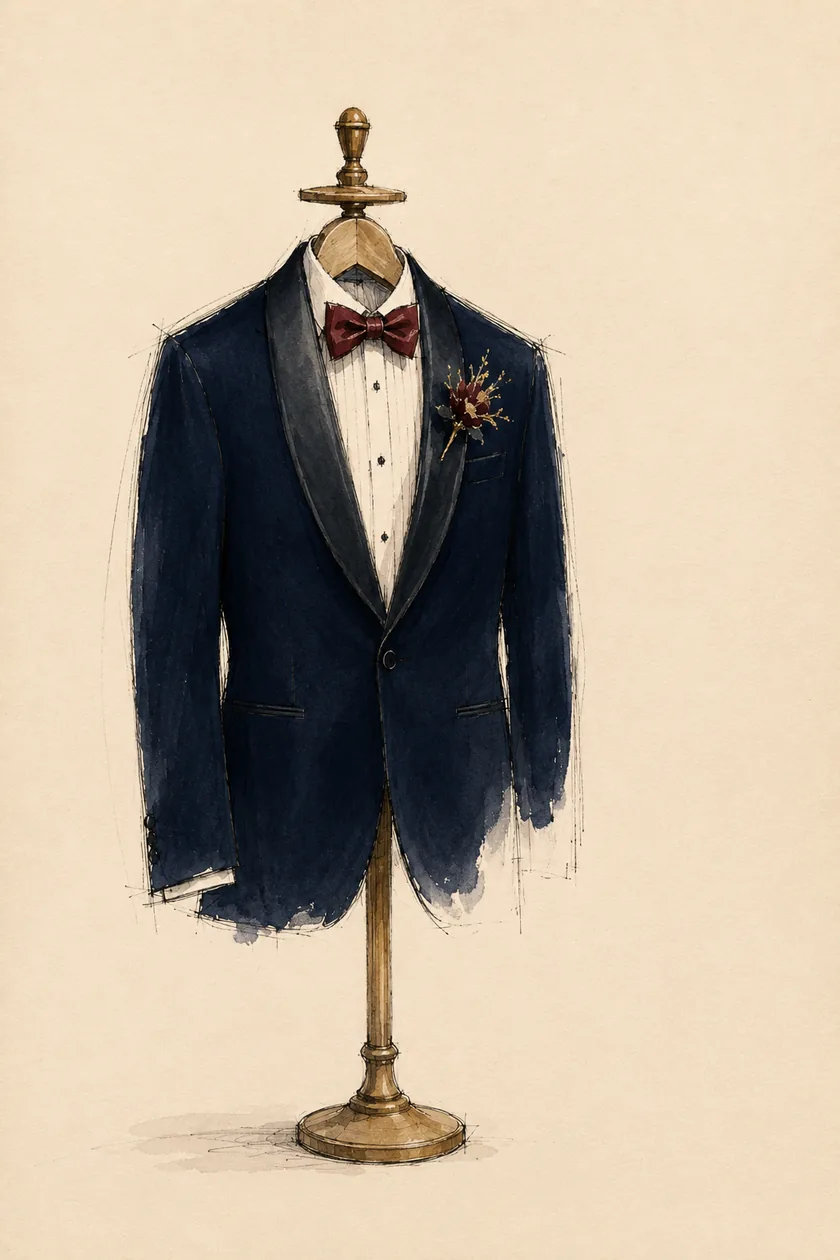
- Navy is the workhorse. Trustworthy, calm, never aggressive. Works on everyone.
- Mid-grey is friendly and neutral; softer than charcoal, which can feel severe up close.
- Earth tones (tan, olive, soft brown) are warm and disarming, good for relationship selling and less formal verticals.
- Go easy on stark black suits (reads funeral/security), high-contrast pinstripe (reads Wall Street shark), and anything glossy.
Shirts: white and light blue do the heavy lifting. A blue shirt in particular is proven to feel open and honest. No accident that it’s the default for people whose whole job is being believed.
How do I read the client’s industry and calibrate?
Do ten minutes of homework before every first meeting: LinkedIn photos, the company’s team page, event pictures. Dress for their norm, not a generic idea of “business.”
Verticals in the GTA genuinely differ:
- Banking, law, insurance, real estate (Bay Street): full suit and tie. Here matching is the play; you can’t over-dress a lawyer.
- Tech, startups, agencies (King West, Liberty Village): blazer and good trousers, no tie, clean sneakers or loafers. A full suit here can actually cost you rapport.
- Manufacturing, construction, logistics, trades: dial it down. Jacket optional, no tie, sturdy shoes. Show up in a three-piece to a plant and you’ve told them you don’t understand their world.
- Healthcare, government, education: conservative and understated. Mid-grey, soft colours, nothing flashy.
When you truly can’t tell, default to a jacket you can remove. Overdressed-but-adaptable beats underdressed every time.
What fabric survives a car, a flight, and six meetings?
High-twist wool, roughly 280–300g. The tightly-spun yarn is springy, so it sheds wrinkles from car seats and plane rows and looks fresh at 5pm.
This is the part reps get wrong most. A soft, luxurious fabric looks gorgeous in the shop and looks slept-in by your third meeting. A salesperson lives in the car and the overhead bin, so you want fabric that fights back. High-twist wool (mills often label it “travel” or “performance”) holds the crease you want in the trouser and drops the ones you don’t. It breathes when you’re sweating a pitch and recovers when you stand up.
Skip cheap all-polyester “wrinkle-free” suits. They don’t breathe, they shine under boardroom lights, and buyers can spot them. A wool or wool-heavy travel fabric is the workhorse that earns its keep. I keep a wall of these; come feel the difference between a fabric that travels and one that just photographs well.
Isn’t the suit itself what matters?
No. Fit is the lever, not flash. A modest suit that fits beats an expensive one that doesn’t, every single time. Buyers can’t name it, but they feel it.
Here’s the tailor’s truth after 30 years: nobody in a meeting clocks the price of your fabric. They clock whether your shoulders sit right, whether your jacket closes clean, whether your trousers break properly on the shoe. A jacket pulling across the back or sleeves swallowing your hands quietly says “this doesn’t quite work,” and that doubt bleeds into how they hear your pitch. A clean shoulder line and a proper sleeve length says “buttoned-up, on top of the details” before you open your mouth.
That’s why an off-the-rack suit that’s been tailored to you will out-perform a pricier one straight off the peg. Get the shoulders, the waist, and the trouser length right and you’ll look like the suit was made for you, because, effectively, it was. If you want the mechanics, read how a suit should fit.
Common mistakes that quietly cost the deal
- Scuffed or worn shoes. People look down. Keep them clean; buy a second pair so you rotate.
- Wrinkled shirt, untucked tail, loud socks. Small tells that read as careless, and careless with your shirt reads as careless with their account.
- Dressing for yourself, not the room. Your favourite bold suit is the wrong call if it intimidates the buyer.
- One suit worn to death. Two or three that rotate look sharper and last far longer than one hammered daily.
- Buying flash over fit. Every dollar is better spent on tailoring than on a flashier label.
You don’t need a wardrobe. You need two or three suits in navy and grey, in a travel fabric, cut to fit you, that break apart into separates. That’s a full sales season handled.
I’m a Toronto tailor and I work across the GTA. I’ll build you a rotation that reads right in a Bay Street boardroom and a Liberty Village loft without you thinking twice. See how I work with professionals, design a suit from the fabric up, or book an appointment and we’ll figure out what your week actually asks of your clothes. If your next big meeting is an interview instead of a pitch, start with the interview suit.