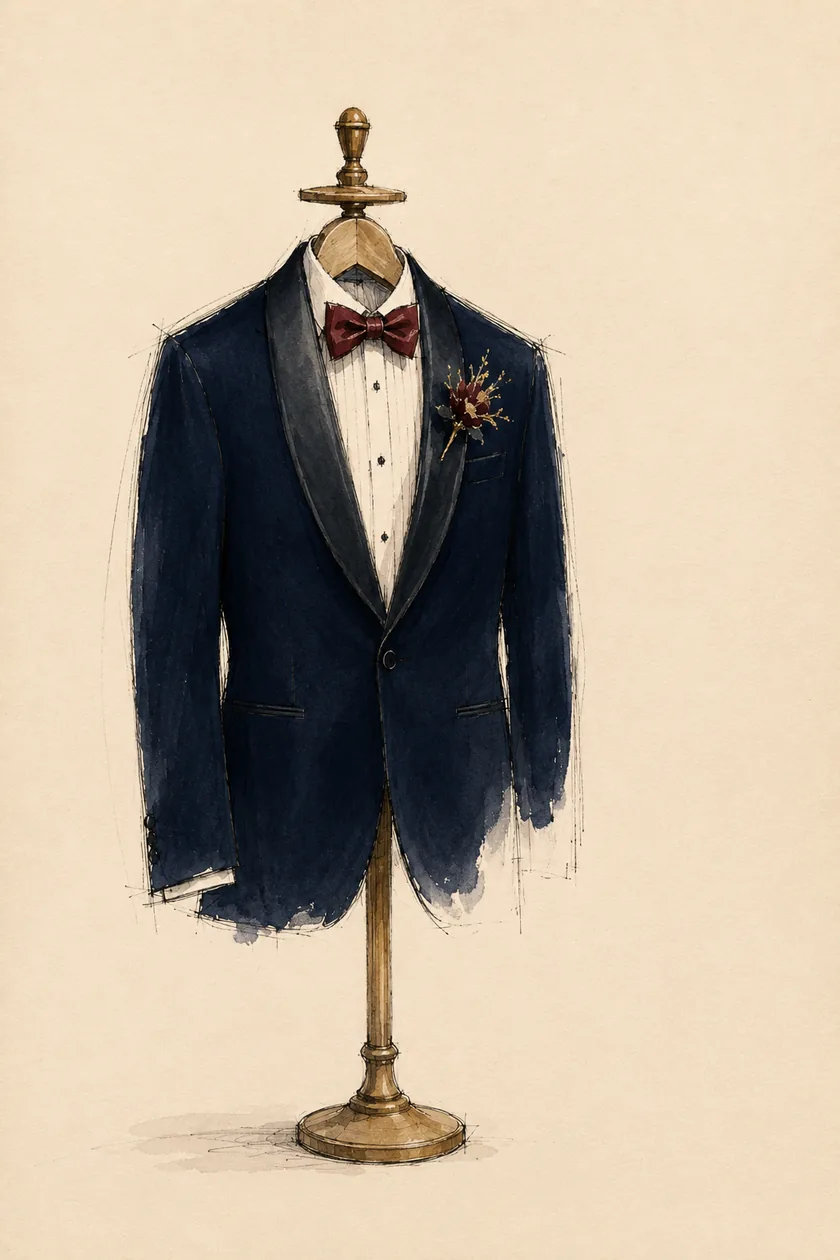
The founder's uniform: one great suit that dresses up or down
Updated July 2026 · Sam’s Menswear editorial team
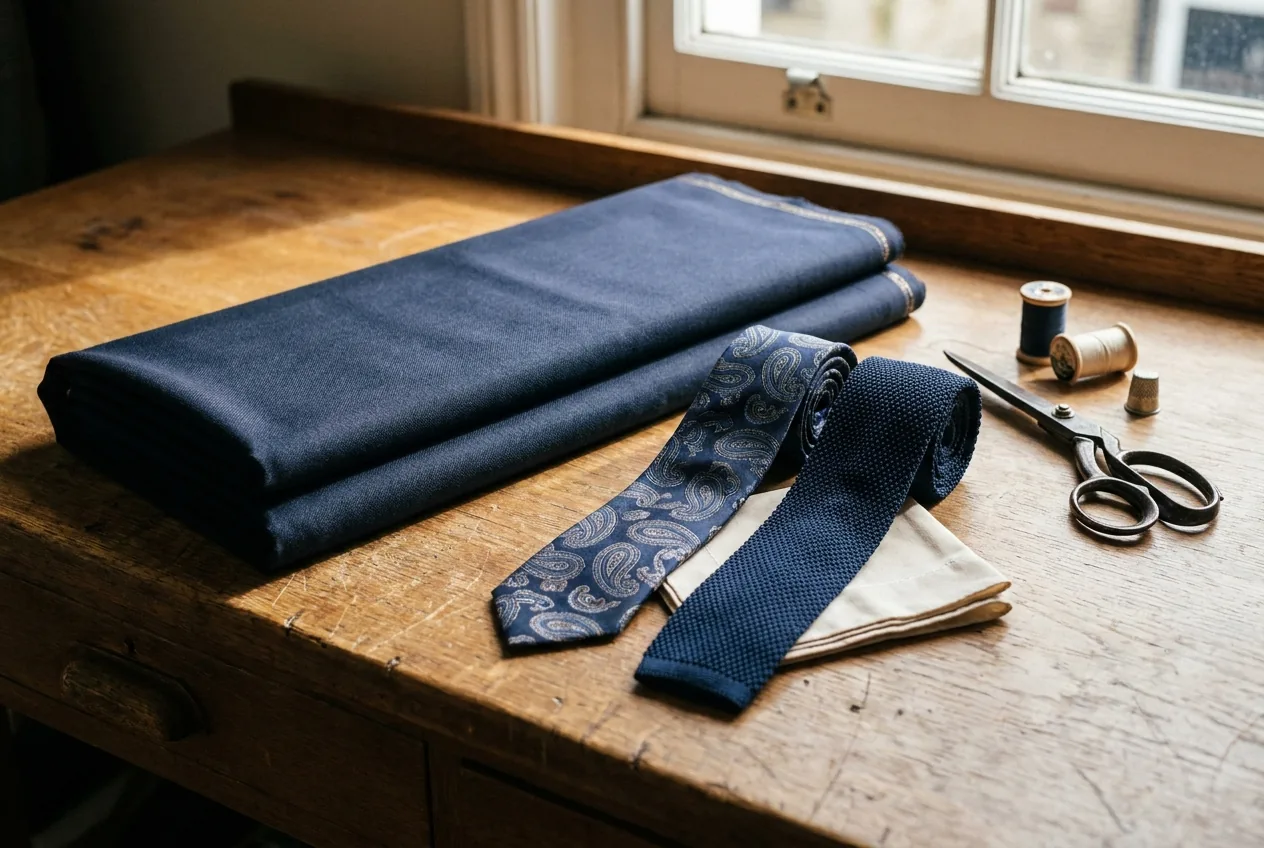
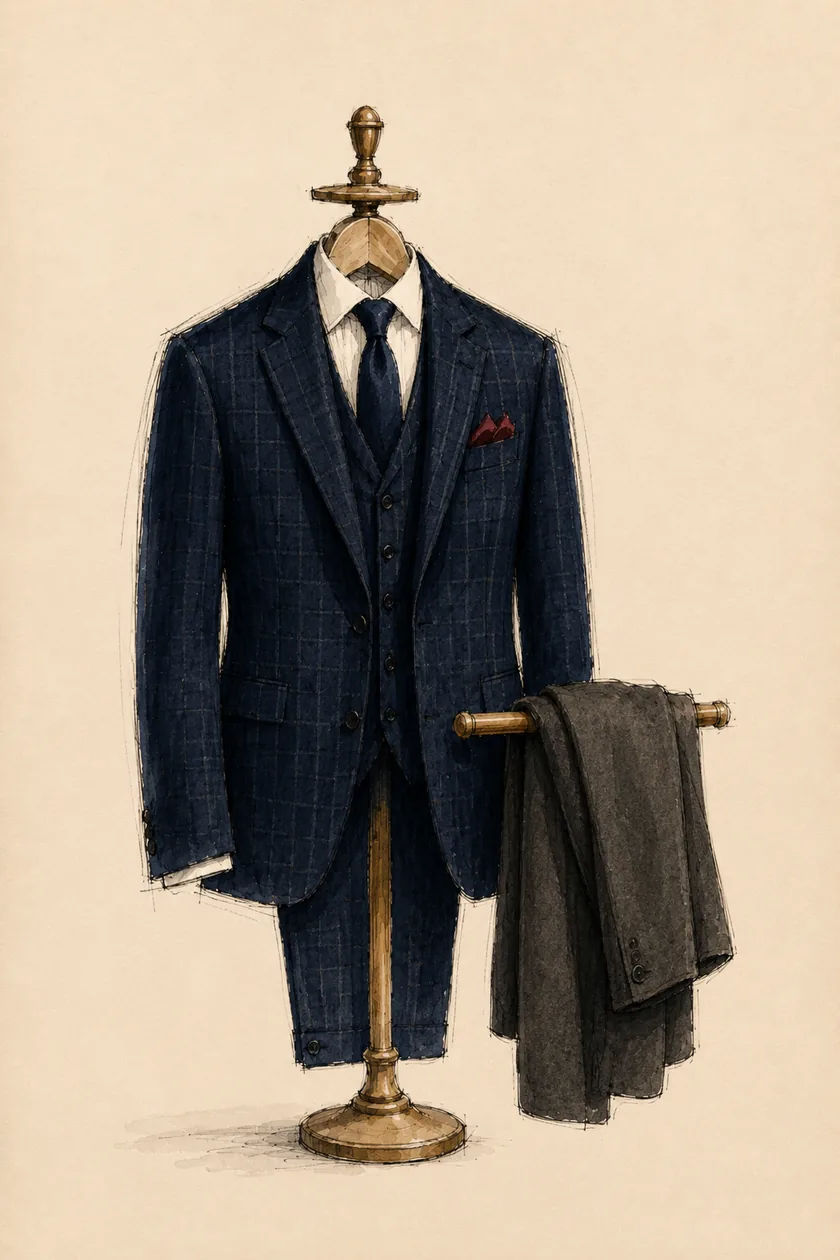
Here’s the honest version: as a founder you don’t have a dress code, which means you are the dress code. The move isn’t a closet full of clothes. It’s one great navy suit that breaks down into pieces, plus a soft blazer and a couple of trousers that separate. Sharp and buttoned for the raise, jacket-off and open-collar for the team. Same wardrobe, different room.
If you work for yourself in Toronto, the guy pitching a fund on Bay Street at 10am and running a standup in Liberty Village at 2pm is the same guy. Here’s how to dress for both without owning two wardrobes.
What should a startup founder actually wear?
One well-fitted navy suit you can split into separates, plus a soft unstructured blazer and two pairs of trousers. That covers the boardroom and the team room. Fit matters far more than labels.
The founder’s problem isn’t formality; it’s range. In one day you might sit across from a bank, a customer, and your own engineers, and each one reads clothing differently. You don’t solve that with more clothes. You solve it with a small set of pieces that recombine.
Start with the spine of it:
- A navy suit. The jacket and trousers match, but both work on their own. That’s the whole trick. (More on why navy in The Navy Suit.)
- A soft, unstructured blazer in navy or a muted check. This is your “jacket-on but not corporate” piece.
- Two trousers that separate: grey wool and a stone or olive cotton. They pair with the blazer and the suit jacket.
- Good shoes and a clean shirt. Non-negotiable. People read your shoes before they read your deck.
That’s it. Six or seven pieces, dozens of looks.
How do I dress for pitching VCs versus my own team?
Match the formality of the room. Pitching money (VCs, banks, enterprise clients) go sharp: full suit or blazer-and-trousers, jacket on. Internal or product days: jacket off, open collar, still tailored.
This is the real skill, and it’s not complicated once you name it. You dress for the room, not for a rulebook.
Raising money / selling up-market. The person across the table is deciding whether to hand you a large sum or a long contract. They want to feel you’re a safe pair of hands. Here you wear the full navy suit, or the suit jacket over grey trousers, with a crisp white or pale blue shirt. No tie needed in tech, but the jacket does the work of saying I take this seriously. If you’re ex-finance, older, or in fintech, a tie is completely fine and reads as native, not stiff.
Team, product, day-to-day. Now the signal flips. Overdress here and you look out of touch with your own company. Jacket comes off or gets swapped for the soft blazer over a fine knit or good shirt, trousers or dark denim, clean leather sneakers or loafers. Still put-together. Just not performing.
Same founder, same wardrobe. You just add or remove one layer of formality depending on who’s reading you.
Do I even need a suit as a founder?
Yes, but a versatile one, not a corporate uniform. A single great navy suit that separates into a blazer and odd trousers earns its keep. You’ll wear the pieces far more than the matched two-piece.
There’s a myth in tech that suits are dead. They’re not; they’re situational. Nobody expects you in a suit at your own all-hands. But the day a term sheet, a banker, a big customer, or a conference stage shows up, “I don’t own a jacket” stops being charming.
The answer isn’t a rack of suits. It’s one suit that pulls double duty. Buy it so the jacket looks intentional over jeans and the trousers look right under a knit. Then it’s not “a suit you wear twice a year.” It’s the hardest-working thing you own. If you’re weighing whether it’s worth doing properly, that’s exactly what The Business Suit page is about.
What colours and fabrics work for a founder?
Navy first, grey second. Stick to a mid-weight wool you can wear most of the year in Toronto. Add soft, unstructured construction so tailoring reads modern and approachable, not banker-stiff.
Colour is where founders overthink it. Keep it boring on purpose:
- Navy. The most versatile colour in menswear. Authoritative in a pitch, easy in a t-shirt on a Tuesday.
- Grey. Your second suit or your separate trousers. Cool, neutral, pairs with everything.
- Stone, olive, tan in cotton, for the trousers that make your blazer feel relaxed rather than formal.
On fabric: a mid-weight wool (around 260–300g) is your GTA workhorse: fine under a heated boardroom, fine walking to the subway in October. For the blazer, ask for unstructured or half-canvas, little to no shoulder padding, soft chest. That single construction choice is the difference between “I look credible” and “I look like I’m about to audit you.” It’s the whole reason the founder look works: it is tailoring, it just doesn’t shout.
How do I look credible raising money without looking corporate?
Fit, not flash. A soft blazer that fits your shoulders beats an expensive stiff suit that doesn’t. Keep it plain and dark, let the tailoring do the talking, and skip anything that draws the eye off you.
Investors have seen a thousand pitches. They notice sloppy (a gaping collar, a jacket swimming on the shoulders, trousers puddling on the shoe) and it quietly costs you. They don’t notice good fit; they just feel that you’re solid. That’s the goal. You want them thinking about your numbers, not your outfit.
A few rules that keep you on the right side of the line:
- No gimmicks. Don’t dress as your product. Don’t wear the loud jacket to “stand out.” You stand out by being clean and unbothered.
- Shoulders are everything. If the jacket’s shoulders fit, you look expensive. If they don’t, nothing else saves it. This is the one thing worth getting tailored. See how a suit should fit.
- Plain over patterned. Solid navy, solid grey. Save the personality for your pitch.
- One good watch, done. Minimal everything else.
Credible and corporate are two different things. Fit gives you the first without the second.
What are the common mistakes founders make?
Buying flashy instead of well-fitted, owning zero tailoring “because tech,” or overdressing at their own company. All three send the wrong signal. Fit and appropriateness beat price every time.
The disheveled-genius look is a trap: it reads as “doesn’t have it together,” not “too busy building.” At the other end, the founder who shows up to a casual team in a slick full suit looks like he’s interviewing to leave. Both are misreads of the room.
And the biggest one: buying off the rack and never touching a tailor. A $200 jacket that fits your body beats a $2,000 one that doesn’t. If you’re between sizes, built athletically, or just hard to fit, that’s exactly what a bench is for; suits for hard-to-fit bodies goes deeper. The same fit logic runs through the interview suit too. Different room, identical principle.
Book an appointment
If you’re a founder in Toronto or across the GTA, come see me. We’ll build the one suit that separates, get the shoulders right, and set you up so you’re dressed for the raise and the standup with the same closet. Book an appointment or start to design your suit. Early mornings and evenings are the founder-friendly slots, and the whole thing takes one visit.