Down coat or wool overcoat? What actually keeps you warm in a Toronto winter
Updated September 2026 · Sam’s Menswear editorial team
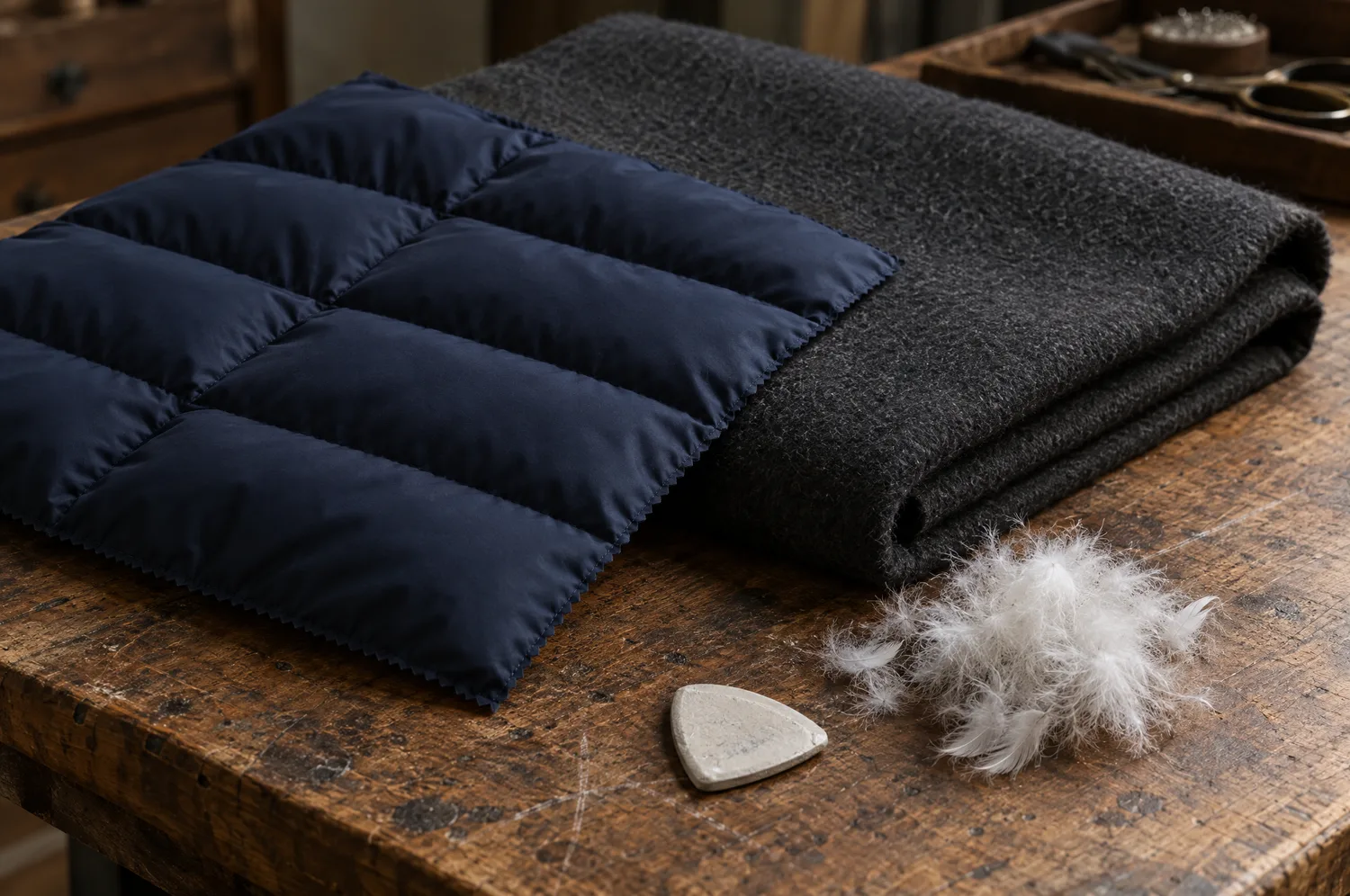
Stand on any subway platform in January and count the black parkas. A Toronto winter pushes most men into the same coat: warm, practical, and identical to the one next to it. The choice people think they are making is warm or well dressed. It isn’t, and the first step out of it is knowing what each kind of coat is actually good at.
January nights downtown average around minus seven, colder at Pearson and north of the city, and the wind off the lake makes it feel far colder than the thermometer says. An average winter brings more than a metre of snow. Both kinds of coat were built for exactly this. They just solve it differently.
How each one keeps you warm
Down works by loft. The clusters under a duck’s or goose’s feathers trap still air, and still air is what holds your body’s heat in. The measure of it is fill power: how many cubic inches one ounce of down fills. The higher the number, the more air it traps for the same weight, so a high-fill coat can be very warm and still light. The shell on the outside does the other job, stopping the wind from blowing the warm air away.
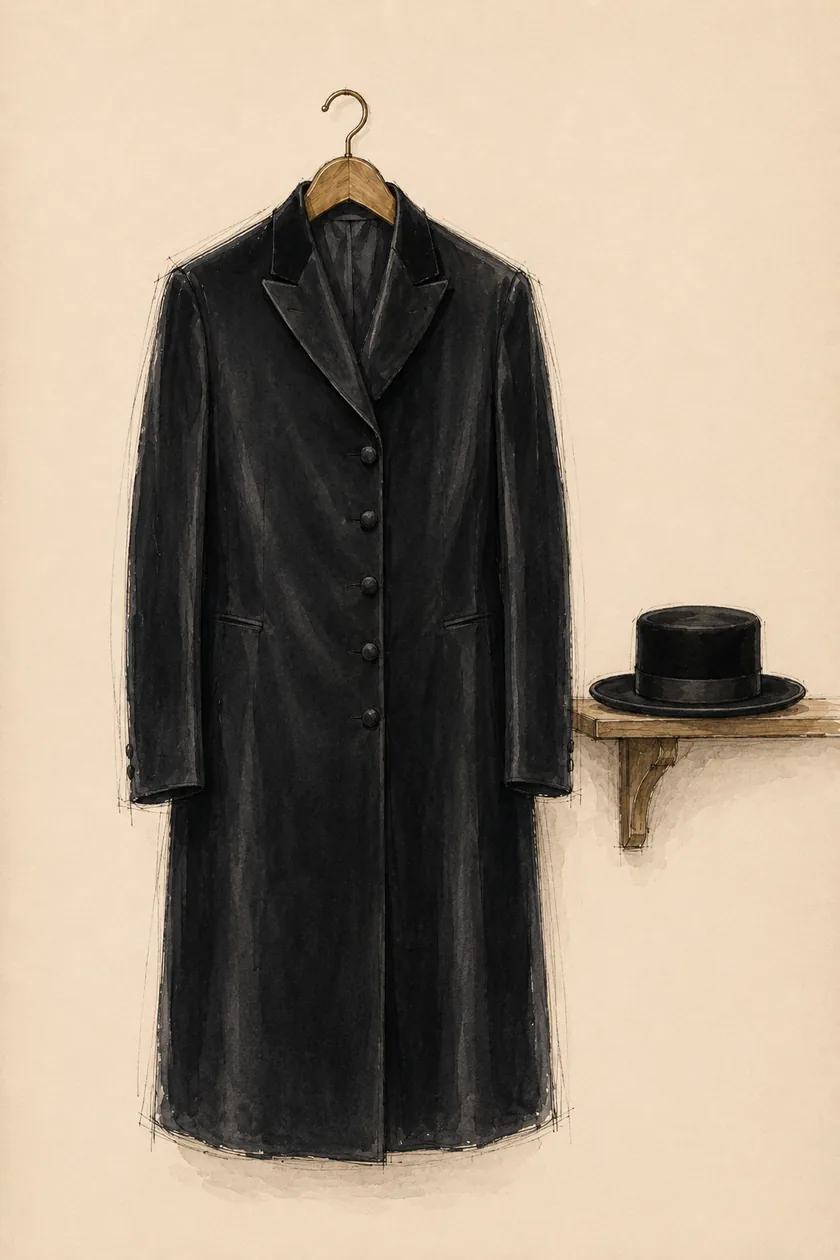
Wool works by density. An overcoat cloth like melton is woven and then fulled, shrunk and felted until it is thick and tight enough to stop the wind on its own. It holds warmth in its fibres rather than in air pockets, which is why it keeps insulating when it’s damp, where wet down collapses and stops working until it dries. Weight matters: a winter overcoat wants a cloth of 18 to 20 oz; a lighter topcoat cloth is for autumn.
Where each one wins
| Down-filled coat | Wool overcoat | |
|---|---|---|
| Warmth for its weight | Higher. Wins for standing still in deep cold | Lower, but enough for moving about most days |
| Wind | Blocked by the shell | Blocked by the cloth itself |
| Wet snow and sleet | Loses warmth if the down gets soaked | Keeps insulating when damp |
| Over a suit | Only if it is cut with room for the jacket | Made to go over tailoring |
| The look | Casual, unless it is cut and coloured with care | Tailored; the finish on a suit |
| Best for | Waiting outside, long walks, the coldest weeks | The commute, the office, evenings out |
Why many Toronto men own both
The honest answer for a Toronto winter is often one of each. A heavy wool overcoat covers most working days: the walk to the GO train or the subway, the PATH, a dinner downtown. It looks like part of the suit because it was made to go over one, and the commuter’s guide to a coat over a suit sets out exactly how long and how heavy it should be.
Then there are the days wool is not the right tool: a morning spent waiting at a bus stop in minus twenty with the windchill, a weekend on a hill with the children, a long walk the whole way to work. Those days belong to down.
If you only want one coat, the deciding question is how much of your winter is spent standing still outside. If it’s minutes, a wool overcoat. If it’s hours, down.
A warm coat that doesn’t look like everyone else’s
The reason most down coats look alike is that they are cut for an average body and sold in the season’s three colours. The warmth is real; the fit is a compromise. The sleeves are long or short, the shoulders sit wherever they land, and the length is whatever the size chart gave you.
The way out of the uniform isn’t a different parka. It’s a coat cut to you: a cashmere or heavy melton overcoat, made to your measurements, is warm enough for most of a Toronto winter, and the shoulders sit, the length is right for your height and the colour is your choice rather than the season’s.
A wool overcoat also has more room for character. Charcoal and navy are the workhorses; a camel polo coat is the one people remember. The overcoat styles guide sets the Chesterfield, the polo coat, the car coat and the rest side by side.
Looking after each one
- Down: wash it rarely, and only as the maker’s label says. Dry it completely, on low heat, with something to break up the clumps; down that goes into a cupboard damp mats and smells. Store it hung or loose, never compressed in a bag all summer.
- Wool: brush it weekly, down the front and across the shoulders, to lift grit and salt before it works into the cloth. Hang it on a broad, shaped hanger. Dry-clean it once a season at most; a clean coat needs a brush and a night’s air more than a cleaner. The salt guide covers the white tide marks a Toronto winter leaves behind.
Having one made
Sam makes the tailored half of this: cashmere and wool overcoats cut to go over a suit, as well as trench coats and pea coats. He doesn’t make or repair down coats; for the deepest cold, buy one ready-made. At Canada Goose, Sam’s role was increasing the efficiency of fabrics, getting the most out of every length of cloth; his studio is his own and is not affiliated with Canada Goose.
A coat takes about five weeks, 35 days from the first appointment, so October is the month to start and the coat is finished before the cold settles in. This year’s dates are worked out here → The first appointment can be at your office or your home, and Sam can measure you over the jacket you wear to work; the fitting can be at the studio in Vaughan, or back at your office or home if that’s easier. See custom overcoats and winter coats for what he makes.
Where the numbers come from: Toronto temperature and snowfall are Environment and Climate Change Canada’s Canadian Climate Normals for the Toronto City station.