Four days on Bay Street: a suit rotation for the return to the office
Updated September 2026 · Sam’s Menswear editorial team
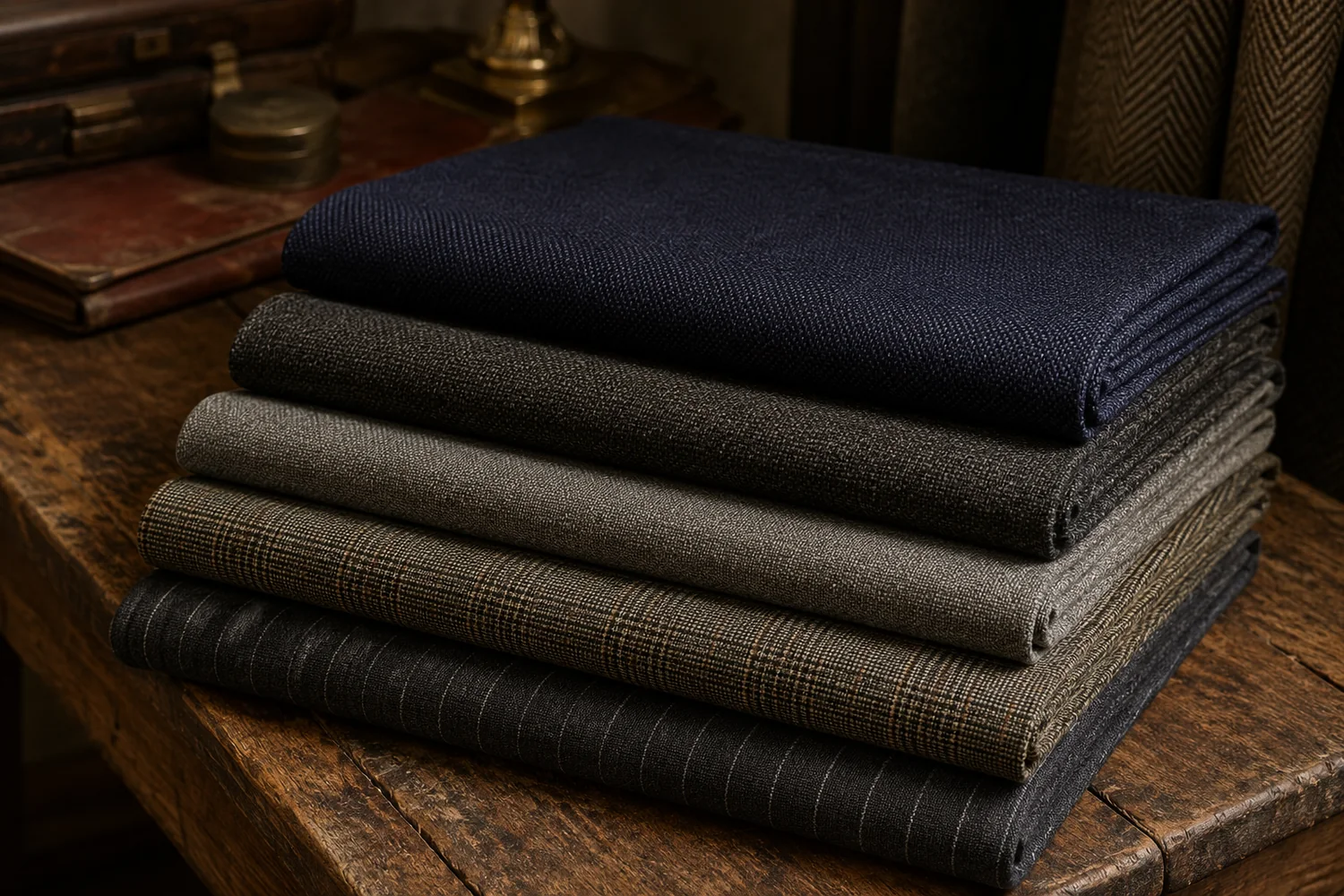
For five years the suit was a Tuesday thing, if it was a thing at all. Then in the spring of 2025 RBC told its office staff it wanted them in four days a week from September 15. BMO and Scotiabank followed with the same date, and TD with November. Plenty of the Financial District did the same. A man who had been getting by on two suits bought before the pandemic found he now needed a wardrobe, and that the two suits he had no longer fit the way they did in 2019.
This is the arithmetic of rebuilding it without buying more than you need.
The brief
A composite, not one client’s order.
He works in the core, in finance, law or a large firm’s back office. From 2020 he went in once or twice a week, in chinos and a sweater more often than not. Now it is four days, client-facing on at least one of them, and the two suits in his closet are tight across the middle and shiny at the seat. He wants to look like he meant to come back, not like he found his old clothes in a box.
How many suits four days actually takes
The rule every tailor repeats is that wool needs a day off between wears. A day on the hanger lets the fibres recover from the creases of sitting and lets the moisture of a day’s wear evaporate. A suit worn two days running starts to lose its shape and wears much faster.
Four office days a week is roughly 190 days a year. Divide it:
| Suits in rotation | Days each suit is worn a year | Rest between wears |
|---|---|---|
| Two | about 95 | exactly one day, every time |
| Three | about 63 | one to two days |
| Four | about 48 | two to three days |
Two suits technically obey the rule, but each one takes a working week’s wear every fortnight and the trousers go first: the seat and the inner thigh take friction the jacket never sees. Three is the number where the rotation stops being the thing that wears your suits out. Four is comfortable, not necessary.
The order
Build the three in this order, because each one covers more of the week than the next.
| Cloth | Why | |
|---|---|---|
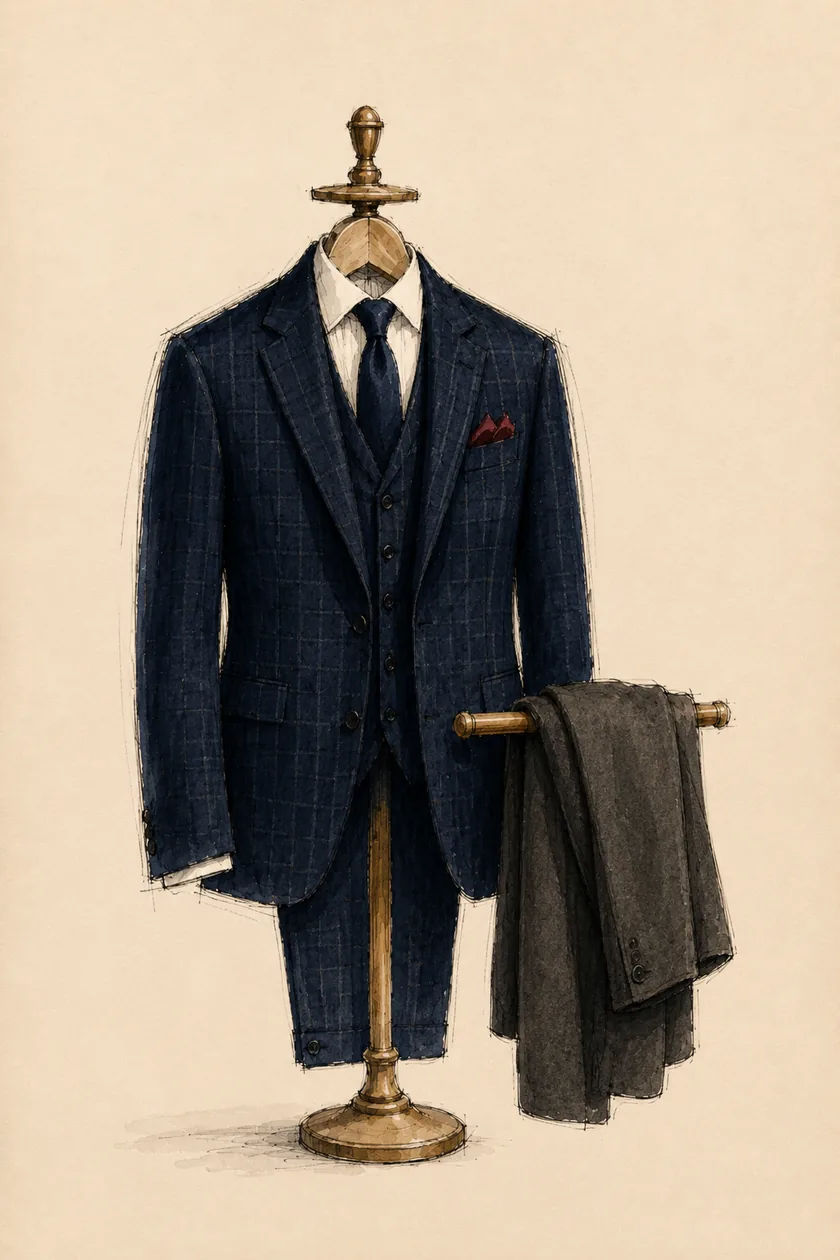
| First | Navy, plain or a faint birdseye | Goes with every shirt and tie you own, and to every meeting. Why navy comes first |
| Second | Charcoal | The more serious of the two; the one for the board presentation and the funeral |
| Third | Mid-grey, a quiet pinstripe, or a birdseye | Breaks the navy-charcoal pattern so the week does not look like a uniform |
All three in a year-round worsted of about 10 to 11 oz. Toronto offices are heated to shirtsleeve temperature in January and chilled in July, so a mid-weight cloth is right indoors almost all year. The weather outside is the coat’s job, not the suit’s.
Add a second pair of trousers for the navy suit. It will be worn the most, and trousers wear at roughly twice the rate of the jacket. Cut from the same bolt at the same time, the second pair matches exactly; ordered two years later from a new dye lot, it is close, and close shows in daylight.
Three suits, one wardrobe
Three suits, three shirts and three ties give you twenty-seven combinations before you repeat, which is more than a season of four-day weeks.
- Shirts: white, a pale blue, and one fine stripe or check. Every one of them works with all three suits.
- Ties: one navy or dark grenadine, one with a small pattern, one with some colour in it for the day you want it.
- Shoes: dark brown with the navy and the grey, black with the charcoal. Black or brown goes further into it.
And for the Friday that has quietly become optional: an odd jacket, navy hopsack or a grey herringbone, over the trousers of any of the three suits. It is the difference between dressing down and giving up.
Before you buy anything new
Look at the two old suits honestly. A suit that has grown tight at the waist can often be let out, because good trousers are cut with cloth in reserve at the seat and waist for exactly this. Trousers thinned right across the inner thigh, or shiny through the seat, are near the end of their life. When to alter and when to replace walks through the difference.
How long it takes
A first suit takes three to four weeks from the first appointment. After that your pattern is kept on file, so the second and third suits are ordered by phone and made in two to three weeks each. Order the navy now, the charcoal when the navy is in the fitting, and you will have the full rotation in about two months.
Start with the charcoal on the Drawing Board and see how it wears with a silver tie and a white shirt: draw the office suit. Sam makes custom suits for Toronto clients at the studio just north of Steeles, and business suits are cut for exactly this kind of week. Book a time, and bring the old suits if you want an honest verdict on them.