How many suits do you actually need?
Updated July 2026 · Sam’s Menswear editorial team
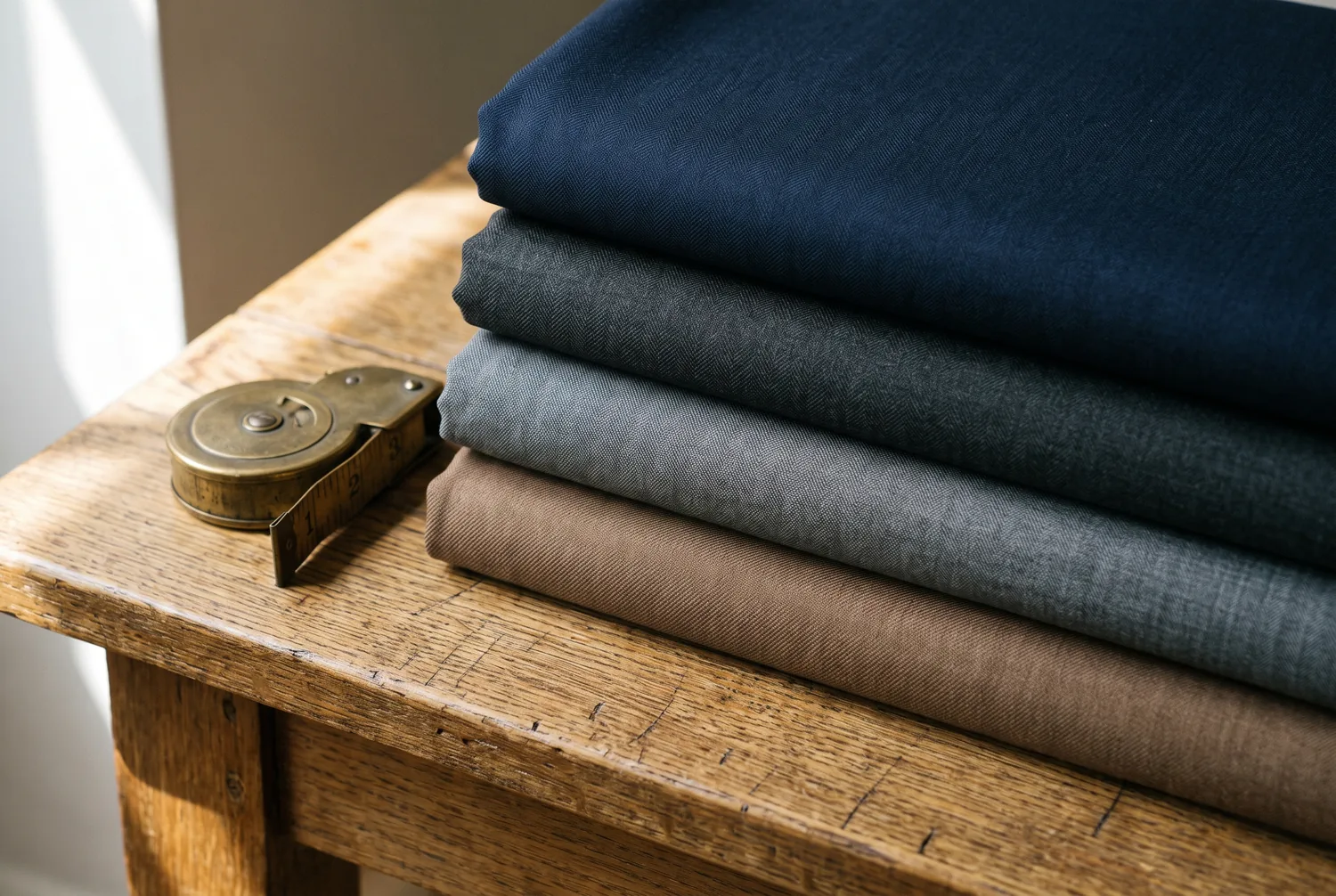
Most working men need three suits, not ten. Two good ones will get you through a week if you rest them properly; the third saves you when one’s at the cleaner or you’ve got a funeral and a wedding in the same month. Buy fewer, buy better, and rotate them. That’s the whole game.
The men who look sharpest aren’t the ones with the fullest closets. They’re the ones with a small, deliberate rotation they actually wear.
How many suits do I actually need for work?
Three is the honest number for most men. One if you rarely suit up, five if you’re in a boardroom daily, but three covers the majority.
Here’s why three works. Two suits let you alternate day to day so neither gets worn out. The third gives you breathing room: one’s being pressed, one has a spill, or you’ve got two events close together. Below three and you’re wearing the same wool too often. Above five and you’re buying suits you’ll wear twice a year.
If you’re building from zero, start with one and add over time. You don’t need the whole rotation on day one. You need the right first suit. That’s what a proper first fitting is for.
What’s the ideal capsule work wardrobe?
A tight capsule beats a full closet every time. Three suits, a handful of shirts, and pieces that mix: that’s more outfits than you’d think.
For a working man, I’d build it like this:
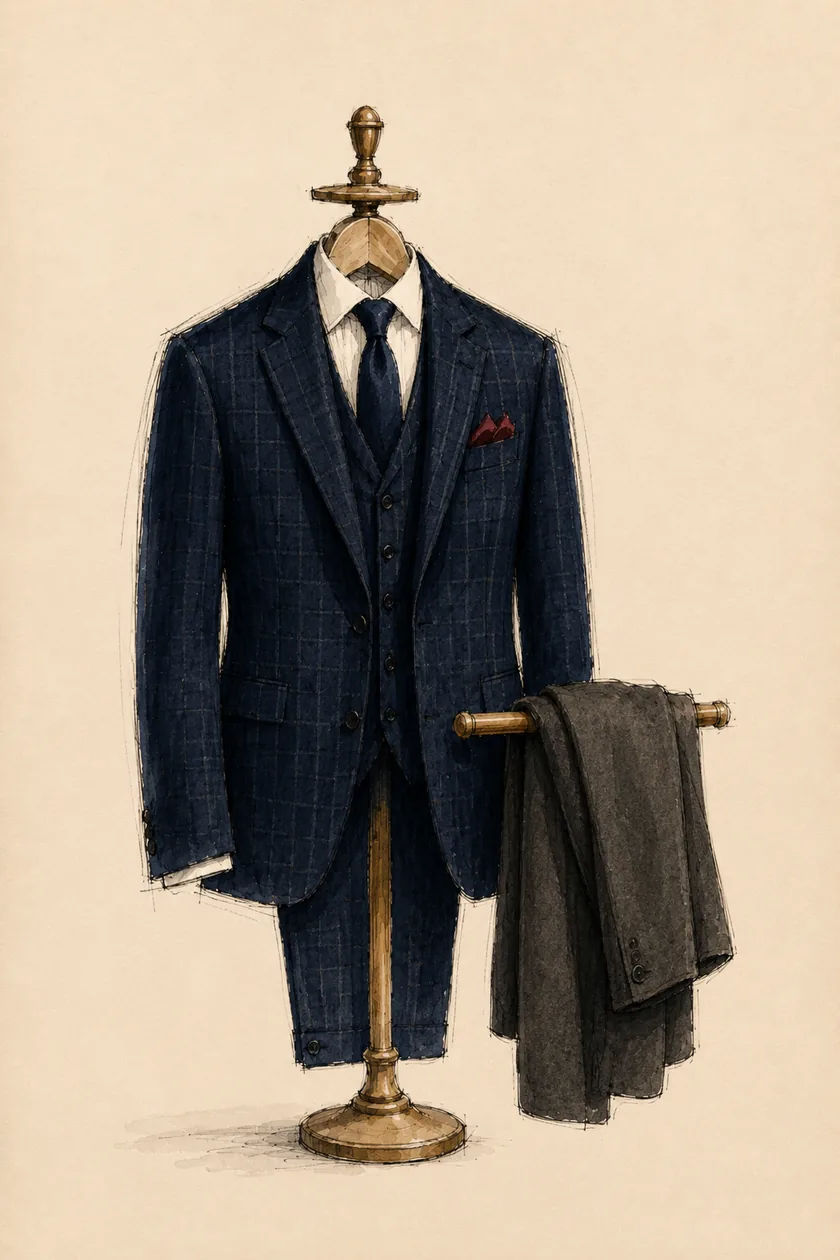
- The navy suit: your anchor. Works for interviews, meetings, weddings, and funerals. If you own one suit, own this. See why navy earns its keep.
- A mid-grey suit: your second pillar. Reads differently than navy, pairs with almost any shirt.
- A third in your own color: charcoal, a soft brown, a subtle check. Something that’s you.
The trick is separates. A suit jacket that works as a blazer, trousers that go with a knit, and suddenly three suits give you fifteen looks. That’s the capsule doing its job. We build this thinking into every custom suit on the design bench.
Why do I need to rest a suit between wears?
Wool needs to recover. Wear a suit two days straight and the fibers stay compressed. They lose their spring and the shape goes for good.
This is the part most men skip, and it’s the reason a rotation matters more than the count. Wool has a natural crimp that gives it shape memory, but it needs time to bounce back. A suit also absorbs a surprising amount of moisture over a day (from your body, the weather, the commute) and that has to dry out before you wear it again.
The rule I give every client: never wear the same suit two days in a row. Give it 24 hours minimum, 48 is better. That single habit adds years to a good suit. It’s also why two suits in real rotation outlast four suits worn carelessly.
How long should a good suit last?
A well-made suit, properly rested and cared for, should give you a decade or more. Cheap suits worn daily are done in a year or two.
The math is simple. A quality suit costs more up front, but rested and rotated it lasts ten times as long as a bargain one you wear into the ground. Fewer suits, better made, is cheaper over a career, not more expensive.
What kills a suit isn’t age, it’s abuse: worn every day, over-dry-cleaned, stored on a wire hanger. Learn to care for it properly: brush it, air it, press don’t clean, and it earns its keep for years. That’s the real case for going bespoke: you’re buying something built to survive the rotation, not survive one season.
Do I need different suits for different occasions?
Usually no. One or two well-chosen suits cover most of a man’s life: work, weddings, funerals, the occasional formal night.
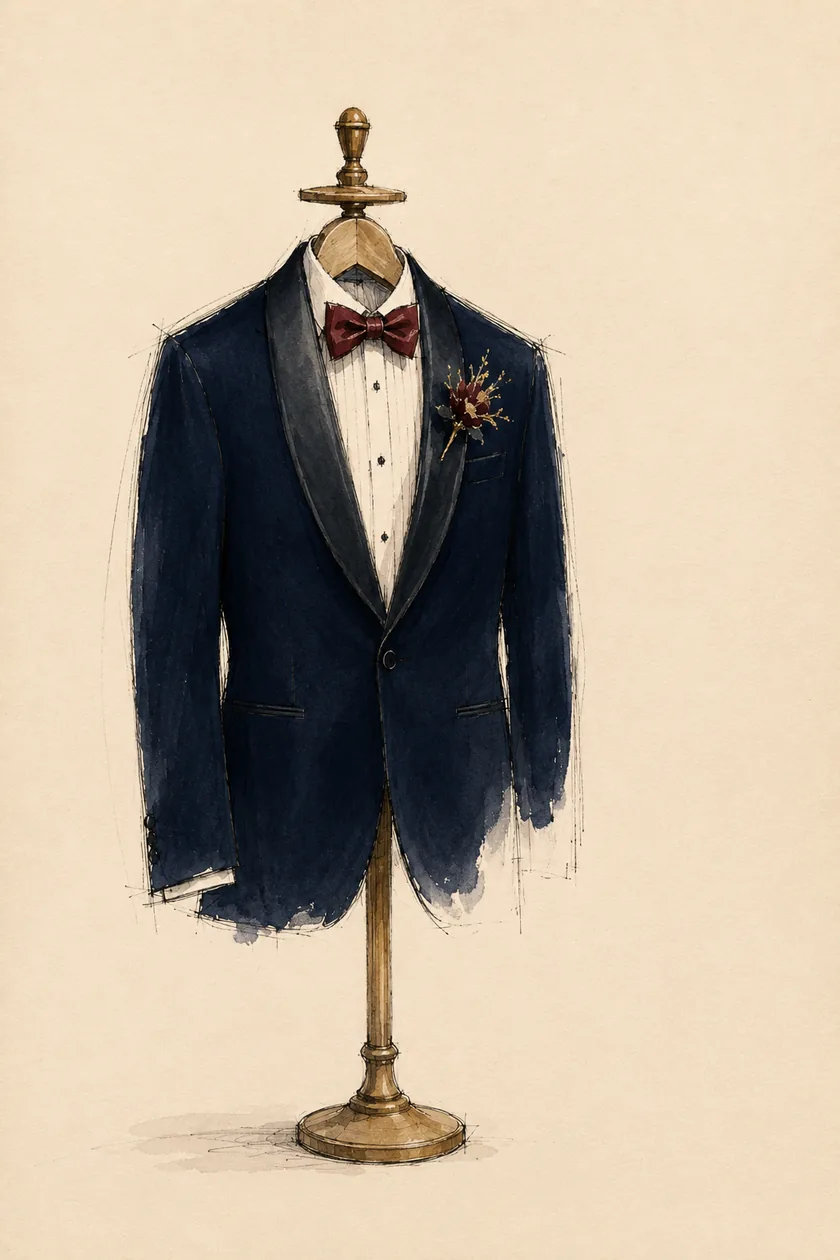
The navy and grey in your capsule already handle the day-to-day and the milestones. You only need something extra when the dress code is genuinely different: a tuxedo for black tie, or a real interview suit if you’re job-hunting hard. If you’re getting married, that’s its own conversation. See the wedding and groom’s suit guides.
For most professionals, the business capsule is enough. You’re not building a costume department. You’re building three suits you reach for without thinking.
What fabric holds up best in a work rotation?
Wool, and specifically a mid-weight worsted. It presses well, resists wrinkles, breathes, and recovers its shape after a rest day, which is exactly what a rotation needs.
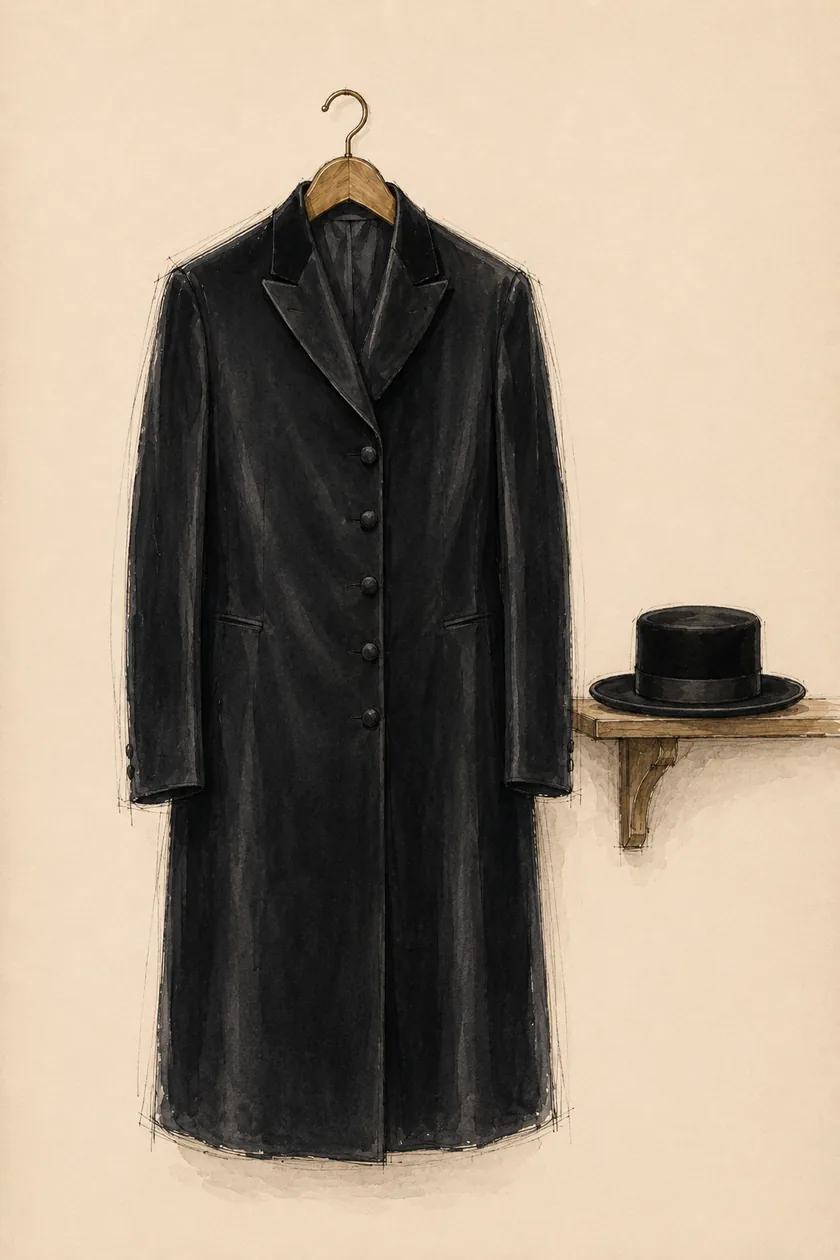
Go too lightweight and it wrinkles and wears through fast. Too heavy and you’re sweating three seasons of the year. A four-season worsted in the 250–290g range is the workhorse. It’s what most of our fabric library is built around for a reason. For a traditional wardrobe with its own considerations, the Jewish wardrobe guide covers the specifics.
Once you’ve got the fabric right, the rotation almost takes care of itself.
Three suits, rested and rotated, will out-dress a closet full of the wrong ones. If you’re not sure what your three should be, book an appointment and bring the suits you already own; we’ll sort keepers from retirees and map the capsule from there. Or start online and design your suit whenever you’re ready.