Black shoes or brown, and when it actually matters
Updated August 2026 · Sam’s Menswear editorial team
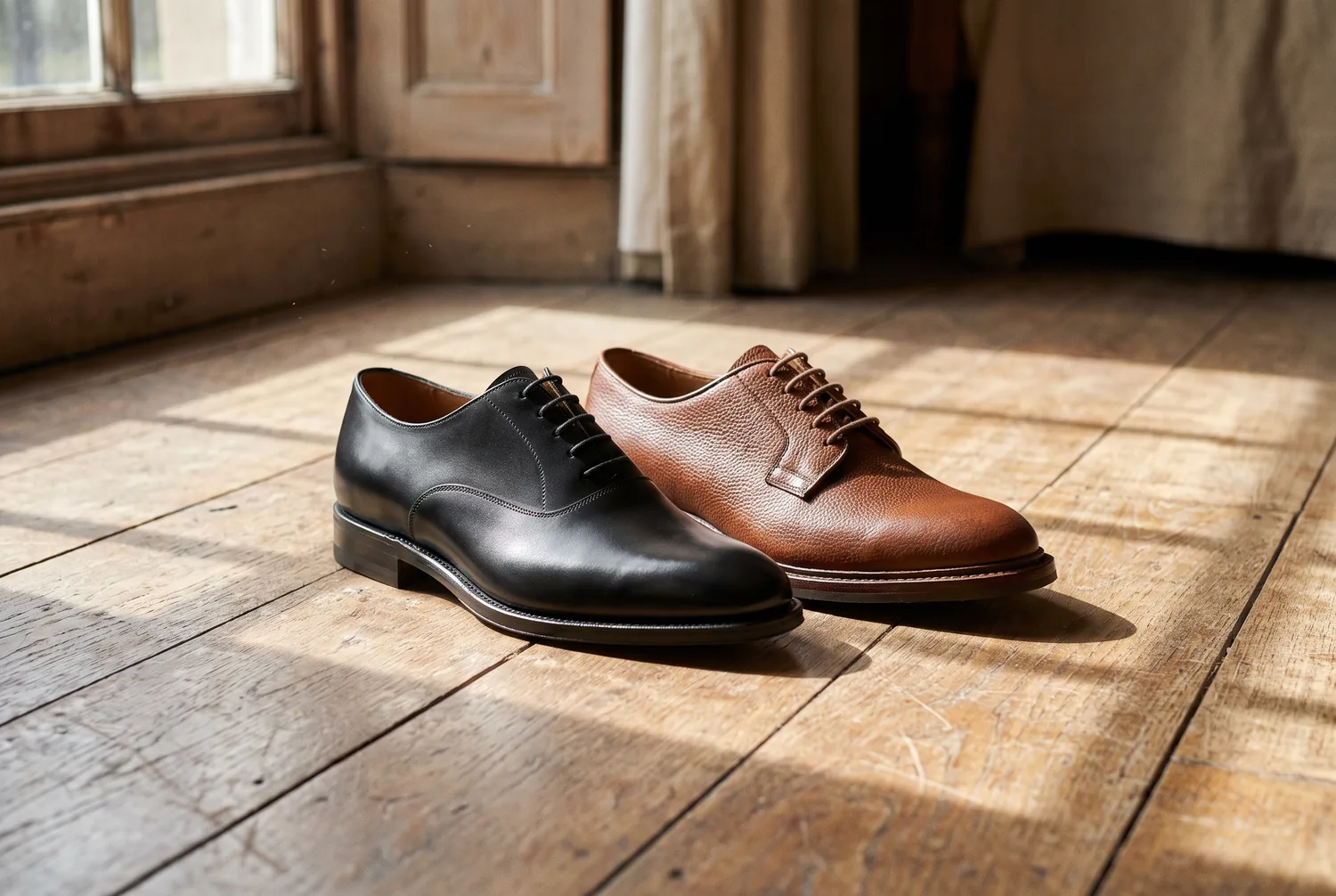
Men ask this expecting a rule and there almost is one, but it runs the opposite way to what most of them assume. Black is the specialist. Brown is the workhorse.
The short answer by suit colour
Navy suit. Brown. Dark brown, mid brown, tan in summer — all of them work, and all of them work better than black. Navy and black sit close enough in depth that black shoes make the whole thing read as one dark mass, and something is lost. Brown gives the outfit a floor. If you own one navy suit and one pair of shoes, make the shoes dark brown and you have covered nearly everything.
Mid grey suit. Brown or black, genuinely both. Brown is warmer and less formal; black is sharper. This is the one suit colour where it is a free choice, so pick by the occasion.
Charcoal suit. Black. Charcoal is close enough to black that the two agree, and brown against charcoal can look slightly at odds unless the brown is very dark. Not a disaster, but this is where black earns its place in daylight.
Brown or olive suit. Brown, obviously, and a shade darker than the suit.
Black suit. Black. There is no other answer, which is one of several reasons a black suit is a narrower purchase than men expect.
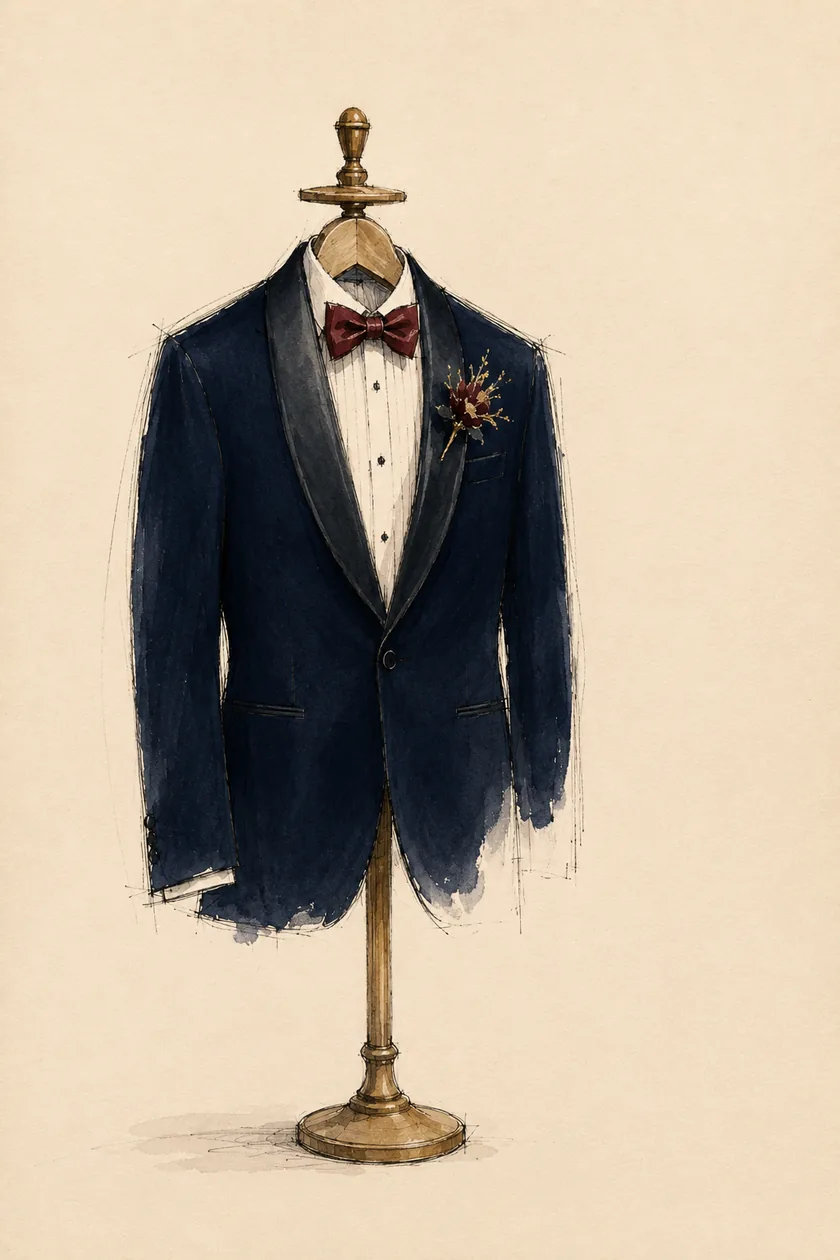
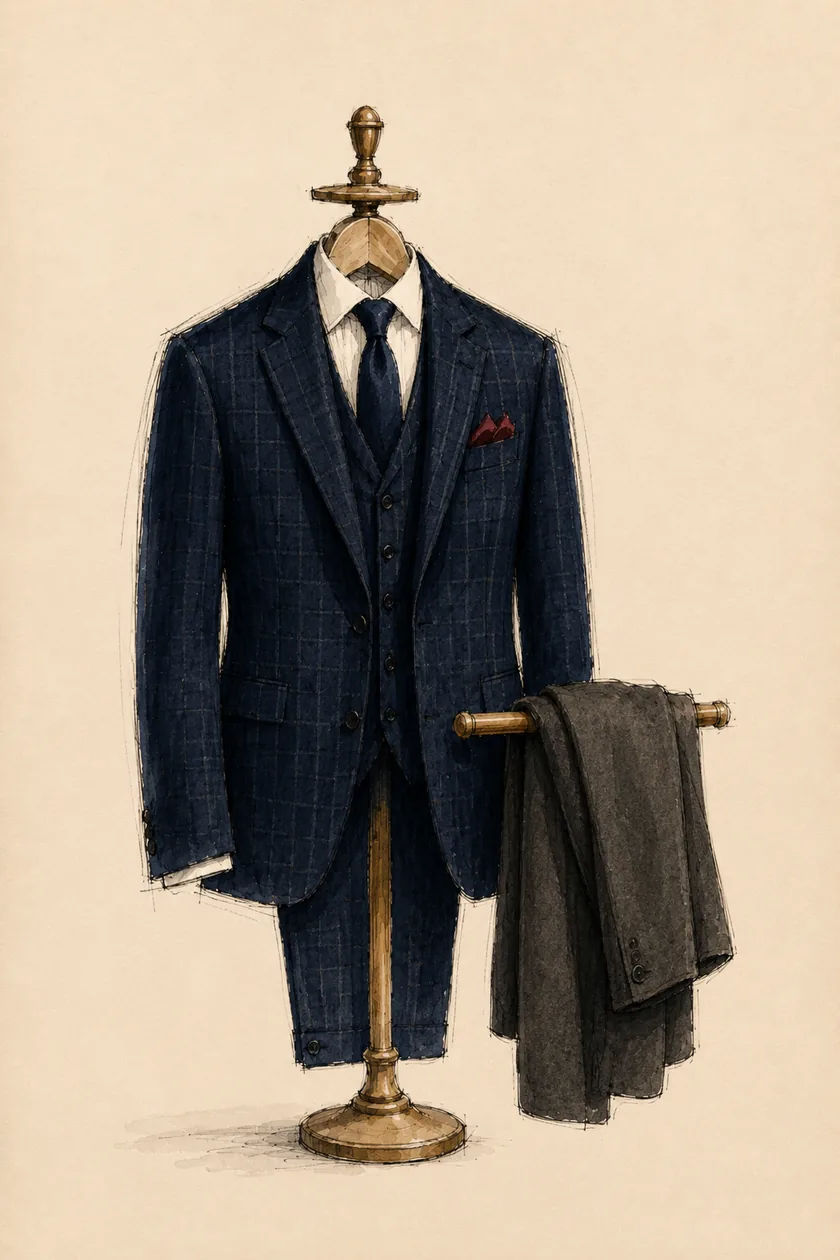
The shirt and tie for each of these are drawn side by side: navy, charcoal, grey, brown and black.
The two times black is actually required
Everything above is judgement. These two are not.
Black tie. Black patent or highly polished black calf, and nothing else. The dress code is a dress code precisely because it removes choice.
A stated formal dress code. An occasion that specifies morning dress or formal wear. If a card tells you what to wear, do what it says.
Outside those two, nobody is going to stop you at a door over the colour of your shoes.
”No brown in town”
Someone will quote this at you eventually, usually with confidence.
It is an English rule, it is roughly a century old, and it belongs to a specific world: men who had a house in London and a house in the country, wore black in the city and brown for shooting, and dressed to signal which they had come from. It made sense there and then.
It has no authority in Toronto, it has very little left in London, and a man in a navy suit and dark brown oxfords is correctly dressed for any business day in this city. If someone raises it, they are quoting a tradition rather than describing the room you are standing in.
Shape matters more than colour
This is the part that gets missed. The formality of a shoe is decided by its construction far more than by its colour, and a man worrying about brown versus black is often standing in the wrong shoe entirely.
Oxford. The lacing is closed — the flaps holding the eyelets are stitched under the front of the shoe, so when it is laced the whole thing looks like one clean piece. This is the most formal shoe. A dark brown oxford is dressier than a black derby.
Derby. The lacing is open — the flaps sit on top and you can see them meet. Slightly less formal, more comfortable for a high instep, entirely correct with a business suit.
Loafer. No lacing. Fine with a summer suit, fine with separates, not for an interview or a funeral.
Anything with a heavy sole, a visible rubber tread, or brogueing across the whole upper. Country shoes. They dress a tweed jacket beautifully and they undercut a formal suit.
So: a dark brown plain oxford is a more formal shoe than a black brogue derby, every time. Get the shape right and the colour question gets much smaller.
The rest of the leather has to agree
Whichever you land on, your belt follows the shoe, and so do the leather ends on a pair of braces and the strap on your watch if it is leather. That is its own small subject and it has its own guide.
What to buy first
If you are building from nothing and you wear a suit for work:
- Dark brown oxford. Covers navy and most greys. The single most useful dress shoe there is.
- Black oxford. Covers charcoal, black tie at a push, funerals, and anything with a dress code.
- Then whatever your life actually calls for — a loafer for summer, a lighter brown, a derby if your foot prefers one.
Two pairs, alternated rather than worn on consecutive days, will outlast four pairs worn into the ground. Leather needs a day to dry out, and shoe trees are worth more than most men expect for what they cost.
One thing about the trouser
None of this shows properly if the trouser is the wrong length. A break that is too long piles cloth on the shoe and hides it; too short and the shoe becomes the whole story. When trousers are made here the hem is set on you, in the shoes you actually intend to wear with them, which is why it is worth bringing them to the fitting rather than guessing.
Men do forget. Then the trouser is finished to a shoe with a different heel height and it never sits quite right, and nobody can work out why.