Goldfinger: the glen check three-piece that made Bond's name
Updated September 2026 · Sam’s Menswear editorial team
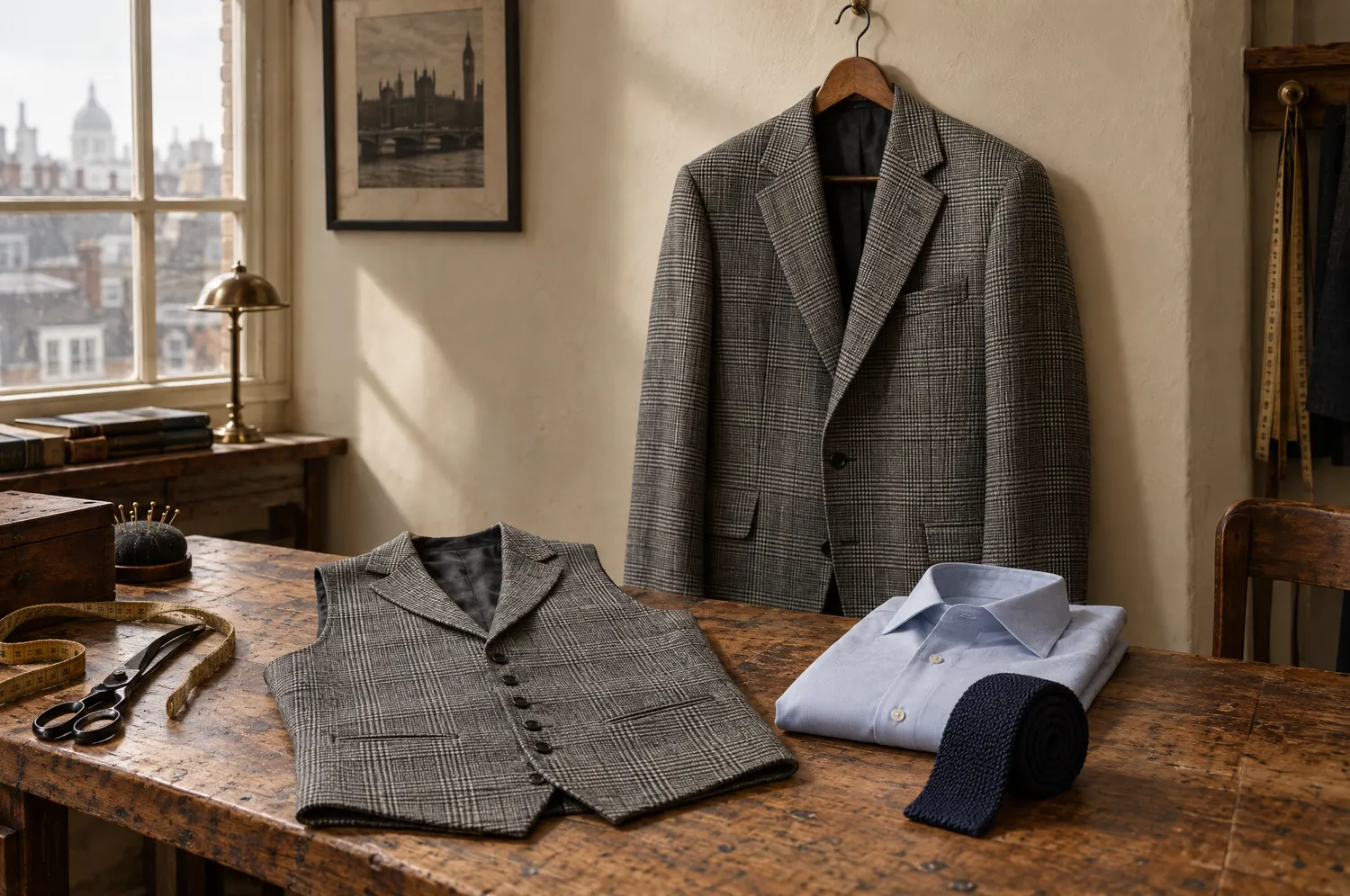
Every Bond film has a suit people remember. Goldfinger has the one people still order.
In the 1964 film Sean Connery wears a mid-grey glen check three-piece that has become the reference point for the whole franchise: the suit that turns up in “best Bond suit” arguments, in tailors’ windows, and in the requests of men who have just rewatched the film. It is not flashy. That is exactly why it has lasted.
The suit
The early Bond suits were made by Anthony Sinclair, a tailor on Conduit Street in Mayfair, whose house style came to be called the “Conduit Cut”.
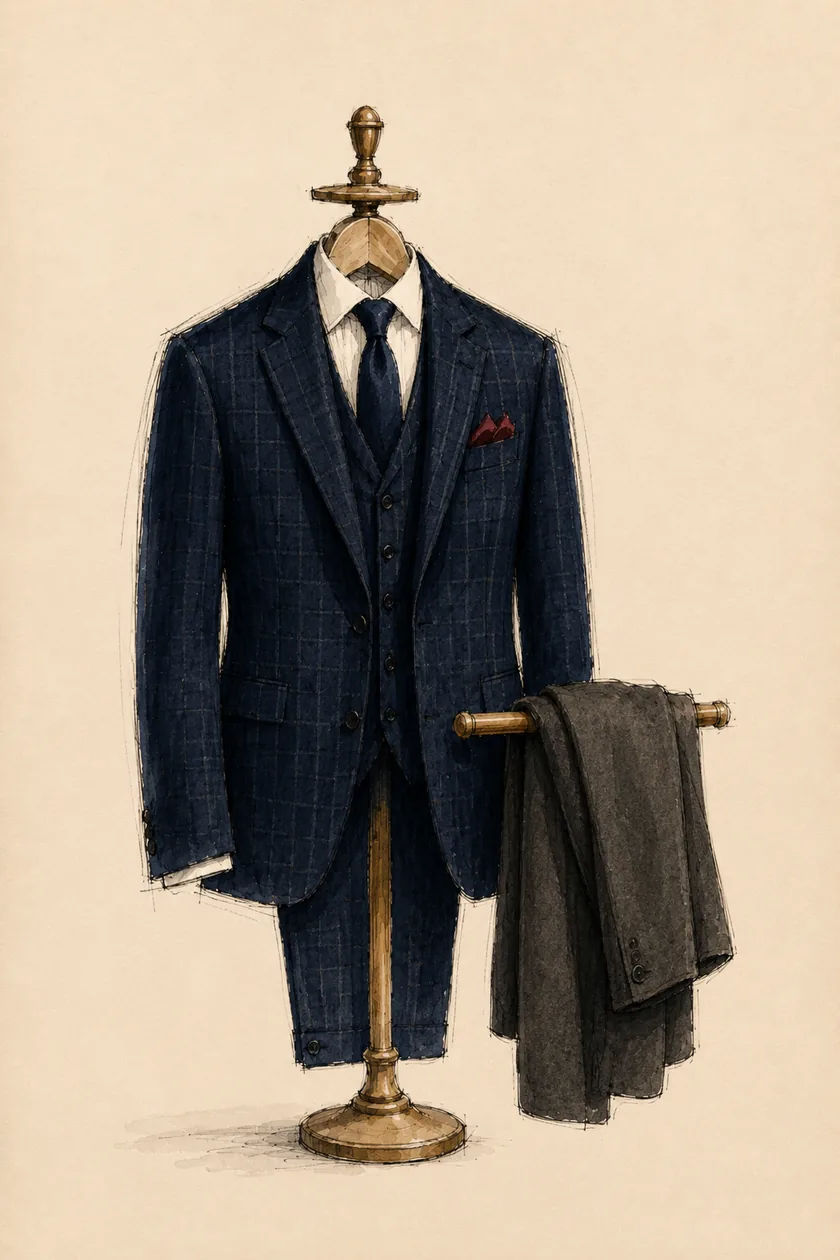
- The cloth is a fine glen check, the pattern also called Glenurquhart or Prince of Wales check, in black, grey and white. It is woven in a small basket weave that gives the surface a slightly open texture.
- The waistcoat has its own small notched lapels, a detail most waistcoats lack and the one that makes this suit instantly recognisable.
- The trousers have side adjusters at the waistband, so they need neither belt nor braces.
The mid-grey glen check three-piece remains the most requested design in Sinclair’s archive, sixty years after the film.
Why it works
The pattern disappears at a distance. Like Cary Grant’s suit in North by Northwest, a fine glen check reads as grey from across a room and only shows its pattern up close. That makes it formal enough for anywhere and interesting enough not to be a uniform.
The three-piece is doing real work. With the jacket off, a waistcoat keeps a man looking dressed. With it on, it gives a clean line from collar to belt line with no shirt showing. A lapelled waistcoat adds a small, confident flourish without adding a single colour.
No belt. Side adjusters give an unbroken line at the waist, which is why a three-piece looks so smooth. It is a detail from a time when every suit was made for its owner, and it still does what it did then. Belt or braces goes into the options.
What to take from it
- A three-piece in a quiet pattern is a workhorse, not a costume. Wear it as a three-piece to a wedding, as a two-piece to the office, and the waistcoat on its own over grey trousers on a Friday.
- Keep the rest plain. A pale shirt and a plain dark tie let the check be the only pattern in the room. Mixing patterns explains why.
- Consider the waistband. Side adjusters are worth asking for on any suit you will wear with a waistcoat.
Getting it made
Sam makes three-piece custom suits at the Vaughan studio in three to four weeks; ask about a lapelled waistcoat or side adjusters at the first appointment. The Drawing Board will sketch the three-piece in silver grey glen check, with a plain waistcoat rather than Bond’s lapelled one: draw the Goldfinger suit.
Where the details come from: Bond Suits, BAMF Style and Anthony Sinclair.