North by Northwest: the grey suit that survived a crop duster
Updated September 2026 · Sam’s Menswear editorial team
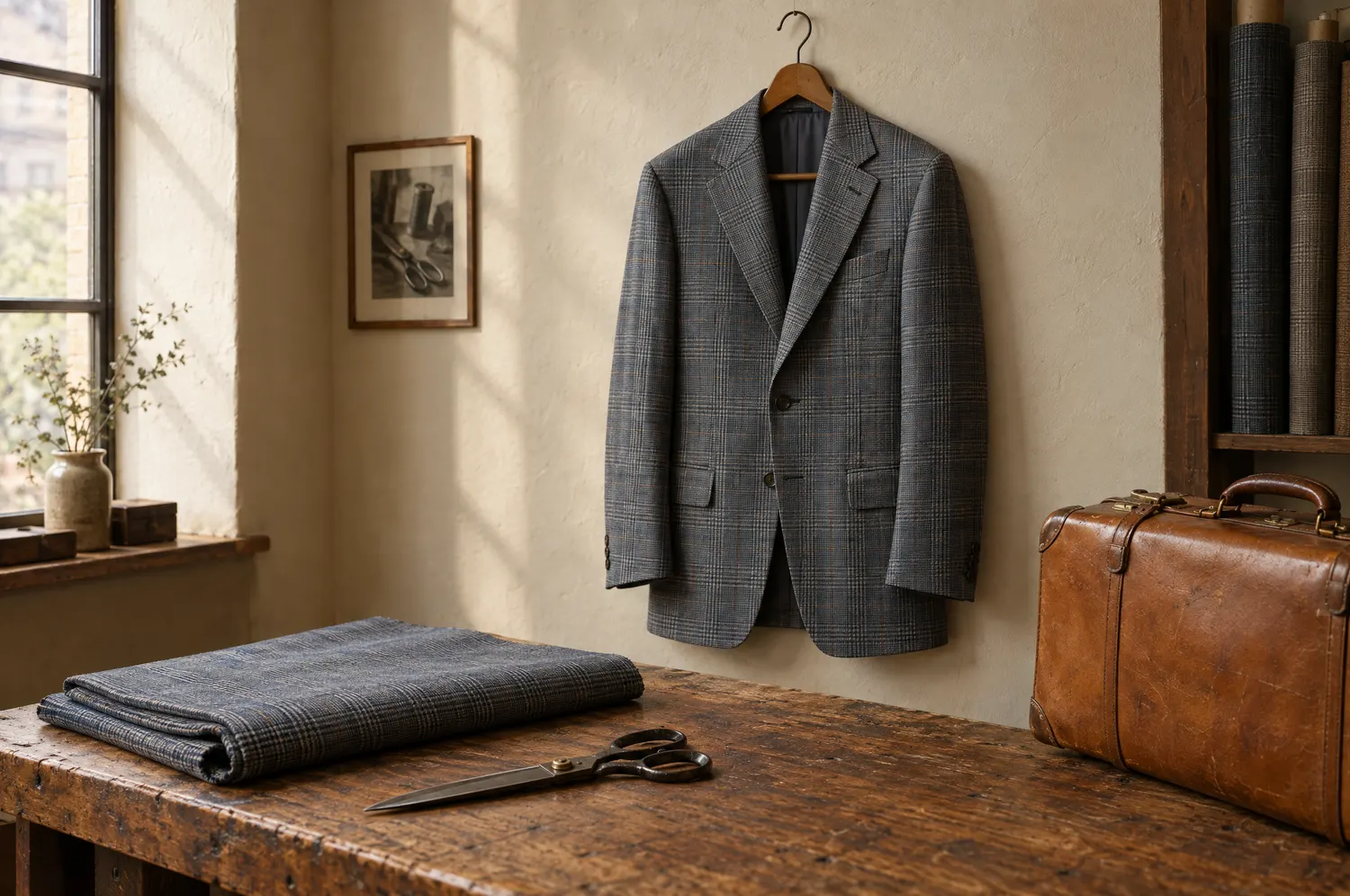
The man in the best suit in film history is called Thornhill. We did not plan that, but we are not going to pretend we did not notice.
Roger Thornhill, played by Cary Grant in Alfred Hitchcock’s North by Northwest (1959), is a Madison Avenue advertising man mistaken for a spy. He spends the film being chased across America in one suit: through the Plaza Hotel, onto a train, across a dusty cornfield under a crop duster, and up Mount Rushmore. By the end the suit has been through more than most suits see in a decade, and it still looks right. That is the whole argument for it.
The suit
The suits Grant wears for most of the film were made by Kilgour, French & Stanbury on Savile Row, cut by Arthur Lyons, who also made suits for the Duke of Windsor. For the action sequences, where Grant did not want to ruin the originals, a double was made by Quintino, a Beverly Hills tailor.
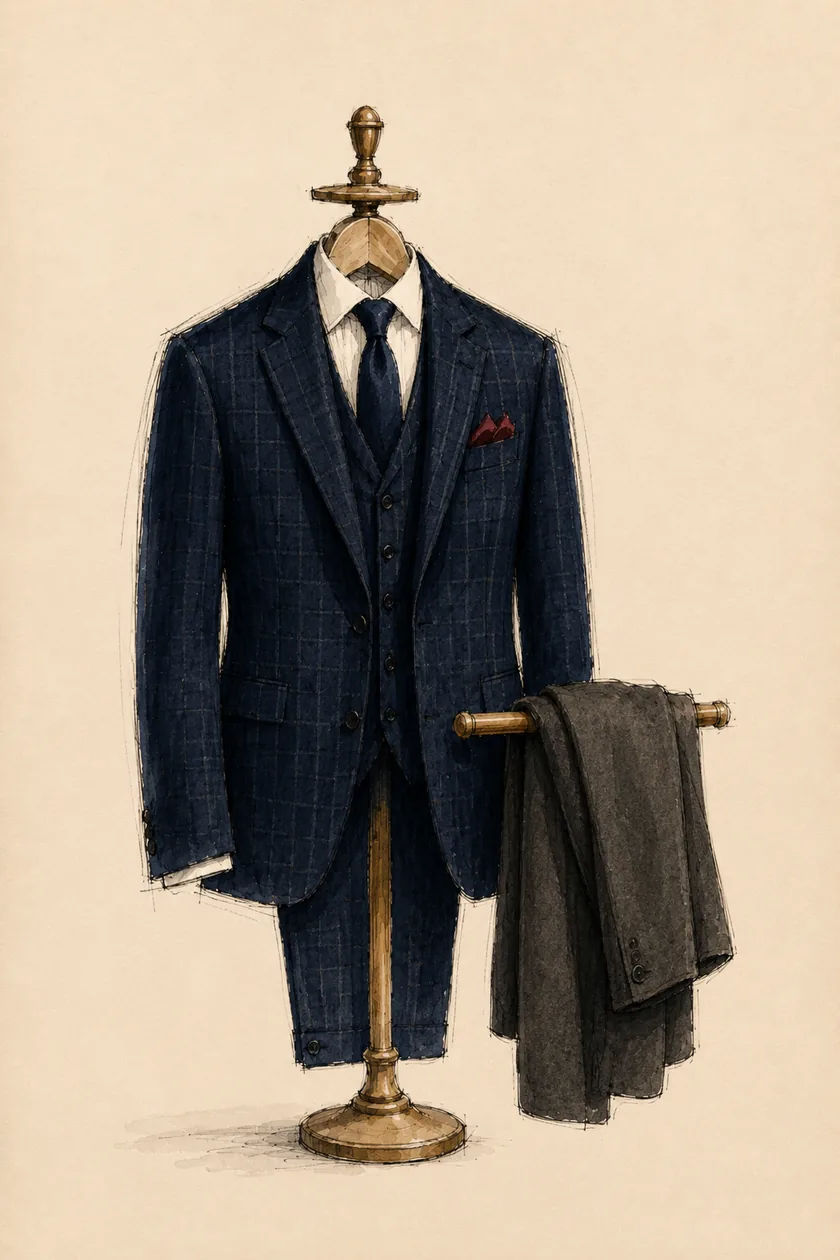
- The cloth is a lightweight worsted in a fine grey glen check, often described as grey with a blue cast. From across a room it reads as plain mid-grey; up close, the check appears.
- The jacket is single-breasted with notch lapels, cut as a “three-roll-two”: three buttons, with the lapel rolling softly over the top one so only the lower two fasten.
- The fit is clean and easy rather than tight. Grant could run, climb and fall in it.
Esquire put it at the top of its list of the greatest suits in film in 2015, and GQ has called it the best suit in film history.
Why it works
It is quiet. Nothing about the suit asks to be looked at. Mid-grey is the most adaptable colour a suit comes in; the check gives it depth without turning it into a pattern.
It is forgiving. A fine check hides dust, creases and the odd cornfield far better than a plain dark worsted, which shows every mark. That matters for a suit you actually wear.
It goes everywhere. The same jacket works at the office, at dinner, on a train and on the side of Mount Rushmore. Most men want exactly that from their first good suit and buy something too dark, too shiny or too sharp to get it.
What to take from it
- Buy the quiet pattern. A fine glen check, a birdseye or a sharkskin in mid-grey will be worn far more often than a bold one.
- Mind the button stance. The three-roll-two is a soft, relaxed front. It is an old cut and a good one for a man who finds a standard two-button too sharp.
- Weight matters. A lighter worsted is what let Grant run and climb in it. For Toronto, the same idea in a year-round weight of about 10 to 11 oz does most of the calendar; see fabric for a Toronto winter and the humid summer.
Getting it made
Sam makes custom suits in this kind of cloth, measured and fitted at the studio in Vaughan, just north of Steeles, in three to four weeks. The Drawing Board will sketch the idea in slate grey glen check with a three-button front: draw the North by Northwest suit. Bring the still to your appointment. There is nothing wrong with wanting to look like Cary Grant; the tailoring trade has been fielding that request since 1959.
Where the details come from: BAMF Style and Bond Suits.