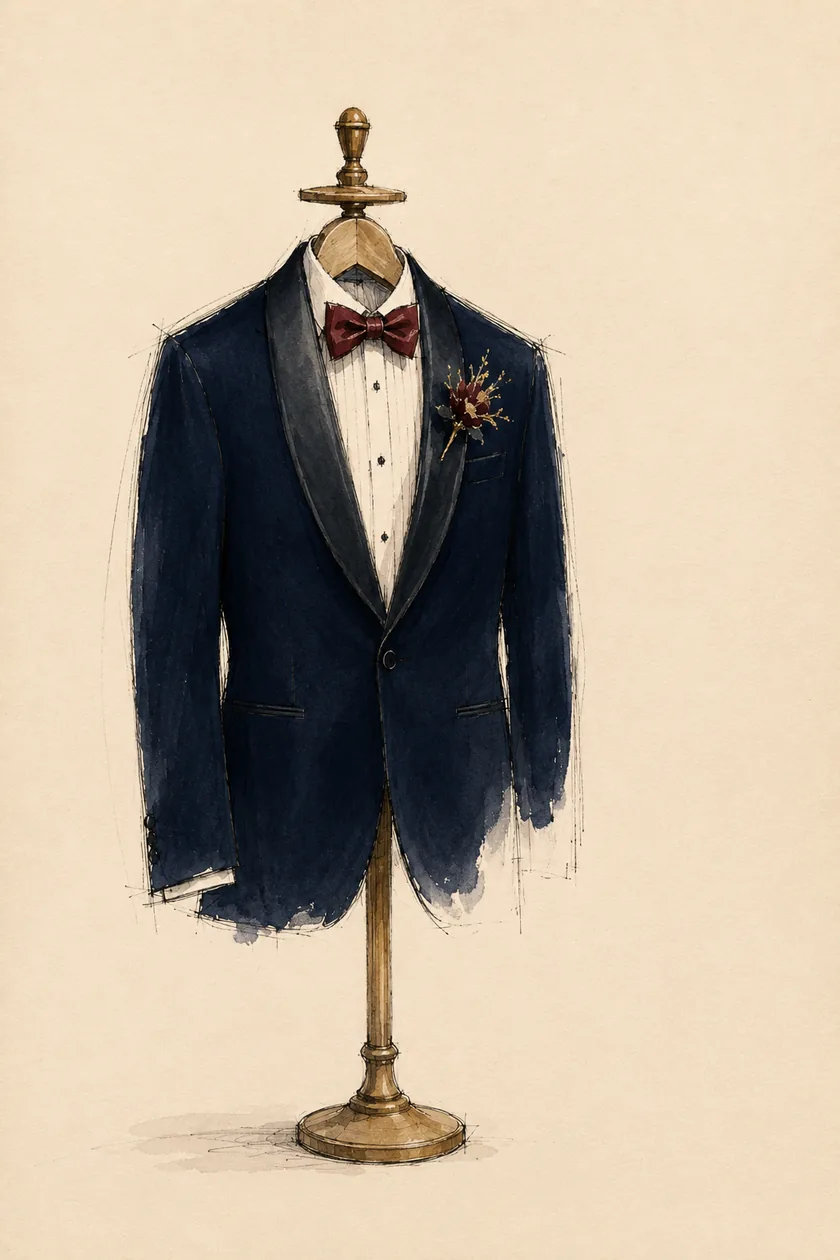
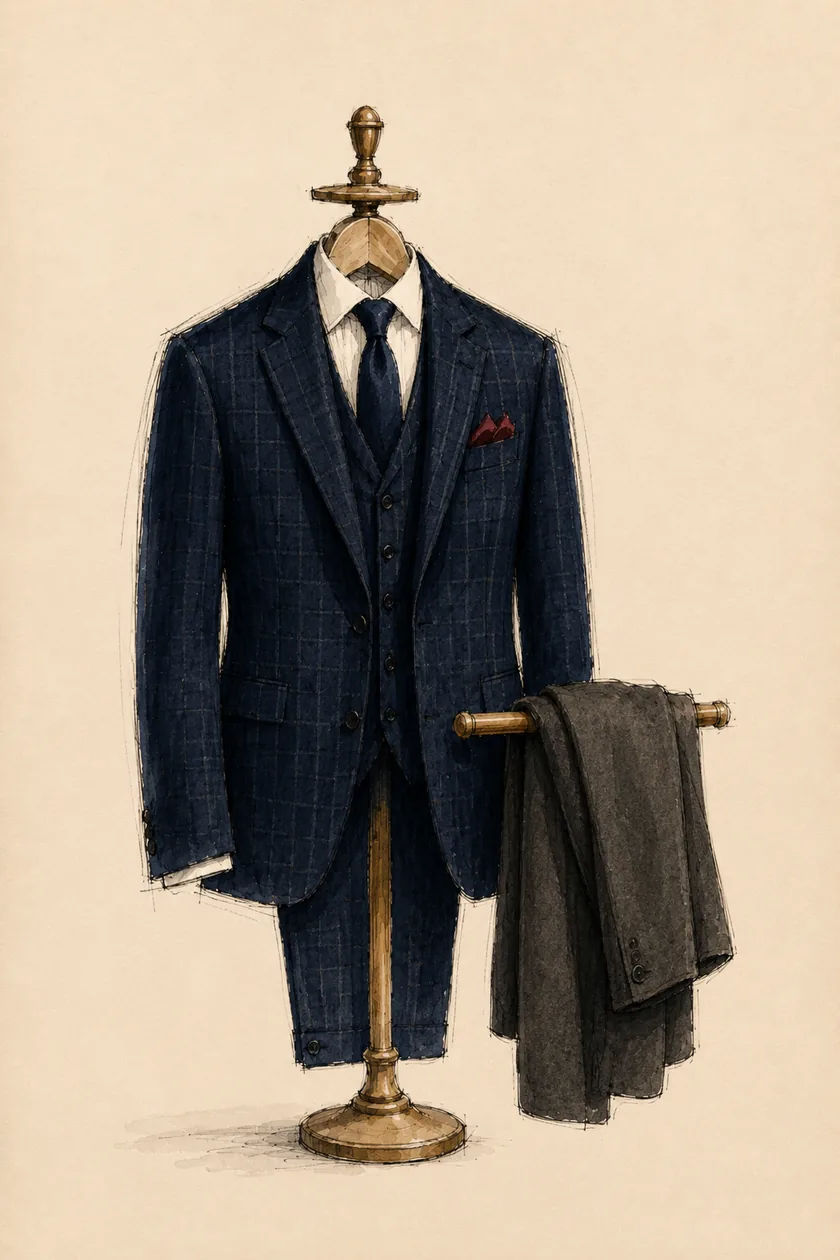
One, two or three buttons? Suit jackets, drawn side by side
Updated September 2026 · Sam’s Menswear editorial team
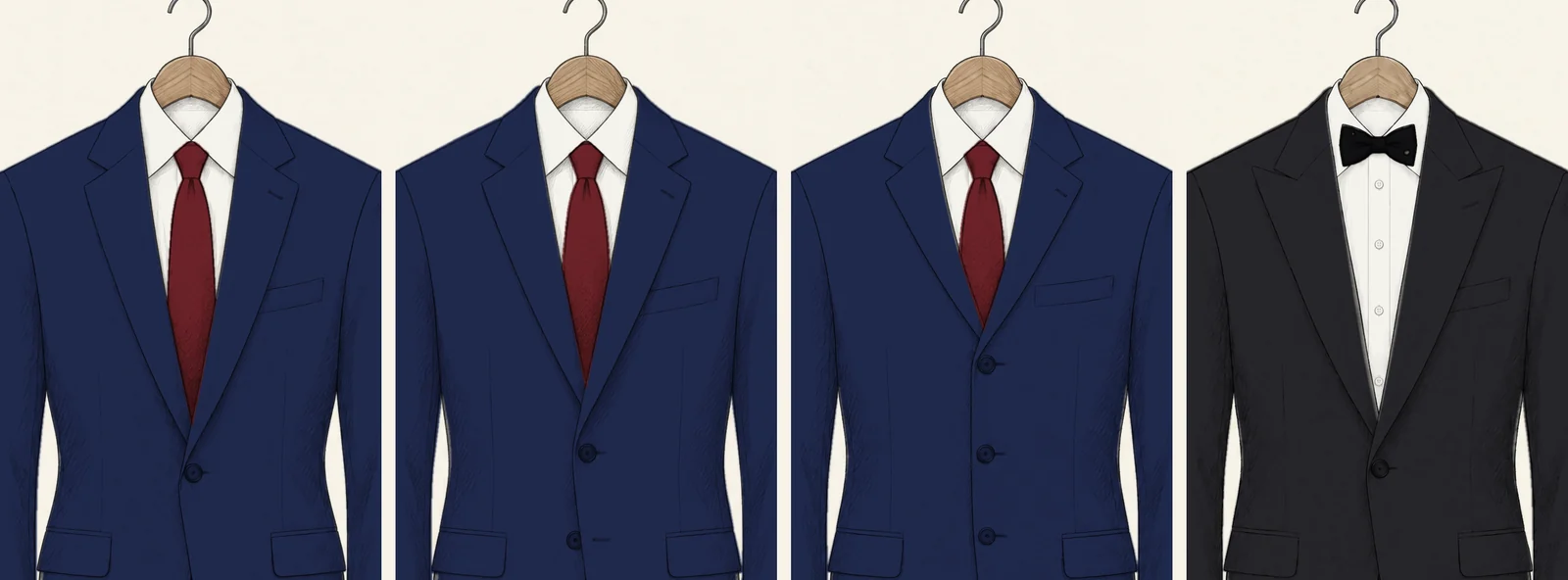
How many buttons a single-breasted jacket has looks like a small detail. It isn’t. The top fastening button is where the lapels end, so the button count sets how deep the V of the jacket is, how much shirt and tie show, and how long your chest and legs look.
The drawings below are the same navy suit on the Drawing Board, with only the buttons changed.
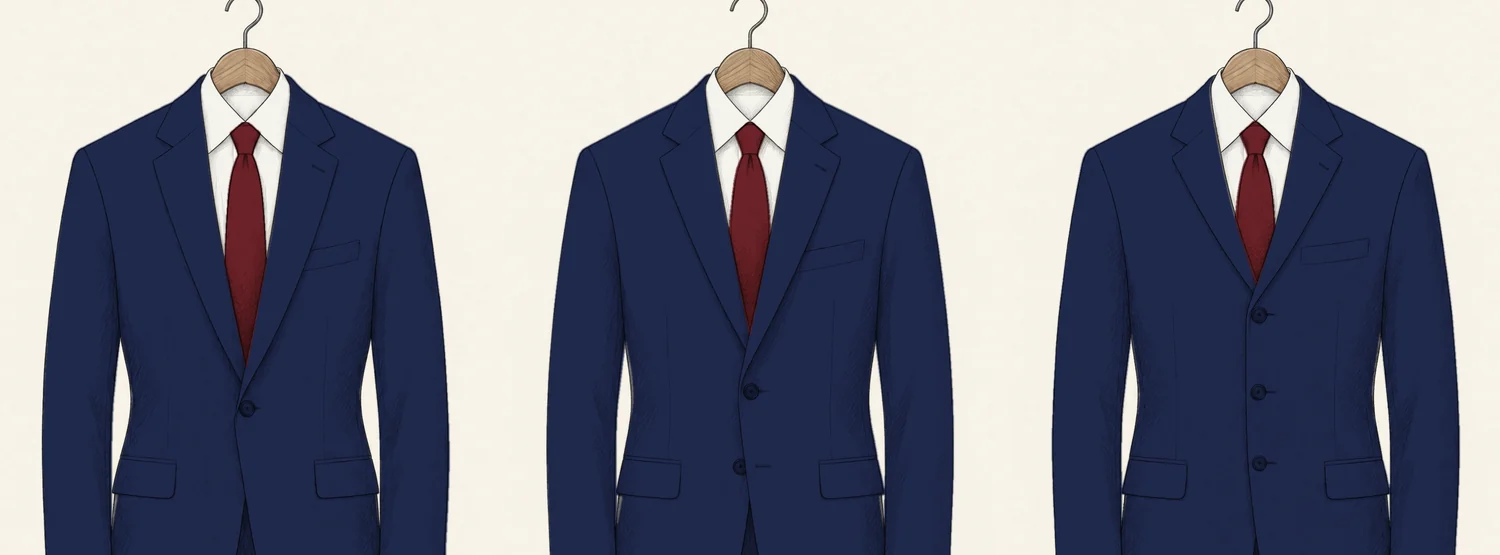
Which buttons to fasten: sometimes, always, never
The rule is easiest to learn on a three-button jacket and works for the others:
- Three buttons: the top one sometimes, the middle one always, the bottom one never.
- Two buttons: the top one always, the bottom one never.
- One button: fasten it.
The bottom button stays open because the front of a modern jacket is cut to open over the hips below the waist button. Fasten it and the skirt of the jacket pulls into creases. Fasten the jacket when you stand, and undo it when you sit down, so the front doesn’t strain across your middle.
One button: the deepest V
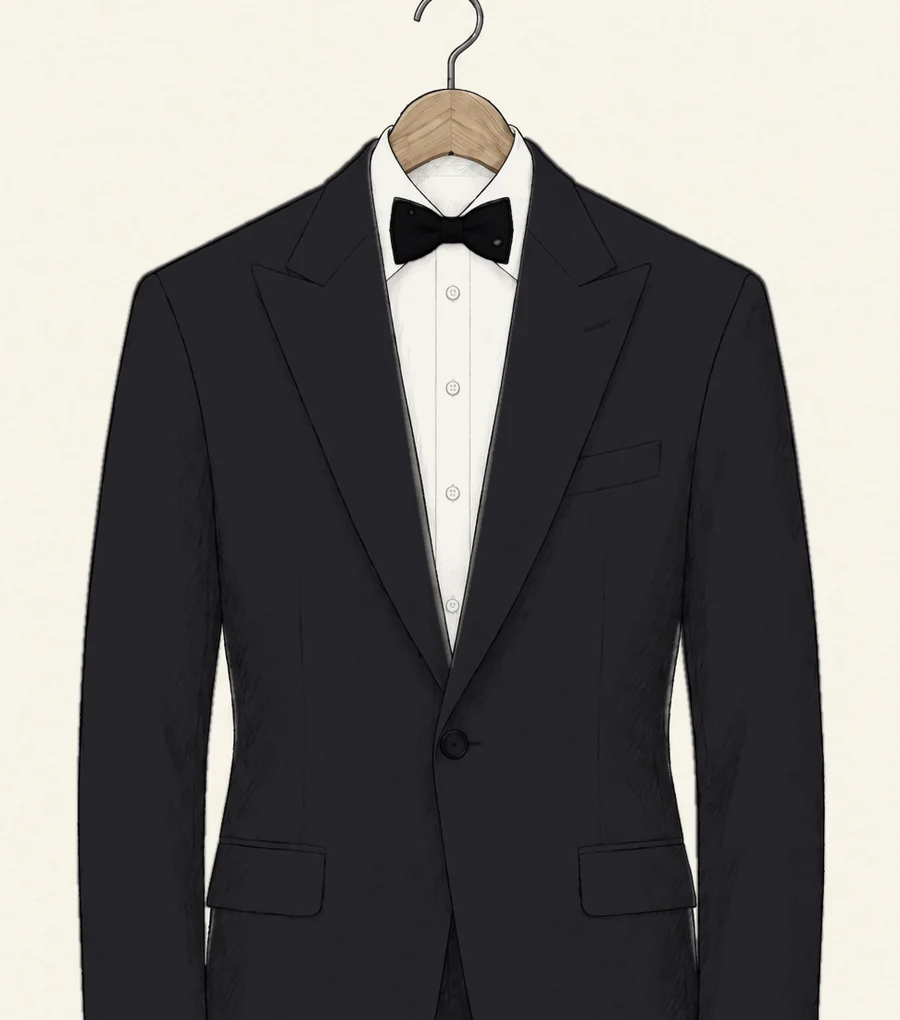
With one button the lapels roll all the way down to the waist, so the V is as long as it can be. The line is clean and uninterrupted, and it makes the chest look broad and the body look long.
It is the classic cut for a tuxedo and a dinner jacket, where the long V shows off the dress shirt and the bow tie. On a day suit it reads sharp and a little fashion-forward: good for an evening, a groom who wants the suit to stand out, or a man who simply likes the line. In a conservative office, two buttons is the safer choice.
Two buttons: the standard
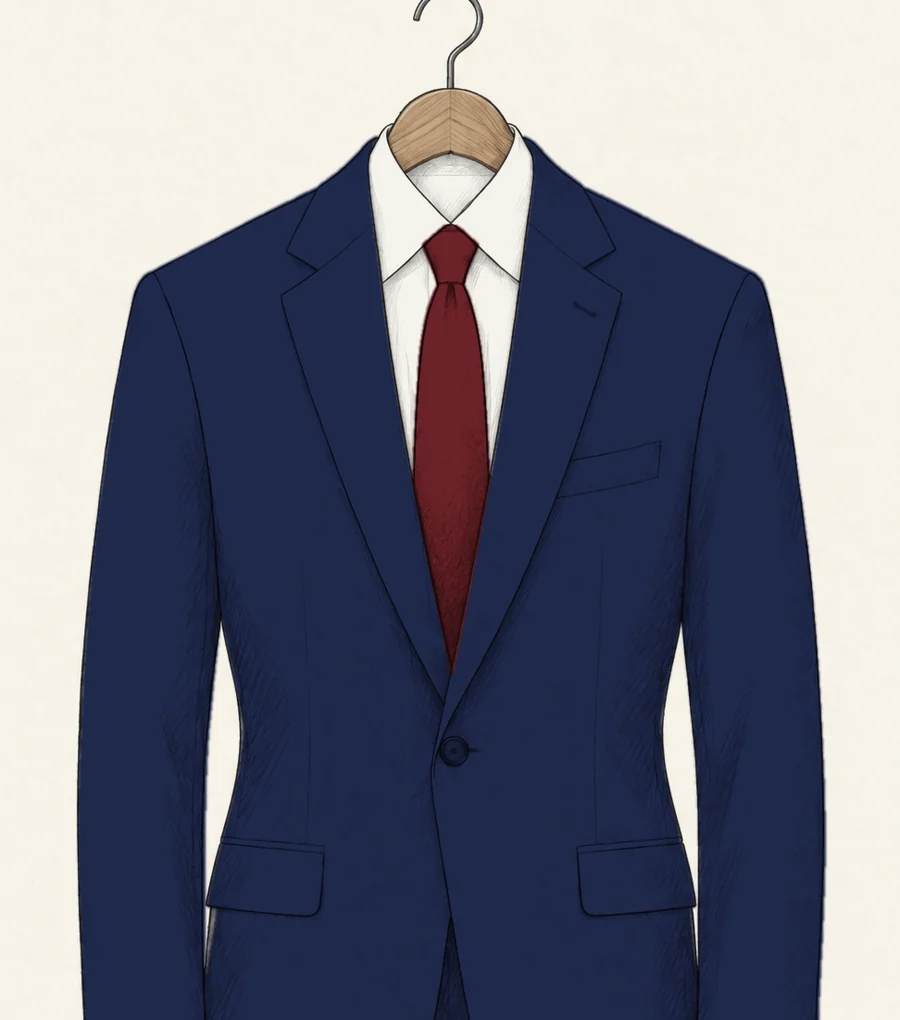
The two-button is the jacket most men own, and for good reason. The lapels end at the top button, just above the waist, which gives a V long enough to look lean without looking like evening wear. It works on almost every build, with a tie or without, in every setting from an interview to a wedding.
If you are not sure, it is two. It is the right answer for a first custom suit, and for most suits after that.
Three buttons: the traditional one
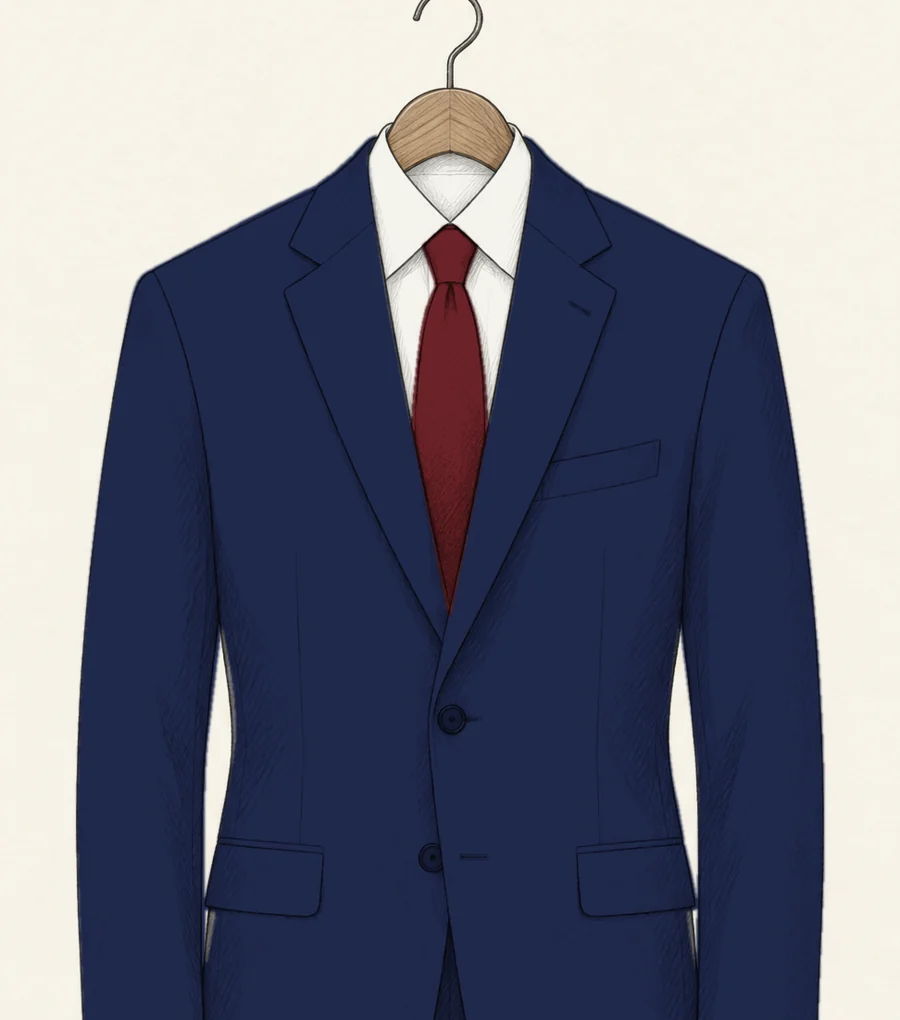
On a three-button jacket the lapels end higher on the chest, at the top button, so the V is shorter and more of the jacket covers the shirt and tie. It looks more buttoned-up and more traditional. It was the business standard for much of the last century, and it comes back into fashion every so often.
It suits a taller man best: the high closure balances a long torso, where on a shorter man it can make the chest look short. It also sits naturally in country cloths, a flannel, a tweed or a corduroy.
There is also the three-roll-two, where the lapel rolls softly over the top button so only the middle one fastens. From the front it reads almost like a two-button, with a gentler roll. It is the cut of Cary Grant’s suit in North by Northwest. The drawings here show a true three-button, the lapels ending at the top button.
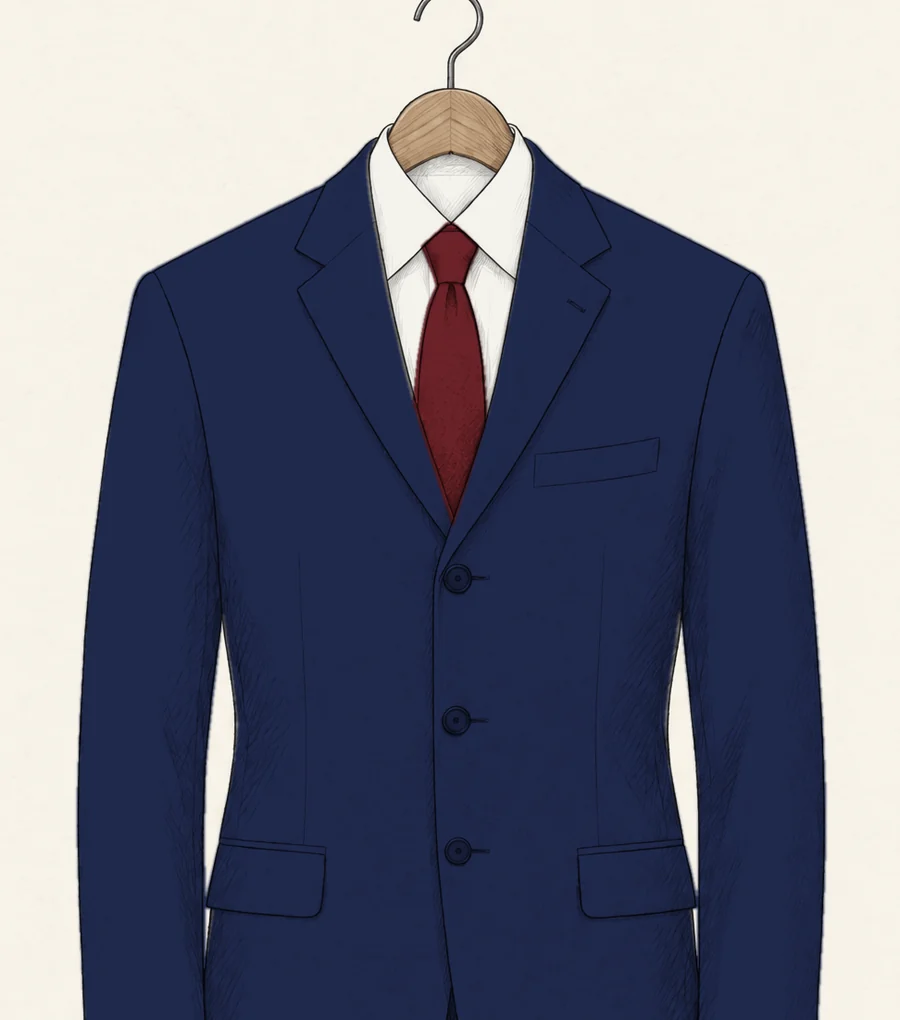
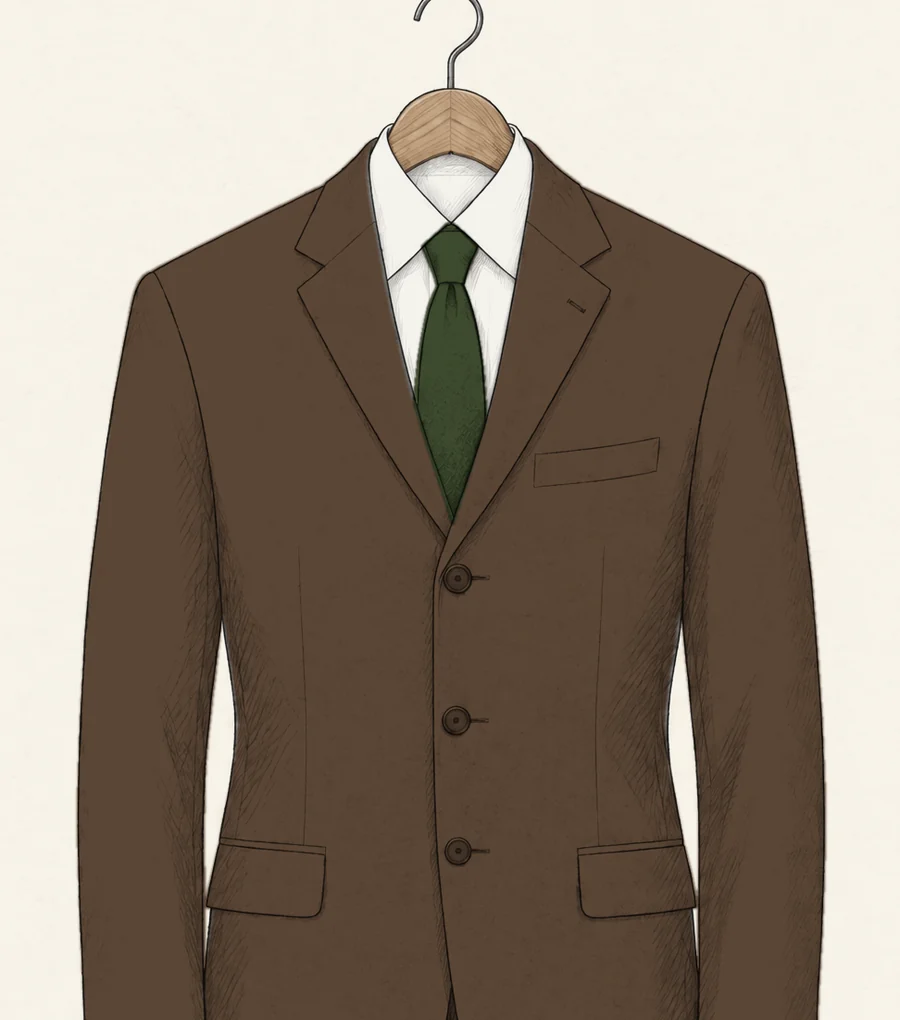
At a glance
| One button | Two buttons | Three buttons | |
|---|---|---|---|
| The V | Deepest, to the waist | Medium, just above the waist | Shortest, high on the chest |
| You fasten | The one | The top one | The middle, and the top if you like |
| The look | Clean, sharp, evening | Standard, balanced | Traditional, buttoned-up |
| Suits | Most builds; lengthens a shorter man | Almost everyone | Taller men |
| Best for | Tuxedos, dinner jackets, evenings | The office, interviews, weddings | Country cloths, a taller frame |
Which one suits your build
The count matters, but where the buttons sit matters more. The fastening button, the top one on a two-button, should sit at or just above your natural waist. Too low and the jacket looks sloppy and your legs look short; too high and it looks tight and dated. Off the rack, that point is set for somebody else’s torso.
In general, a shorter man looks taller in a one- or two-button jacket, whose longer V draws the eye down. A taller man can carry three buttons, which fill the length of his chest. A broad man is usually best in two, which neither exaggerates the chest nor closes it off. Sam sets the button stance to your body at the fitting, whichever count you choose.
Which one for the occasion
- The office and interviews: two buttons.
- Your first custom suit: two buttons.
- Your wedding: two buttons, or one for an evening wedding or a jacket that stands out.
- A wedding guest: two buttons.
- Black tie: one button, with peak lapels or a shawl collar. A shawl collar is cut with one or two buttons, never three.
- Your community’s custom: if the men in your community wear a particular cut, tell Sam what it is. He makes traditional suits as they are worn.
Double-breasted jackets count their buttons differently, in pairs: 6×2 and 4×2 explains what those numbers mean.
Draw all three
On the Drawing Board you can switch between one, two and three buttons on the cloth you are actually considering, with any lapel, a waistcoat, and the shirt and tie you would wear: one, two, three. Send the drawing to Sam and the appointment starts from it.
Sam makes one-, two- and three-button suits at his studio in Vaughan. A suit takes three to four weeks, with one fitting on the finished garment, or twelve days when it is urgent and the fabric is in. Custom suits has the rest.