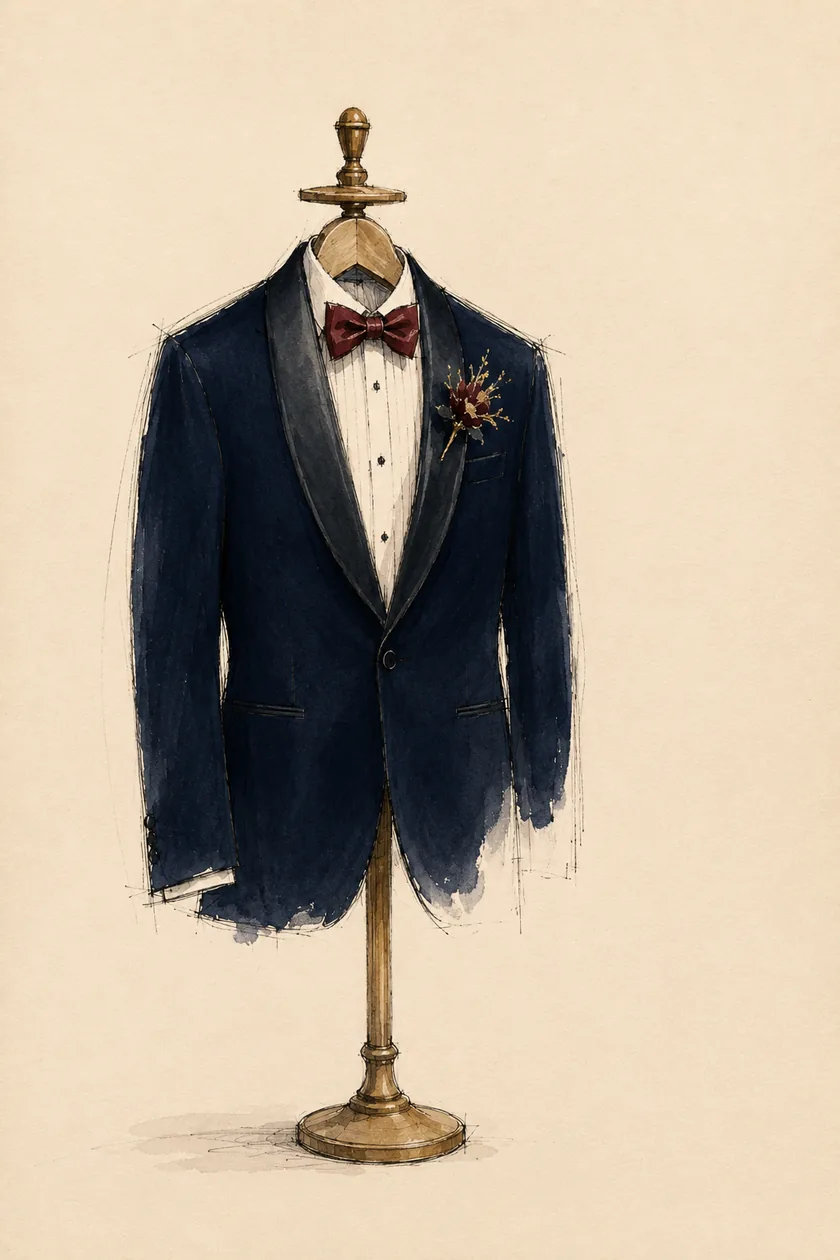
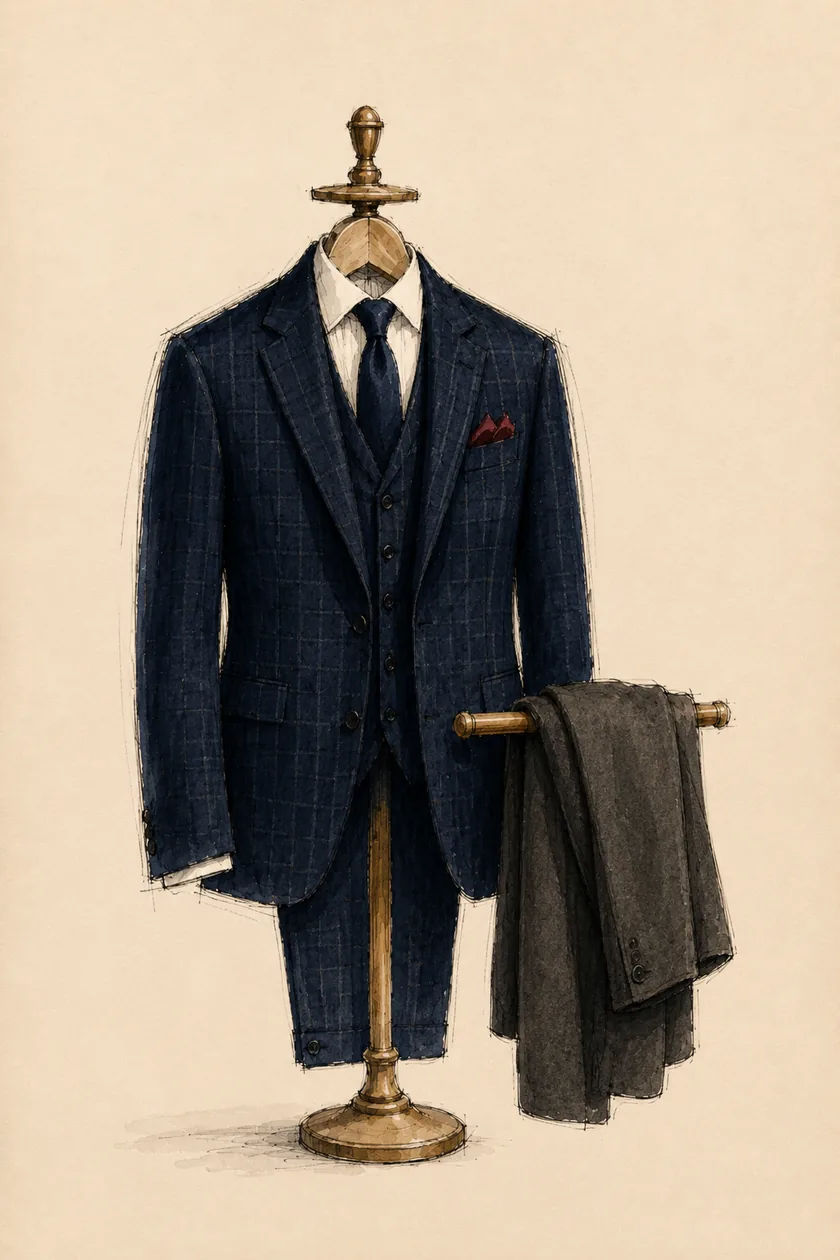
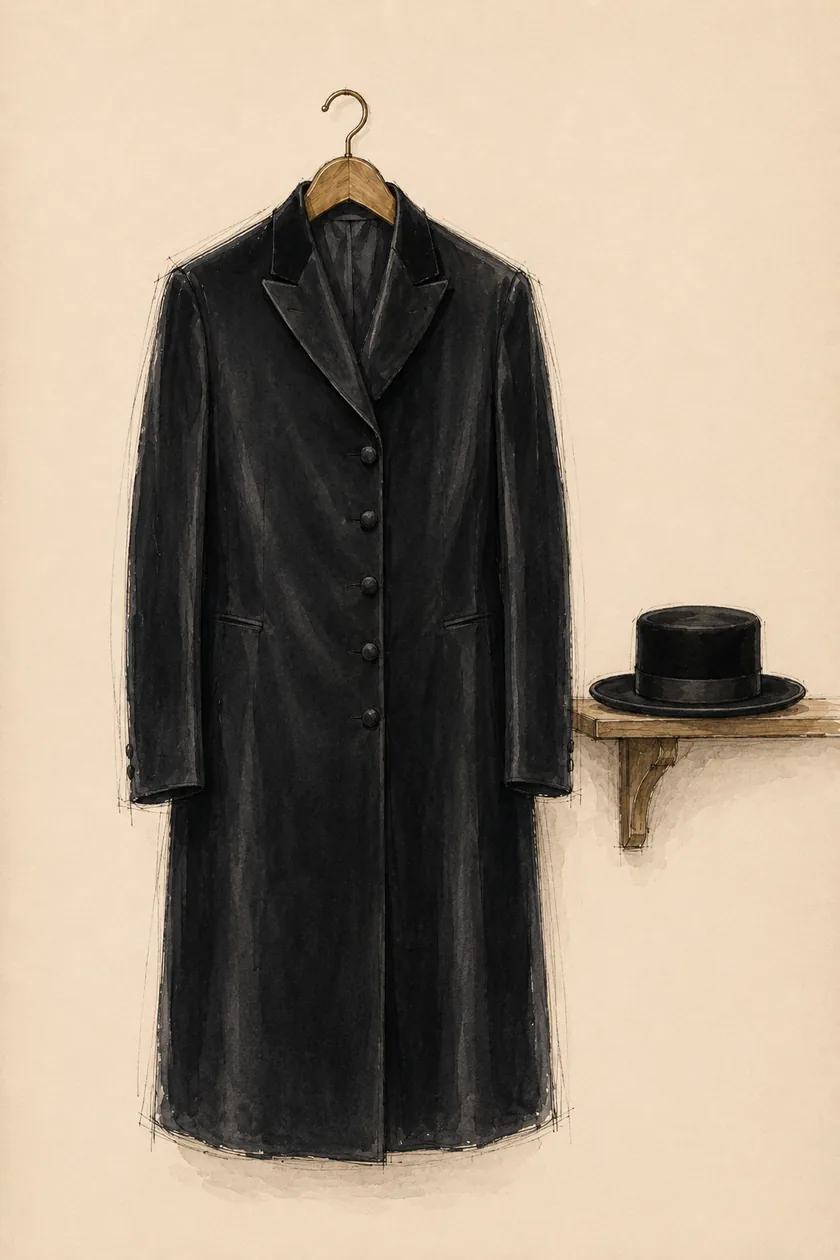
Notch, peak and shawl lapels, drawn side by side
Updated September 2026 · Sam’s Menswear editorial team
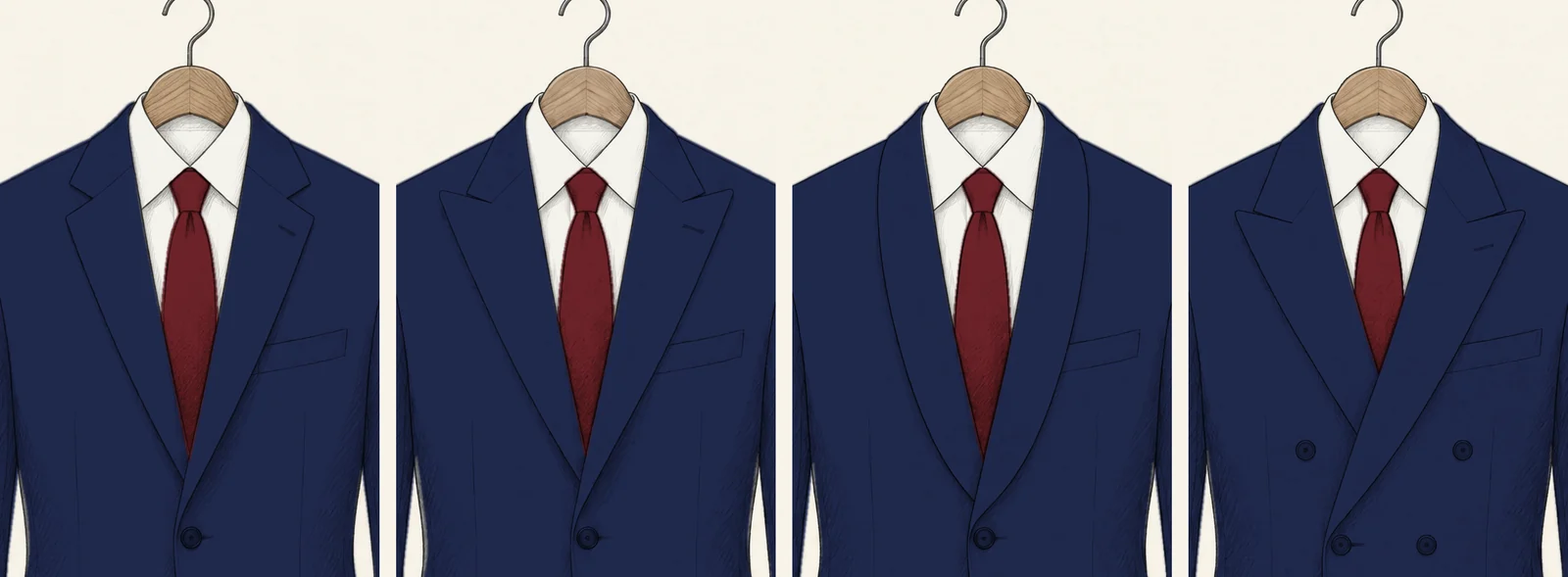
The lapel is the widest line on a jacket and the first one anybody reads. It frames the shirt and tie, leads the eye to your face, and decides more than any other detail whether a suit looks like business, like a statement or like evening wear. There are three, and they are not interchangeable.
The drawings are the same navy suit on the Drawing Board, with only the lapel changed.
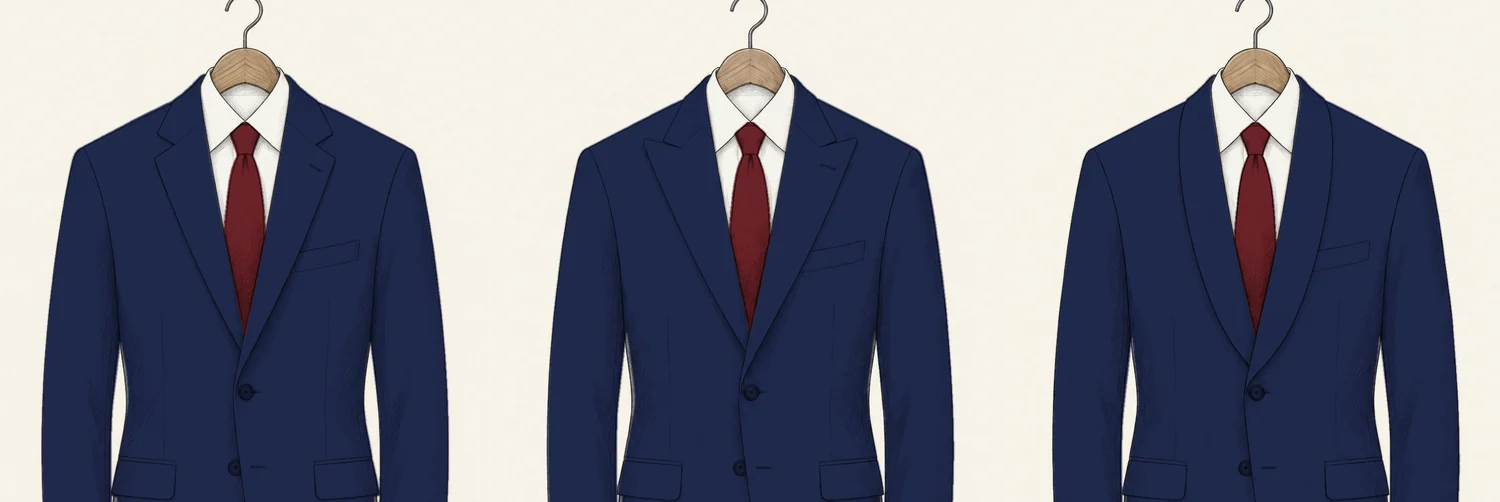
Notch lapel: the everyday one
A notch lapel has a small V-shaped cut where the collar meets the lapel, the notch that gives it its name. It is the lapel on most suits in most offices, and for good reason: it is neutral. It suits almost every build, it is right with a tie or without, and nobody at an interview, a meeting or a wedding will think twice about it.
That neutrality is also its limit. A notch lapel never looks wrong, but it rarely makes a statement, and it has one hard rule: it does not belong on a tuxedo.
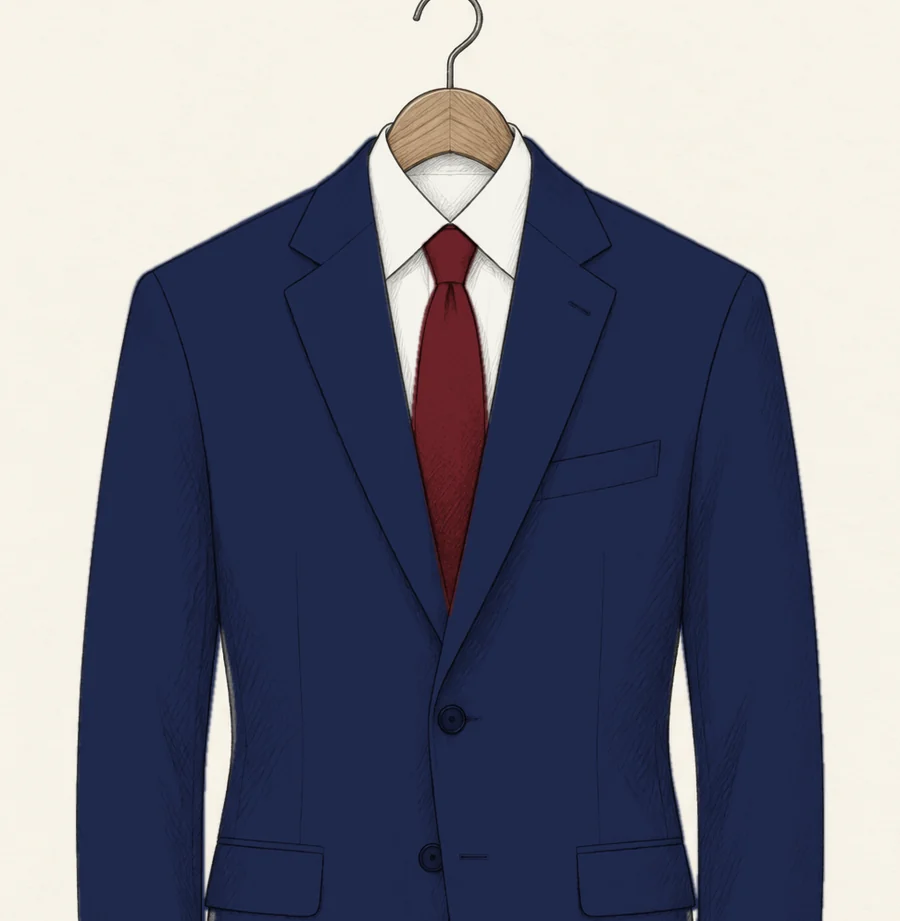
Peak lapel: the formal one
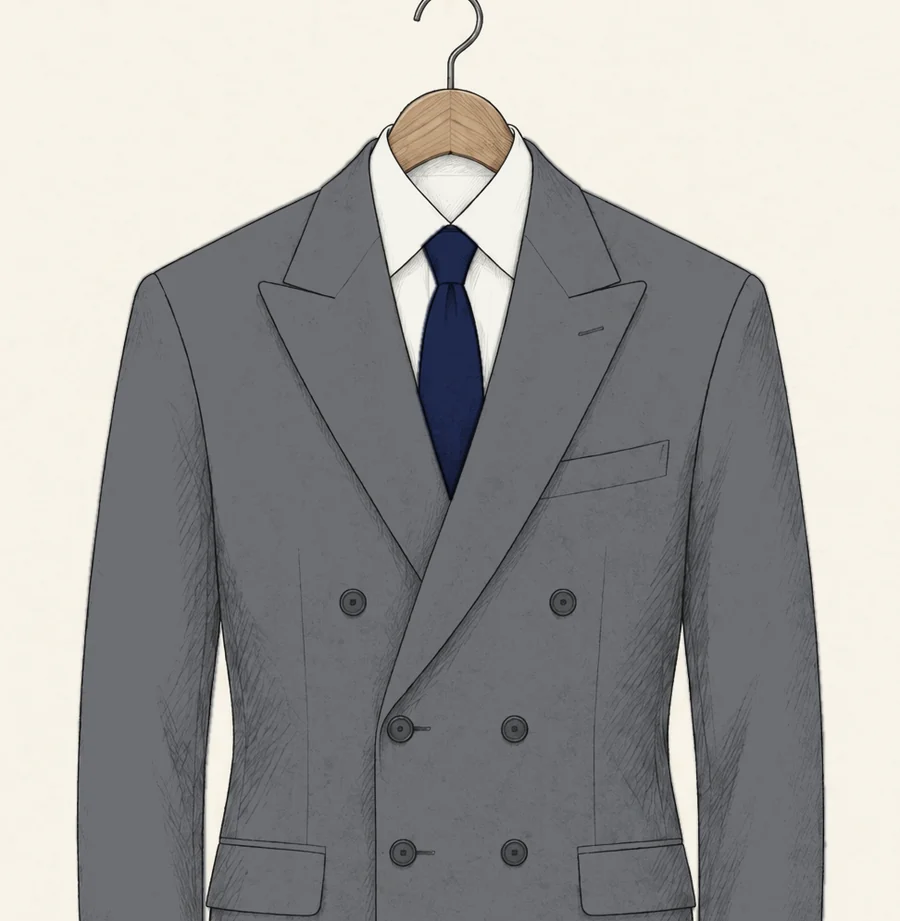
On a peak lapel the lower edge of the lapel sweeps up into a point aimed at the shoulder. The line carries the eye up and out, so it makes the shoulders look broader and the whole jacket look more deliberate. It is the more formal of the two everyday lapels, and the more assertive.
Peak lapels are traditional on double-breasted jackets, where the points balance the wide front, and they are the more common lapel on a tuxedo. On a single-breasted business suit they read as confident rather than conservative, which is exactly why television lawyers wear them.
Shawl collar: the evening one
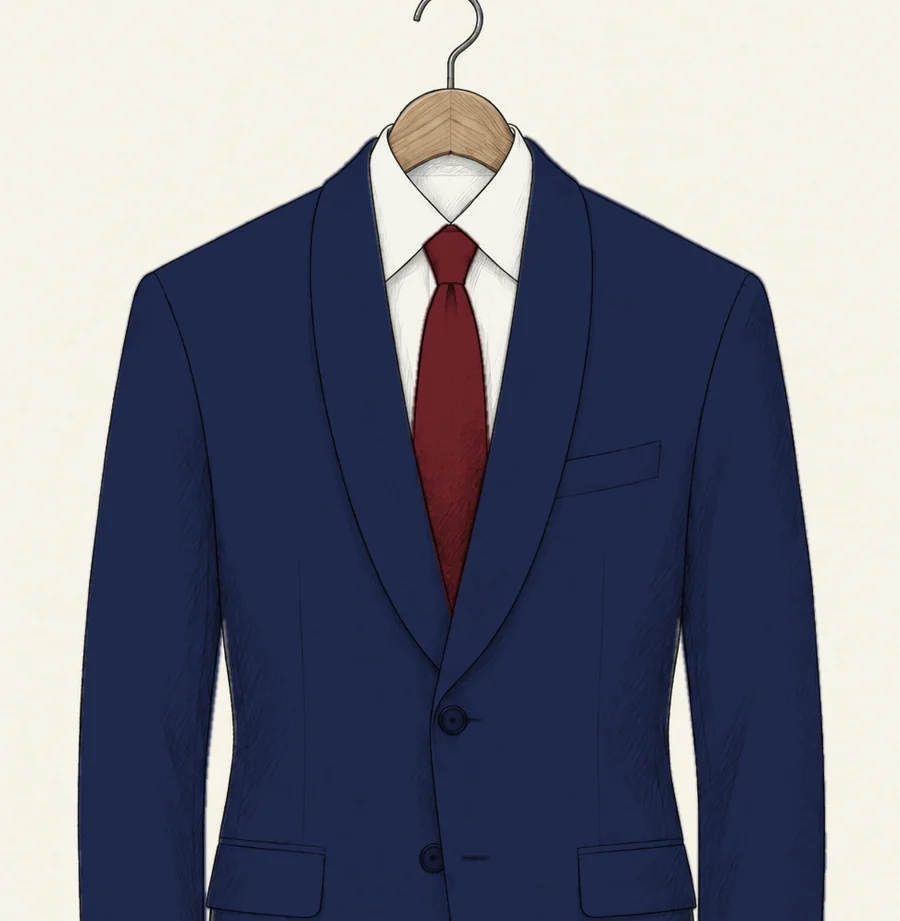
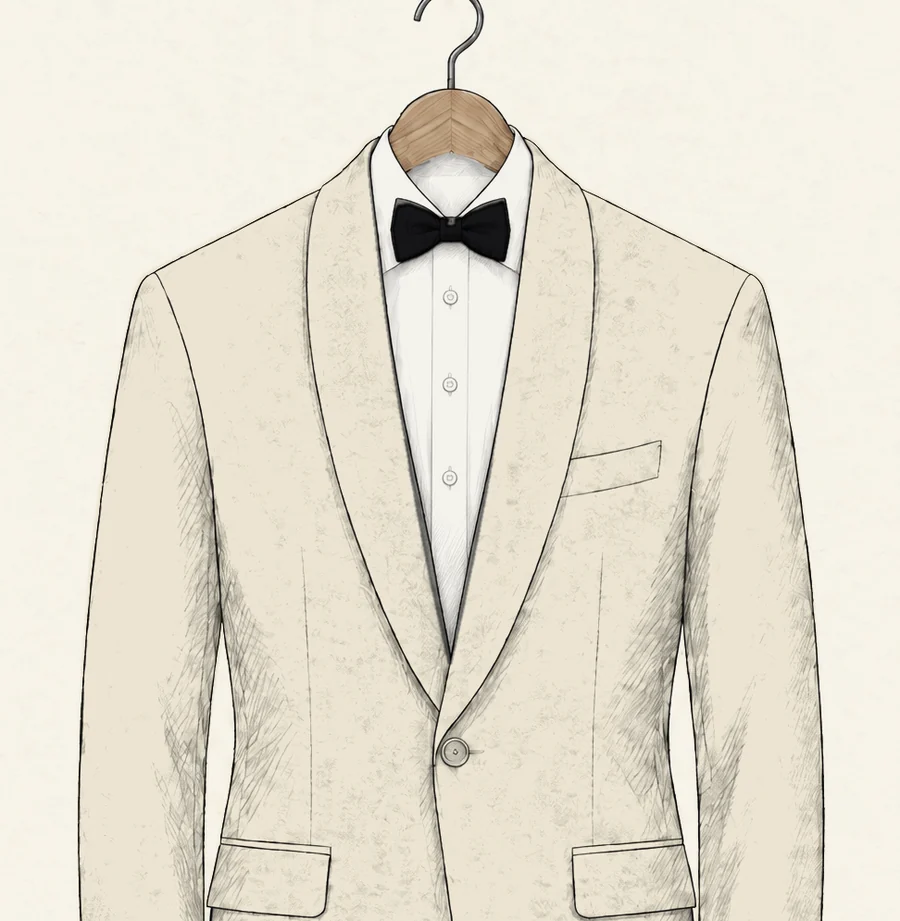
A shawl collar has no notch and no peak: collar and lapel run together in one smooth, rounded curve. It came from the smoking jacket, and it still belongs to the evening. On a dinner jacket or a tuxedo it is softer and a little more relaxed than a peak, and just as correct.
On a business suit it is rare enough to look like a costume, so keep it for black tie, for a velvet jacket, or for a white dinner jacket on a summer evening.
The three lapels at a glance
| Lapel | The shape | Formality | Usual jacket | Best for |
|---|---|---|---|---|
| Notch | A V cut where collar meets lapel | Everyday | Single-breasted | The office, interviews, a first suit |
| Peak | Points swept up toward the shoulders | Formal | Double-breasted, or single for presence | Weddings, big days, tuxedos |
| Shawl | One smooth curve, no notch | Evening | Dinner jacket, tuxedo | Black tie, velvet, white dinner jackets |
Which lapel for the occasion
- Your first custom suit, for work: notch.
- Interviews and client meetings: notch, or peak if you want to be remembered.
- Your own wedding: peak, on a single- or double-breasted suit; notch if you would rather the suit stayed quiet.
- A wedding guest: notch or peak; shawl only if the invitation says black tie.
- Black tie: peak or shawl, faced in satin. A notch on a tuxedo is the one choice that is simply wrong.
Which lapel suits your build
Fashion matters less here than your frame. A peak lapel widens the shoulders, which helps a slim or narrow-shouldered man and can overdo it on a very broad one. A notch lapel is neutral on almost everyone. A shawl softens the line of the chest. The width of the lapel matters as much as its shape: it should be in proportion to your shoulders and chest, broader on a broad man, never a fashion width borrowed from someone else’s frame.
This is why Sam holds each lapel against your face and shoulders at the fitting before anything is decided: which one suits you depends on your build far more than on fashion.
Draw all three
On the Drawing Board you can put each lapel on the cloth you are actually considering, single- or double-breasted, with one, two or three buttons, and the shirt and tie you would wear with it: notch, peak, shawl, peak on a double-breasted jacket. Send the drawing to Sam and the appointment starts from it.
Sam makes all three at his studio in Vaughan. A suit takes three to four weeks, with one fitting on the finished garment, or twelve days when it is urgent and the fabric is in. Custom suits has the rest, and the custom tuxedo covers black tie in detail.