Your first grown-up suit: a 25-year-old’s playbook
Updated July 2026 · Sam’s Menswear editorial team
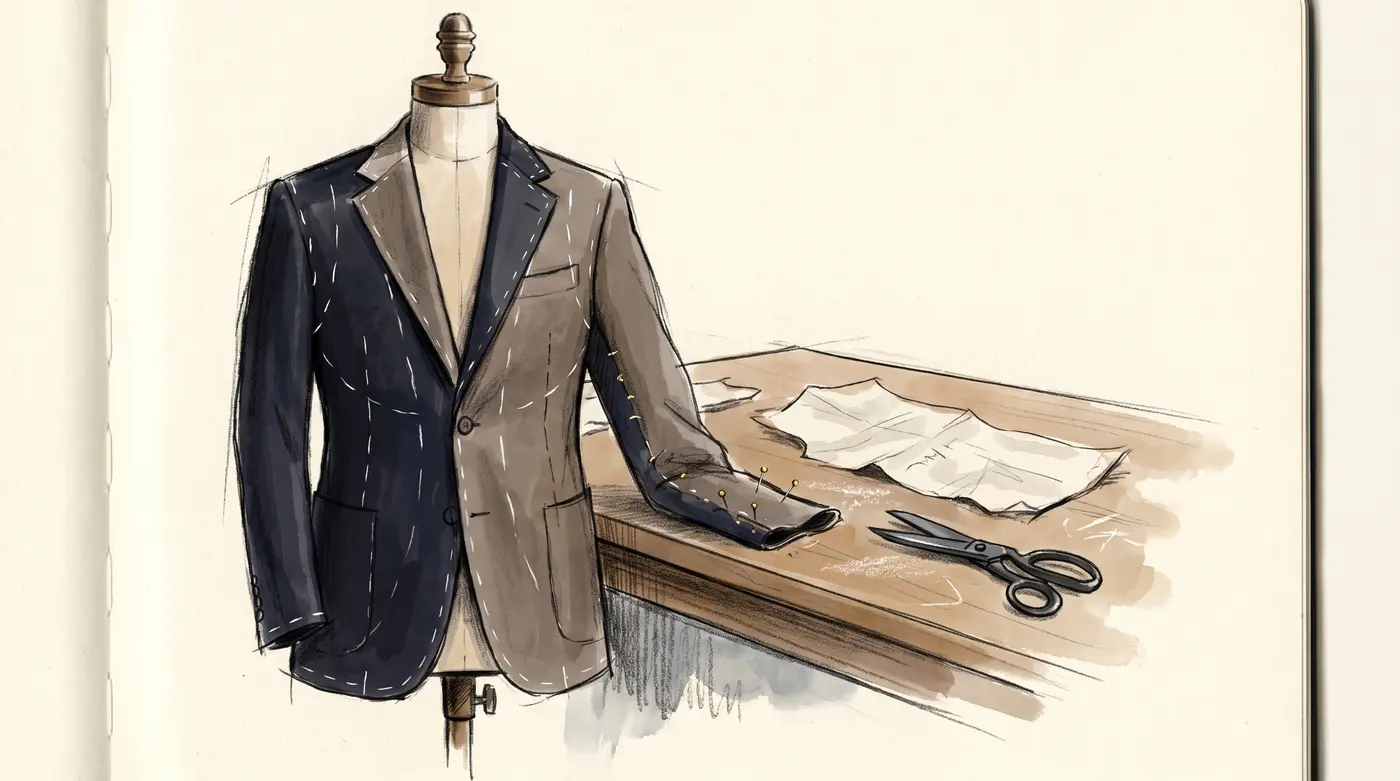
Buy one navy suit that fits you properly, in a wool worsted around 10–11oz, and put every dollar you can into the fit rather than the label. Navy first because it does the most jobs: office, wedding, interview, funeral. Get one good suit right before you own three cheap ones.
What should my first suit actually be?
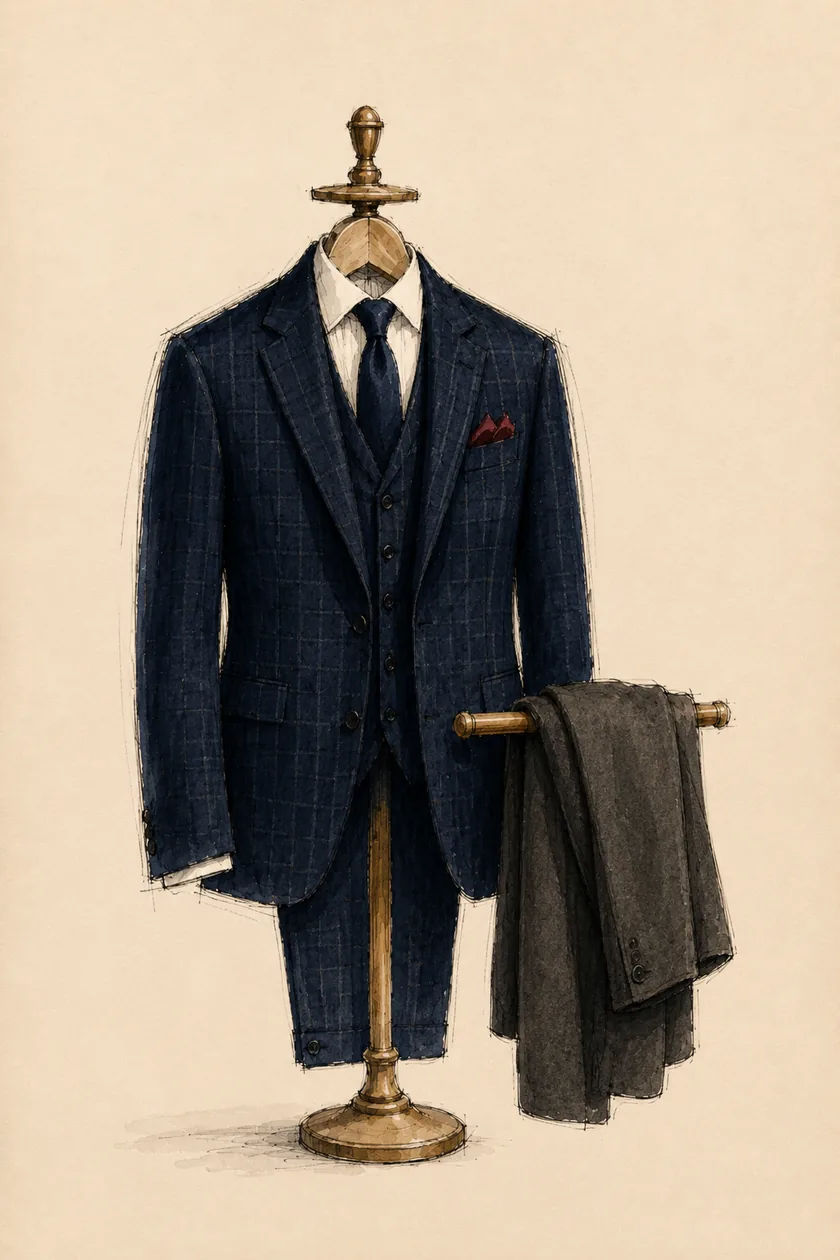
A single-breasted navy suit, notch lapel, two buttons. That’s the answer for almost every 25-year-old.
It’s the least fussy, most flexible thing you can own. It doesn’t announce itself, it works in daylight and at night, and nobody will ever look at it and think you got it wrong. Skip the black, skip the bold checks, skip the double-breasted. Those are suits two and three, once you know what you like. Your first suit is the workhorse you’ll reach for without thinking. Here’s why navy beats black as the one to own first.
Why navy and not black or grey?
Because navy is the one colour that never fights you. It flatters nearly every complexion, photographs well in daylight, and reads as intentional in a boardroom and correct at a wedding.
Black is formalwear pretending to be a business colour. Under office light it goes flat and dusty, and it really belongs on a tuxedo or a waiter. Charcoal grey is a fine second suit, a touch more serious, but slightly less do-everything than navy. For one suit that quietly covers a job interview Monday and a cousin’s wedding Saturday, navy wins. Go deep or midnight navy in a plain or subtle weave, and save the pinstripe for later.
How much should I realistically spend?
Off the rack, expect a wool-rich suit worth owning to land in the $400–$800 CAD range, then budget $75–$150 for alterations on top. Below roughly $300 you’re usually buying a synthetic blend that shines, sweats and pills within a season.
Here’s the honest math from the bench:
- $100–$300: mostly polyester blends. Fine for one wear, not for a suit you’ll live in.
- $400–$800: wool or wool-rich, real value, the sweet spot for a first suit.
- Always add alterations. A $500 suit that fits beats a $900 suit that doesn’t, every time.
If you’re deciding between spending more on the garment or more on the tailoring, spend on the tailoring. And if you’re weighing off-the-rack against going custom for your first one, read our take on whether a custom suit is worth it. Sometimes it isn’t yet, and I’ll tell you so.
What fabric and details should I look for?
A mid-weight wool worsted around 10–11oz: enough body to hold a press, light enough to wear most of the year. Half-canvas or full-canvas construction if you can find it; avoid fully fused (glued) suits, which bubble over time.
Keep the details quiet on your first one: notch lapel at a normal width, natural shoulder, two buttons, side vents, a lining that isn’t shiny. Trends age fast; a suit cut to flatter you doesn’t. If you want to understand what separates the fabric that lasts from the fabric that doesn’t, we walk through it in choosing your fabric, and you can browse what we actually stock in our fabric library.
How should it fit?
The jacket should hug your shoulders without pulling, close cleanly with a flat lapel (no X-wrinkle at the button), and let a half-inch of shirt cuff show. Trousers break just slightly on the shoe.
The shoulder is the one thing a tailor can’t easily fix, so get that right first and let us handle the rest: waist, sleeve length, trouser taper. Most young guys wear a suit a size too big because it feels “safe”; it just looks borrowed. Trust the fit. Our full breakdown lives in how a suit should fit, and if it’s your first time on the stand, here’s what actually happens at a fitting.
Can one suit really cover everything?
Yes. That’s the whole point of buying navy first. One suit, three shirts and two ties will get you through an interview, a wedding, a work presentation and a night out.
- Interview / office: white shirt, burgundy or navy tie, black shoes.
- Wedding guest: light-blue or pink shirt, a textured tie, brown shoes, a pocket square.
- Smart casual: no tie, open collar, loafers; or wear the jacket alone over dark denim or chinos.
If your calendar is heavy on one of those, we’ve got focused guides for the interview suit and the groom’s suit too.
When is it worth going custom instead?
When your body doesn’t match a rack size (long arms, athletic legs, broad shoulders with a trim waist), or when you’re buying a suit you’ll wear weekly for years. Then made-to-measure or bespoke pays for itself in fit and lifespan.
If off-the-rack fits you close and you just need a first suit, buy smart and get it altered. I’ll never push you into custom you don’t need. But if the rack keeps failing you, that’s exactly what we do here every day. See the difference in bespoke vs made-to-measure vs off-the-rack, or read our pillar on custom suits.
Not sure where you land? Bring in the suit you’re eyeing, or just your budget, and we’ll tell you straight whether the rack will do or whether it’s worth building one to your measurements. Book an appointment or start designing your suit whenever you’re ready.