Mad Men: why Don Draper wore the same suit for ten years
Updated October 2026 · Sam’s Menswear editorial team
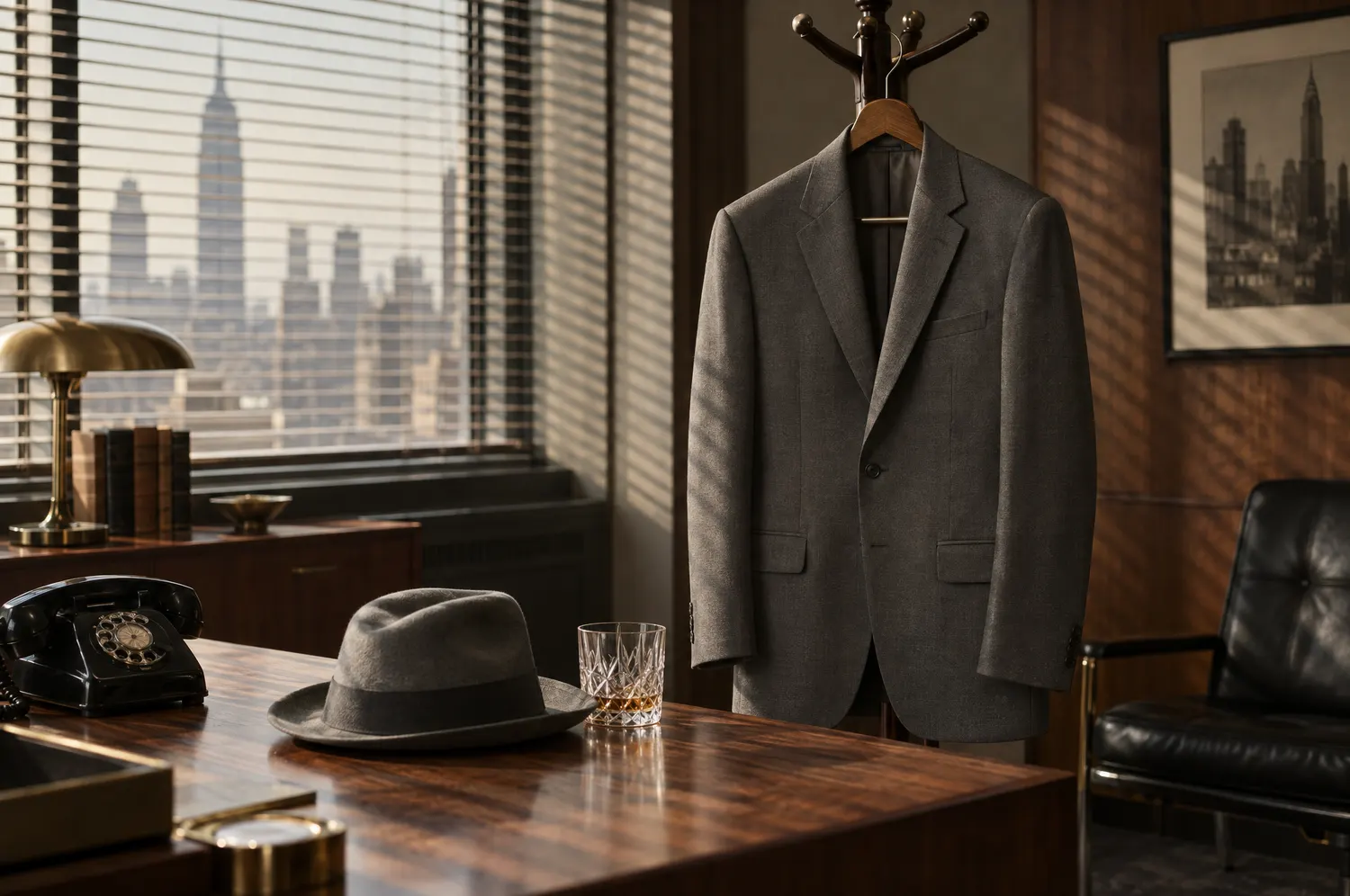
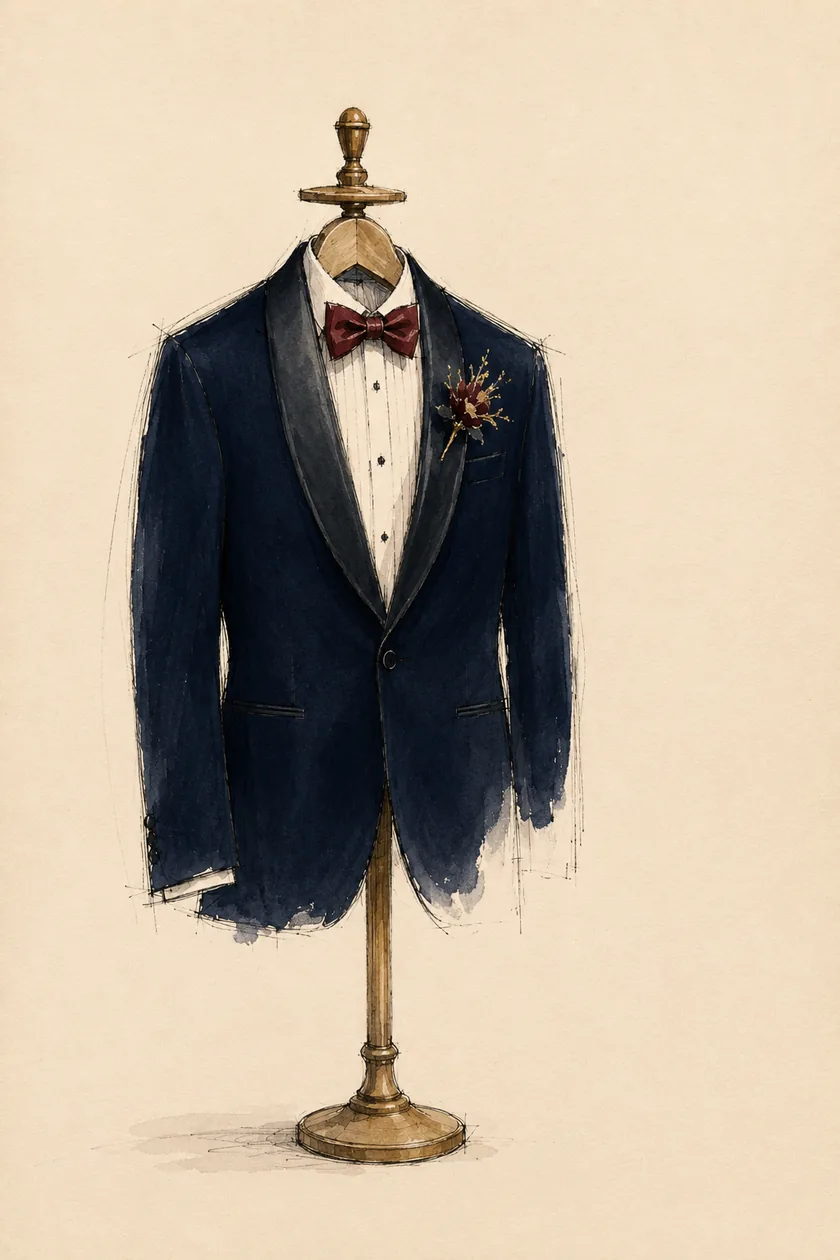
Don Draper is a man who made himself up, and his suit is part of the disguise. Across seven seasons of Mad Men he changes wives, firms and cities, and the cut of his suit barely moves.
Men look up Don’s suits for a practical reason: they want to look that put-together at the office on an ordinary Tuesday. The worry is that the result will look like a theme party, or like 2010, when a great deal of menswear was being sold on the back of the show. Both risks are real, and both come from copying the wrong parts.
What does Don actually wear?
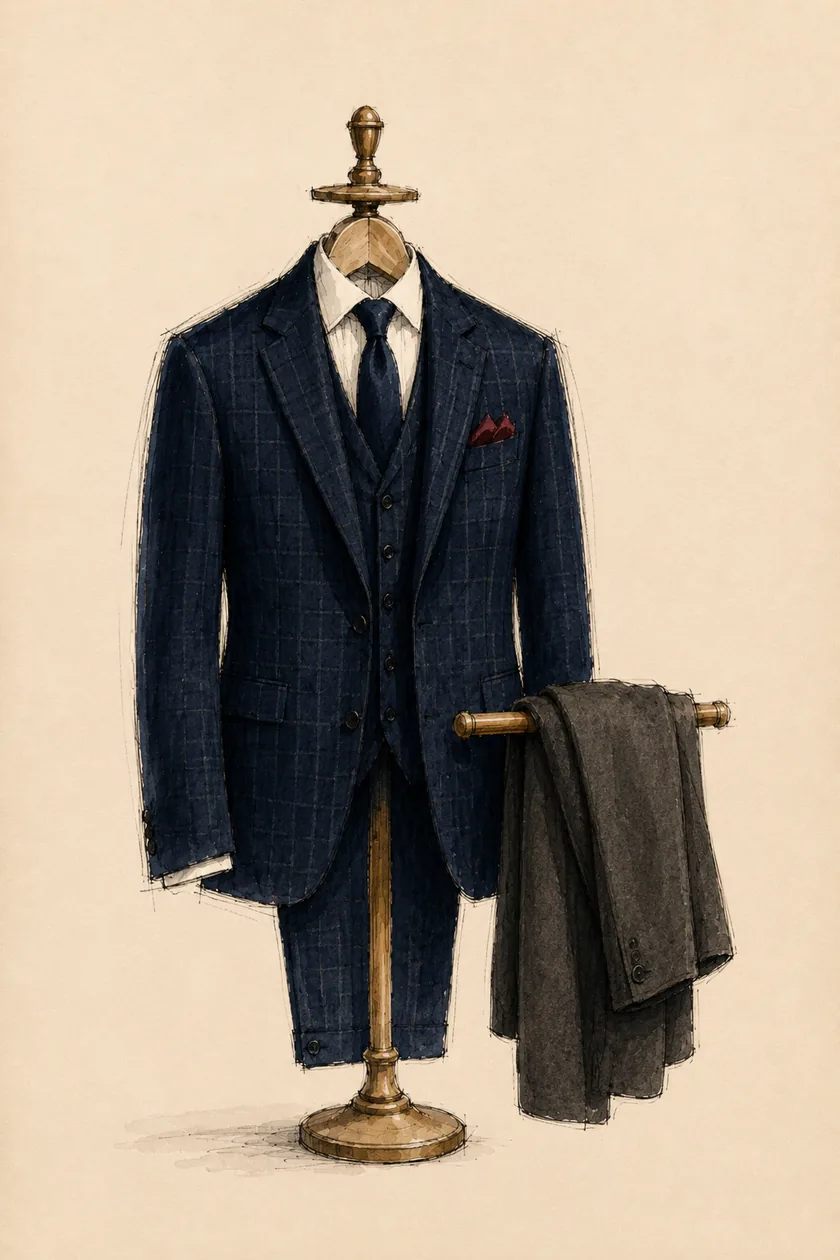
Grey, in many shades, and navy. Janie Bryant, the show’s costume designer, treated his grey suit as armour against the world and kept it deliberately the same while the late sixties grew sideburns, wide lapels and loud cloth around him. The cut was already a holdover from the fifties, so by the final season it looks out of date on purpose.
BAMF Style has catalogued his suits one by one, and the pattern is clear:
- Mostly grey worsteds, plain or with a quiet check, stripe or windowpane, with a taupe, a brown-olive, and a few navies and blue-greys in rotation.
- Three-button jackets, many of them cut so the lapel rolls past the top button and only the middle one fastens. Plain two-buttons are the minority.
- Narrow lapels and narrow, mostly solid ties, with the occasional tie clip.
- A white pocket square folded flat, showing a thin straight edge above the pocket.
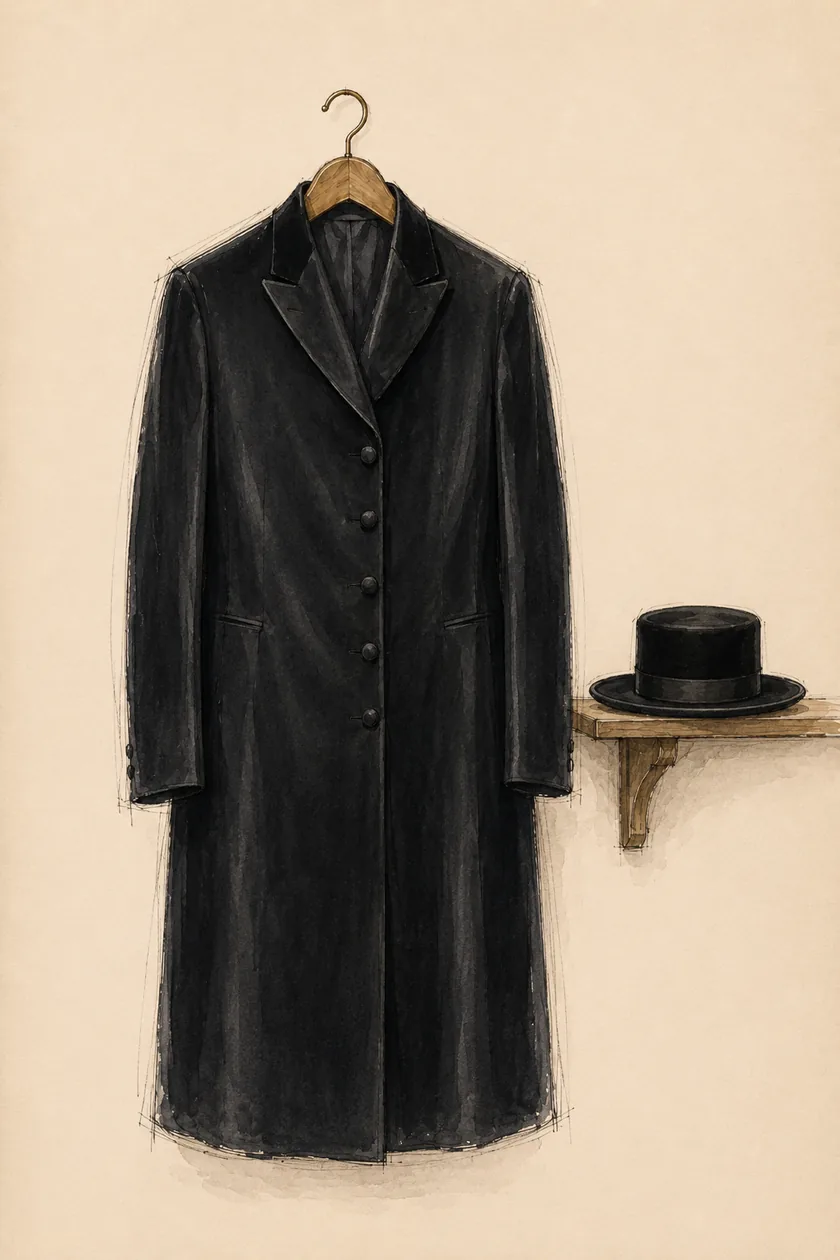
- A felt hat out of doors.
Which details carry the look?
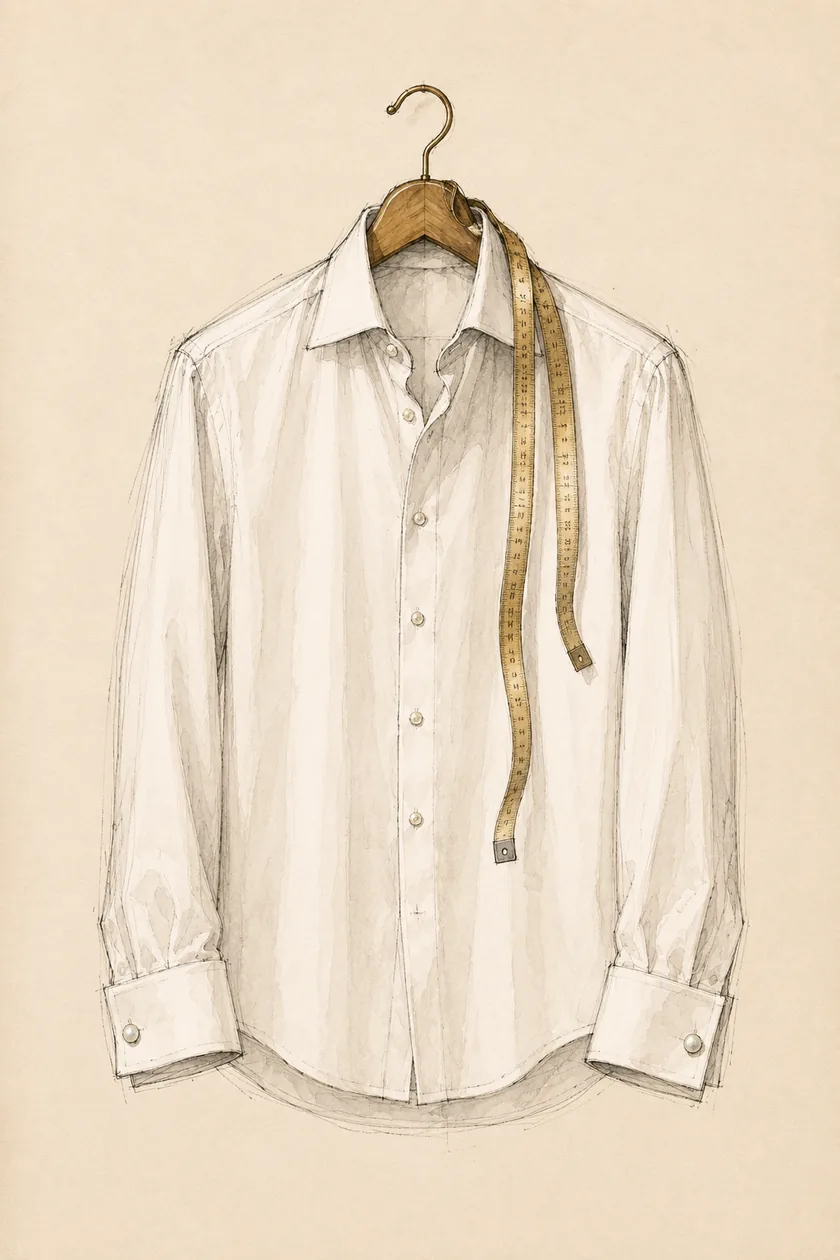
Proportion. Lapel, tie and shirt collar are all narrow, and they all agree. That agreement is what reads as sharp. A narrow lapel with a wide tie, or the reverse, looks like two decades arguing. The tie: width, knot and length explains the rule.
The three-roll-two front. This is the detail almost every “Mad Men suit” copy drops. A jacket with three buttons, where the lapel rolls softly over the top one, opens into a long V like a two-button but with a gentler line through the chest. Ask for it by that name; one, two or three buttons draws it next to the others.
One colour family. Grey and navy, white shirts, dark ties. Every shirt and tie works with every suit, which is why Don never seems to think about getting dressed. Grey suit, shirt and tie combinations lays out the pairings.
What should you tone down for 2026?
- The hat, unless you already wear one. A felt hat over an overcoat in a Toronto January looks practical. Carried into a meeting room with the suit, it looks like a costume.
- The skinniest lapel. The very narrow lapels sold around 2010 now date a suit to 2010, not 1960. Ask for a lapel on the narrow side of normal, in proportion to your chest, and a tie to match it.
- The full kit at once. A tie clip, a hat, a flat square and a three-roll-two front: any two of them look considered, all four look like you are going to a party with a theme.
Keep the pocket square. The flat white fold is the plainest there is and it has never looked like fancy dress. The pocket square, without the fuss shows how to fold it.
How should it fit on a modern body?
What most copies get wrong is length and rise. Suits of the early sixties had jackets long enough to cover the seat and trousers that sat near the natural waist, held up by a belt. Many of the slim suits sold in the show’s wake were short in the jacket and low and tight in the trouser, which is a different suit entirely.
For a real office:
- The jacket covers your seat. Standing straight with your arms at your sides, the hem should land around where your fingers curl.
- The trousers sit at or just below the waist, so the shirt stays tucked when you sit and no triangle of shirt shows under the button.
- Trim, with room to move. The jacket closes without the button pulling and the sleeves let you reach across a desk.
- The lapel suits your frame. A narrow lapel on a broad chest makes the chest look broader and the lapel look skinnier. If you are built wide, go a little wider on the lapel and the tie together.
How a suit should fit has the full checklist.
Where does the look actually work?
Anywhere a suit is still normal for work: the office, an interview, a client dinner, a funeral in charcoal or navy with a dark tie. That is the real point of Don’s wardrobe. It is a working wardrobe dressed up as a rich man’s, and it covers every room he walks into because it never tries anything new. Build yours the same way: the navy suit first, a mid or charcoal grey second, and only then anything with a pattern.
Getting it made
Sam makes business suits in grey and navy to your measurements, taken at the Vaughan studio or at your office on request, in three to four weeks with one fitting on the finished suit. Ask for the three-roll-two front and a narrow lapel at the first appointment; the width is set to your frame, not to a still from the show. Sketch Don’s grey on the Drawing Board first: draw the Draper suit. It draws a two-button front, so add a note about the roll when you send it, and the appointment starts from there.
Where the details come from: BAMF Style, Screen Rant on the costume and Forbes’ interview with Janie Bryant.