When your wardrobe stops fitting: a tailor's plan for the clothes you already own
Updated September 2026 · Sam’s Menswear editorial team
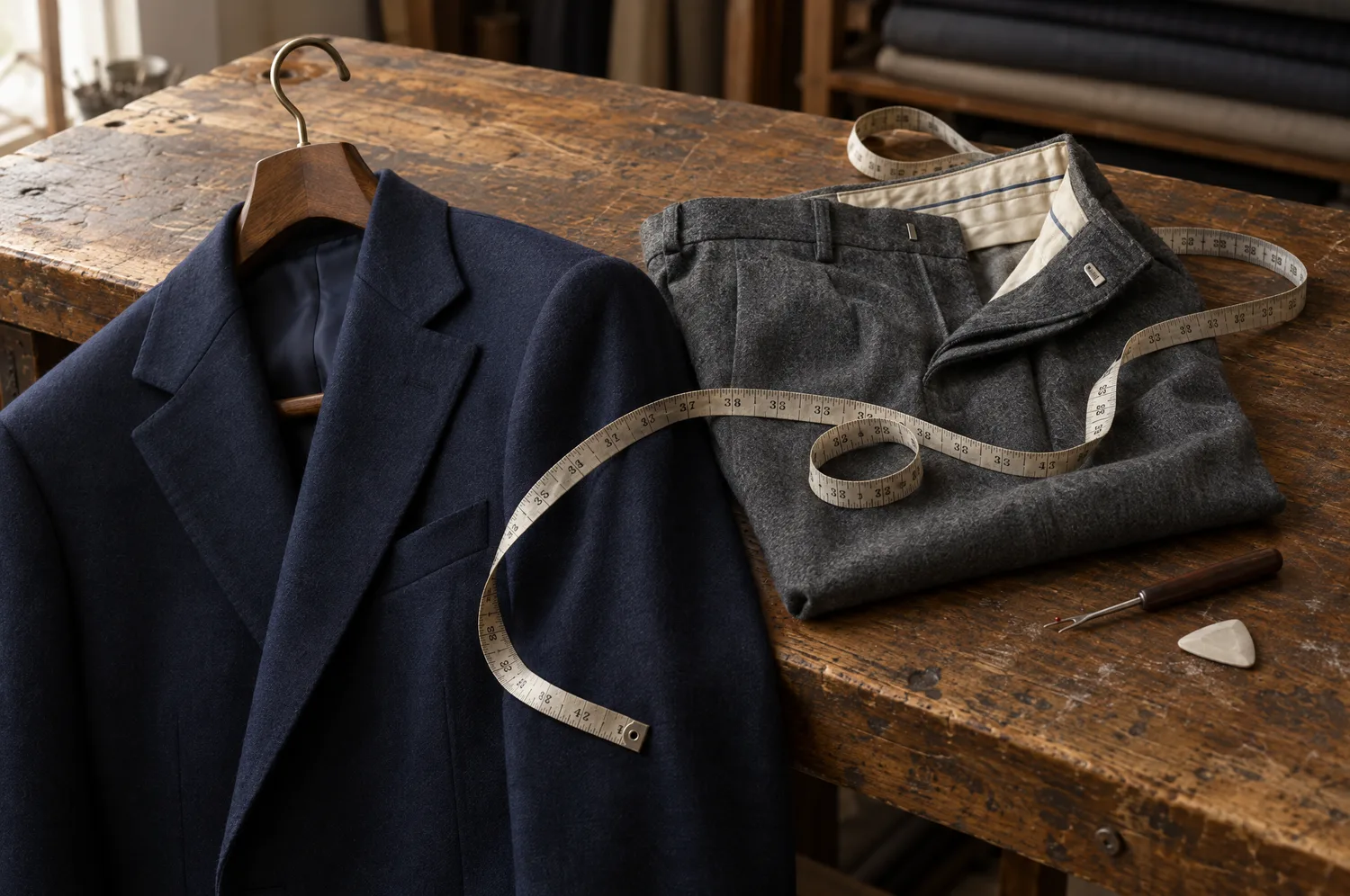
It usually shows up on a Friday morning. The good trousers won’t close without a breath held in, the collar button is a fight, and the jacket that looked sharp at last year’s wedding now pulls into creases at the button. Nothing is ruined. The clothes stayed the same size and you didn’t, and that is the most ordinary thing that happens to a wardrobe.
The reasons are just as ordinary: a new baby and no sleep, a desk job after years on your feet, an injury that stopped the running, quitting smoking, a new medication, a year of simchas, or simply turning forty. None of them calls for a new wardrobe overnight. They call for a plan.
Weight doesn’t land evenly
When most men gain weight, the clothes tell you where in a predictable order. Knowing the order tells you which garments are worth saving.
- The waist and the front go first. Trousers that sat at the waist start to slide under the belly, and the jacket button pulls.
- The neck goes early. Half an inch more around the neck is enough to make a collar you’ve worn for years feel like a grip.
- The seat and the hips come next. Trouser pockets start to flare open and the back vents of a jacket spread when you stand.
- The thighs and the upper arms follow. Trousers rub through between the legs sooner, and sleeves get snug when you reach forward.
- The shoulders barely move. The bone structure doesn’t change, so a jacket that fit your shoulders still fits them.
That last point is the good news. The shoulder is the one part of a jacket a tailor can’t really change, and it’s also the part that usually still fits.
The three piles
Empty the wardrobe onto the bed and try everything on, buttoned, with the shoes you’d wear. Then sort.
Pile one: alter. The shoulders sit right, the chest closes without straining, and the problem is at the waist, the seat or the length. These are the clothes worth taking to a tailor, provided there is cloth left in the seams to let out. Six mirror tests will tell you which garments belong here before you carry anything anywhere.
Pile two: bridge. Things you can wear right now with a small change. Trousers that close but sit uncomfortably can come back to life with braces instead of a belt. A jacket that is snug buttoned can be worn open over a slimmer knit. A shirt that is fine everywhere but the collar can be worn under a tie with a collar extender for one more event.
Pile three: pass on. The jacket won’t close across the chest, the shoulders feel tight when you reach for a seatbelt, the trousers have already been let out once, or the cloth is worn thin. Alteration can’t put cloth back where there isn’t any. Pass these on with a clear conscience; someone else’s shoulders will be glad of them.
Be honest in the sort, and be kind about it. Clothes are tools. A pile of things that don’t fit is information, not a verdict.
Fix things in the right order
Not everything needs doing at once, and the order matters for your wallet and for how you feel walking out the door.
- Trousers first. You wear them every day, they show discomfort the most, and letting out a waist is usually quick work. Start with the two or three pairs you wear most. How much a pair can be let out depends on one seam, and you can check it yourself.
- Shirts second. A tight collar is visible in every photograph and every conversation. Shirts can’t be let out in any useful way, so this is where new is usually the answer. Why the neck goes first, and what to do before the next event.
- Jackets last. A jacket can be worn open for a while, and it’s the most expensive thing to get wrong. Decide on jackets once the trousers and shirts are settled and you have a clearer idea of where your weight is heading.
Don’t buy for the size you plan to be
The most expensive mistake in this situation is buying clothes for a future body. The suit bought two sizes small as motivation sits in the wardrobe with its tags on. The suit bought two sizes large to grow into makes you look heavier than you are.
Dress the body you have this month. If you’re actively losing or gaining, buy the minimum and keep it adjustable. Buying clothes while your weight is still changing covers what to buy now and what to wait on. If your weight has held steady for about three months, it’s a reasonable time to have new things made.
What this looks like at the bench
Bring the pile-one garments to a tailor together, with the shirt and shoes you’d wear. A good tailor will check each piece on you and tell you plainly which ones are worth the work. That is how Sam does alterations: suits, jackets, trousers and wool overcoats, quoted once he has seen the garment on you, before anything is unpicked. If letting a suit out won’t give you a good result, he’ll say so rather than take the job.
Where new clothes are the answer, they are measured to you as you are now. Once your pattern is on file, a later order starts from it, so if your size changes again, the next garment is a re-measure and an adjustment rather than a fresh start. The first appointment is at the studio in Vaughan, or Sam comes to your office or home if you’d rather, and the fitting can be there too.
When there’s an event coming
If a wedding or a bar mitzvah is the reason you opened the wardrobe, count back from the date.
- Three weeks or more: time to have a suit made. Sam’s suits take three to four weeks.
- About two weeks: a rush is twelve days if the cloth is in stock, so call first.
- Less than that: alter the best thing you own, wear braces instead of a belt, and use a collar extender under the tie. Under a jacket and a tie, none of it shows.