Shirt collar too tight? Why the neck goes first, and what to do before the next event
Updated September 2026 · Sam’s Menswear editorial team
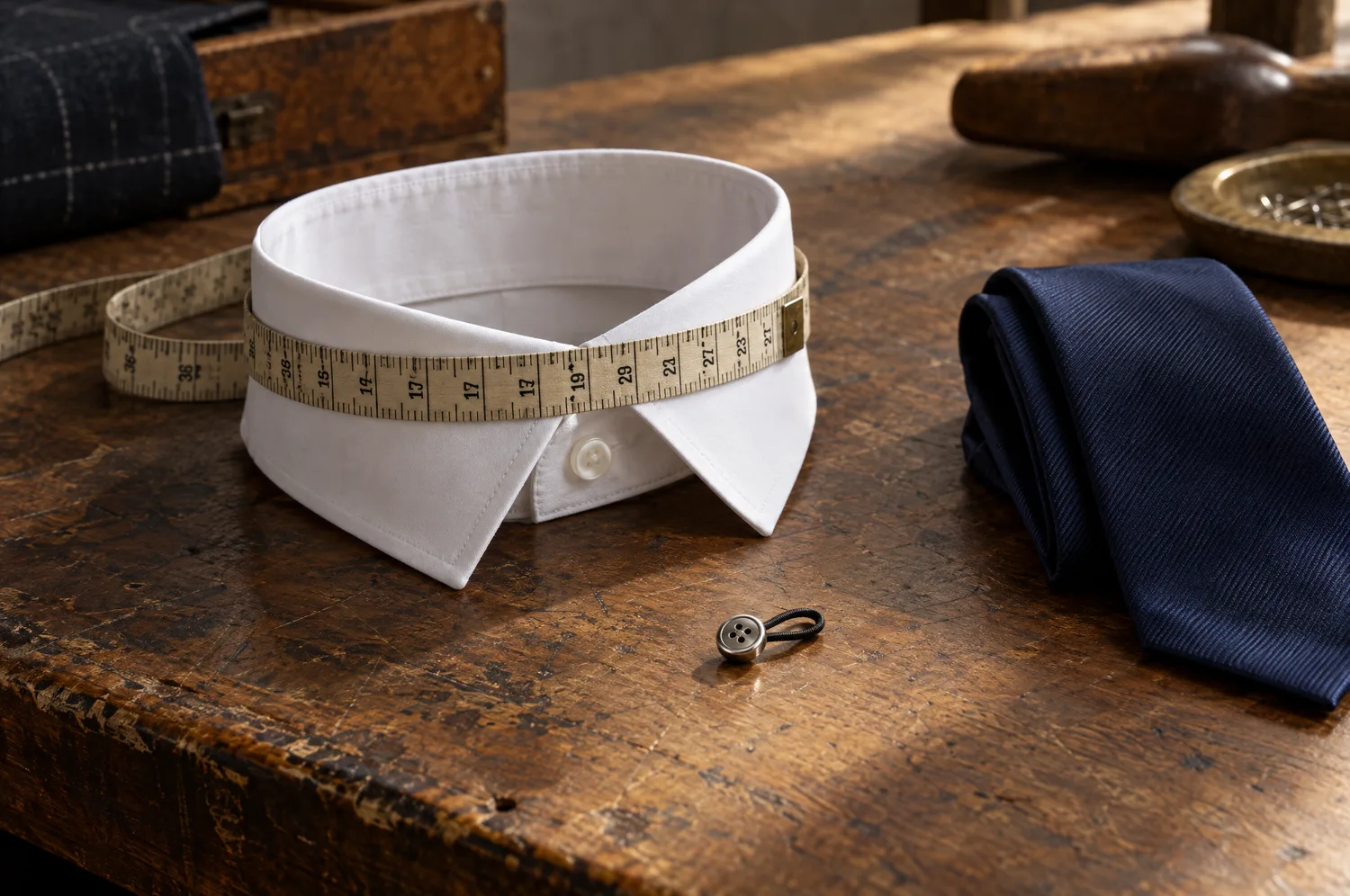
Of everything in a wardrobe, the shirt collar is the least forgiving. Trousers have a seam with spare cloth in it. Jackets can be worn open. A collar either closes around your neck or it doesn’t, and when it doesn’t, everybody can see: the tie knot sits crooked, the collar points curl and lift, and the skin above the collar band bunches.
It’s also usually the first thing to go.
Why the neck goes first
The neck carries soft tissue that responds early to weight, and a collar has almost no tolerance. A shirt collar that fit well had about a finger’s width of ease in it. Half an inch more neck uses most of that up, and the neck often gains that half-inch before a jacket starts to feel tight.
It works in reverse too. If you’ve lost weight, the collar is often the first thing that looks too big, standing away from the neck like a ring.
Measure it properly
Most men know their collar size from the last shirt they bought, which may be ten years old. Measure again.
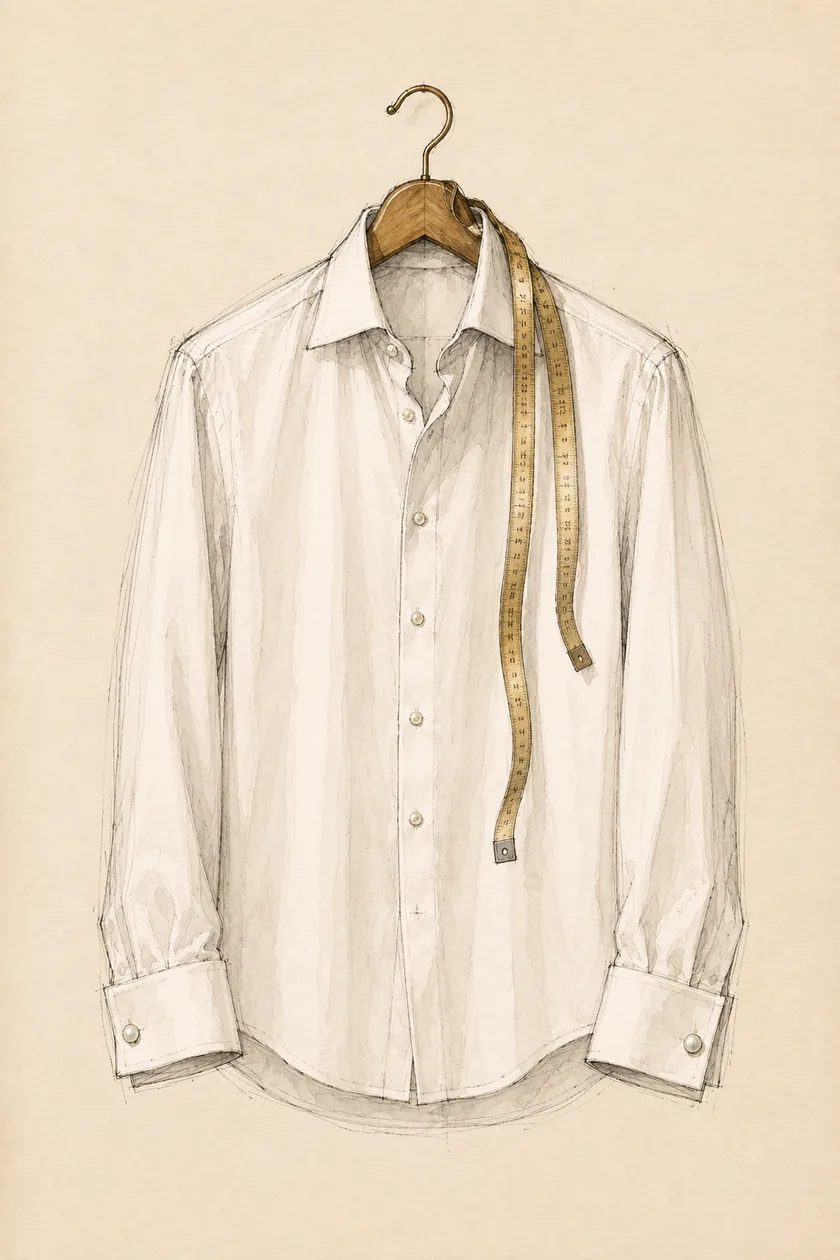
- Use a cloth tape measure. Put it around your neck at the height a collar sits, just below the Adam’s apple, not around the base of the neck.
- Hold it snug but not tight, with one finger flat between the tape and your neck.
- Read it in inches. Shirt collars are sold in half-inch steps, so round to the nearest half.
Then test the shirts you own: button the collar and slide two fingers, flat, between the collar and the side of your neck. They should just fit. If one barely fits, the collar is too small, however well the rest of the shirt fits.
For the next event: the collar extender
A collar extender is a button sewn onto a short elastic or metal loop. The loop goes over the collar button and the extender button goes through the buttonhole, adding about half an inch to the collar.
When it works: with a tie. The knot sits over the collar button and hides the extender completely. For a wedding, a bar mitzvah or a funeral next week, it’s the right answer, and it costs next to nothing.
When it doesn’t: without a tie. With the collar buttoned and no tie, the extender is visible and the two sides of the collar don’t meet cleanly. With the collar open, you don’t need it.
The limit: it adds length to the collar, not shape. If the collar is more than about half an inch too small, the extender pulls the collar points apart and the collar won’t sit flat on your shirt front under the jacket.
Why you can’t just let a shirt out
A collar is a small, stiffened, shaped piece of cloth with an interlining fused or sewn into it, and very little spare cloth anywhere. There’s almost nothing to give. A good hand can sometimes move a collar button slightly towards the edge for a quarter-inch, but that’s the end of it, and the body of a shirt has narrow seams that can’t be let out usefully either. Sam doesn’t alter shirts.
So for everyday wear, a collar that’s become too tight means new shirts.
The other shirt problem: the gape
The second thing weight does to a shirt is open it up between the buttons. When the stomach comes forward, the front of the shirt is pulled tight horizontally, and the placket gapes into little eye-shaped openings between the buttons, usually the two or three over the widest part of the stomach.
On a ready-made shirt there’s no good fix except going up a size, which makes the collar, shoulders and sleeves too big. A shirt made to your measurements is cut with the room where you need it: enough across the front that the placket lies flat, with the collar, shoulders and sleeves still fitted.
Two other details that help:
- Longer tails. When the stomach comes forward, the front of the shirt is pulled up, and short tails come untucked. Shirts cut with longer tails stay tucked when you sit.
- The right collar shape. A collar with a little more height at the back sits better on a fuller neck, and points that are long enough stay under the jacket lapels when the collar is spread wider.
What to do
- Measure your neck this week, not from memory.
- Pull out the collar extenders for any event in the next month.
- Don’t buy a drawer of new shirts at once if your weight is still moving; buy two or three to get through the week. Buying while your weight is changing covers this.
- Once your weight has settled, have shirts made to your neck and your build as they are now.
Sam makes shirts to your measurements in two to three weeks, the first shirt and the twentieth alike, from hundreds of shirtings. Once your pattern is on file, the next order starts from it, so if your neck changes again it’s a re-measure and an adjustment rather than starting over. More on what a good fit looks like in how a dress shirt should fit.