The Big Lebowski: the Dude's wardrobe, and a suit that feels like his cardigan
Updated October 2026 · Sam’s Menswear editorial team
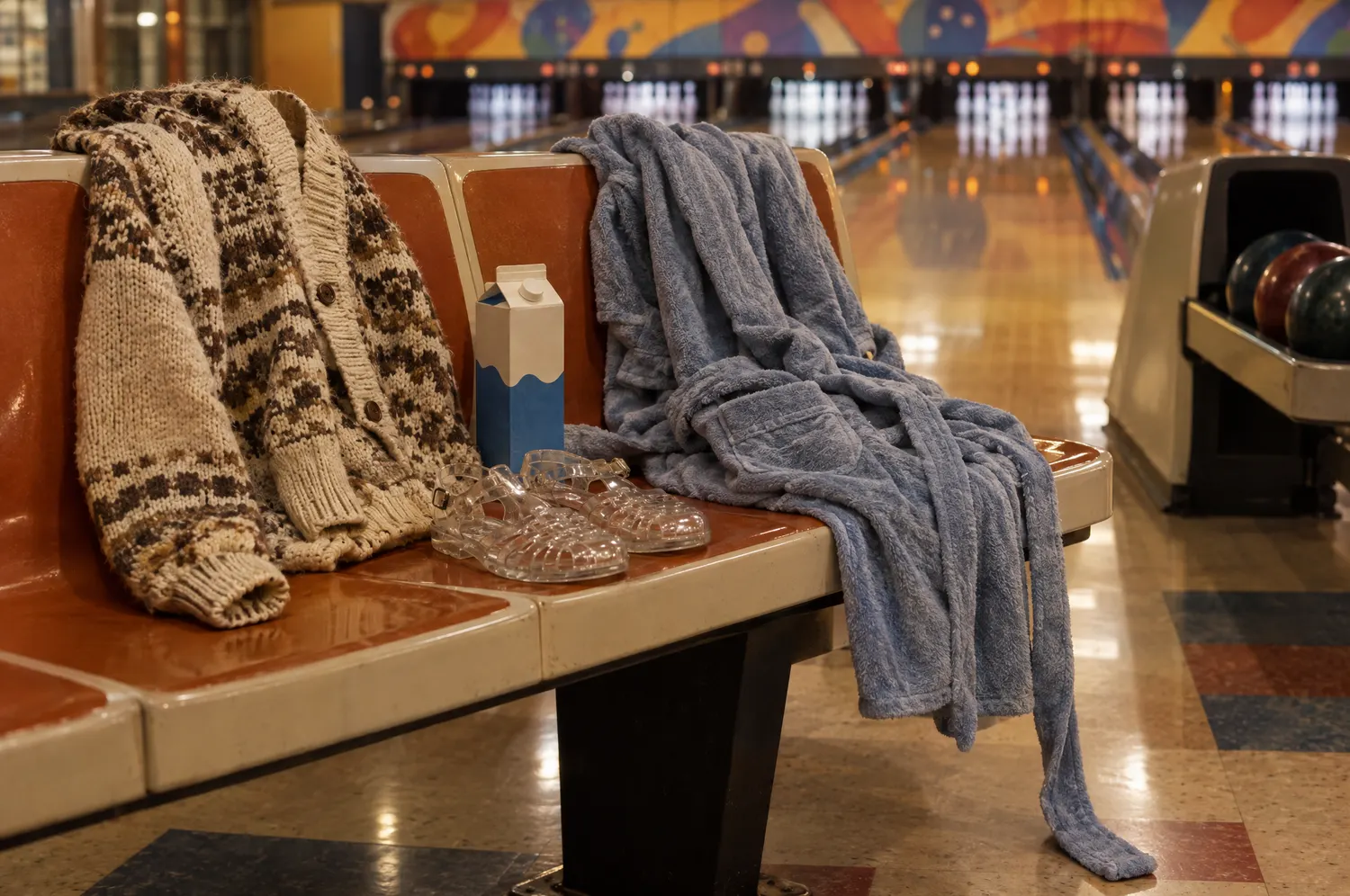
The Dude goes to the supermarket in his bathrobe and sunglasses and pays for a carton of half-and-half by cheque. Nobody in the shop reacts. That scene sets out the whole wardrobe philosophy of Jeff Bridges’ Jeffrey Lebowski in the Coen brothers’ The Big Lebowski (1998), and it earns the film a place in our hall of shame on seniority alone.
It also earns some respect. Plenty of men who would never leave the house in a robe share the Dude’s real position on clothes: suits are uncomfortable, and they would rather not. This guide is for them, and for the wedding invitation that eventually arrives.
What is the Dude actually wearing?
Mostly thrift. Costume designer Mary Zophres bought much of the wardrobe from second-hand shops near her home in Venice, California, and picked pieces that deliberately did not match, because the Dude gives his clothes no thought at all.
- The cardigan: a tan lambswool shawl-collar cardigan with a zip, knitted in a brown geometric pattern borrowed from the Cowichan sweater. Zophres had one vintage original and three modern copies; Bridges wore only the original on screen, and it was auctioned in 2011.
- Clear jelly sandals, which were Bridges’ own.
- Drawstring trousers, from hospital-style scrubs to loudly striped weightlifting pants.
- Stretched T-shirts, a few hoodies, and the robe.
Which parts of the look are worth keeping?
The cardigan, and the colours. The real Cowichan sweater is a Coast Salish craft from the Cowichan Valley on Vancouver Island, knitted there since the mid-1800s, and a heavy shawl-collar knit in oatmeal and brown is a proper garment with a long history. Worn over an open-collar shirt with flannel or corduroy trousers, it does a jacket’s job at a Sunday lunch, a casual dinner or a Friday at a relaxed office, and nobody thinks of bowling.
The robe and the jellies stay home. So does the drawstring, at least outside the house.
What the Dude gets right is the thing most men in suits get wrong: there is no fight between him and his clothes. Everything he wears lets him sit, slouch and reach without noticing it. That is a fair goal for a suit too, and it is more achievable than most comfort-first men believe.
Why do suits feel so uncomfortable?
Usually because the suit was chosen by the chest size on the label, and the rest of the body had to cope. Three things go wrong.
- The trousers sit in the wrong place. Most ready-made trousers now have a low rise, so the waistband sits under the stomach. Sit down and it cuts in; stand up and a triangle of shirt shows below the jacket button. Letting out the waist does not fix it, because the fault is the height of the waistband, and no seam can raise it.
- The armholes are big and low. A roomy armhole sounds comfortable, but lift your arm and the whole jacket rises with it, collar and all.
- The jacket was bought a size up to cover the belly. Then the shoulders overhang, the sleeves reach the knuckles, and it still pulls when you reach for a drink.
Buying bigger makes all three worse. Comfort comes from room in the places that move and a close fit in the places that do not.
What should a comfortable suit be cut like?
Think of it as the Dude’s wedding suit, the one he would actually agree to wear.
- A soft shoulder with little or no padding, so the jacket follows your own shoulder. American Gigolo is the film that made this cut famous.
- A higher, closer armhole and room across the back, so you can reach for a glass or hug an aunt without the jacket climbing up your neck.
- Trousers with a higher rise that sit at the natural waist, above the stomach, with room in the seat and thigh. Pleats help a man who spends the evening sitting. Trousers for a bigger belly explains why the rise matters more than the waist size.
- Side adjusters instead of a belt, so no buckle presses in when you sit. They give about an inch of play either way; see side adjusters vs belt loops.
- A cloth with texture: hopsack, a soft flannel or a brushed wool forgives a slouch and hides creases far better than a smooth, shiny worsted.
- Half lining if you run warm, so the heat can get out.
Keep the colour in the Dude’s family: brown, olive or a soft grey. Skip the tie if the invitation allows it, and wear loafers rather than stiff lace-ups.
How do you test comfort at the fitting?
Do what you actually do. Sit in a chair the way you sit at home, slouch included. Reach across a table. Lift your arms as if hugging someone taller than you. Bend to tie a shoelace. Every jacket pulls a little in some of those positions, but a suit cut properly should not bind at the waistband, climb at the collar or pin your arms.
If something bothers you, say it in plain words: “It digs in when I sit,” or “I can feel it across my back.” Those sentences tell a tailor more than any technical term. Sam fits every suit once, on the finished garment, and alterations after delivery are included, so the fitting is where comfort gets settled rather than hoped for.
Where should a man like the Dude start?
Bring the trousers you live in, the pair you would wear every day if you could. They show Sam where you like a waistband to sit and how much room you want in the leg, which is half the comfort question answered before the tape measure comes out. Sam measures at the studio in Vaughan, or at your office or home on request. A suit takes three to four weeks, and for a wedding two to three months ahead is comfortable. The unstructured jackets and casual pieces are worth a look if a full suit is more than the day needs. Book a time and bring those trousers.
Where the details come from: Focus Features on the Dude’s style and BAMF Style on the cardigan.