Columbo's raincoat, and the raincoat a man in a suit actually needs
Updated October 2026 · Sam’s Menswear editorial team
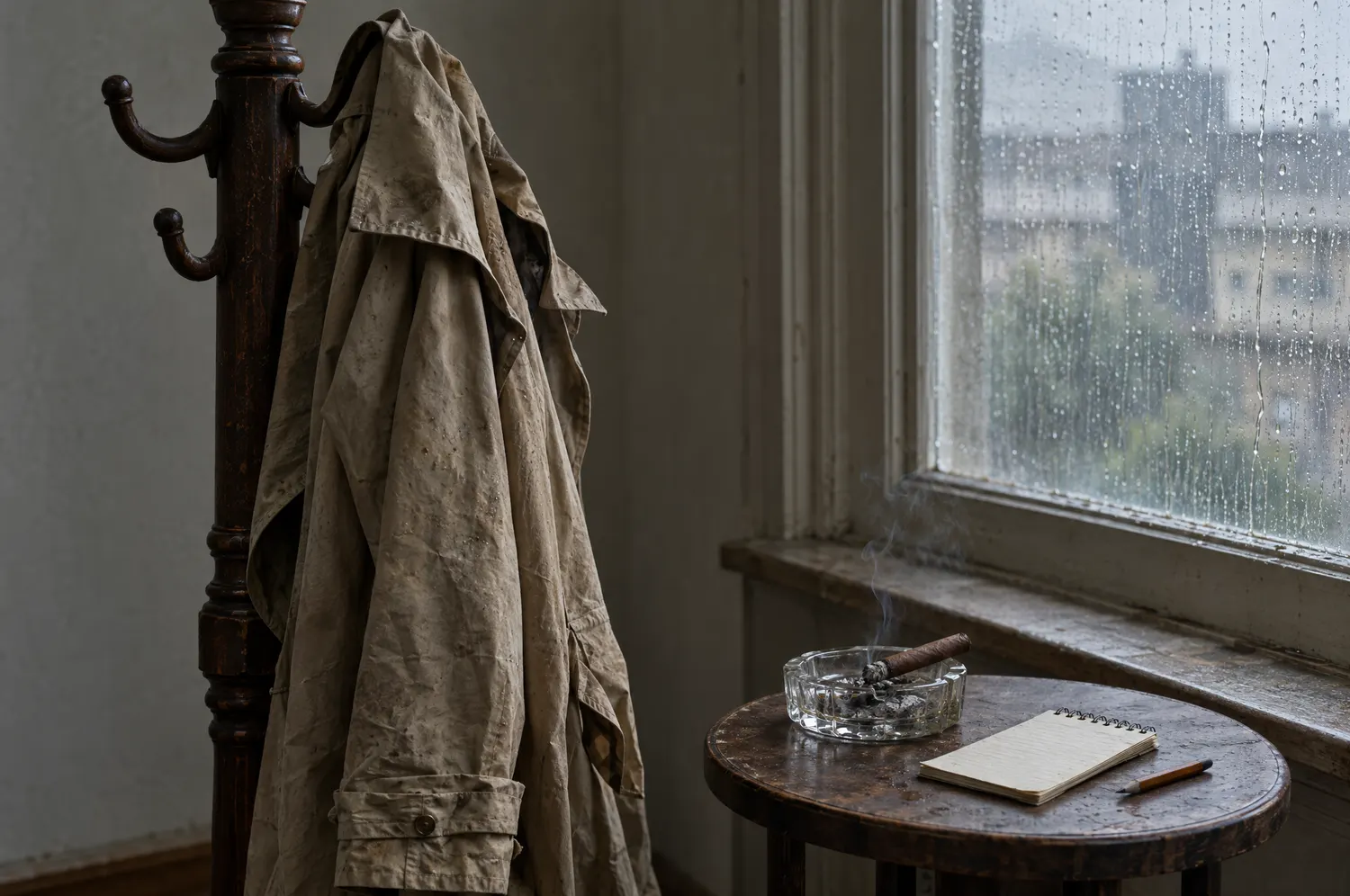
Lieutenant Columbo almost never draws his gun. He shuffles in, apologises, asks one more thing, and leaves with the murderer. The raincoat is half the act. Nobody takes a man in that coat seriously, and every killer on the show makes the same mistake about him.
Where did Columbo’s raincoat come from?
From Peter Falk’s own closet. By the account usually told, and repeated by the series’ co-creator William Link, Falk bought it on 57th Street in New York, after ducking into a shop to get out of a downpour, years before the part came along. When Falk saw the wardrobe first proposed for the character, he thought it was wrong for the man. He went home for the old coat, and had one of the blue suits chosen for him dyed a dull brown. Those two decisions made the look that ran, on and off, from 1968 to 2003.
The coat did not last the whole run unaided. Several were used over the years, and a 1974 TV Guide article, quoted on the fan site The Columbophile, described new raincoats being aged on purpose so the set always had a stock of shabby ones.
Why did a rumpled coat work for him?
Because it was a disguise. The creased coat, the brown suit and the cigar ash all say harmless, distracted, a little lost. Suspects relax around him, talk too much, and get caught. It is one of the few cases in film where looking badly dressed is the cleverest move in the room.
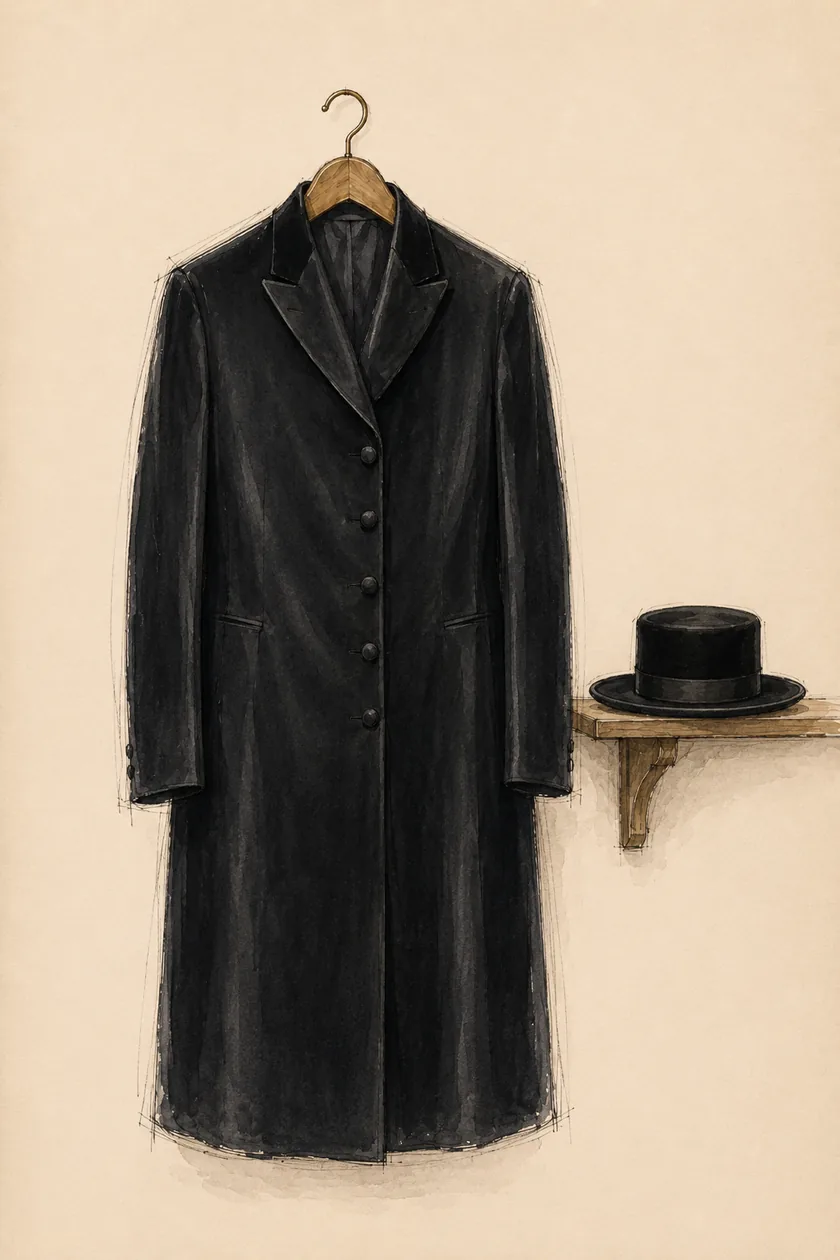
Off screen, a coat that looks slept in says exactly what it seems to say. The useful part of Columbo’s coat is the job it was doing, and that job is real: something to wear over a suit on a wet day when an overcoat is too warm.
What does a raincoat over a suit actually need?
Men ask this when they own a winter coat, a parka and a suit, and still arrive at an April meeting either damp or overheated. A raincoat for a man in tailoring has four jobs.
- Cover the jacket. It should reach the knee or just above, so the jacket hem never hangs out below the coat. A short rain shell leaves the bottom of the jacket and the tops of the trousers to soak. A coat over a suit sets out the same rule for winter.
- Go over the jacket without crushing it. The coat needs room in the shoulder, the upper arm and across the back for a tailored jacket underneath. A coat bought in your suit size is usually cut to go over a shirt or a thin sweater, and over anything more it pulls across the shoulder blades and flattens the jacket’s shoulders.
- Cover the cuffs. The coat sleeve should come down past the jacket and shirt cuffs, so your wrists stay dry when you reach for an umbrella or a door handle.
- Breathe. A tightly woven gabardine sheds rain and still lets heat out. A plastic or rubberised shell keeps the rain off and the warmth in, and on a mild day the suit underneath comes out damp anyway.
Why do raincoats end up looking like Columbo’s?
Mostly the cloth and the size. Cotton creases where it is folded and sat on, and a cotton raincoat that has spent a humid commute crushed into a car seat comes out looking lived in. Wool gabardine recovers from creases better, though it is warmer. And a coat bought a size up to get over a suit has Columbo’s problem: too much cloth everywhere, falling in folds.
Two details help a raincoat sit well over tailoring. Raglan sleeves, which run in one piece up to the collar with no seam on top of the shoulder, give more room over a jacket’s shoulder than a set-in sleeve, and they are common on raincoats for that reason. A fly front, with the buttons hidden under a strip of cloth, keeps a single-breasted coat clean and keeps rain out of the buttonholes.
Care does the rest. Hang a wet raincoat on a broad hanger at room temperature, away from the radiator, and let it dry fully before it goes in the closet. The water-repellent finish on most cotton raincoats wears off with time and cleaning, and a specialist cleaner can renew it with a reproofing treatment. Caring for your suit covers the suit underneath.
Which Columbo details are worth keeping?
The colour. Beige, stone, khaki and olive go over navy, grey and brown suits, and they look just as right over a sweater and jeans on a Saturday. That matters, because plenty of men who rarely wear a suit still want one good coat for the wet months. Keep the length, too, and a little ease: a raincoat should hang rather than cling.
Tone down the size, the creasing and the cigar. Columbo’s coat belongs to a character who has stopped caring about clothes, and that is a part best left to Falk.
Do you need a raincoat if you already own an overcoat?
In Toronto, most men who wear a suit do. A heavy overcoat is too warm for a damp 12-degree morning in April or October, and a raincoat is not warm enough for January. The two cover different months. The overcoat styles guide sets the trench coat and the plain raincoat beside the winter coats, if you are deciding which to own first.
How do you get one made?
Sam makes coats cut over your own suit: cashmere and wool overcoats, trench coats, pea coats and raincoats, each measured over the jacket you will wear under it. He doesn’t make down coats, and he doesn’t repair coats, so a raincoat that has gone the way of Columbo’s is a replacement rather than a rescue. The cloths are on the custom outerwear page.
A coat takes about five weeks. Orders placed from 20 November through February take about three weeks longer, so for April rain, order by late January and allow about eight weeks. Book a time and wear the suit the coat has to go over.
Where the story comes from: Mental Floss and The Columbophile.