American Gigolo: the film that took the stuffing out of the suit
Updated September 2026 · Sam’s Menswear editorial team
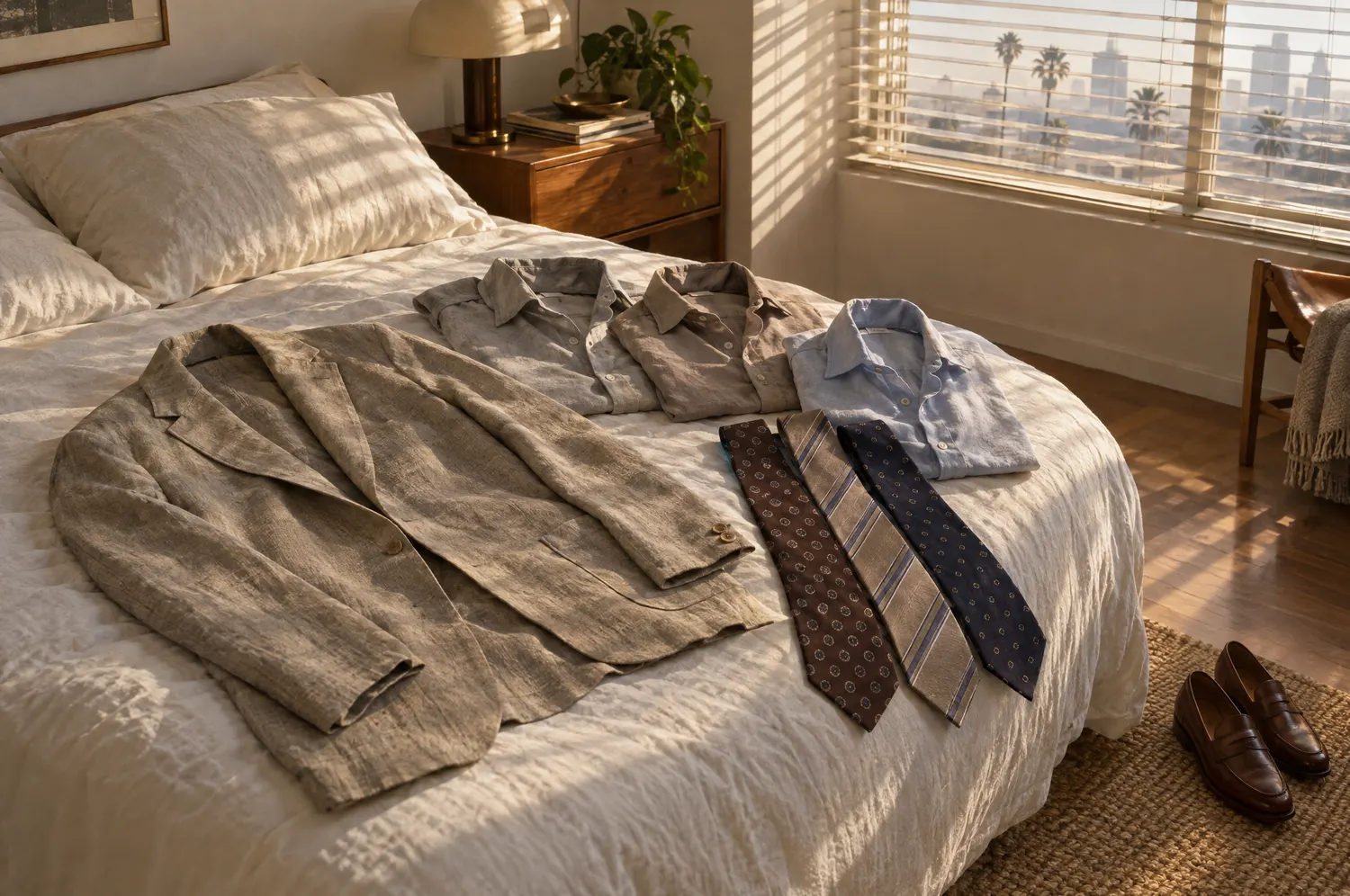
Before 1980, a man’s suit was built like a piece of architecture: padded shoulders, a stiffened chest, a full lining, a shape that stood up on its own. Then Paul Schrader’s American Gigolo put Richard Gere in jackets that fell like a shirt, and a generation of men discovered that a jacket could move.
The scene everybody remembers is the one where Gere’s character, Julian Kaye, lays his jackets, shirts and ties out across the bed and chooses between them. It is a man enjoying clothes, which in 1980 was a small revolution of its own.
The clothes
The wardrobe was largely designed by Giorgio Armani, his first collection for an American film. Armani had spent the late 1970s taking the traditional jacket apart:
- The padding came out of the shoulder, so the jacket followed the wearer’s own shoulder line.
- The lining came out, or most of it, so the cloth hung and moved freely.
- The cloth softened: linens and light wools, in greige, taupe, soft blue and grey rather than navy and charcoal.
The film helped make Armani an international name and set the look of 1980s menswear: fluid, relaxed, expensive-looking without being stiff.
Why it works
It is honest about the body. An unstructured jacket does not build you a new shoulder; it shows the one you have. On a man with a good natural frame it looks effortless.
It suits heat. A jacket without padding or lining is the coolest jacket there is, which is exactly why it belongs on a July patio more than in a boardroom.
The colours are tonal. Gere’s palette is all one family: stone, taupe, grey, soft blue. Nothing shouts, and so everything looks deliberate.
The catch
Take the structure out of a jacket and there is nothing left to hide a poor fit. A structured jacket can disguise a sloping shoulder; an unstructured one follows it exactly. That is why the soft look is harder, not easier, to get right off the rack, and why it rewards being cut to the man.
It also creases. Linen and soft unlined jackets wear their day. That is part of the look, but it is worth knowing before you order one for the office. Fully canvassed vs fused explains what sits inside a jacket and why it matters.
What to take from it
- Own one soft jacket. In linen or an open wool, stone or taupe, worn over a knit or an open collar. The patio suit is the Toronto version of the same idea.
- Keep the palette tonal. Pick colours from one family and let texture do the work. Colours that suit you helps with the family.
- Fit first. The softer the jacket, the more the shoulder has to be right.
Getting it made
Ask Sam for a soft shoulder and as little lining as the cloth allows, and it will be cut to your frame at the Vaughan studio in three to four weeks. Sketch it first in stone linen with pleated trousers, very 1980: draw the Gigolo jacket.