You have no idea what you’re doing? Start here
Updated July 2026 · Sam’s Menswear editorial team
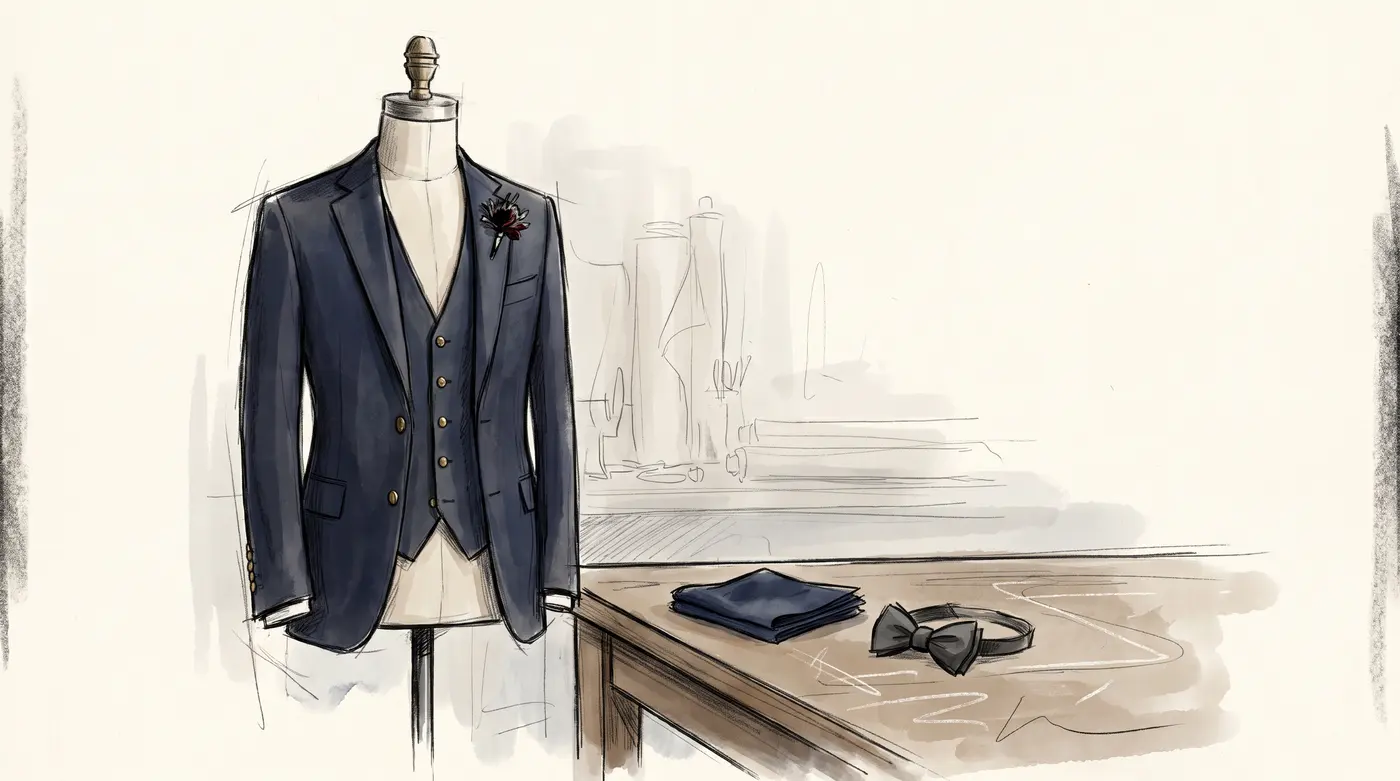
You know nothing about suits and your wedding is coming. Good news: you don’t need to. Pick a colour, get the fit right, and start early enough that nobody’s rushing. That’s the whole game, and a real tailor walks you through every step so you never have to fake knowing what a “notch lapel” is.
Here’s how to go from clueless to sorted, one calm step at a time.
Where do I even start if I know nothing?
Start with three answers, not a suit: your date, your budget, and roughly what the wedding looks like. Everything else follows from those.
You don’t walk in and point at fabric. You sit down and say “I’m getting married in September, it’s outdoors, here’s my number.” A good tailor takes it from there. Nobody expects you to arrive with opinions about vents and buttons. That’s literally the tailor’s job.
The one thing to bring: a photo or two of the venue and the vibe. Beach, banquet hall, backyard, black-tie ballroom. That single detail steers colour, weight, and formality more than anything you could read online.
Come in for a free first fitting and we sort the rest together, no pressure to decide anything on the spot.
What colour suit should a first-time groom get?
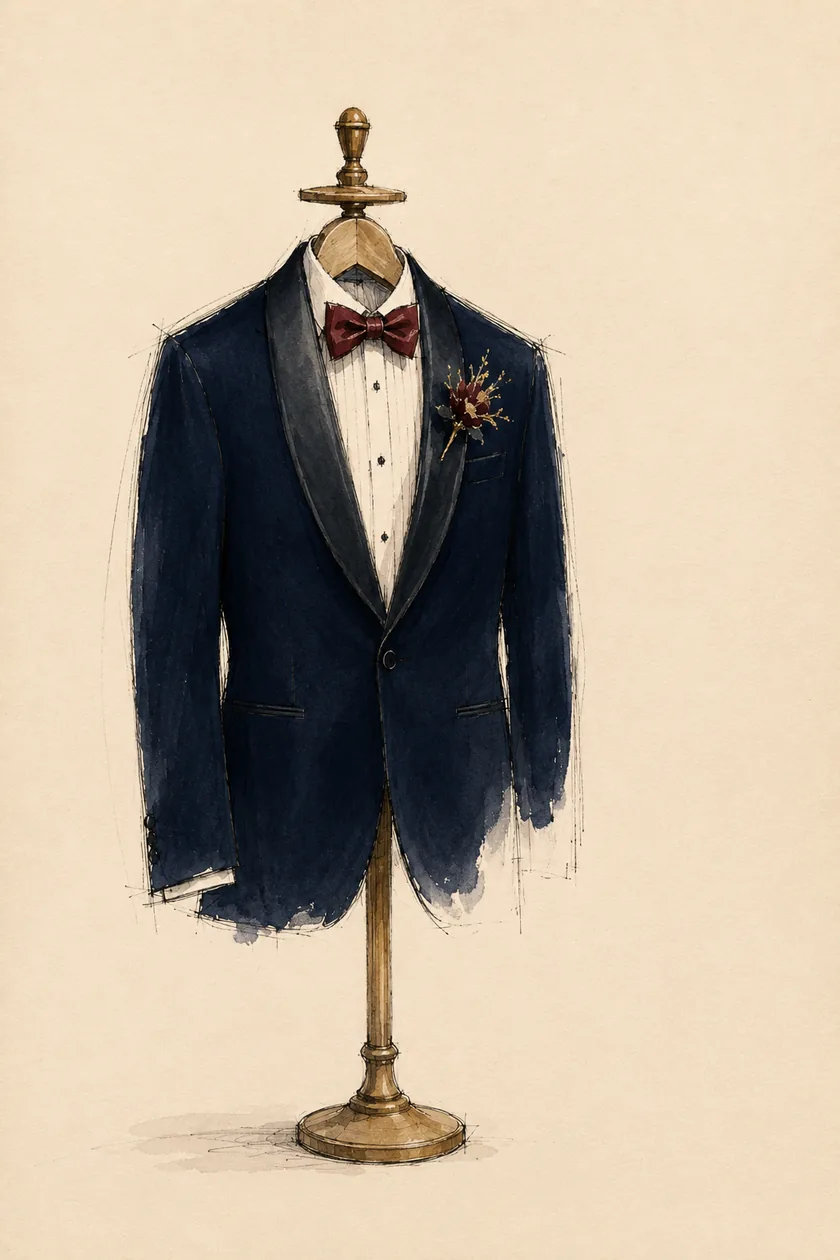
Navy. If you take one thing from this page, take navy. It’s the most versatile, most flattering, hardest-to-get-wrong colour there is.
Navy works at every venue, in every season, in every photo, and you’ll wear it again after the wedding. That’s why it’s the default recommendation for grooms in 2026, and why we steer nervous first-timers toward it. Charcoal grey is the safe runner-up.
Want a little personality without gambling? These are all trending and still safe in 2026:
- Deep green (forest/emerald): great for autumn, winter, barn and countryside weddings
- Burgundy: warm, distinctive, photographs beautifully
- Midnight blue: reads like navy but richer under evening lights
Rule of thumb: darker and richer for autumn and winter, lighter and warmer for spring and summer. If you’re overwhelmed, navy ends the debate.
How does the fit actually work?
The fit is where a suit stops looking bought and starts looking yours. Shoulders sit flat, jacket closes without pulling, no tightness when you raise your arms.
Here’s the honest truth most guys don’t know: fit beats everything. A modest suit that fits perfectly looks better than an expensive one that doesn’t. That’s the entire argument for going custom instead of grabbing something off a rack and hoping.
And the trend is on your side. The ultra-tight, can’t-lift-your-arms look is over. 2026 fits are slightly relaxed and comfortable, because you’re going to be standing, hugging, sitting, and dancing for twelve hours straight. See our full guide on how a suit should fit if your body doesn’t match a standard rack size, which is most bodies.
You don’t measure yourself. We do that. You just show up.
How far in advance do I need to start?
Start two to three months out for a custom suit. That’s the relaxed, no-stress window, and it’s the single best decision you can make.
Why so early? A custom suit isn’t printed on demand. There’s the consultation, three to four weeks of making, then the fitting on the finished suit. Rush that and you are asking a favour rather than booking a service, and you may have to settle for a cloth that’s in stock. Start early and everything is calm.
Quick reality check on timing:
- Two to three months out: ideal. Room for choices, the fitting, zero panic.
- Four to six weeks out: still workable. The suit itself takes three to four weeks.
- Under four weeks: sometimes possible as a rush, twelve days at the fastest, but your fabric options narrow.
Even if your date is close, come talk to us. We’ve dressed a lot of grooms on a tight clock. Book an appointment and we’ll tell you straight what’s doable.
What fabric should I choose?
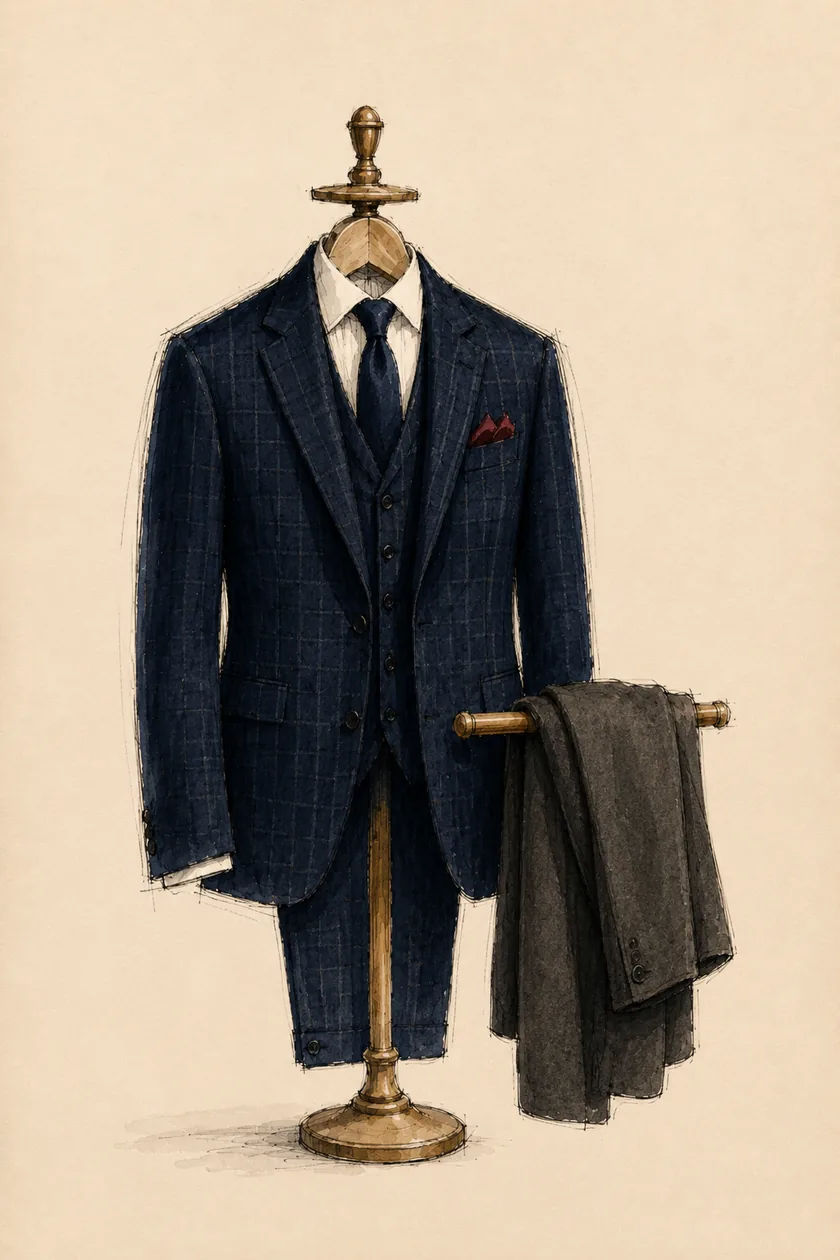
Wool, almost always. It breathes, holds its shape all day, and photographs like a suit should. A mid-weight wool is the groom’s workhorse.
Don’t overthink this one. A mid-weight wool (roughly 280–320 grams) survives a full day of standing, dancing, and hugging without looking crushed by the time the speeches start. Lighter, more open weaves for summer heat; a touch more weight and texture for winter.
You’ll see and feel the actual fabric in person, which beats guessing from a screen. Browse the Fabric Library to get a sense of what’s out there, but the real decision happens with fabric in your hands at the drawing board.
Custom or rental? What’s the difference for a groom?
Rental is temporary and generic. Custom is built to your body and yours to keep. For your own wedding, most grooms want custom.
A rental gets returned Monday and never fit quite right to begin with. A custom suit fits you specifically, becomes your best suit afterward, and shows up in every photo you’ll look at for the rest of your life. That’s a different tier of decision. We break the whole tradeoff down in custom vs. rental wedding suit.
If you’ve got groomsmen to coordinate too, coordinating groomsmen walks through keeping everyone consistent without headaches.
So what’s my actual first step?
Book an appointment with your date and a photo of the venue. You sit down, we talk through what the day looks like, you feel some fabric, and you leave knowing exactly what your suit will be. No jargon quiz.
Thirty-plus years on the bench here in Vaughan, on the Thornhill line, serving grooms across the GTA: Toronto, Thornhill, North York, Richmond Hill, Markham. We’ve made this easy for a lot of guys who walked in exactly as lost as you feel right now.
You don’t need to know anything. That’s what we’re for. Book your appointment or start playing with ideas at the drawing board whenever you’re ready.