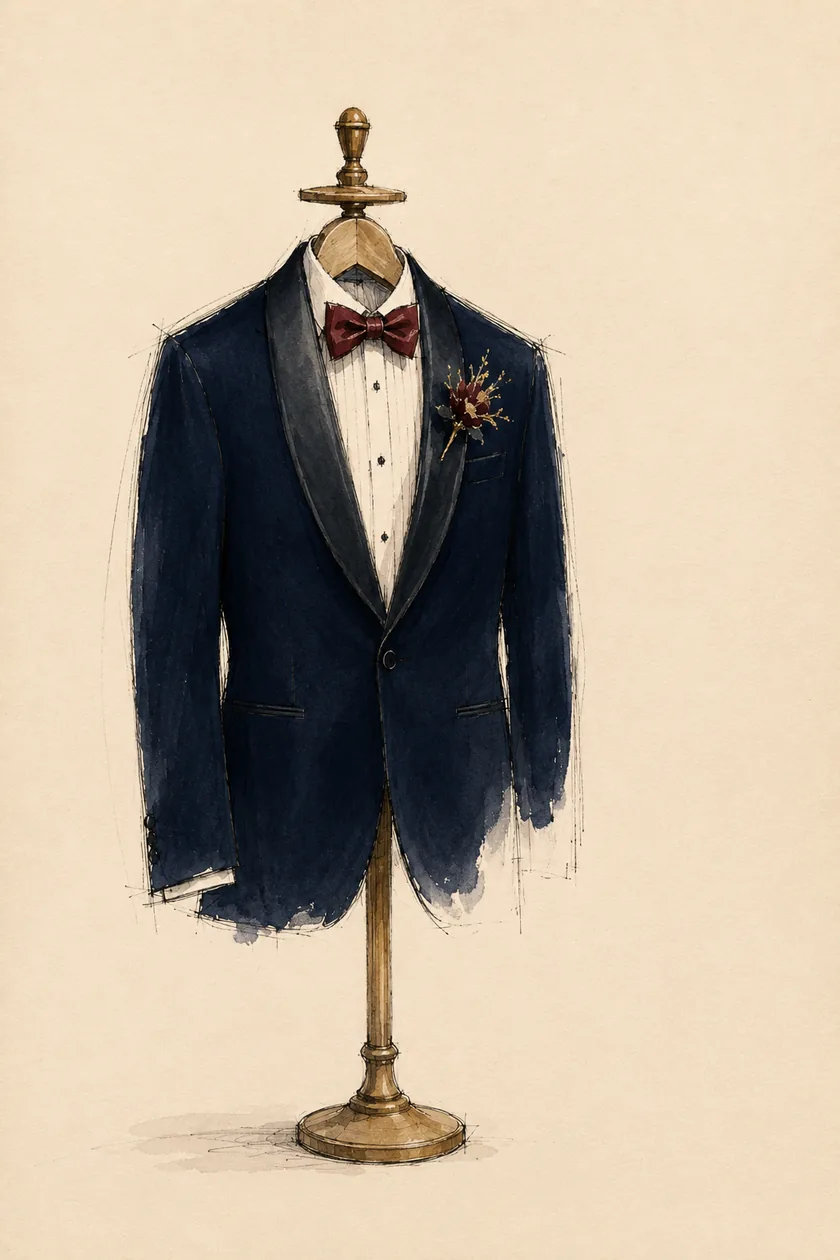
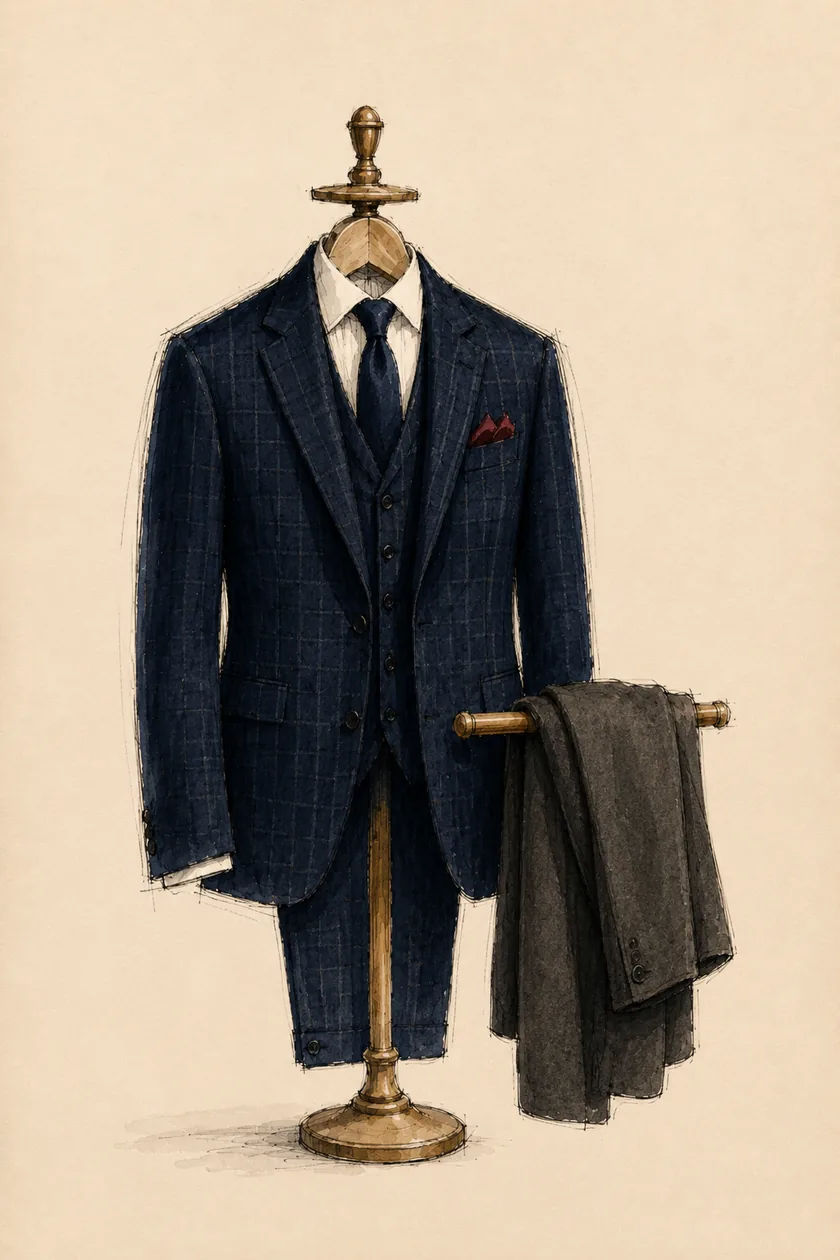
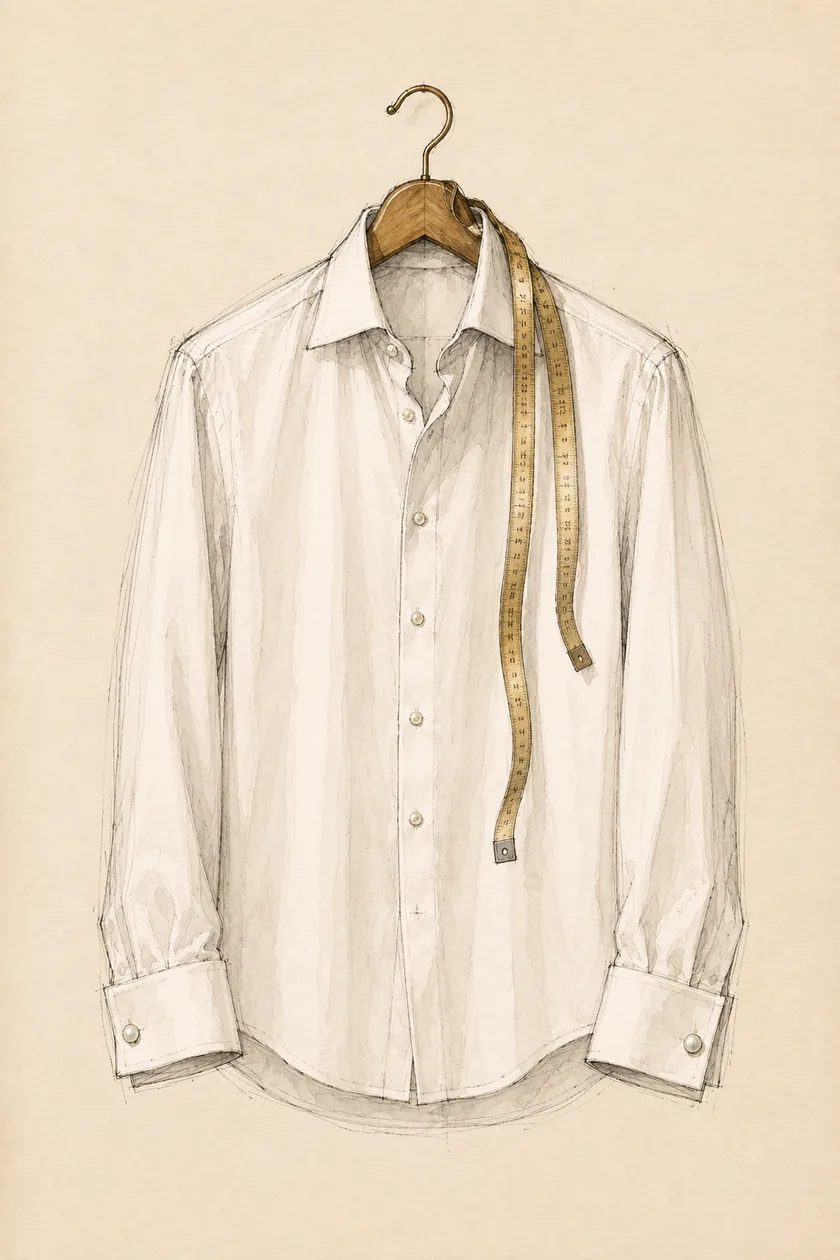
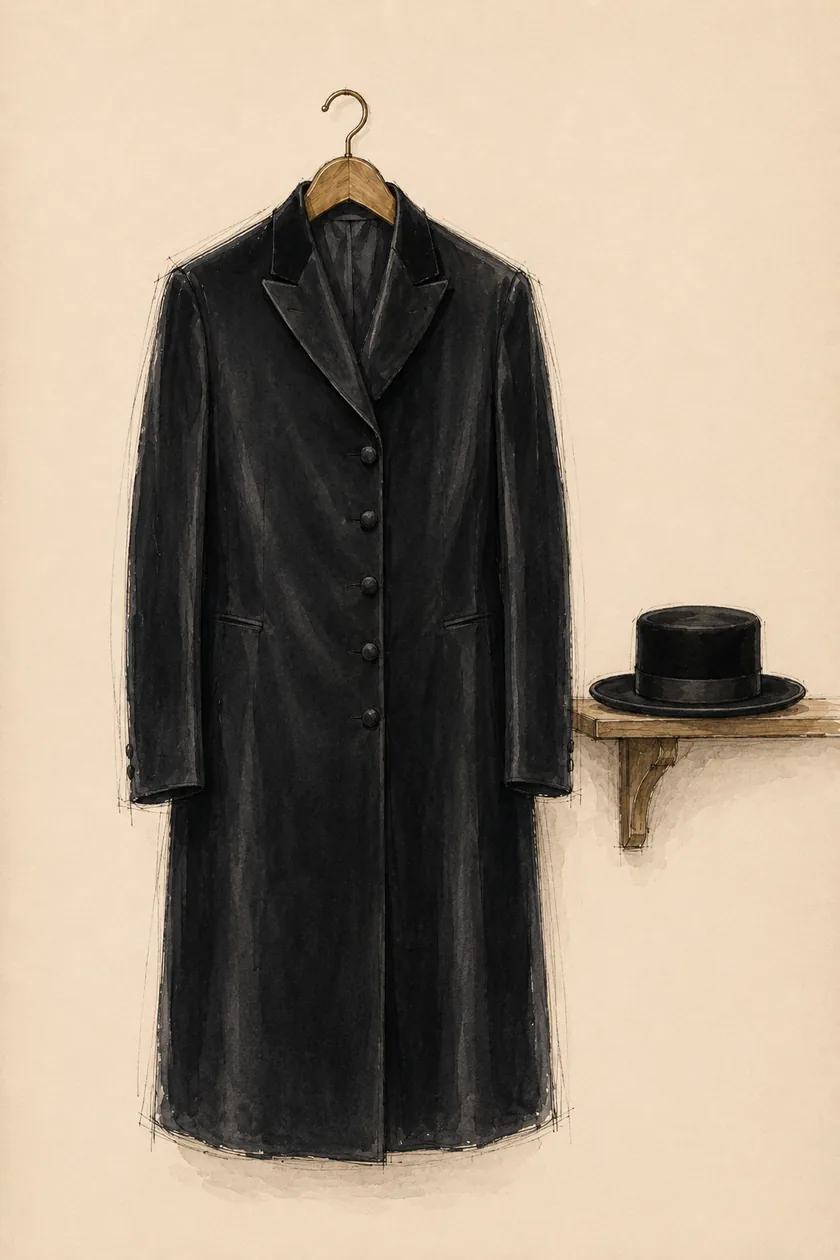
Draw your rekel, kapota or bekishe, then have it made.
Choose the garment, the cloth and the finish, and see it on the hanger: free, and nothing to sign up for. The drawing shows one common version of each coat; Sam cuts the length, the buttons and the trim to your community's custom.

- Garment
- Cloth
- Shirt
One common version of the coat, not a pattern. Length, buttons and trim are cut to your minhag.
The garment
The cloth
Shirt & tie
The Shabbos suit is on the suit Drawing Board →
Send your coat to Sam
Sam will have the drawing before you arrive. Bring the coat you are replacing if you have one: it settles the length, the buttons and the trim in a minute. Sending it books nothing.
Or WhatsApp this drawing to Sam It arrives as the picture.
Saved. Sam has your drawing: . Book an appointment, and bring the coat you are replacing if you have one.
Book an appointment with this drawingFrom the screen to the studio.
Draw it here
Choose the garment, the cloth and the finish, and whether it is worn with a tie. The drawing shows one common version of each coat; the details that belong to your community come next.
Send it to Sam
One form sends the drawing with your name and phone number, or book an appointment and bring it. Better still, bring the coat you are replacing. Sending it books nothing.
Cut to your minhag
Sam measures you at the studio on the Vaughan and Thornhill line, one-on-one and by appointment, and cuts the length, button count, collar and trim to your community’s custom. Three to four weeks: order before Yom Tov, not during it.
Good to know.
What is the difference between a rekel, a kapota and a bekishe?
A rekel is the long weekday jacket, often double-breasted, falling past the hip toward the knee. A kapota is a coat cut to its own pattern with a waist seam, worn for Shabbos by many. A bekishe is the silk or satin Shabbos and simcha coat, cut long. Which is right follows your community’s minhag.
Is the drawing exactly what I will get?
It is one common version of each garment, so you can see the shape and the cloth. Button count, length, collar and trim differ from one community to the next, and Sam cuts to yours: bring the coat you are replacing, or name the community and the macher.
Satin or fine wool?
A bekishe is traditionally satin or silk, and the board’s Sheen finish shows it that way; a kapota and a rekel are usually fine wool. Sam will put both in your hands and say which will survive the way you actually wear it.
Do you allow for the gartel and tzitzis?
Yes. The garment is cut with proper allowance so nothing pulls or rides when the gartel is on, and so the tzitzis sit as they should.
How long does it take?
Three to four weeks. Order well before Yom Tov rather than during it, and a chosson’s wardrobe two to three months before the wedding. If a date is tight, call, and you will be told straight what is still possible.
What about the Shabbos suit?
The fine dark Shabbos suit is drawn on the suit Drawing Board: black or midnight, with the lapel, buttons and waistcoat you wear.