Kapota, rekel, frock: a plain guide
Updated July 2026 · Sam’s Menswear editorial team
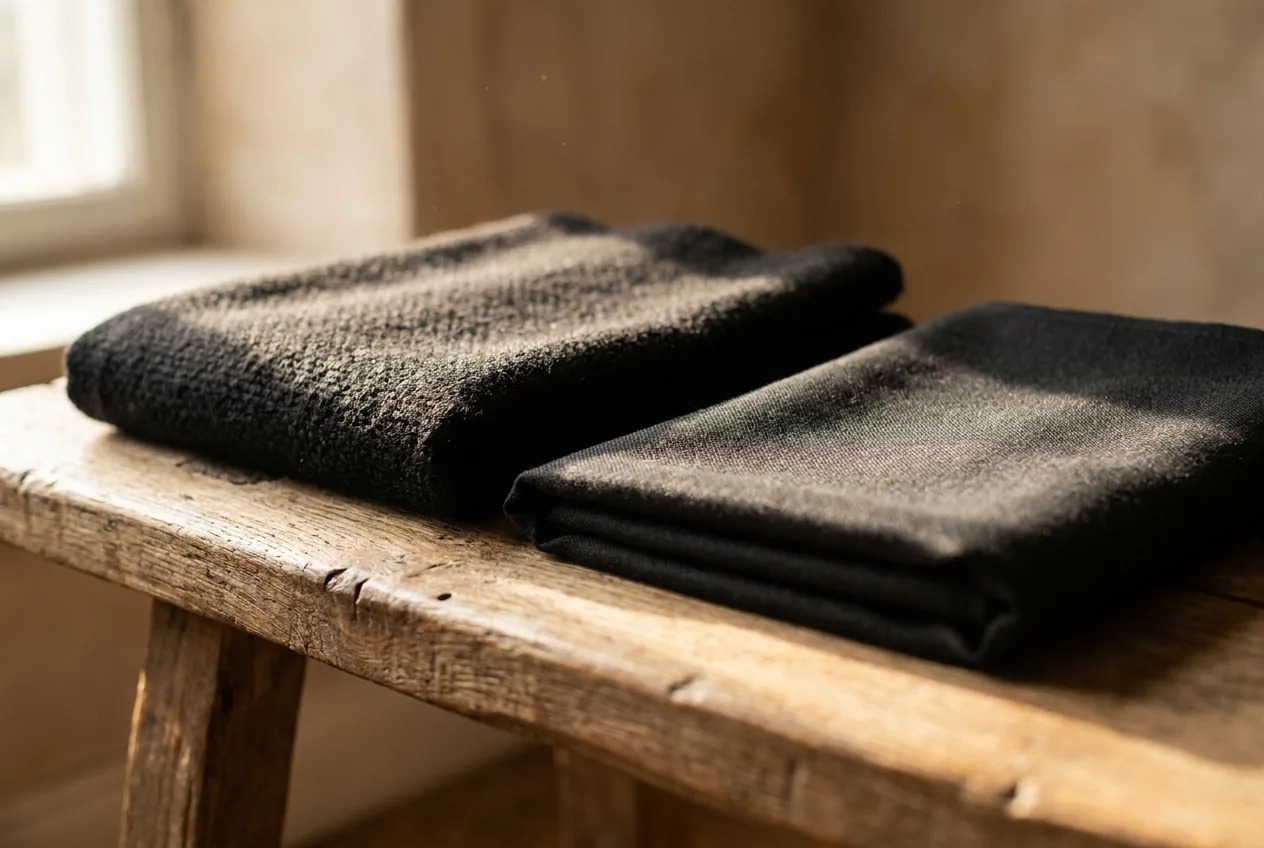
There’s a lot of names for these garments, and they get used loosely. The plain version is this: the rekel is the everyday long jacket (weekday), the kapote (or frock) is the tailored, waist-seamed coat some wear for Shabbos and by community, and frock is just the English word people reach for when they mean either. Which one is “right” depends less on a rule book and more on your community and your rebbe. Here’s how Sam sees it from the bench.
What’s the difference between a rekel and a kapote?
Short version: a rekel is a long suit jacket; a kapote is a coat cut to its own pattern. They’re not the same garment in a different fabric.
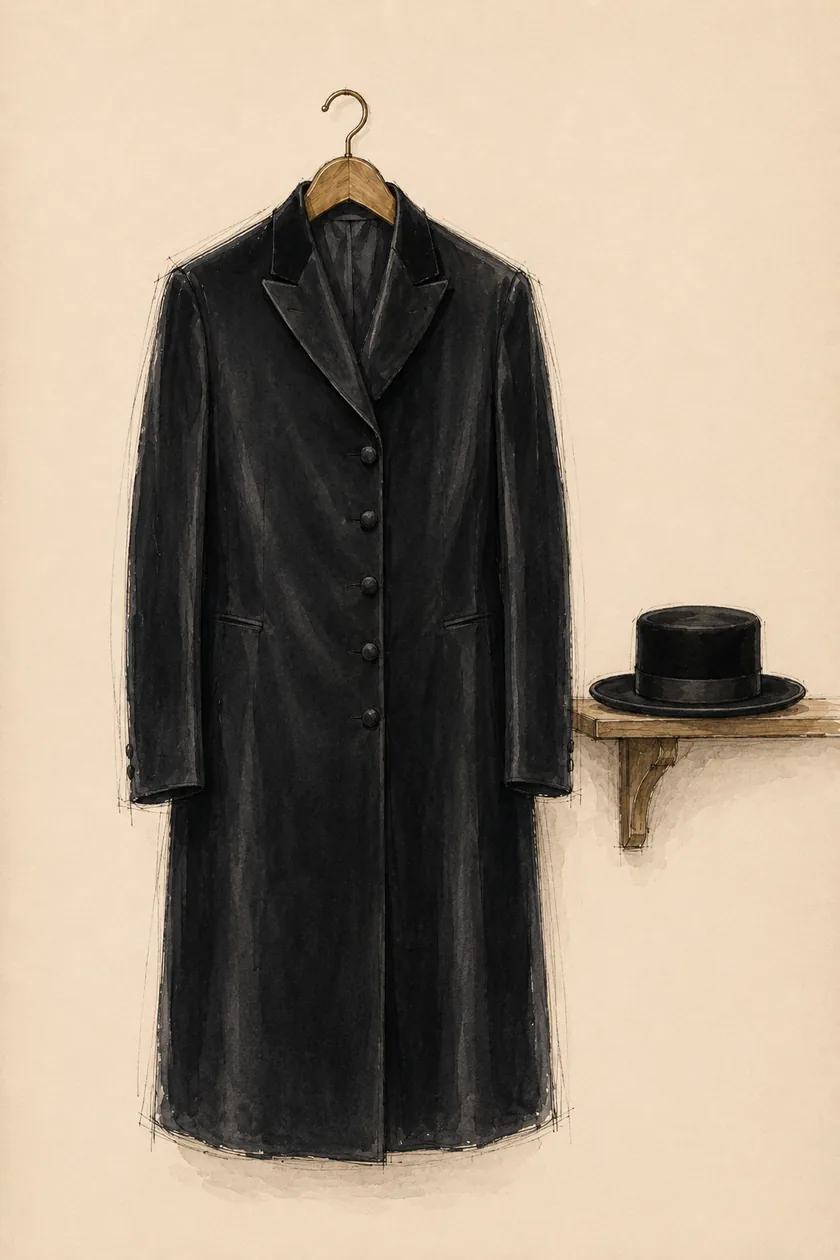
The rekel is what most men reach for during the week. It looks like a regular jacket (often double-breasted), just longer, falling past the hip toward the knee. Wool or a wool-blend, dark, practical. It’s the workhorse.
The kapote (you’ll also hear kapoteh, sirtuk, or just “frock”) is built differently. It has a waist seam (the body is cut in two pieces and joined at the waist so it nips in and then flares), plus a back slit and usually four front buttons rather than the six or eight you’d see elsewhere. That construction is why it hangs the way it does. You can’t fake it by lengthening a suit jacket.
What is a bekishe, and how is it different?
A bekishe is the silk or satin Shabbos coat: softer, shinier, worn for Shabbos, Yom Tov, and simchas. The kapote is the tailored wool version of that idea.
Think of it as a spectrum:
- Rekel: wool, weekday, cut like a long jacket.
- Kapote / frock: wool (sometimes silk), tailored waist seam, worn Shabbos or by community custom.
- Bekishe: silk/satin, the dressiest, for Shabbos and simchas, no waist seam, no back slit.
Different Chassidic groups lean on different ones. Chabad married men, for instance, wear a kapote where others wear a bekishe. None of it is one-size; it follows the minhag of the community.
Who wears what, and when?
Broadly: rekel for the week, kapote or bekishe for Shabbos and simchas. But the real answer is your community’s custom, not a universal rule.
- Litvish / yeshivish men mostly wear a well-cut dark suit; the long frock garments are less common day to day. More on that wardrobe →
- Chassidic men wear a rekel through the week and a bekishe or kapote for Shabbos, Yom Tov, and weddings.
- Chabad married men wear a kapote (frock) for Shabbos rather than a bekishe.
If you’re not sure which applies to you, ask your rov or your father. Sam won’t tell you what your custom is; that’s not his job. His job is to make the garment right once you know.
Why does the cut matter so much on these coats?
Because the whole character of a kapote lives in the waist seam and the drape. Get the proportion wrong and it reads as a costume; get it right and it carries kavod.
A frock coat is one of the more demanding things to cut. The waist has to sit at your waist, not two inches high, not dropped. The skirt below has to flare cleanly and hang plumb when you stand and move in shul. The back slit has to lie flat. This is pattern work, not off-the-rack guesswork, and it’s the kind of thing that separates a tailor who’s made these before from one who hasn’t. Sam has been making them for the Thornhill and Vaughan community for years. See the traditional wardrobe →
What fabric is best for a rekel or kapote?
For something worn every Shabbos and every simcha, a good wool earns its place. It holds a press, breathes in a warm shul, and looks considered years in.
Weekday rekels take a hard-wearing wool or wool-blend that shrugs off a full week. Shabbos garments can go finer, or into silk for a bekishe. The rule is simple: the more you wear it, the more the fabric matters. Cheap fabric telegraphs itself by the second season. How to choose your fabric → or browse the fabric library →.
Can you make these to my community’s exact custom?
Yes. Bring the details (length, buttons, lapel, whether it’s a rekel, kapote, or bekishe) and it’s made to exactly that. Your minhag, not a generic template.
Every group has its particulars: the exact length, how the lapel sits, single or double-breasted, the fabric weight. What actually differs from one chassidus to the next → If you have a garment you already like, bring it. Sam can read the pattern off it and improve the fit. If you’re starting fresh, tell him the custom and he’ll take it from there. Draw your rekel, kapota or bekishe →
A few words before you book
You don’t need to know the vocabulary to get this right. Plenty of good men mix up rekel and kapote; the names blur even inside the community. What you do need is a tailor who understands the construction and respects the custom, and who’ll fit it properly so it hangs the way it should.
Sam’s home studio sits on the Vaughan–Thornhill line, a short drive for most of the community. If travel is genuinely hard, Sam comes to your home or your office on request, for the first appointment and for the fitting. Does Sam come to you? →
Dressing for Shabbos, a simcha, or just replacing a tired rekel? Book a first appointment and bring the garment you’re replacing. Sam will tell you what can be read off it and what should be drafted fresh.