The bar mitzvah suit that still fits in two years
Updated July 2026 · Sam’s Menswear editorial team
Yes, a bar mitzvah suit can still fit two years later, but only if it’s built for it. The trick is a tailor who leaves growing room in the right places: deep hems, long sleeves reserved inside the cuff, and a little give in the trouser waist and seat. Off the rack won’t do that on its own. It’s a bench decision made the day you cut and fit.
Can a bar mitzvah suit really still fit in two years?
Yes, within reason. A well-built suit with generous inlays can follow a growing boy for a season or two, but no suit follows a full growth spurt forever.
Boys grow fastest right around thirteen, roughly three inches in a year, and shoulders, arms, and legs don’t all grow at the same rate. So think of “growing room” as buying time, not defeating biology. Done right, the same suit carries him from the bimah through a cousin’s wedding, a few dinners, and into ninth grade before he truly needs the next one.
Where does the “growing room” actually come from?
From the seam allowances a tailor leaves inside the garment. On a suit built to grow, we hold back fabric in the spots that lengthen first.
- Trouser hems left deep, so we can drop them an inch or more as his legs catch up.
- Jacket sleeves with fabric reserved inside the cuff to let down later.
- Trouser waist and seat with real inlay, so we can let it out as he fills in.
- Jacket side seams left with a touch of give for the chest and shoulders.
You can’t invent this fabric after the fact. A cheap suit is often cut with almost nothing to spare, which is why letting it out later is really a decision made at the design stage. See how to care for your suit for keeping those inlays clean and pressable.
Should we buy off the rack or have it made?
For a first suit that has to last, made-to-measure usually wins, because we control the inlays from the start. Off the rack can work, but the alterations add up fast.
A department-store suit almost always needs the sleeves shortened, the hem set, and the waist taken in. By the time you’ve paid for all that, you’ve often spent more than the ticket price and you still have a suit cut with no room to grow. When we make it here, growing room is planned, not patched. If budget is the concern, say so plainly at the first fitting and we’ll build the version that makes sense for your family.
When should we start the suit before the bar mitzvah?
Start about six to eight weeks out, and save the final fitting for the last two weeks. That window lets us catch any late growth spurt before the big day.
Thirteen-year-olds can shoot up between measurements, so we take his numbers early, cut with room, and then do the precise finishing fit close to the date. If he grows two inches in that stretch, good, that’s exactly what the inlays are for. Rush it into a single last-minute appointment and you lose the room to adjust. Plan the timing and the suit shows up calm and right, same as we do for a groom.
How do we make the second-year alterations easy?
Bring him back when the cuffs ride up or the hem climbs, and we let the reserved fabric down. Most growing-room adjustments are quick bench work.
The honest limit: we can add length and let out width, but we can’t add shoulders. When his shoulders finally broaden, that’s the sign the suit has done its job and it’s time for the next one. Until then, dropping a hem or letting down a sleeve is a short, inexpensive visit. Keep the suit on a proper hanger and pressed between wears so the let-down lines don’t set permanently.
What style lasts two years without looking dated?
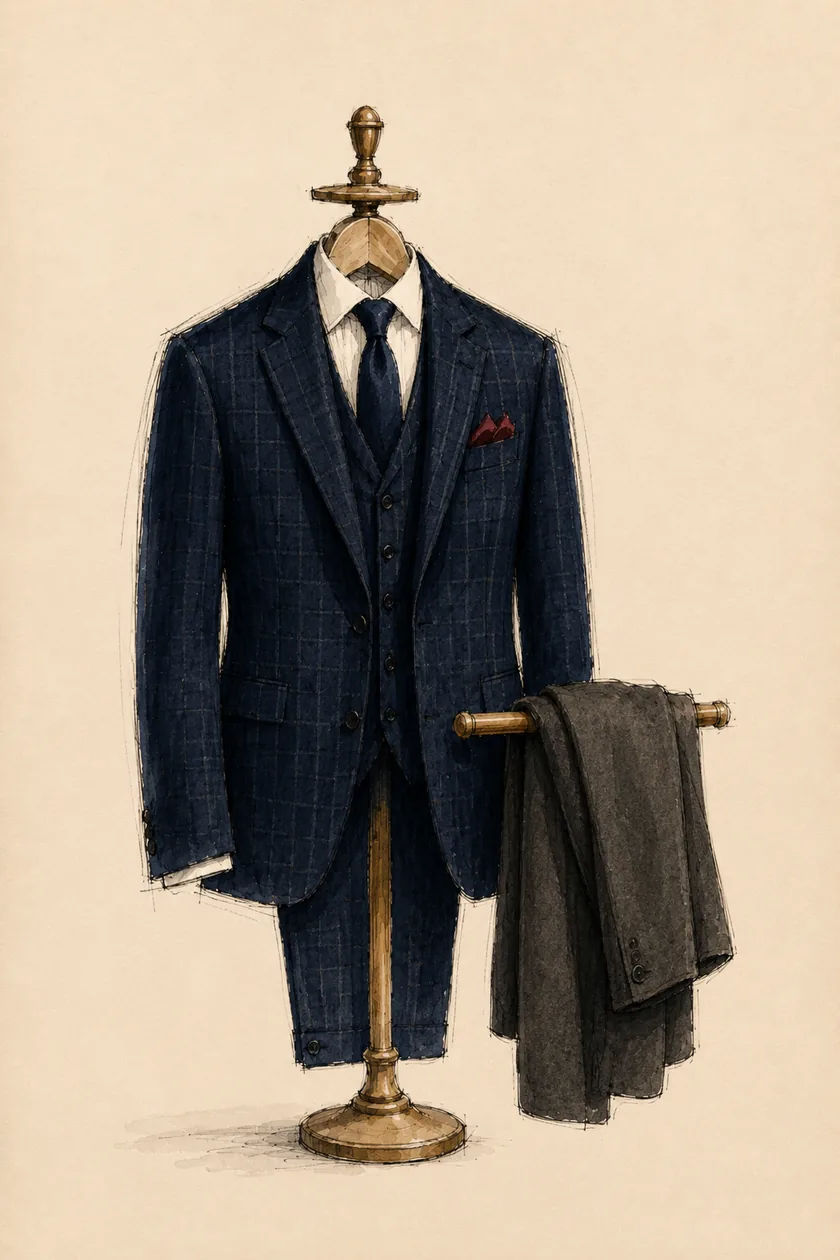
Go classic and go navy. A navy suit in a mid-weight fabric reads sharp at thirteen and still reads sharp at fifteen, and it works far beyond the bar mitzvah.
Skip the trendy slim-of-the-moment cut and the loud pattern he’ll be embarrassed by in a year. A clean navy or charcoal, a natural shoulder, a versatile lapel. That’s a suit for shul, for a traditional simcha, for the interview he’ll have in a few years. Browse the fabric library and we’ll steer you toward something durable that presses well and hides a rushed morning.
What makes a bar mitzvah suit worth doing together?
It’s the first suit, and the first appointment is a moment. Standing a boy on the block, chalking the sleeve, teaching him how a jacket is supposed to sit, fathers remember their own.
Sam has fitted a lot of first suits over thirty-plus years on the Thornhill line, and the ones that land are the ones where dad comes too. Your son learns what a real fit feels like, and he learns it from you. That’s worth more than the suit. For the fathers standing up that day, the father-of-the-groom and father-of-the-bride guide covers your side of it.
Bring your son, bring your questions, and we’ll build a first suit that fits the day on the bimah and grows with him after it. Six to eight weeks before the simcha is the right moment to start. Book an appointment or design his suit whenever you’re ready.
Find his Shabbos and the exact start dates: The bar mitzvah suit calendar, October 2026 to March 2027 →