The bekishe explained: fabric, cut and care
Updated July 2026 · Sam’s Menswear editorial team
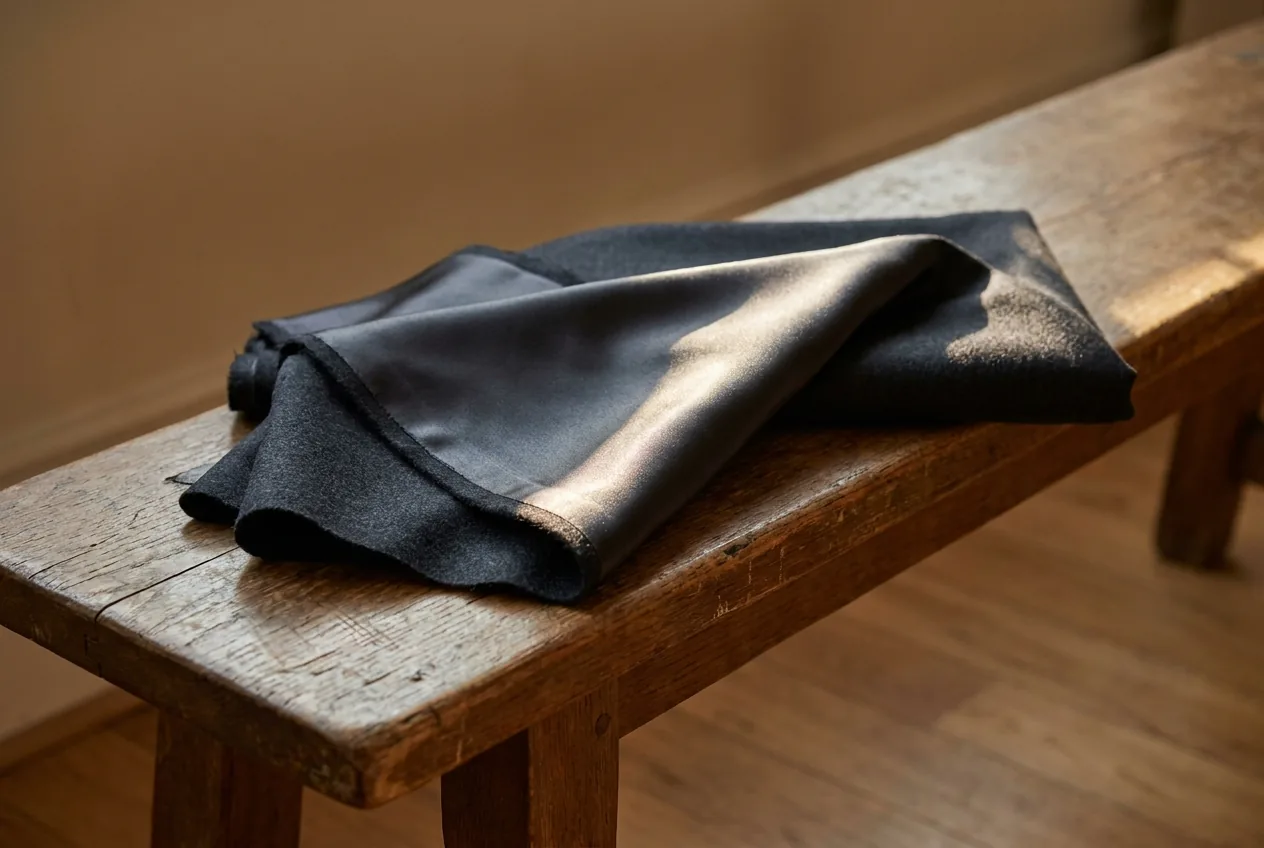
A good bekishe lives or dies on three things: the right fabric, a true cut through the body, and care that keeps it sharp for years. It’s not a long suit. It’s a garment with its own logic, and getting the drape and proportion right takes someone who has made them before. Sam has, for the Thornhill and Vaughan community, for years. It is also not one garment with one pattern: colour, cloth, ornament and button count all shift from one chassidus to the next.
What is a bekishe made of?
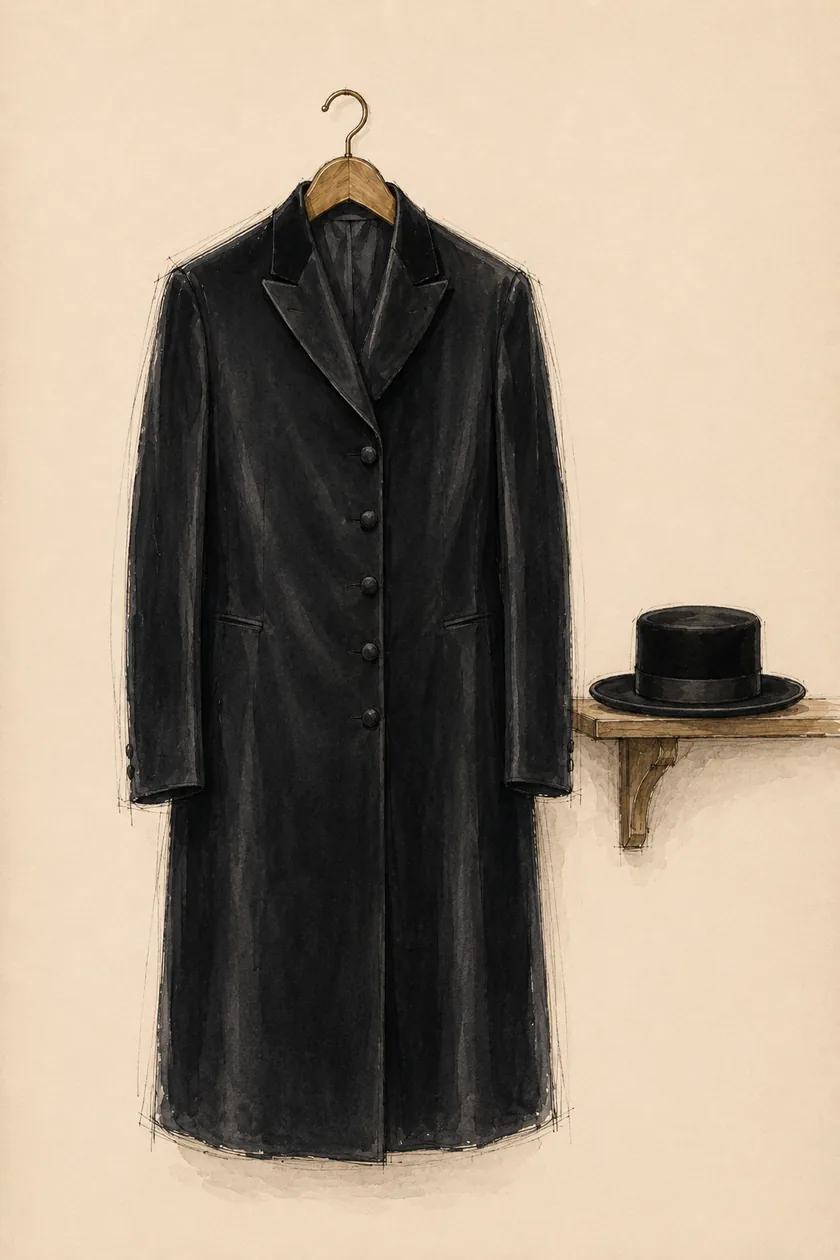
A bekishe is the finer Shabbos and simcha coat: usually black, cut long, with a subtle sheen. Most are made in silk or a silk-like polyester, which gives that soft glow the everyday rekel doesn’t have.
The old distinction still holds: the rekel you wear through the week is wool or a matte polyester, the bekishe is the dressier one. The sheen is the whole point; it reads as yom tov, not weekday.
- Pure silk: the traditional choice. Deepest color, softest hand, a living sheen that shifts in light. It also creases more and asks for more care.
- Silk-blend and quality polyester: holds its press longer, shrugs off a warm shul, more forgiving day to day. A good one looks close to silk at arm’s length.
There’s no wrong answer here. It’s a trade between the finest look and the easiest life. Sam will show you both and let the fabric tell you. More on how fabric behaves over years: choosing your fabric.
How should a bekishe fit?
Fitted clean through the shoulders and chest, then easing to a fuller skirt below the waist. It should follow you, never grip you, and hang straight to around the ankle.
The bekishe has a shape all its own: a trim upper body, a high collar, long sleeves, and a back vent so you can walk and sit without the skirt pulling. The give is all below the waist. That’s what lets you daven, sit at a tish, and move through a long simcha without fighting the garment.
Get the shoulder right and everything else follows. A bekishe cut off a generic block will pull across the back or flare wrong at the hem. It has to be built to your frame. The same principles that make any coat sit clean apply here: how a suit should fit.
What makes a good bekishe versus a cheap one?
The fabric, the cut, and what you can’t see: the canvas, the collar roll, the hem finish. A good one holds its line all day; a cheap one collapses at the shoulder and puckers at the seams within a season.
Tells of a well-made bekishe:
- A collar that sits flat and rolls softly, with no gaping and no stiff cardboard feel.
- Clean, straight seams with no puckering, and a hem that hangs dead level all the way round.
- A skirt that falls in a smooth column, not a stiff bell or a limp sheet.
- Real inner structure through the chest so the front holds its shape instead of caving.
Off-the-rack bekishes are cut to an average nobody actually is. Made properly, to your measurements, it sits right the first Shabbos and every one after. That’s the difference between a garment and a costume.
How do you care for a bekishe?
Hang it on a broad wooden hanger, air it out after wear, spot-clean small marks, and dry-clean only when it truly needs it, not on a schedule. Silk especially does not want to live at the cleaner’s.
The everyday routine that keeps one sharp:
- A wide, contoured hanger to hold the shoulders; never a wire hanger, which digs and distorts.
- Air it after each wear before it goes back in the closet, so it stays fresh between cleanings.
- A gentle brush or a shake for surface dust; save the dry cleaner for real stains.
- Give it room in the closet. A crushed bekishe holds its creases, and silk creases stubbornly.
When it does go for cleaning, use a cleaner who knows these garments. The sheen and the drape are easy to flatten with the wrong press. The care logic mirrors any fine tailoring: how to care for your suit.
How long does a bekishe last?
A well-made one lasts many years (often a decade or more) if the fabric is good and you look after it. The seams and collar are what age first, and both are repairable on a garment that was built right.
This is the case for making it properly. A cheap bekishe is bought again and again; a good one is pressed, aired, and worn with kavod for years, and let out or taken in as your frame changes. That’s cheaper in the long run and it looks it every single Shabbos.
Can a bekishe be altered or restored?
Yes. A properly made bekishe has seam allowance to let out or take in, the hem can be adjusted, and a worn collar or lining can be renewed. That’s exactly why the making matters.
Bring Sam an older bekishe and he’ll tell you honestly whether it’s worth refreshing or whether you’re better served by a new one. No upsell, just what the garment can take. He’s cut these for the community for over 30 years, from his studio on the Vaughan–Thornhill line, and if travel is genuinely hard, Sam can come to you, at home or at the office, on request.
Refreshing your Shabbos wardrobe, or dressing for a simcha? Come by for a first fitting and put the silk and the polyester side by side in your own hands before you decide. Book an appointment or draw your bekishe first. More on dressing the traditional wardrobe.