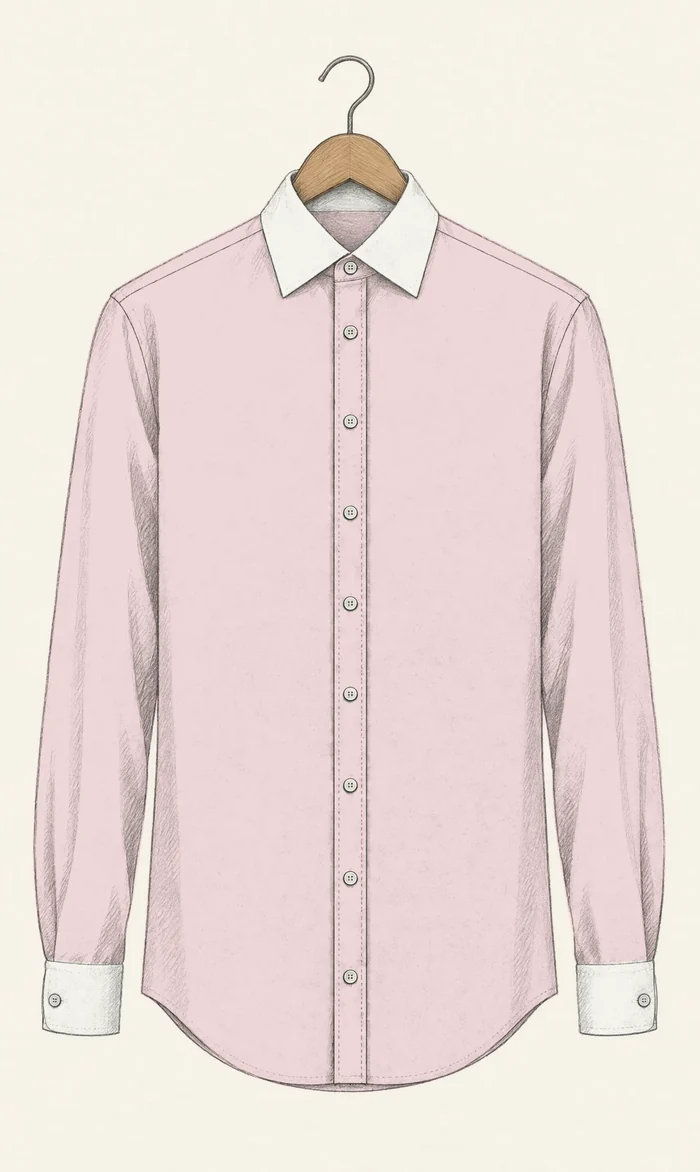
White collar, coloured shirt: the contrast collar, drawn side by side
Updated September 2026 · Sam’s Menswear editorial team
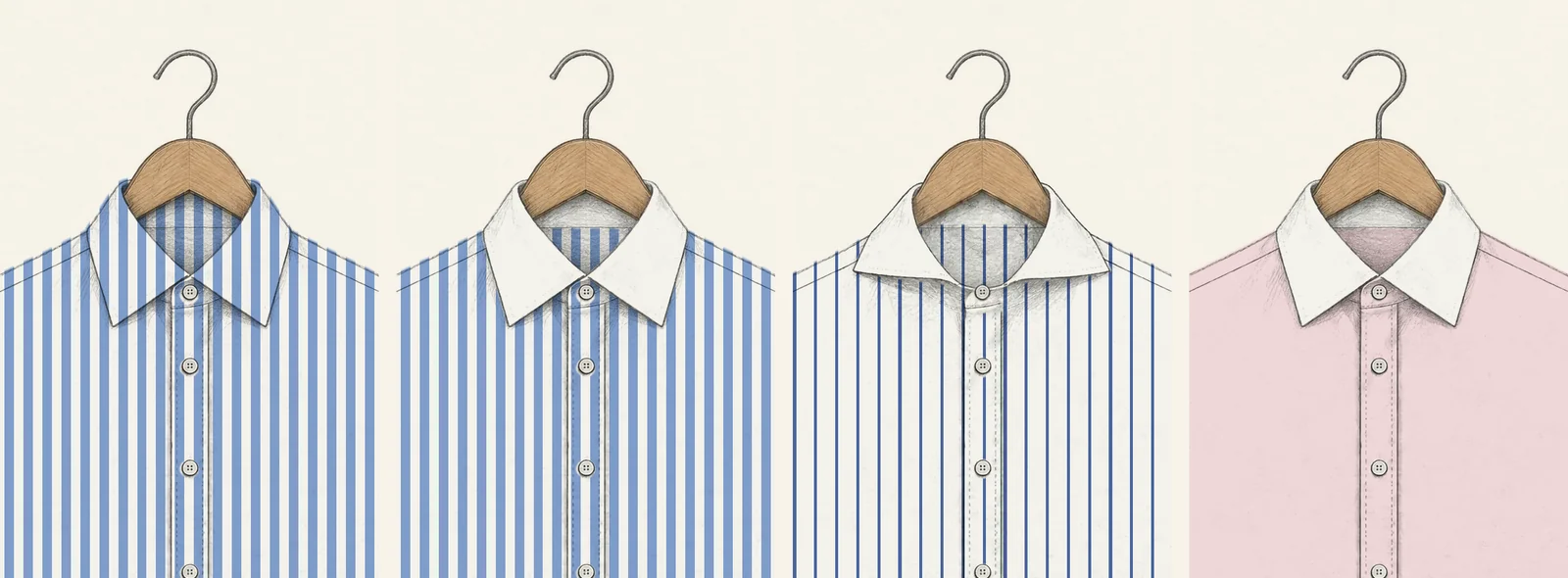
A contrast collar shirt is a coloured or striped shirt with a white collar and white cuffs. You will hear it called a banker’s shirt, and in America a Winchester. It is one of the few shirts that says something from across a room, which is exactly why it needs handling with a little care.
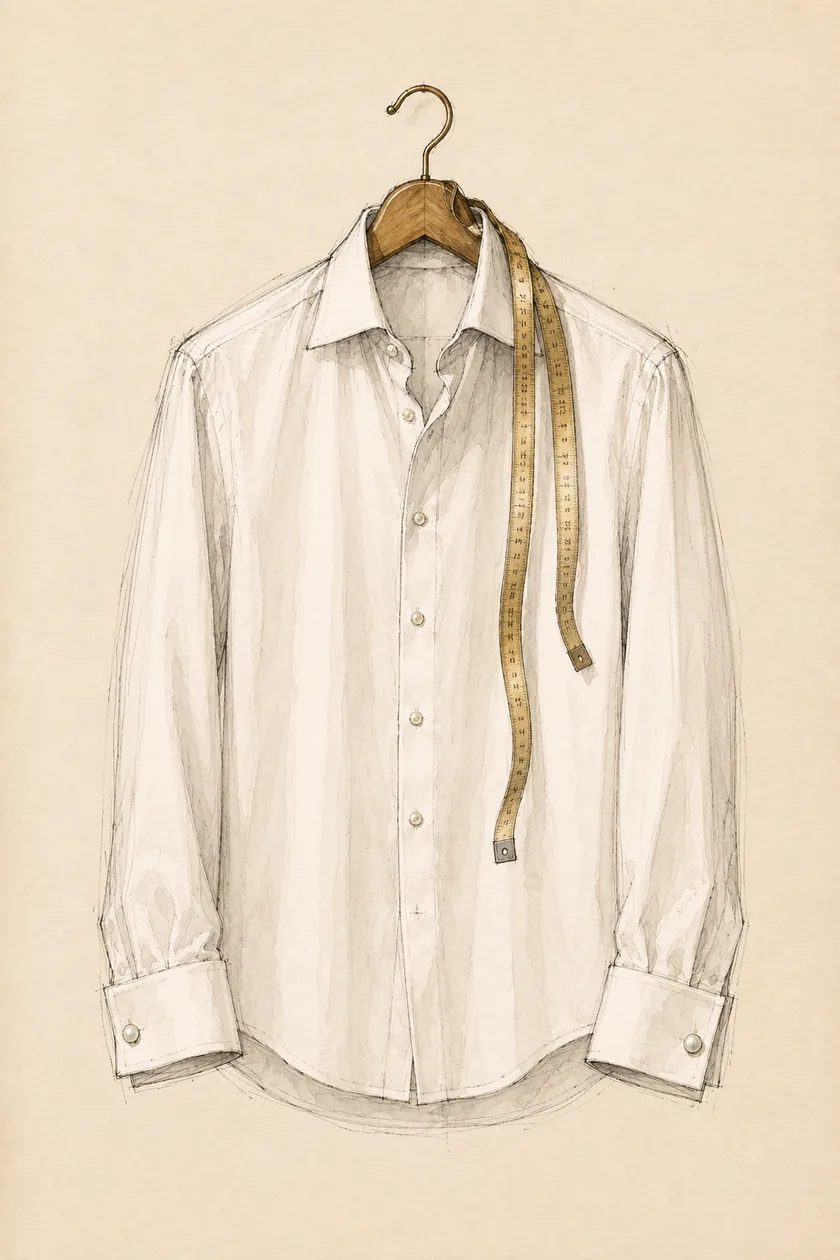
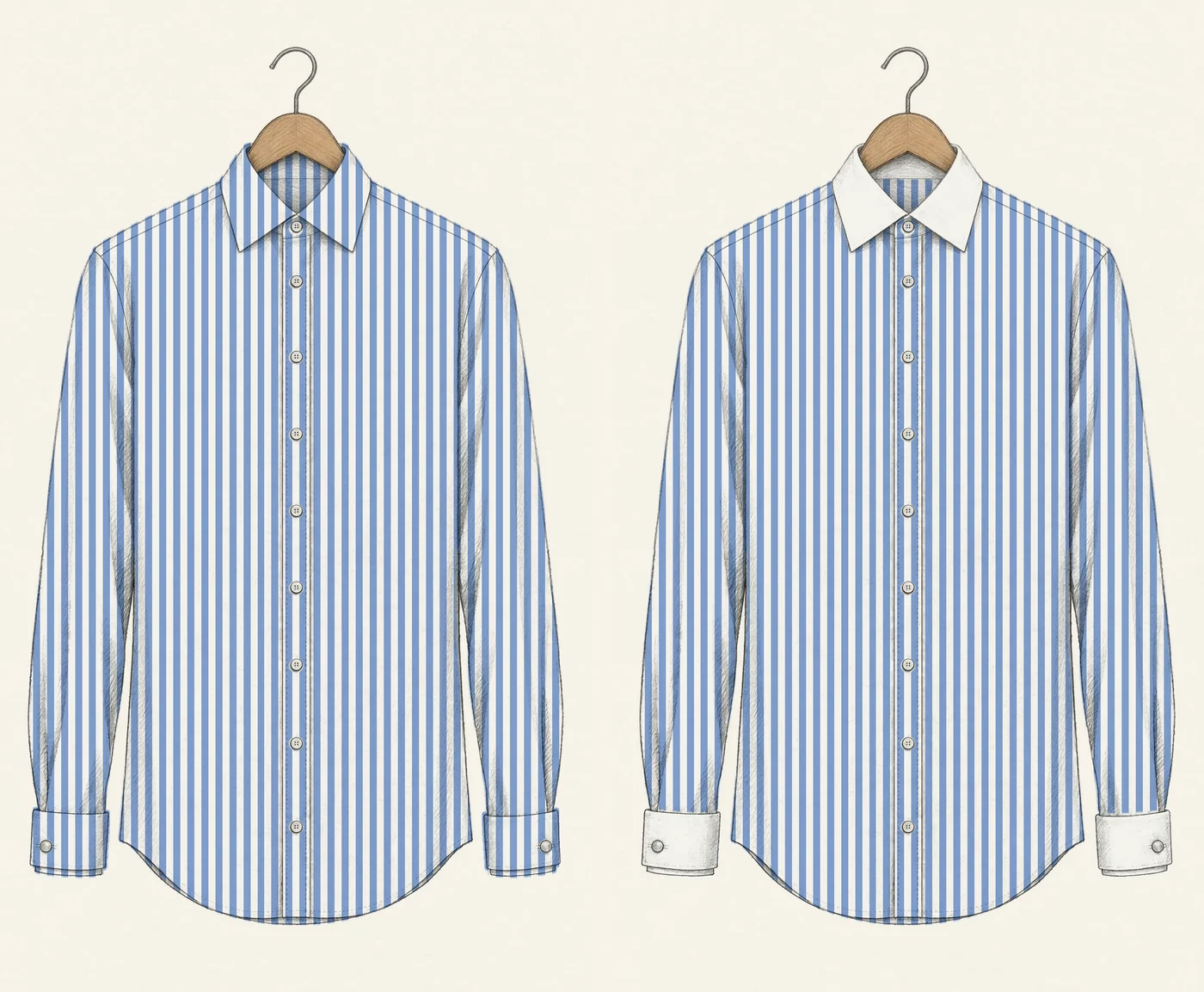
The drawings are the same Bengal stripe shirt on the Shirt Board, with its own collar and cuffs and with white ones.
Where it comes from
For a long time collars were not sewn to shirts at all. They were separate, starched stiff and white, and fastened on with studs, so a man could wear the same shirt for days and change only the collar. Coloured and striped shirts were worn with white collars as a matter of course.
When collars were sewn on for good, the white collar stayed as a style. It became the shirt of City bankers and stockbrokers, and in 1987 Gordon Gekko wore it through Wall Street, which fixed it for a generation as the uniform of the trading floor. It still reads that way: confident, formal, a little old-money.
How to wear one
- With a tie and a jacket. A contrast collar is a formal shirt. Open at the neck and without a jacket, it looks like half an outfit.
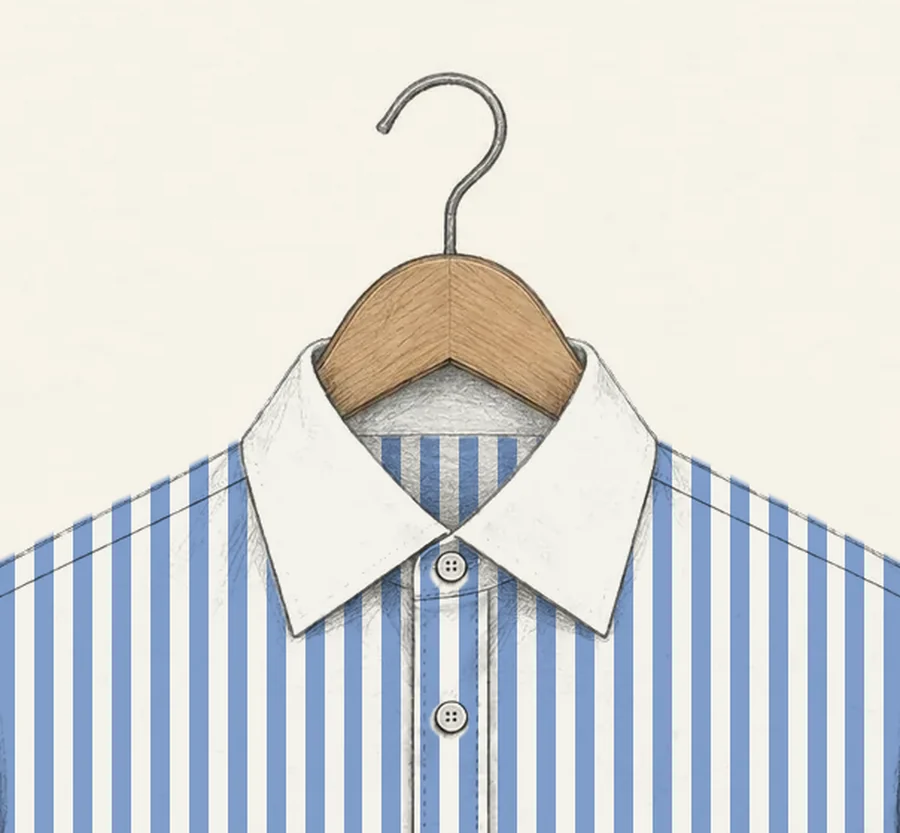
- A collar with some presence. A spread or a cutaway, cut stiff enough to stand up to the contrast. A point collar works. A button-down never does: it is a casual collar on a formal shirt.
- White cuffs to match, usually French cuffs with links. The collar and cuffs go white together.
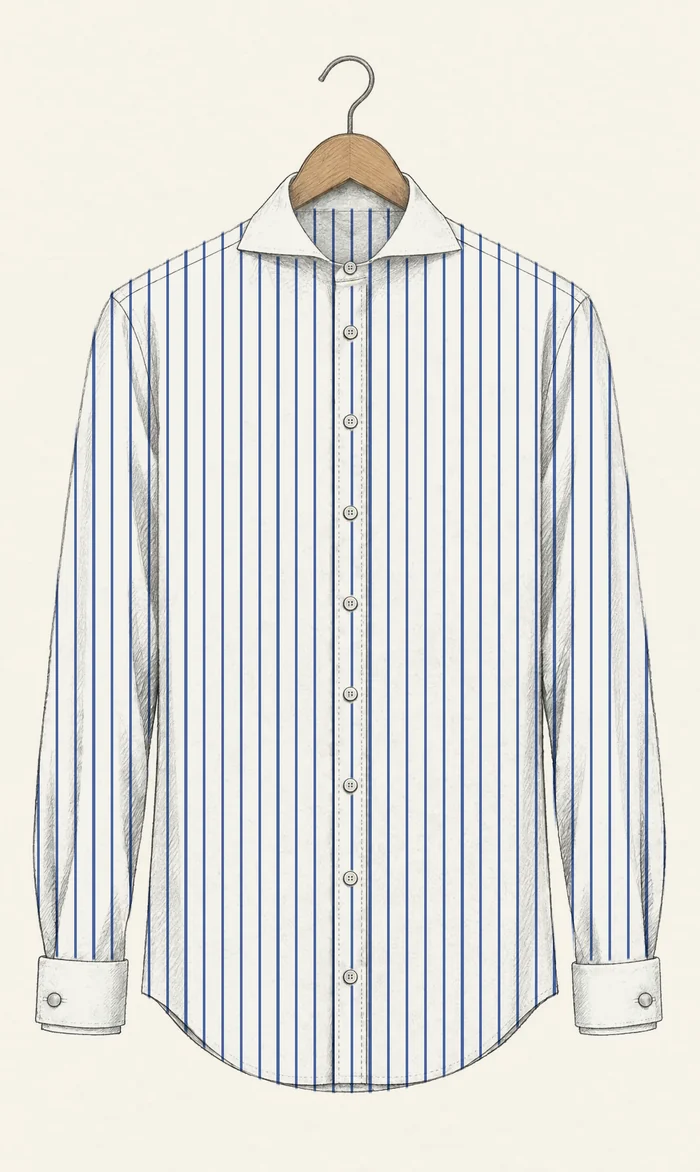
- The right body. Blue, a Bengal or pencil stripe, or pink. A check is rarer and reads less at home, and on a white shirt the whole point disappears.
- A quiet tie. A solid or a small, regular pattern. The collar is already the statement; a busy tie fights it.
- A dark suit. Navy or charcoal, and a pinstripe or chalkstripe if you want the full banker.
At a glance
| Matching collar | White contrast collar | |
|---|---|---|
| The look | Quiet, everyday | Sharp, deliberate, formal |
| Needs a tie | No | Yes, and a jacket |
| Collars | Any, including button-down | Spread, cutaway or point |
| Cuffs | Barrel or French | White, usually French |
| Cottons | Anything | Blue, stripes, pink |
| Best for | Every day | The office, a big meeting, a daytime wedding |
When to wear one
- The office: yes, if your office wears suits and ties, and especially in finance and law. It is a confident shirt, so one or two in a rotation is plenty. Dressing for finance has the wider picture.
- An important meeting: it signals that you took trouble, which is often the point.
- An interview: think twice. It reads as sure of itself, and a plain white or blue shirt keeps the attention on you.
- A daytime wedding: as a guest in a dark suit, yes; it is dressier than a plain shirt without being loud.
- Black tie: no. Evening dress wants a white dress shirt, all white.
- Without a jacket: no. That is when it looks most like a costume.
Draw it
On the Shirt Board the Collar & cuffs row switches any cotton between its own collar and cuffs and white ones, with any of the four collars and either cuff: a Bengal stripe with white, a pencil stripe with a white cutaway, pink with white. Send the drawing to Sam and the appointment starts from it.
Sam makes dress shirts at his studio in Vaughan, from hundreds of cottons. Your collar, cuff and body are measured once; the first shirt takes two to three weeks, and every one after is a phone call.