Shirt collar types, drawn side by side
Updated September 2026 · Sam’s Menswear editorial team
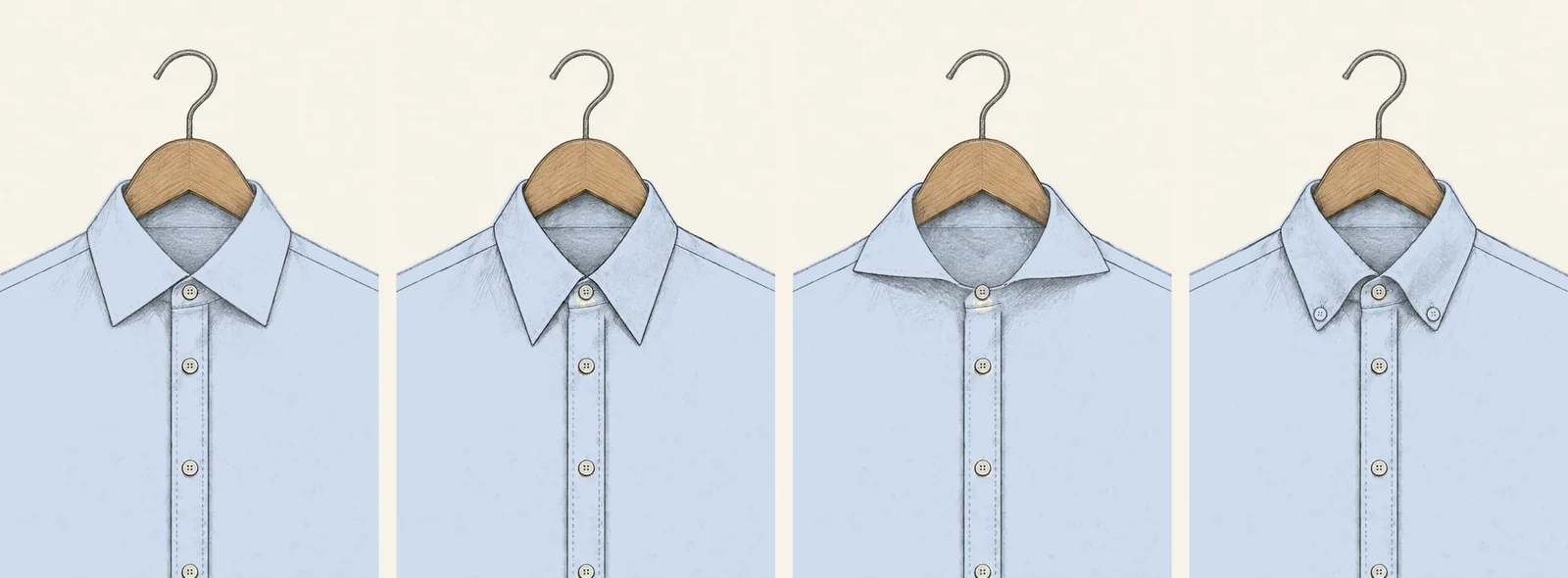
The collar is the part of a shirt people actually look at. It sits next to your face, it frames the tie, and under a jacket it is often the only part of the shirt anyone sees. It is also where most men make a choice without knowing there was one, because a shirt off the shelf comes with whatever collar the brand decided on.
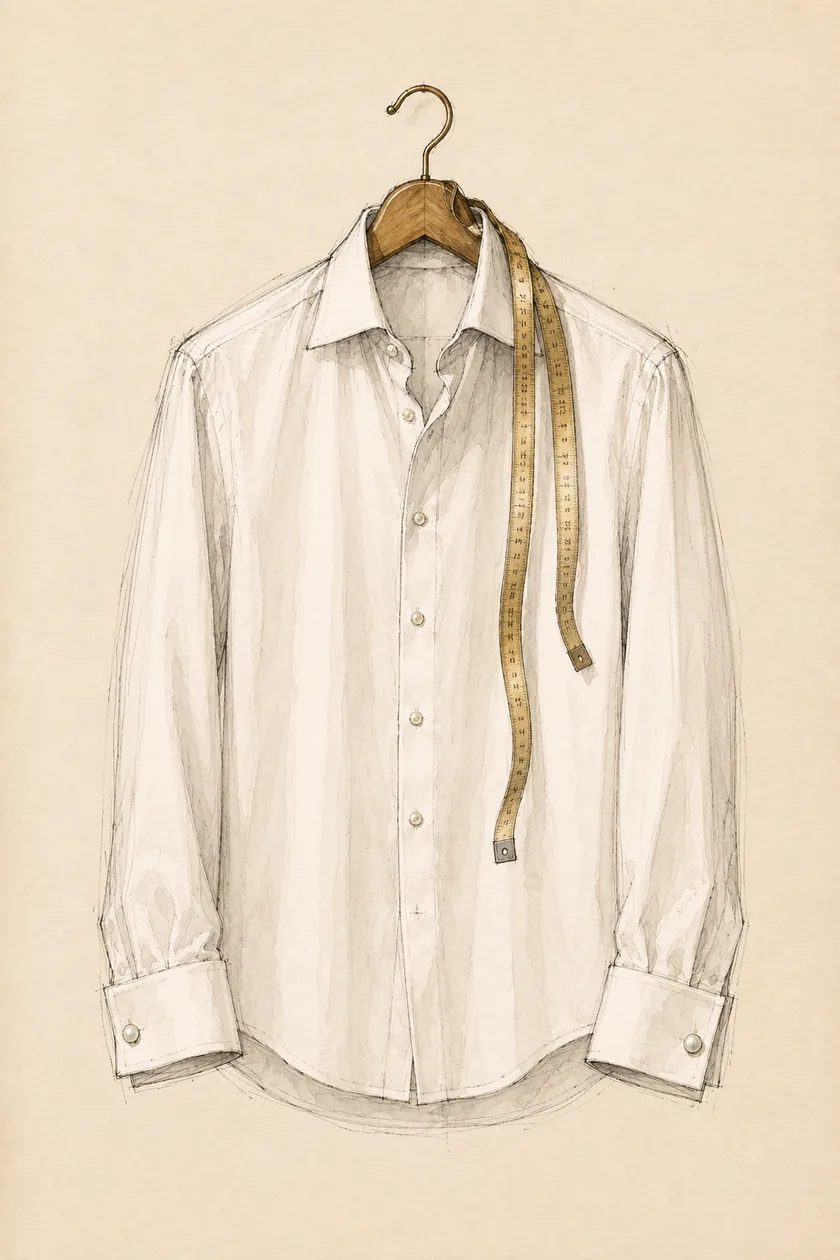
There are four collars worth knowing. The drawings here are the same shirt four times on the Shirt Board, identical except for the collar, which is the only fair way to compare them.
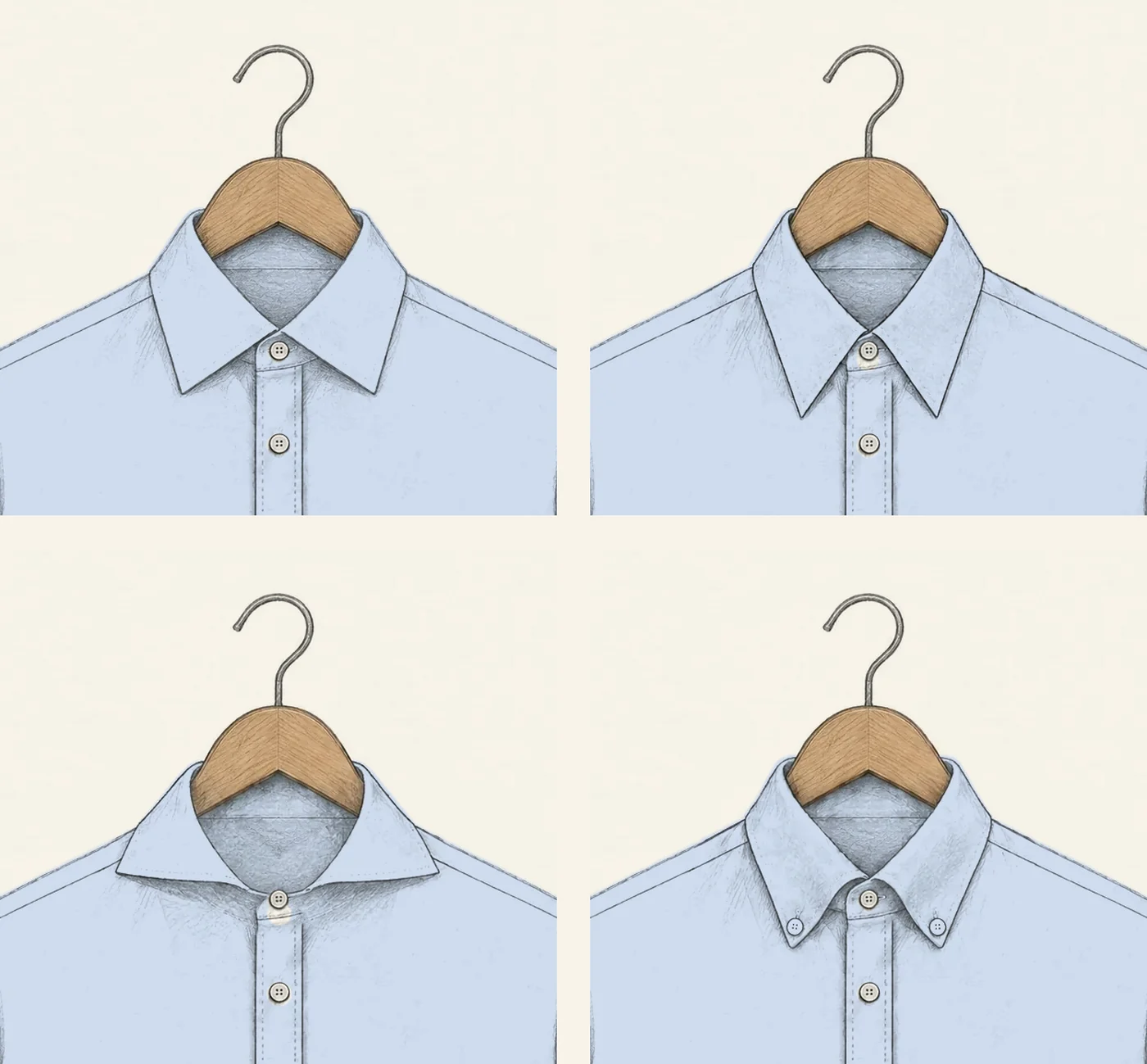
Spread collar: the one to own first
The points of a spread collar angle out toward the shoulders, leaving a clear space between them for the knot. That space is why it works so widely: a four-in-hand sits in it neatly, a half-Windsor fills it, and it looks finished with a suit, with a sport coat or on its own.
It suits most faces because it adds a little width without exaggerating it. If you are having one custom shirt made and you wear a tie most days, this is the collar to start with.
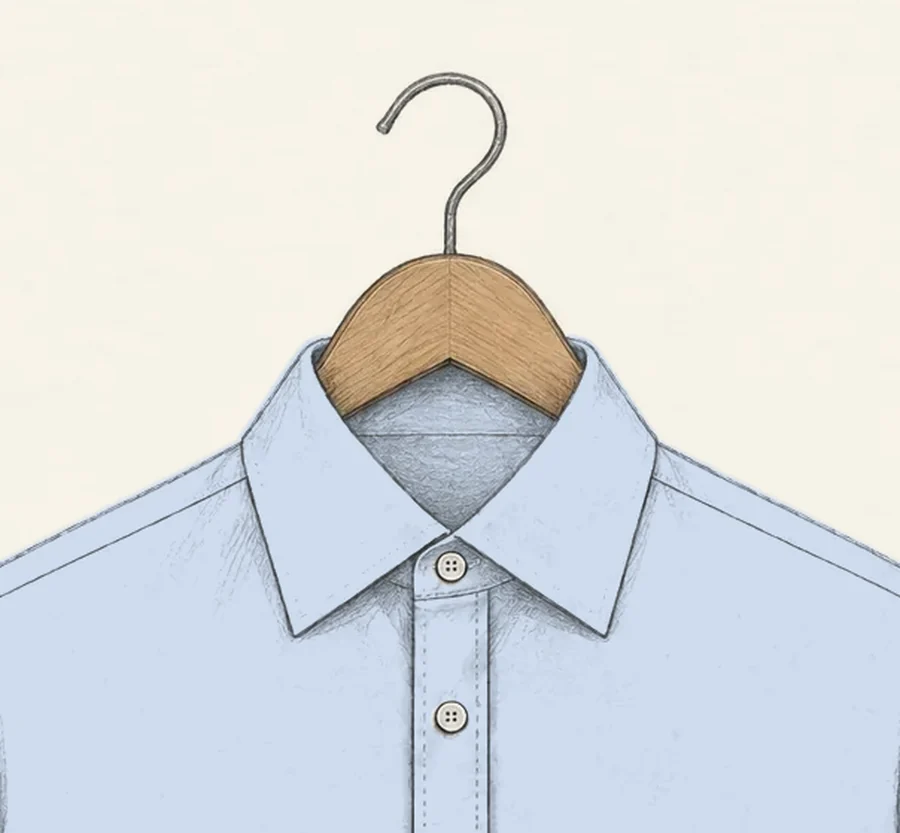
Point collar: the traditional, narrow one
A point collar has longer points that angle steeply down, close together, with only a narrow space above the top button. It is the older business collar, and it asks for a slim knot: a four-in-hand, not a Windsor, which would force the points apart.
Because it draws the eye down, a point collar lengthens a round or full face, and it is the kindest collar for a short neck. On a long, narrow face it can make the face look longer still.
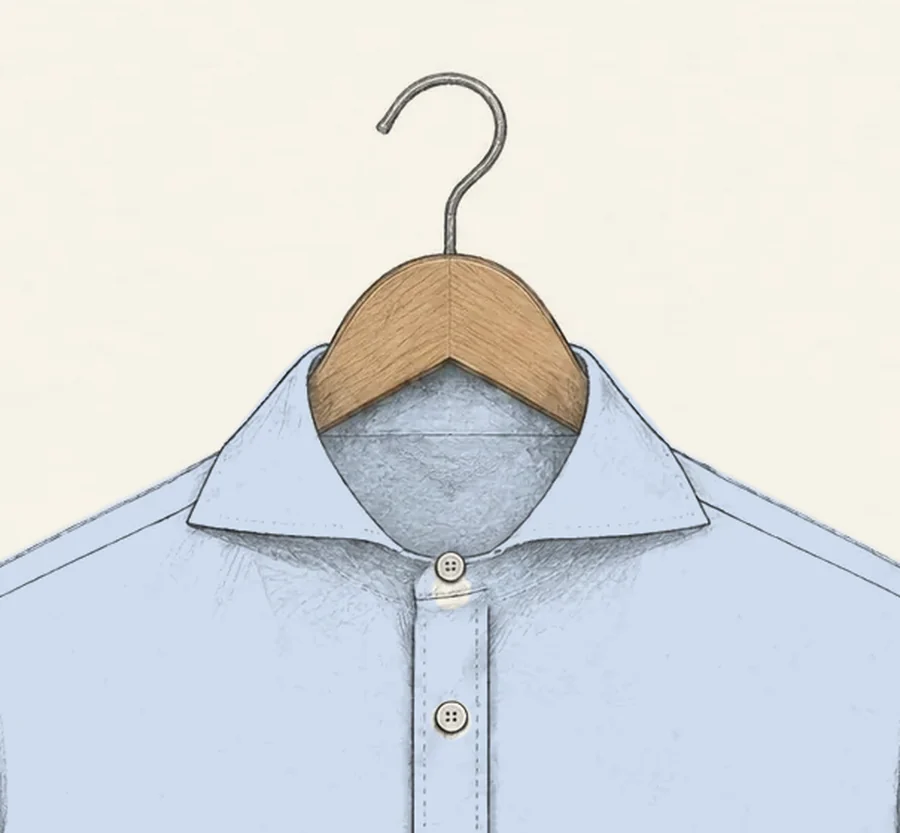
Cutaway collar: the wide one
A cutaway takes the spread to its limit: the points are cut back until they run nearly horizontal toward the shoulders. It leaves a broad stage for the knot, so it wants a fuller one, a half-Windsor or a Windsor, or no tie at all. A thin knot looks lost in the gap.
It widens a long or narrow face, and it holds its shape with the top button open, which makes it the dressier choice for an evening without a tie. It is a stronger look than a spread, so it reads as a decision rather than a default.
Button-down collar: the relaxed one
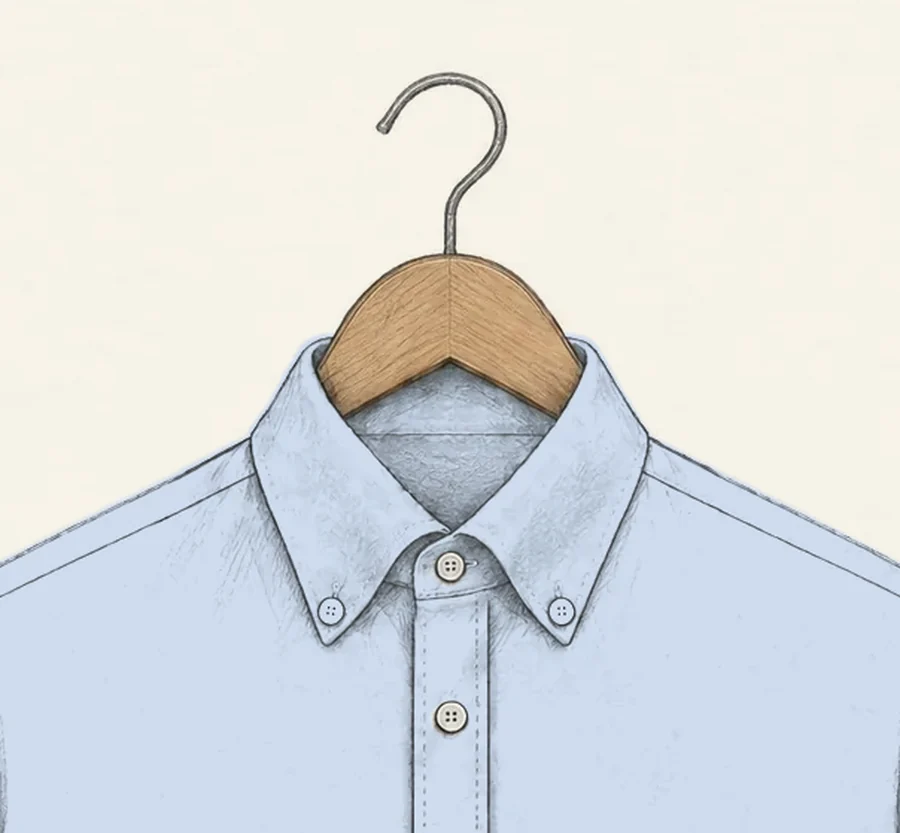
The points of a button-down are fastened to the shirt by two small buttons, so the collar rolls softly instead of lying flat. It began as a sporting collar, buttoned down so the points could not flap about on the polo field, and it has never quite lost that informality.
It is at its best in an oxford cotton, with a sport coat or chinos, and with a knit tie or no tie at all. Beside a dark business suit or at a wedding it looks casual next to a spread; that is a matter of taste rather than a rule, but it is why most men keep it for the weekend.
The four collars at a glance
| Collar | The points | Tie knot | Flatters | Best for |
|---|---|---|---|---|
| Spread | Angled out toward the shoulders | Four-in-hand or half-Windsor | Most faces | Every day, with or without a suit |
| Point | Long, steep, close together | Four-in-hand | Round or full faces, short necks | Traditional business dress |
| Cutaway | Nearly horizontal | Half-Windsor, Windsor, or none | Long or narrow faces | Dressier suits, open-necked evenings |
| Button-down | Buttoned to the shirt | Four-in-hand, knit tie, or none | Most faces | Sport coats, chinos, weekends |
Which collar for the occasion
- The office, with a tie: spread, or point if your office runs traditional.
- A wedding or a formal evening: spread or cutaway with a tie, and cutaway if the tie is coming off later. A black-tie bow sits best on a spread or a cutaway.
- No tie at all: cutaway or button-down. Both hold their shape open, where a point collar without a tie tends to collapse under a jacket.
- A sport coat and chinos: button-down.
What makes any collar sit right
The style is only half of it. A collar also has to fit. Button it, and two fingers should slide flat inside the band and no more; how a dress shirt should fit goes through the rest of the shirt. The height of the band matters too: a taller band suits a long neck and shows properly above a jacket collar, a lower one suits a shorter neck. And the points need stays, thin strips on the underside of each point, to keep them flat and sharp through the day.
A shirt off the shelf gets all of this from a size chart. A custom shirt gets it from your neck, which is the whole reason its collar can sit right.
Try them on your own shirt
On the Shirt Board you can put each collar on the cotton you would actually wear, from white poplin to a Bengal stripe, with barrel or French cuffs, a white contrast collar if you like and trousers underneath: spread, point, cutaway, button-down. Send the drawing to Sam and the appointment starts from it.
Sam makes all four collars at his studio in Vaughan. The first shirt takes two to three weeks, and because your pattern is kept, every shirt after it is a phone call. Custom dress shirts has the rest.