French cuffs vs barrel cuffs, drawn side by side
Updated September 2026 · Sam’s Menswear editorial team
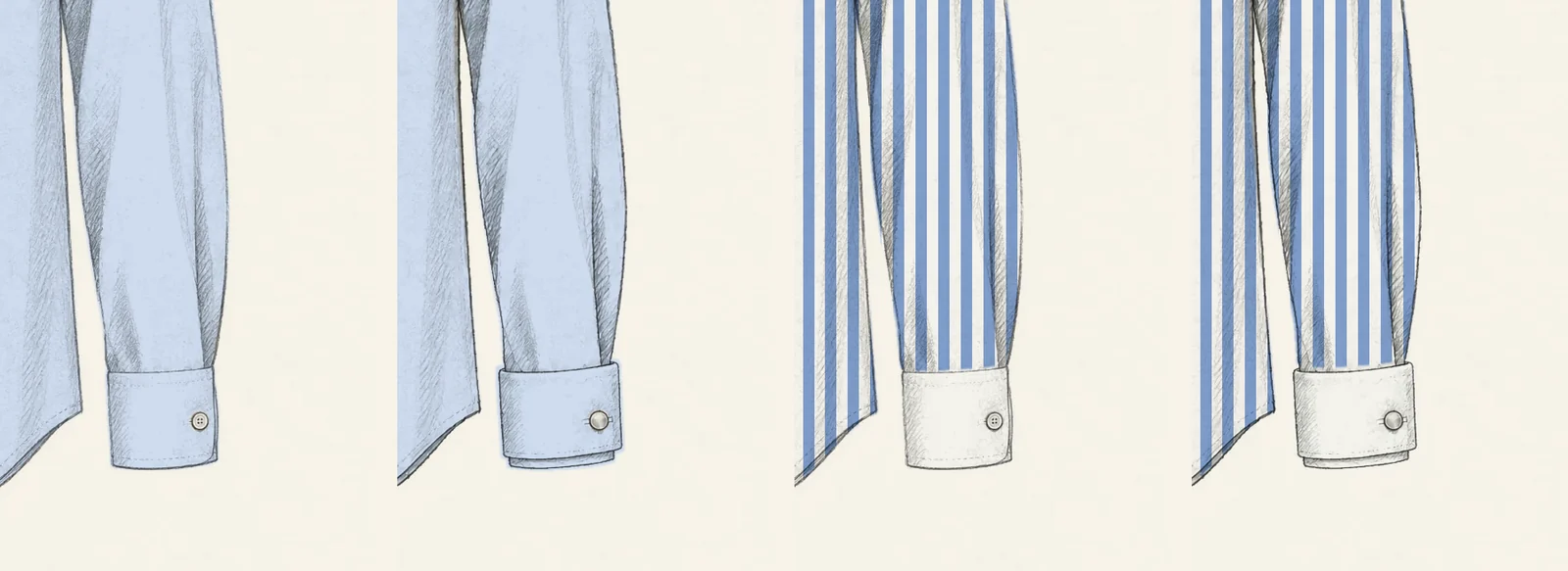
After the collar, the cuff is the part of a shirt people see. Under a jacket it shows as a quarter to half an inch of cloth past the sleeve, which is exactly where the eye goes when you reach for a glass or shake a hand. There are two cuffs worth knowing, and the difference between them is less about looks than about what the shirt is for.
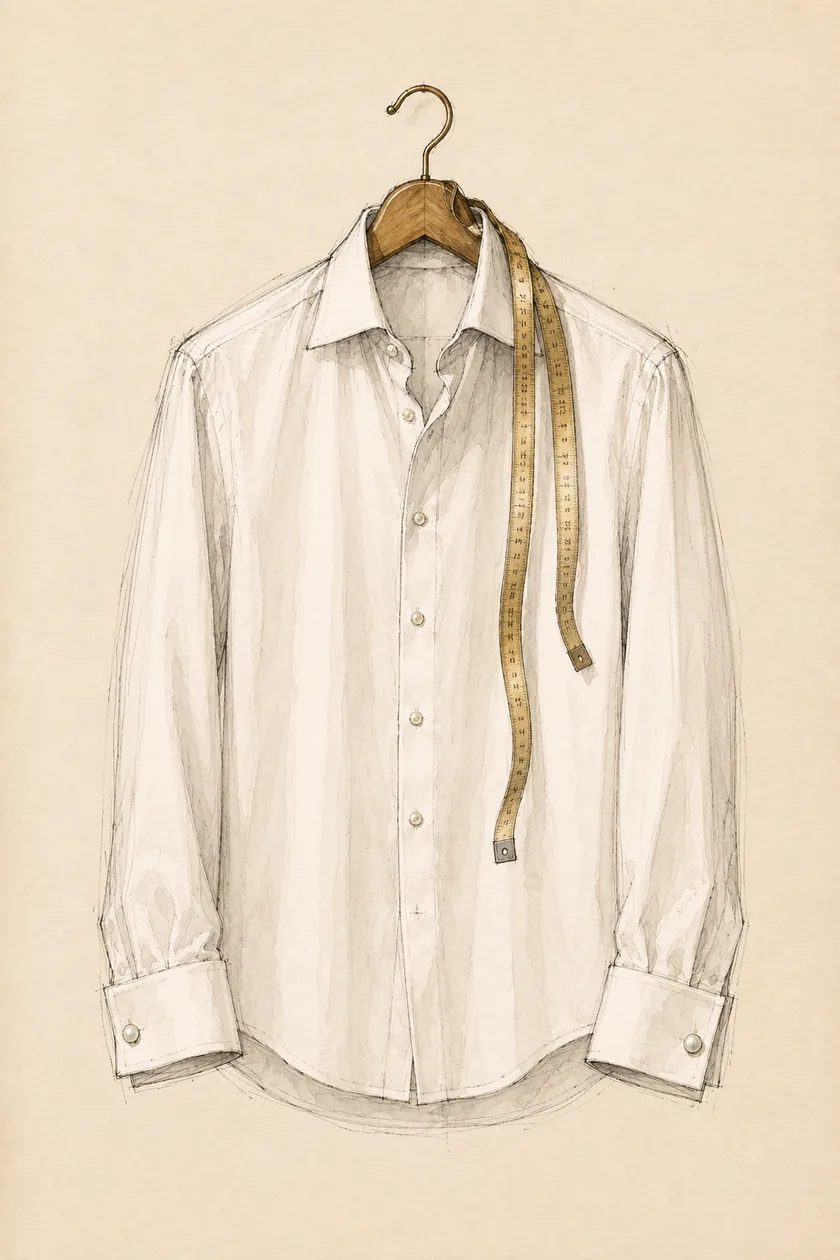
The drawings are the same shirt on the Shirt Board, with only the cuff changed.
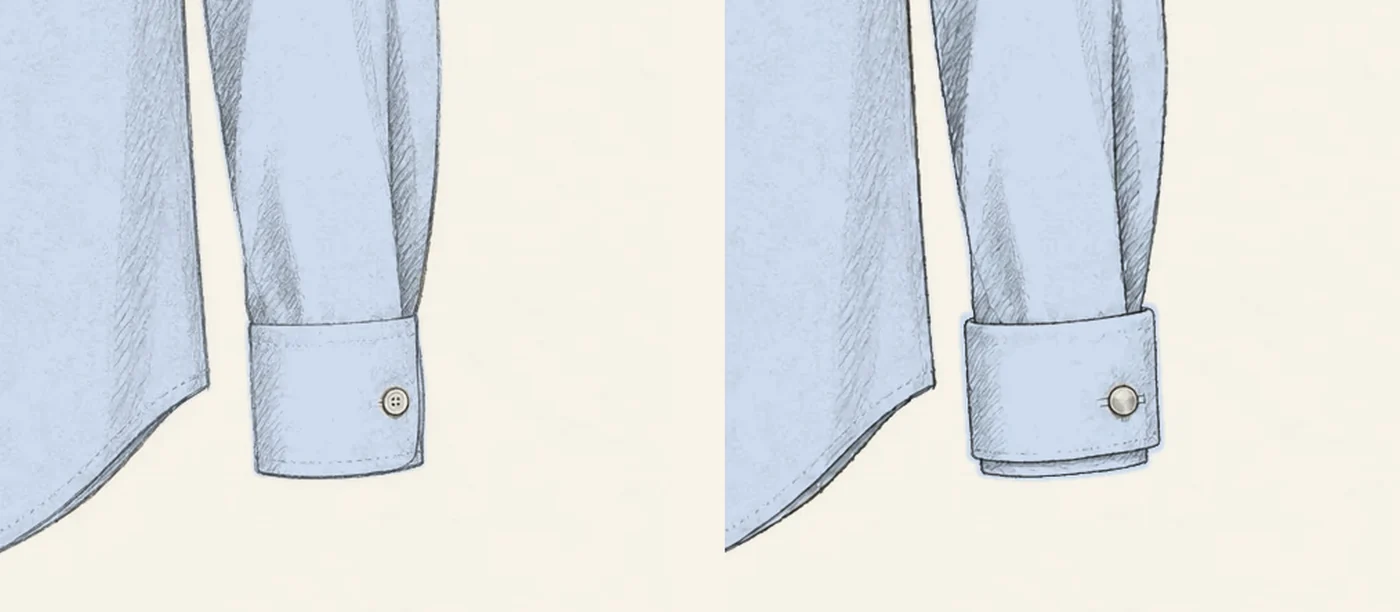
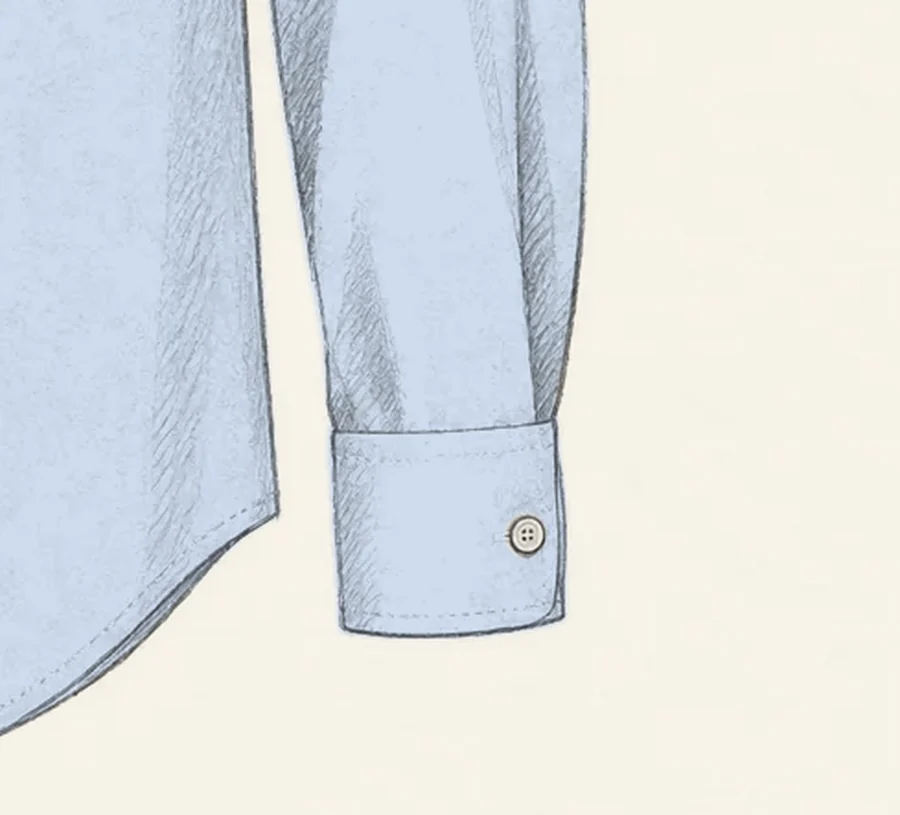
The barrel cuff: the everyday one
A barrel cuff is a single band of cloth around the wrist, closed with a button. It is the cuff on almost every shirt you already own, and there is a reason for that: it asks nothing of you. No cufflinks to remember, nothing to catch on a desk, and it slips under a watch without a fight.
It works under a suit, under a sport coat and with no jacket at all, which makes it the right cuff for a shirt you will wear every week. On Sam’s shirts it closes with a mother-of-pearl button.
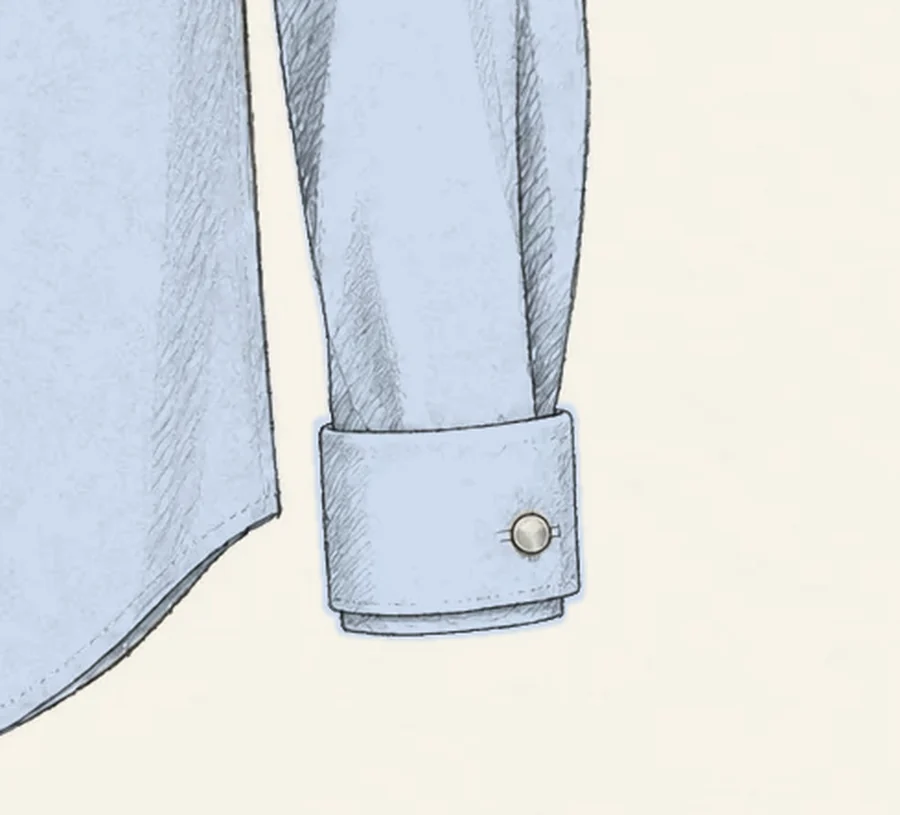
The French cuff: the dressy one
A French cuff, or double cuff, is cut twice as deep, then folded back on itself so the fold sits at the end of the sleeve. It has no button. Instead it has buttonholes on both sides, the two edges are brought together, and a cufflink goes through all of them.
That extra depth and the link make it the more formal of the two. It is the traditional cuff for black tie and the natural one for a wedding, and it belongs under a jacket: on its own, with the sleeves on show, a French cuff looks like it is waiting for the rest of the outfit.
The two cuffs at a glance
| Barrel cuff | French cuff | |
|---|---|---|
| Closes with | A button | Cufflinks |
| Formality | Everyday | Dressy |
| With a suit | Yes | Yes |
| With no jacket | Yes | Better not |
| Black tie | No | Yes |
| Under a watch | Slips under easily | Bulkier; sits against it |
Which cuff for the occasion
- The office, every day: barrel.
- An important meeting, a presentation, a dinner: French, if you like wearing links, and barrel if you do not. Neither is wrong.
- A wedding: French for the groom and the wedding party; either for a guest.
- Black tie: French, with plain or dress cufflinks.
- A sport coat and chinos, or no jacket: barrel.
Cufflinks, briefly
A French cuff needs a pair, so it is worth owning one plain pair before the shirt arrives. Links with a swivelling bar back are the easiest to put on with one hand. Chain links, a face on each side of the cuff, are the traditional kind. Silk knots are the relaxed, inexpensive option, and a good way to find out whether you like French cuffs before you buy anything better. Keep the metal roughly in step with your watch and you will not go wrong.
White cuffs
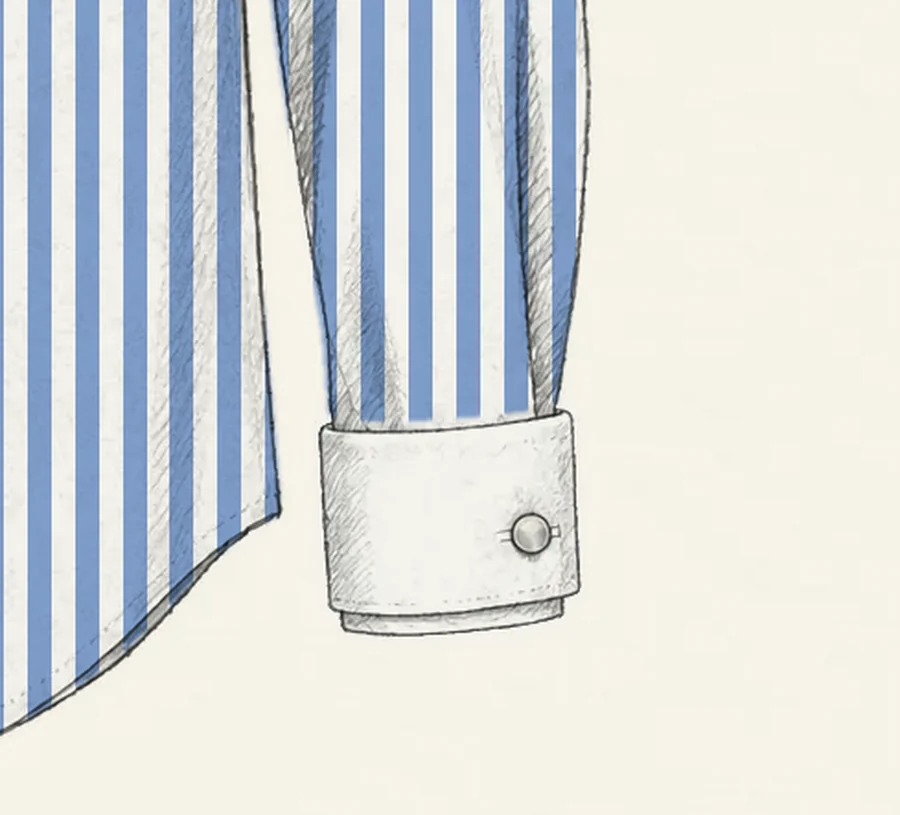
The one departure from matching cloth is a white collar and white cuffs on a coloured or striped shirt, most often a blue stripe with French cuffs. It is a sharp, deliberate look that wants a tie and a jacket, and the collar and cuffs are always white together, never one without the other.
How any cuff should fit
Whichever you choose, the fit decides whether it looks right. A cuff should be snug enough that the shirt does not slide down over your hand when you reach for something, and loose enough to take a watch. It should end at the wrist bone, so that a quarter to half an inch shows beyond the jacket sleeve. Most arms are not the same length, which is why a custom shirt sets each cuff to its own wrist. How a dress shirt should fit goes through the rest of the shirt.
Draw both
On the Shirt Board you can put either cuff on the cotton you would actually wear, with any of the four collars and trousers underneath: barrel, French, or white French cuffs on a stripe. Send the drawing to Sam and the appointment starts from it.
Sam makes both cuffs at his studio in Vaughan. If you are ordering more than one shirt, it is worth having both, because the same cotton in a different cuff genuinely changes what the shirt is for. The first shirt takes two to three weeks, and every one after it is a phone call. Custom dress shirts has the rest.