From Bathurst to Bay Street: one wardrobe for Shabbos and the office
Updated September 2026 · Sam’s Menswear editorial team
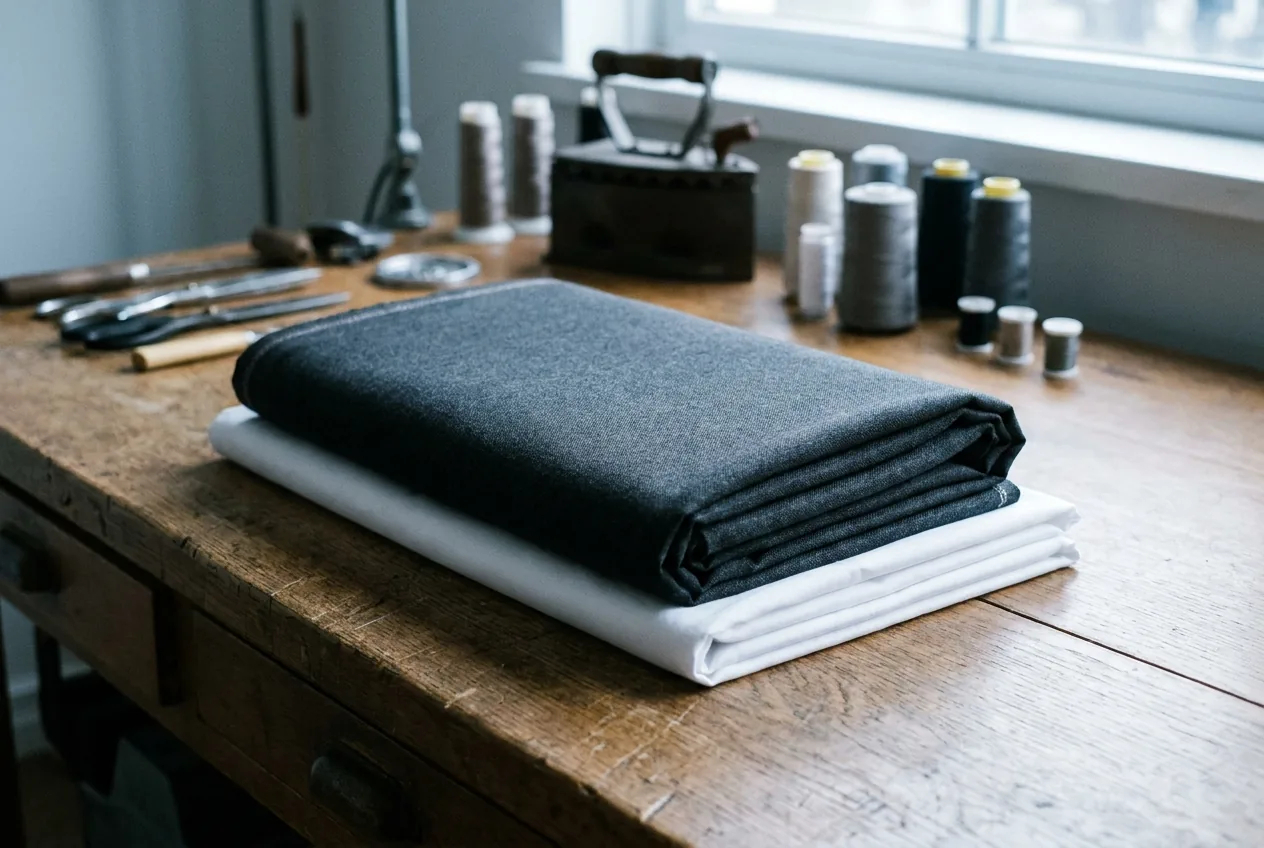
Plenty of Toronto men live two dress codes in one week. Monday to Thursday it is a desk downtown, client meetings and the four-day office week the big firms have gone back to. Friday night and Saturday it is shul off Bathurst, in Lawrence Manor or up in Thornhill, and a suit that is kept for Shabbos. The two codes agree on more than they differ, and a wardrobe built with both in mind costs less and looks better than two wardrobes built separately.
The brief
A composite, not one client’s order.
He is a lawyer or an accountant downtown and lives off Bathurst. He owns one good dark suit that does duty on Shabbos and at the office’s important meetings, and it is wearing out twice as fast as it should. His weekday suits are fine for Bay Street and not quite right for shul. In the winter, on Fridays, he leaves the office early and there is rarely time to change before Shabbos. He wants one plan that covers both halves of the week.
Two dress codes, more alike than they look
Both want dark cloth, a white or near-white shirt, clean lines and nothing loud. Both reward fit over fashion. The differences are in the details:
- Colour. The office is happy with navy, charcoal, mid-grey and a quiet pattern. In many communities Shabbos is navy or black, and in some it is black only.
- Cut. Some communities have a particular jacket length, button count or lapel they expect for Shabbos. The office has no view on any of it.
- Shirt. Shul is almost always white. The office allows pale blue and a fine stripe, but a white shirt is never wrong at either.
- Tie. Varies by community for Shabbos, from dark and plain to none at all. At the office, it is your call.
Keep one suit for Shabbos
The Gemara’s line that your Shabbos clothes should not be like your weekday clothes (Shabbos 113a) is the oldest version of this advice, and it happens to be good tailoring too.
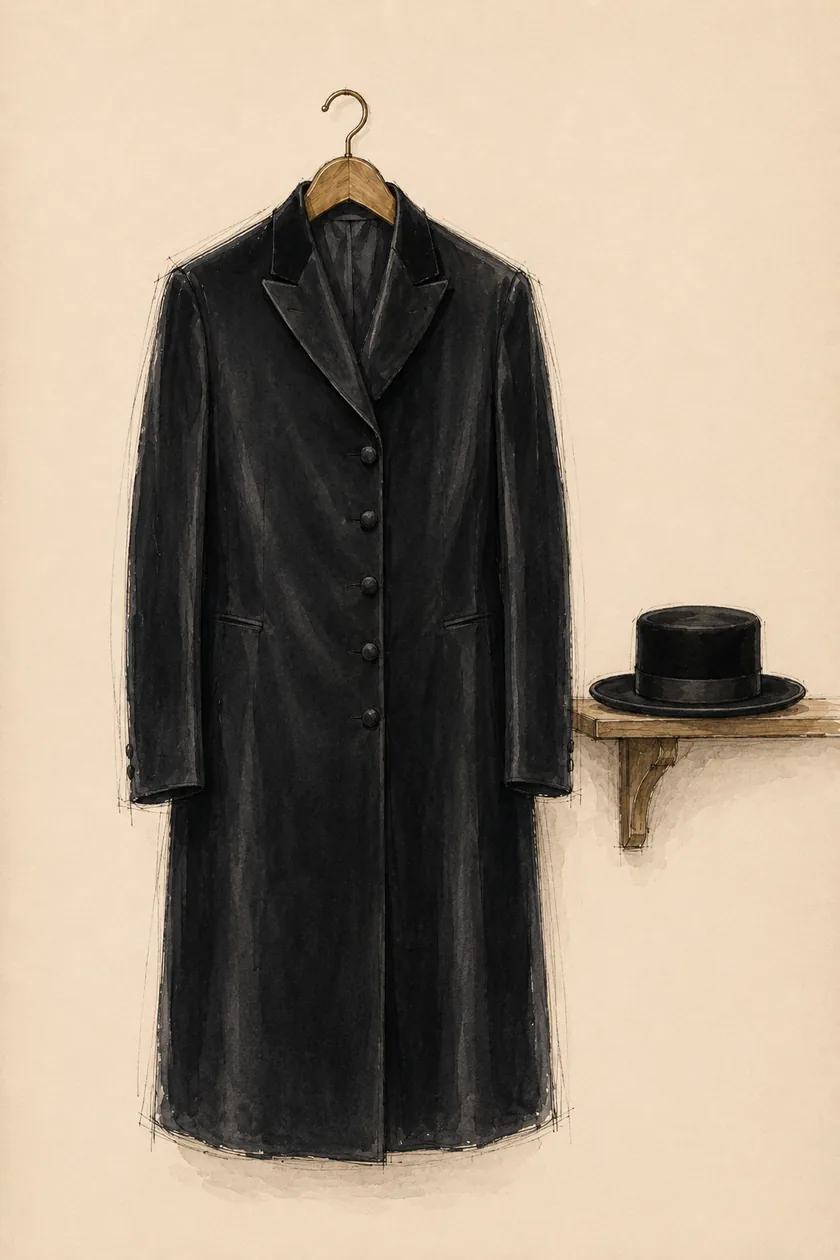
A suit worn four days a week at the office takes about sixty wears a year even in a three-suit rotation. A suit kept for Shabbos and Yom Tov is worn perhaps one or two days a week and is never sat in for eight hours at a desk. It keeps its nap, its crease and its colour for years longer, and it stays the best thing you own. The man who lends his Shabbos suit to the Tuesday board meeting ends up with two tired suits instead of one good one.
Building a Shabbos wardrobe goes through the full set, from the suit to the Yom Tov pieces.
The crossover suit: midnight blue
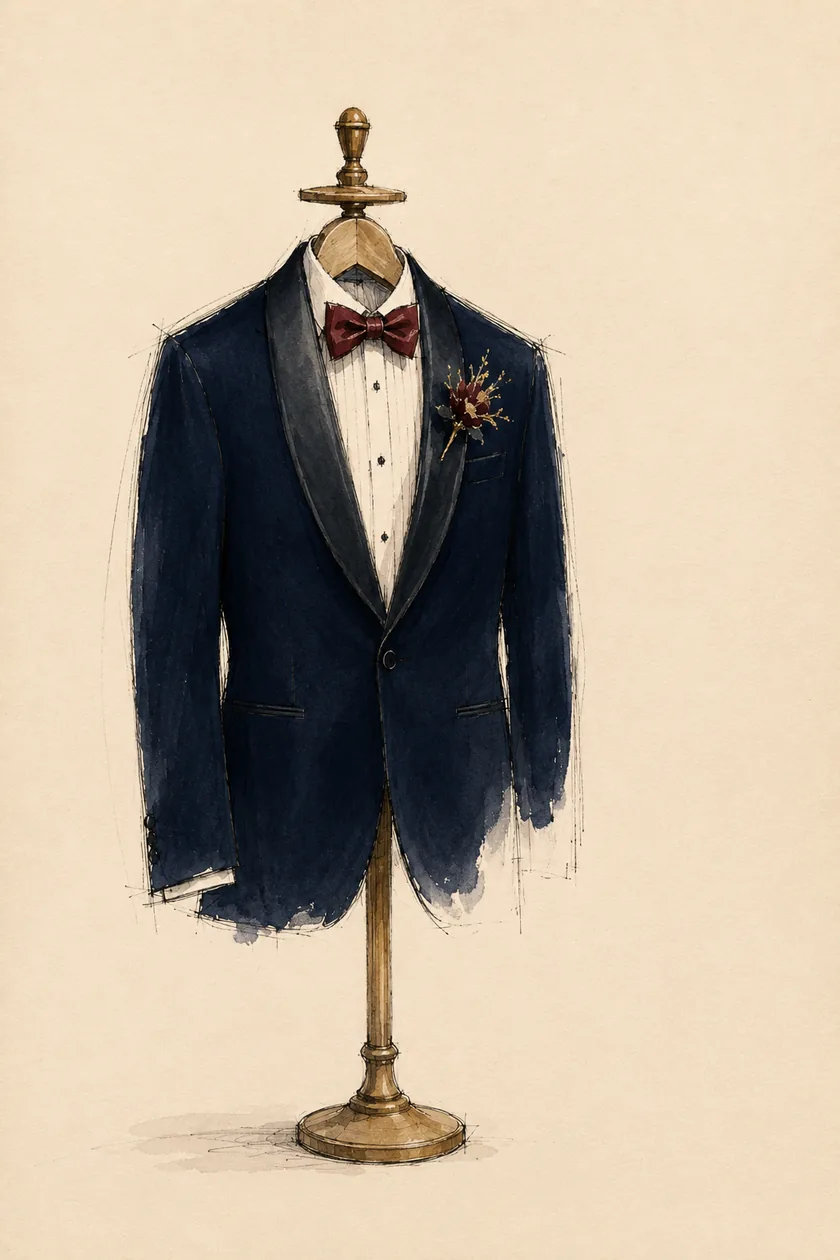
If one suit has to sit in both worlds, midnight blue is the cloth that does it best. It is a very dark navy that reads close to black under artificial light, which is why it was used for evening clothes in the first place, and reads as a rich navy in daylight. In a shul lit by lamps it looks dark and formal; in a downtown boardroom with windows it looks like a proper navy suit.
Where your community wears dark navy or black, midnight blue belongs in both halves of the week. Where Shabbos is black only, keep a black suit for Shabbos and let midnight blue or charcoal be the week’s most formal suit.
The order
| For Shabbos | For the week | |
|---|---|---|
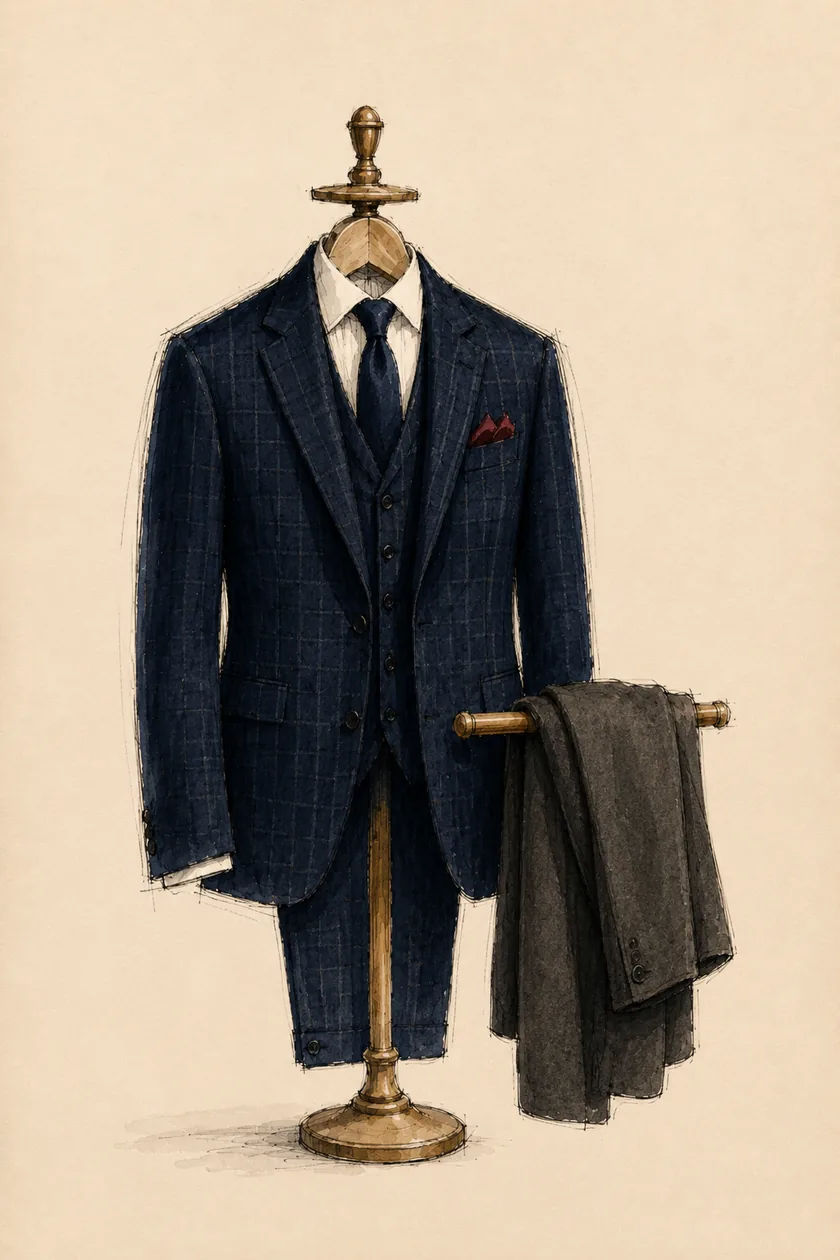
| Cloth | Black or midnight blue fine worsted, about 10 oz | Navy, charcoal, a mid-grey; one midnight blue if it is to cross over |
| Construction | Half canvas, or full canvas on the finer cloths | Half canvas; hard-wearing worsted |
| Cut | As your community wears it: tell Sam what that is | Two button, notch lapel, cut for sitting at a desk |
| Shirts | White, cut with room for tzitzis | White and pale blue, cut the same way |
| Trousers | One pair, kept for Shabbos | A second pair for the most-worn suit |
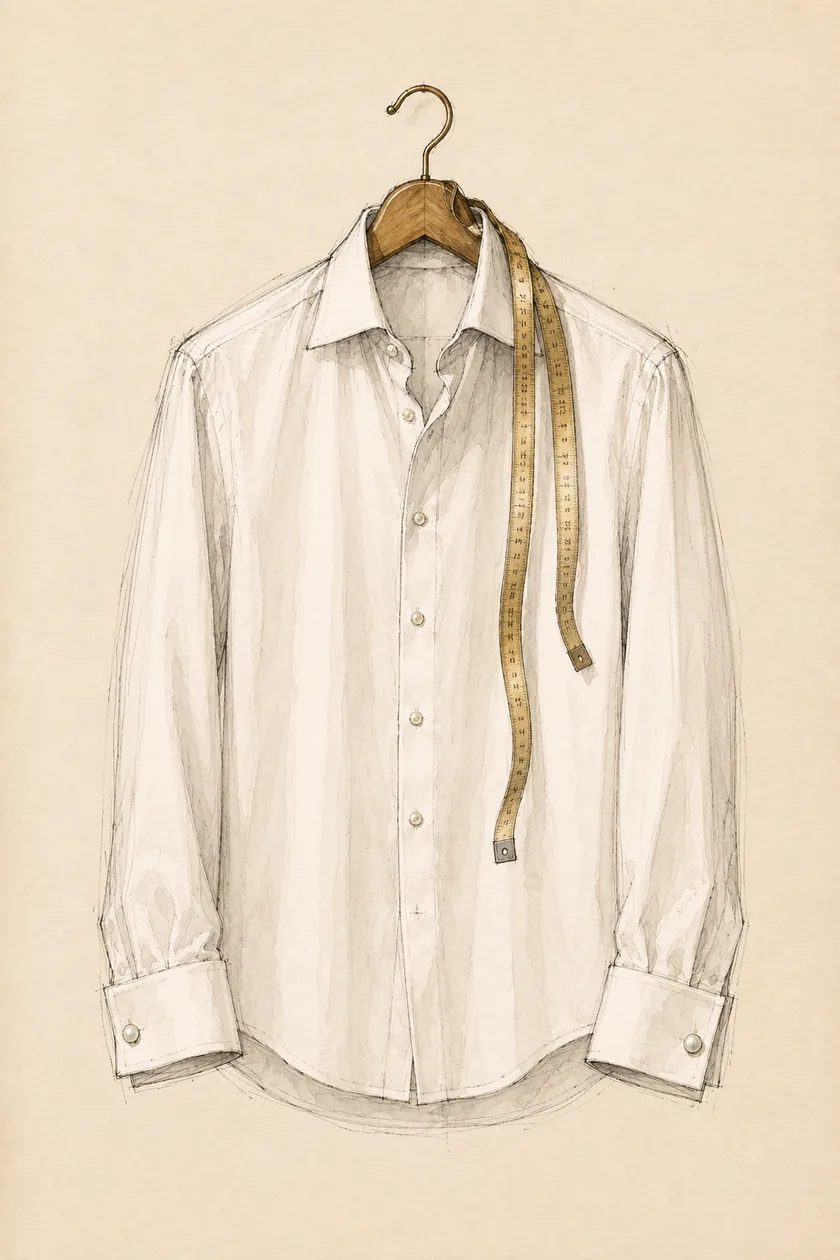
The shirt is the piece that crosses over completely. A good white shirt works at a partners’ meeting and at kiddush, and a stack of them is the hardest-working thing in the wardrobe. The white shirt covers collars, cloth and how many to own.
Have every shirt cut with room for tzitzis underneath. A shirt measured over a bare chest pulls across the back and shows the outline of the tzitzis once they are on; measured over what you actually wear, it hangs clean. Tzitzis explained covers wool, cotton and how they should sit.
Friday in December
This is where the plan earns its keep. In mid-December candle-lighting in Toronto comes as early as about 4:22 in the afternoon. A man leaving a downtown office early still has the Allen, or Bathurst itself, between him and home, and on some Fridays there is no time to change before Shabbos.
On those Fridays the office suit is the one he walks into shul wearing. So the suit you wear to work on a winter Friday should be the darkest, plainest one in your week: the midnight blue or the charcoal, never the grey pinstripe. Keep a white shirt and a dark tie in the rotation for Fridays from November to February. It costs nothing to plan and saves the one hour of the week when there is no time to fix it.
A note on custom
Customs vary by family and by community. This page describes how the clothes are cut and worn, not what is required of you; religious questions belong with your rav.
Draw the crossover suit on the Drawing Board in midnight blue with a white shirt: draw it. Sam makes traditional menswear and custom suits for Toronto clients at the studio just north of Steeles, a short run up Bathurst from Lawrence. A suit takes three to four weeks, so for the winter Fridays, start in October. Book a time and tell Sam what your community wears for Shabbos, and the cut will follow it.